
Comparison Procraft PCA32 vs Procraft PCA20
Add to comparison |  | 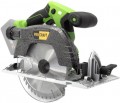 |
|---|---|---|
| Procraft PCA32 | Procraft PCA20 | |
| Outdated Product | Outdated Product | |
| TOP sellers | ||
| Product type | circular | circular |
| Type | portable | portable |
| Power source | battery | battery |
Motor | ||
| Brushless motor |  | |
| Engine location | transversely | transversely |
| No load blade speed | 5200 rpm | 5200 rpm |
Cutting equipment | ||
| Bar/blade size | 165 mm | 185 mm |
| Bore diameter | 20 mm | 25 mm |
| Cutting depth | 59 mm | 60 mm |
| Cutting depth (45° angle) | 45 mm | 45 mm |
| Saw angle | 45 ° | 56 ° |
Protective functions | ||
| Soft start |  | |
| Electronic motor protection | | |
| Motor brake | | |
Features | ||
| Features | LED light speed control | |
| In box | saw blade without charger | saw blade without charger |
Battery | ||
| Battery in set | no | no |
| Battery platform | Procraft 20V | Proсraft 20V |
| Battery voltage | 20 В | 20 В |
| Compatible batteries | Procraft Battery20 | Procraft Battery20 |
General | ||
| Noise level | 89 dB | 80 dB |
| Weight | 4.4 kg | |
| Added to E-Catalog | november 2025 | april 2022 |


Compare Procraft PCA32 and PCA20
You may be interested in
My comparisons
Procraft PCA32 often compared


Procraft PCA20 often compared

Glossary
Bar/blade size
The largest tyre size (in chain saws) or disc (in circular saws and some others, see "Device") that is allowed for this tool. Tyres are sized by working length, rims by diameter.
A larger bar/wheel allows for deeper cuts but requires more powerful motors. Therefore, this parameter cannot be exceeded — this can lead to an overload of the engine with all the corresponding troubles. However, in many models with a disc it is physically impossible to install a nozzle with a diameter larger than the maximum allowable.
Also note that saws with similar bar/blade sizes may differ in maximum depth of cut (mostly due to differences in design or power). As for the specific dimensions, they depend on the type of saw (see "Device"). For example, large discs of 450 – 500 mm are found exclusively in stationary chain saws, the maximum figure for cutting models is 400 – 450 mm, for trimming — 300 – 350 mm, and sizes of 500 – 550 mm or more clearly indicate that speech It's about a chainsaw chainsaw bar. Detailed recommendations regarding the choice of a tool for a given size can be found in special sources.
A larger bar/wheel allows for deeper cuts but requires more powerful motors. Therefore, this parameter cannot be exceeded — this can lead to an overload of the engine with all the corresponding troubles. However, in many models with a disc it is physically impossible to install a nozzle with a diameter larger than the maximum allowable.
Also note that saws with similar bar/blade sizes may differ in maximum depth of cut (mostly due to differences in design or power). As for the specific dimensions, they depend on the type of saw (see "Device"). For example, large discs of 450 – 500 mm are found exclusively in stationary chain saws, the maximum figure for cutting models is 400 – 450 mm, for trimming — 300 – 350 mm, and sizes of 500 – 550 mm or more clearly indicate that speech It's about a chainsaw chainsaw bar. Detailed recommendations regarding the choice of a tool for a given size can be found in special sources.
Bore diameter
The diameter of the mounting hole for which the blade holder in the saw of the corresponding design is designed (see "Device"). In fact, this paragraph indicates the diameter of the axis on which the disk is installed — this size should correspond to the hole in the disk itself.
Note that some models of saws allow the installation of discs with larger holes than indicated in the specifications — when using an adapter sleeve. The main thing is that the own diameter of the disk does not exceed the values \u200b\u200ballowed for this model (see "Tyre / disk diameter"). Popular sizes include 20mm, 25mm and 30mm.
Note that some models of saws allow the installation of discs with larger holes than indicated in the specifications — when using an adapter sleeve. The main thing is that the own diameter of the disk does not exceed the values \u200b\u200ballowed for this model (see "Tyre / disk diameter"). Popular sizes include 20mm, 25mm and 30mm.
Cutting depth
The greatest depth of cut provided by the saw.
In most types of saws (see “Device”), the depth of cut directly depends on both the engine power and the size of the tyre / disk. The specifications give a value for the maximum allowable size of the working nozzle; when using nozzles of a smaller size, the depth of cut, respectively, will be less. But in band saws, this depth is rather weakly related to the actual length of the tape — it is determined primarily by the length of the open section of the tape, which is directly involved in the work.
Anyway, the greater depth of cut makes the tool more versatile, but comes at the cost of weight, price, and electricity/fuel consumption. So when choosing, it is worth considering the real features of the planned work and the dimensions of the workpieces that are planned to be cut. As for specific values, the most modest tools provide a depth of up to 50 mm ; 50 – 75 mm is considered a low indicator, 75 – 100 mm is average, 100 – 125 mm is above average, 125 – 150 mm is already quite an impressive thickness, and the most powerful modern saws can have a cutting depth of more than 150 mm.
In most types of saws (see “Device”), the depth of cut directly depends on both the engine power and the size of the tyre / disk. The specifications give a value for the maximum allowable size of the working nozzle; when using nozzles of a smaller size, the depth of cut, respectively, will be less. But in band saws, this depth is rather weakly related to the actual length of the tape — it is determined primarily by the length of the open section of the tape, which is directly involved in the work.
Anyway, the greater depth of cut makes the tool more versatile, but comes at the cost of weight, price, and electricity/fuel consumption. So when choosing, it is worth considering the real features of the planned work and the dimensions of the workpieces that are planned to be cut. As for specific values, the most modest tools provide a depth of up to 50 mm ; 50 – 75 mm is considered a low indicator, 75 – 100 mm is average, 100 – 125 mm is above average, 125 – 150 mm is already quite an impressive thickness, and the most powerful modern saws can have a cutting depth of more than 150 mm.
Saw angle
The maximum angle at which the working part of the saw can be tilted relative to the vertical. It can be indicated not only for stationary tools, but also for manual ones — in the event that the design provides for a support platform. It is worth paying attention to this parameter if you have to deal with oblique cuts: making such cuts by setting the saw to a certain angle is much more convenient than adjusting this angle manually.
Soft start
A function that starts the engine smoothly without a sudden jerk and gradually brings the tool up to working speed. It makes the start safer and more comfortable because the saw doesn't jerk in your hands at the moment of activation. In practice, soft start is convenient when you need to make a precise cut in mid-air, work in an awkward position, or simply better control the tool from the first seconds.
Compared to models without such a function, the load on the hands, gearbox, and power network is lower. This is especially useful for powerful circular, reciprocating, and chain saws, where a sudden start is felt most strongly.
Electronic motor protection
Electronic motor protection in a saw controls the load on the motor and helps protect it from overheating, overload, or damage. If the tool is operating in a mode that is too heavy, the system can limit power, shut off the engine, or prevent it from overheating. This is beneficial not only for user safety but also for extending the lifespan of the saw itself. For example, when cutting dense wood, wet timber, or during long continuous work, such a feature helps avoid costly breakdowns.
Motor brake
A feature that quickly stops the saw's attachment after releasing the button or trigger. Depending on the type of tool, this could be the blade, blade, or chain, which stops rotating noticeably faster than with a regular stop by inertia. Motor brake enhances safety because after finishing the cut, the working part doesn't spin for extra seconds. Compared to saws without a motor brake, the tool becomes more convenient for frequent short operations and hand position changes. In practice, this is especially useful for precise cuts, working on a workbench, and in situations where it's important to quickly put away the saw after cutting.
Features
— Chain brake. A device that ensures the saw stops during the so-called. reverse kick. In accordance with the name, it is used in chain saw (see “Device”). Kickback can occur, in particular, when the very tip (toe) of the tire comes into contact with the material being processed. The bar and chain are thrown towards the operator, which can lead to injury. To avoid this, a chain brake is provided: during a reverse strike, it stops the saw almost instantly.
— Anti-vibration system. Various design solutions that reduce tool vibration during operation. Strong vibrations, especially long-term ones, negatively affect the quality of work and condition of the tool, and also lead to rapid fatigue of the operator; The anti-vibration system allows to eliminate these phenomena to a certain extent.
— Keyless chain tension. Possibility of adjusting chain tension in chain saw (see “Device”) without the use of special tools - wrenches, screwdrivers, etc. This function is especially convenient in light of the fact that during more or less long-term operation, the saw needs to be periodically checked and, if necessary, the chain must be tightened right on the spot - and this is more convenient to do without unnecessary devices.
— Oil-free saw set. Saws that do not require additional lubrication of sawing equipment. Such models...are unsuitable for long, productive cuts and are suitable for minor work. But the absence of the need for lubrication greatly simplifies the maintenance of the device and “keeping it in shape.”
- Smooth start. A special control system used in electric saw (see “Power source”). Without a soft start, the electric motor “starts” very abruptly, which leads to jerking of the saw and creates the risk of letting go of it. In addition, when started in this way, the tool consumes high currents, creating a significant load on the electrical network. The soft start system allows you to avoid these phenomena: the electronics limit the starting currents of the electric motor, avoiding tool jerks and voltage surges in the network.
— Electronic engine protection. A protection system that turns off power to the saw motor in the event of a critical increase in load - for example, when the disk/chain jams. Such systems are used in electric saw (see “Power source”). They help avoid damage to the unit due to overload. At the same time, we note that the electronic protection is reusable; after it is triggered and the problem is eliminated, it is enough to turn on the power again - and the saw can be used again.
— Engine brake. A device that additionally brakes the engine when the tool is turned off. The engine itself (and, accordingly, the working attachment) after switching off can still rotate for quite a long time by inertia; the brake stops this rotation almost immediately, so you don’t have to hold the tool suspended for extra time.
— Safety clutch. A device that protects the operator from sudden jerks, as well as the engine from damage due to a sharp increase in load. In such cases, the overload clutch disconnects the motor shaft, avoiding overload. Note that such devices can be either reusable or disposable - the latter are destroyed when triggered, and to continue operation you will need to install a new coupling.
— Laser marker. A kind of “target designator” that allows you to clearly determine where the cut will go. To do this, a clearly visible line is projected onto the workpiece, the location of which corresponds to the location of the future cut.
— Backlight. Lighting system built into the saw. This feature is definitely desirable when working in low light conditions. However, it can also be useful in bright external light: the place of work is often in the shadow (for example, from the tool itself), and without special lighting it can be difficult to work in such conditions.
— Speed regulator. The ability to limit the rotation speed of the saw motor (and, accordingly, the speed of the blade). This function is essentially a smooth speed control; it is especially useful in cases where full speed is not required - for example, when working with soft materials that require delicate processing.
— Maintaining speed. A function that ensures maintaining a constant engine speed (and, accordingly, a constant blade speed) regardless of the load on the tool. To do this, the tool’s automation regulates the output power depending on the current load: when the load increases, the power increases, when it decreases, it decreases. Permanent operating speed has a positive effect on both the quality of the cut and the service life of the blade and the durability of the entire tool.
— Stationary installation. Possibility of installing a portable saw (see “Type”) in a stationary manner. Most often, this feature is provided in circular saw (see “Device”), and for a stationary installation such a saw is usually turned “upside down” and fixed on a workbench or other base - thus, the sole turns into an impromptu work table. In addition, there are reciprocating saw with a similar function. In them, a stationary installation means the ability to secure the saw directly to the workpiece using a clamp - this allows you to make an even cut without the need to hold the saw suspended and constantly control its position in your hands.
— Water cooling (coolant). The saw has a water cooling system. In this case, we are talking about cooling the workpiece and the blade: water is constantly supplied to the cutting site using a special pump. Thanks to this, the heating of the blade is reduced, its service life is increased, the quality of the cut is improved and the amount of dust generated during sawing is noticeably reduced. The method of collecting water supply may be different: some models need to be connected to a water supply, others are equipped with their own water tanks. Note that water cooling is not required for sawing wood; but when working on stone, concrete and other hard and dense materials, it can be very useful.
— Keyless blade replacement. Possibility of replacing the saw blade without using wrenches, screwdrivers or other special tools. In other words, to replace the blade, the user does not have to look for an additional tool - you can open the fasteners, change the blade and secure it manually.
— Pendulum stroke. The presence of a pendulum function in the reciprocating saw (see “Device”). With this stroke, the blade, making a reverse movement, deviates slightly from the cutting line in the direction opposite to the teeth. This increases the cutting speed, reduces the heating of the blade and makes it easier to remove sawdust from the working area. At the same time, the pendulum stroke somewhat reduces the quality of the cut and is not suitable for curved lines. Therefore, this function is usually made switchable, and in some models it is also adjustable: using the switch you can change the amplitude of the pendulum.
— Display. The display shows important information about the operating modes of the saw. This can be: current strength, cutting speed, number of passes, operating time, etc. The information displayed on the screen depends on the modification of the sawing tool.
— Synchronization with a smartphone. The ability to connect the instrument with a smartphone or other gadget (for example, a tablet) via Wi-Fi or Bluetooth. The mobile application can provide information about the condition of the saw: battery charge level, temperature, etc., and proprietary software often warns the user about the need to service the tool or replace parts. Some stationary saw support remote control from a smartphone (turn on/off, adjust speed, select operating mode, configure various parameters, etc.). Finally, the mobile application can be used to set a password for starting the tool or logging work performed.
— Anti-vibration system. Various design solutions that reduce tool vibration during operation. Strong vibrations, especially long-term ones, negatively affect the quality of work and condition of the tool, and also lead to rapid fatigue of the operator; The anti-vibration system allows to eliminate these phenomena to a certain extent.
— Keyless chain tension. Possibility of adjusting chain tension in chain saw (see “Device”) without the use of special tools - wrenches, screwdrivers, etc. This function is especially convenient in light of the fact that during more or less long-term operation, the saw needs to be periodically checked and, if necessary, the chain must be tightened right on the spot - and this is more convenient to do without unnecessary devices.
— Oil-free saw set. Saws that do not require additional lubrication of sawing equipment. Such models...are unsuitable for long, productive cuts and are suitable for minor work. But the absence of the need for lubrication greatly simplifies the maintenance of the device and “keeping it in shape.”
- Smooth start. A special control system used in electric saw (see “Power source”). Without a soft start, the electric motor “starts” very abruptly, which leads to jerking of the saw and creates the risk of letting go of it. In addition, when started in this way, the tool consumes high currents, creating a significant load on the electrical network. The soft start system allows you to avoid these phenomena: the electronics limit the starting currents of the electric motor, avoiding tool jerks and voltage surges in the network.
— Electronic engine protection. A protection system that turns off power to the saw motor in the event of a critical increase in load - for example, when the disk/chain jams. Such systems are used in electric saw (see “Power source”). They help avoid damage to the unit due to overload. At the same time, we note that the electronic protection is reusable; after it is triggered and the problem is eliminated, it is enough to turn on the power again - and the saw can be used again.
— Engine brake. A device that additionally brakes the engine when the tool is turned off. The engine itself (and, accordingly, the working attachment) after switching off can still rotate for quite a long time by inertia; the brake stops this rotation almost immediately, so you don’t have to hold the tool suspended for extra time.
— Safety clutch. A device that protects the operator from sudden jerks, as well as the engine from damage due to a sharp increase in load. In such cases, the overload clutch disconnects the motor shaft, avoiding overload. Note that such devices can be either reusable or disposable - the latter are destroyed when triggered, and to continue operation you will need to install a new coupling.
— Laser marker. A kind of “target designator” that allows you to clearly determine where the cut will go. To do this, a clearly visible line is projected onto the workpiece, the location of which corresponds to the location of the future cut.
— Backlight. Lighting system built into the saw. This feature is definitely desirable when working in low light conditions. However, it can also be useful in bright external light: the place of work is often in the shadow (for example, from the tool itself), and without special lighting it can be difficult to work in such conditions.
— Speed regulator. The ability to limit the rotation speed of the saw motor (and, accordingly, the speed of the blade). This function is essentially a smooth speed control; it is especially useful in cases where full speed is not required - for example, when working with soft materials that require delicate processing.
— Maintaining speed. A function that ensures maintaining a constant engine speed (and, accordingly, a constant blade speed) regardless of the load on the tool. To do this, the tool’s automation regulates the output power depending on the current load: when the load increases, the power increases, when it decreases, it decreases. Permanent operating speed has a positive effect on both the quality of the cut and the service life of the blade and the durability of the entire tool.
— Stationary installation. Possibility of installing a portable saw (see “Type”) in a stationary manner. Most often, this feature is provided in circular saw (see “Device”), and for a stationary installation such a saw is usually turned “upside down” and fixed on a workbench or other base - thus, the sole turns into an impromptu work table. In addition, there are reciprocating saw with a similar function. In them, a stationary installation means the ability to secure the saw directly to the workpiece using a clamp - this allows you to make an even cut without the need to hold the saw suspended and constantly control its position in your hands.
— Water cooling (coolant). The saw has a water cooling system. In this case, we are talking about cooling the workpiece and the blade: water is constantly supplied to the cutting site using a special pump. Thanks to this, the heating of the blade is reduced, its service life is increased, the quality of the cut is improved and the amount of dust generated during sawing is noticeably reduced. The method of collecting water supply may be different: some models need to be connected to a water supply, others are equipped with their own water tanks. Note that water cooling is not required for sawing wood; but when working on stone, concrete and other hard and dense materials, it can be very useful.
— Keyless blade replacement. Possibility of replacing the saw blade without using wrenches, screwdrivers or other special tools. In other words, to replace the blade, the user does not have to look for an additional tool - you can open the fasteners, change the blade and secure it manually.
— Pendulum stroke. The presence of a pendulum function in the reciprocating saw (see “Device”). With this stroke, the blade, making a reverse movement, deviates slightly from the cutting line in the direction opposite to the teeth. This increases the cutting speed, reduces the heating of the blade and makes it easier to remove sawdust from the working area. At the same time, the pendulum stroke somewhat reduces the quality of the cut and is not suitable for curved lines. Therefore, this function is usually made switchable, and in some models it is also adjustable: using the switch you can change the amplitude of the pendulum.
— Display. The display shows important information about the operating modes of the saw. This can be: current strength, cutting speed, number of passes, operating time, etc. The information displayed on the screen depends on the modification of the sawing tool.
— Synchronization with a smartphone. The ability to connect the instrument with a smartphone or other gadget (for example, a tablet) via Wi-Fi or Bluetooth. The mobile application can provide information about the condition of the saw: battery charge level, temperature, etc., and proprietary software often warns the user about the need to service the tool or replace parts. Some stationary saw support remote control from a smartphone (turn on/off, adjust speed, select operating mode, configure various parameters, etc.). Finally, the mobile application can be used to set a password for starting the tool or logging work performed.
Battery platform
The name of the battery platform supported by the device. A single battery platform is used to combine various power tools of the same brand into one line (screwdriver, grinder, circular saw, etc.). Devices on the same platform use interchangeable batteries and chargers. Thanks to this, for example, there is no need to select a battery for each individual model of a power tool, because one purchased as a spare battery can be used in various power tools, depending on the situation or as needed. Batteries of the same platform basically differ from each other except perhaps in capacity.