
Comparison Procraft PKA46 vs Procraft PKA32Li
Add to comparison |  | 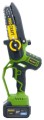 |
|---|---|---|
| Procraft PKA46 | Procraft PKA32Li | |
| Outdated Product | Outdated Product | |
| User reviews | ||
| TOP sellers | ||
The set includes 2 tires and chains (150 and 200 mm). | The set includes 2 tires and chains (150 and 200 mm). | |
| Product type | chainsaw | chainsaw |
| Type | portable | portable |
| Power source | battery | battery |
Motor | ||
| Brushless motor |  | |
| Engine location | transversely | longitudinally |
| No load speed | 4700 rpm | |
Cutting equipment | ||
| Bar/blade size | 200 mm | 200 mm |
| Chain pitch | 1/4 " | 1/4 " |
| Chain speed | 6 m/s | 7 m/s |
Features | ||
| Features | keyless chain tension keyless blade replacement | keyless chain tension keyless blade replacement |
| In box | 2 chains charger case (bag) | 2 chains charger case (bag) |
Battery | ||
| Battery in set | 2 | 1 |
| Battery platform | Proсraft 20V | |
| Battery voltage | 20 В | 20 В |
| Battery capacity | 2 Ah | 4 Ah |
| Battery type | Battery20/4 | |
| Compatible batteries | Procraft Battery20 | |
General | ||
| Noise level | 90 dB | |
| Added to E-Catalog | june 2025 | january 2025 |


Compare Procraft PKA46 and PKA32Li
You may be interested in
Procraft PKA46 often compared


Procraft PKA32Li often compared


Glossary
Engine location
The location of the motor in the electric portable saw (see "Type").
- Longitudinally. The longitudinal arrangement allows you to achieve a good balance, allowing you to work comfortably in different positions; this is especially true for cutting branches from trees and other similar work, where the cutting plane can be located at different angles. In addition, such a tool has a smaller width and a longer length, which can make it easier to work in hard-to-reach places. On the other hand, such saws are more expensive than cross-cut saws.
- Transversely. The transverse arrangement of the engine slightly worsens the balance compared to the longitudinal one and makes it difficult to saw along an inclined plane, at an angle to the vertical. In addition, the length of such saws is noticeably shorter. However, for the simplest work with sawing from top to bottom, they are no worse than longitudinal ones, but they are much cheaper. Yes, and a small length in some cases can also be a virtue.
- Longitudinally. The longitudinal arrangement allows you to achieve a good balance, allowing you to work comfortably in different positions; this is especially true for cutting branches from trees and other similar work, where the cutting plane can be located at different angles. In addition, such a tool has a smaller width and a longer length, which can make it easier to work in hard-to-reach places. On the other hand, such saws are more expensive than cross-cut saws.
- Transversely. The transverse arrangement of the engine slightly worsens the balance compared to the longitudinal one and makes it difficult to saw along an inclined plane, at an angle to the vertical. In addition, the length of such saws is noticeably shorter. However, for the simplest work with sawing from top to bottom, they are no worse than longitudinal ones, but they are much cheaper. Yes, and a small length in some cases can also be a virtue.
No load speed
The highest speed that the saw engine is capable of delivering in normal operation.
We emphasize that this parameter should not be confused with the maximum disk speed (see below) — here we are talking exclusively about the speed of rotation of the motor shaft. It can be specified for all types of saws, not only for models using discs. However, in general, engine speed is more of a reference than really significant information. In fact, it is needed mainly for some specific tool maintenance tasks; when choosing, it is better to focus on indicators that are more “close to life” — engine power, cutting depth, chain / tape speed or disk speed, etc.
We emphasize that this parameter should not be confused with the maximum disk speed (see below) — here we are talking exclusively about the speed of rotation of the motor shaft. It can be specified for all types of saws, not only for models using discs. However, in general, engine speed is more of a reference than really significant information. In fact, it is needed mainly for some specific tool maintenance tasks; when choosing, it is better to focus on indicators that are more “close to life” — engine power, cutting depth, chain / tape speed or disk speed, etc.
Chain speed
The maximum speed of the chain relative to the material that a saw of the appropriate design can provide (see "Device"). Higher speed allows to achieve faster and cleaner cuts, but requires more engine power; low speed, in turn, reduces productivity, but allows you to achieve good traction with a relatively low engine power. More detailed recommendations regarding this parameter can be found in special sources.
Battery in set
Features of the battery saw package, regarding the presence of a battery in the kit or the design of the tool. For cordless tools in general, see "Power Source", and the options in this case may be as follows:
— Missing. The complete absence of batteries in the delivery set — they need to be looked for separately. This is associated with certain troubles, but it also provides important advantages. Firstly, the model and number of purchased batteries can be chosen at your discretion, depending on your needs and low-cost. Secondly, a suitable battery may already be “in the household” — especially when you consider that some manufacturers produce universal batteries suitable for different types of power tools of the same brand. Thanks to all this, this option is extremely popular — in fact, most cordless saws come without batteries.
— 1 battery. "Classic of the genre": one removable battery included. The main advantages of this configuration are low cost and at the same time the ability to use the saw “out of the box” without selecting power sources for it. At the same time, when the charge is exhausted, you will inevitably have to take breaks for charging — or still buy another battery. Thus, this option is relatively rare — sets with two batteries are more common.
— 2 batteries. The most popular option among saws supplied with batteries included. H...owever, it is worth noting that in this category there are two types of tools. The first, and most common, is saws for one battery. In such models, the second battery plays the role of a spare, its presence allows you to extend battery life and minimize interruptions for charging: while one battery is in use, the second can be charged. The second variety of saws in a similar configuration are models that initially operate on two batteries (see "Powered by two batteries") and are supplied with power supplies in the kit; this case is analogous to having one battery in a simpler tool (see above).
— 3 batteries. A very rare configuration option: in the presence of a charger for 2 batteries, it allows you to practically eliminate interruptions in charging, but it is expensive and rarely needed (and in cases where 3 batteries are really needed, the required number of batteries can be purchased separately).
— 4 batteries. A variant found among individual models powered immediately by 2 batteries. Essentially the same as 2 batteries for a tool powered by 1 battery; see above for details.
— Built-in. A battery built into the body of the saw and not designed to be removed and replaced by the user. This design somewhat reduces the overall dimensions of the tool, but does not allow you to quickly change a dead battery to a fresh one — the only option is charging, which can take quite a lot of time. In addition, if the battery fails, the tool will, at best, have to be carried to a service centre, at worst, replaced with a new one. Therefore, this option is used extremely rarely — in separate low-power tools that are not designed for high loads and long-term operation.
— Missing. The complete absence of batteries in the delivery set — they need to be looked for separately. This is associated with certain troubles, but it also provides important advantages. Firstly, the model and number of purchased batteries can be chosen at your discretion, depending on your needs and low-cost. Secondly, a suitable battery may already be “in the household” — especially when you consider that some manufacturers produce universal batteries suitable for different types of power tools of the same brand. Thanks to all this, this option is extremely popular — in fact, most cordless saws come without batteries.
— 1 battery. "Classic of the genre": one removable battery included. The main advantages of this configuration are low cost and at the same time the ability to use the saw “out of the box” without selecting power sources for it. At the same time, when the charge is exhausted, you will inevitably have to take breaks for charging — or still buy another battery. Thus, this option is relatively rare — sets with two batteries are more common.
— 2 batteries. The most popular option among saws supplied with batteries included. H...owever, it is worth noting that in this category there are two types of tools. The first, and most common, is saws for one battery. In such models, the second battery plays the role of a spare, its presence allows you to extend battery life and minimize interruptions for charging: while one battery is in use, the second can be charged. The second variety of saws in a similar configuration are models that initially operate on two batteries (see "Powered by two batteries") and are supplied with power supplies in the kit; this case is analogous to having one battery in a simpler tool (see above).
— 3 batteries. A very rare configuration option: in the presence of a charger for 2 batteries, it allows you to practically eliminate interruptions in charging, but it is expensive and rarely needed (and in cases where 3 batteries are really needed, the required number of batteries can be purchased separately).
— 4 batteries. A variant found among individual models powered immediately by 2 batteries. Essentially the same as 2 batteries for a tool powered by 1 battery; see above for details.
— Built-in. A battery built into the body of the saw and not designed to be removed and replaced by the user. This design somewhat reduces the overall dimensions of the tool, but does not allow you to quickly change a dead battery to a fresh one — the only option is charging, which can take quite a lot of time. In addition, if the battery fails, the tool will, at best, have to be carried to a service centre, at worst, replaced with a new one. Therefore, this option is used extremely rarely — in separate low-power tools that are not designed for high loads and long-term operation.
Battery platform
The name of the battery platform supported by the device. A single battery platform is used to combine various power tools of the same brand into one line (screwdriver, grinder, circular saw, etc.). Devices on the same platform use interchangeable batteries and chargers. Thanks to this, for example, there is no need to select a battery for each individual model of a power tool, because one purchased as a spare battery can be used in various power tools, depending on the situation or as needed. Batteries of the same platform basically differ from each other except perhaps in capacity.
Battery capacity
Capacity of the battery supplied with the saw of the corresponding type (see “Power source”).
In theory, the higher the capacity, the longer the tool can work without recharging/changing the battery. However, in practice everything is not so simple. Firstly, actual autonomy depends not only on the characteristics of the battery, but also on the power consumption of the tool (and this is directly determined by the engine power). Secondly, only batteries with the same rated voltage can be compared by capacity in ampere-hours; if the voltage is different, ampere-hours must be converted to watt-hours using special formulas and using the results already obtained. So it makes sense to compare this parameter only with saw with the same battery voltage and similar motor power. And to assess the actual autonomy, it is better to pay attention to the specified operating time and/or number of cuts (see below for both).
Note that many models allow operation with batteries of different capacities - it is enough that they are compatible in connectors and operating voltage.
In theory, the higher the capacity, the longer the tool can work without recharging/changing the battery. However, in practice everything is not so simple. Firstly, actual autonomy depends not only on the characteristics of the battery, but also on the power consumption of the tool (and this is directly determined by the engine power). Secondly, only batteries with the same rated voltage can be compared by capacity in ampere-hours; if the voltage is different, ampere-hours must be converted to watt-hours using special formulas and using the results already obtained. So it makes sense to compare this parameter only with saw with the same battery voltage and similar motor power. And to assess the actual autonomy, it is better to pay attention to the specified operating time and/or number of cuts (see below for both).
Note that many models allow operation with batteries of different capacities - it is enough that they are compatible in connectors and operating voltage.
Battery type
The model of the standard battery allows you to learn more about its characteristics and will also help you understand which devices it is compatible with and which one should be purchased in case of a malfunction or if there is a need to buy another similar one.
Compatible batteries
Battery models that the saw of the corresponding type is compatible with (see “Power source”). This information will be useful in cases where the battery(ies) must be purchased separately, for example, if the tool does not come with a battery at all, if you need to supplement the original package, or if the existing battery has failed.
Noise level
The noise level produced by the saw during operation. Note that this parameter is rather approximate, because in fact, the “loudness of the work” depends not only on the tool, but also on the material being processed and the characteristics of the environment. Nevertheless, the data given in the characteristics make it possible to assess the comfort of working with the tool. The lower this indicator, the less discomfort the noise will cause, and at high values, even special hearing protection may be needed.
Note that the noise level is usually measured in decibels, and this unit is not linear: for example, a difference of 3 dB corresponds to a difference of 2 times, 10 dB — to 10 times. Therefore, it is easiest to evaluate the noise level using comparative tables. Here is a simplified version of such a table for the range in which modern saws operate:
70 dB — loud conversation of several people in close proximity;
75 dB — a cry in the immediate vicinity;
80 dB — truck engine, mechanical alarm ringing;
85 dB — loud scream;
90 dB — freight car at a distance of 7 – 10 m;
95 dB — subway car at a distance of 7 – 10 m;
100 dB — industrial shop;
110 dB — tractor engine;
120 dB — demolition hammer, thunder from a close lightning strike (pain threshold of auditory perception).
Note that the noise level is usually measured in decibels, and this unit is not linear: for example, a difference of 3 dB corresponds to a difference of 2 times, 10 dB — to 10 times. Therefore, it is easiest to evaluate the noise level using comparative tables. Here is a simplified version of such a table for the range in which modern saws operate:
70 dB — loud conversation of several people in close proximity;
75 dB — a cry in the immediate vicinity;
80 dB — truck engine, mechanical alarm ringing;
85 dB — loud scream;
90 dB — freight car at a distance of 7 – 10 m;
95 dB — subway car at a distance of 7 – 10 m;
100 dB — industrial shop;
110 dB — tractor engine;
120 dB — demolition hammer, thunder from a close lightning strike (pain threshold of auditory perception).