
Comparison Desna-Auto Boks 480 vs Terra Drive 480
Add to comparison | 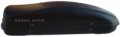 |  |
|---|---|---|
| Desna-Auto Boks 480 | Terra Drive 480 | |
from $136.00 | from $143.20 up to $153.60 | |
| User reviews | ||
| TOP sellers | ||
Double-sided lid opening system. | ||
| Type | box | box |
| Installation | crossbars | crossbars |
Specs | ||
| Load capacity | 100 kg | 70 kg |
| Internal capacity | 480 L | 480 L |
| Opening | one-sided | double-sided |
| Lock |  | |
| Material | plastic | plastic |
| External dimensions (LxWxH) | 196x78x43 cm | 196x78x43 cm |
| Weight | 16 kg | 18 kg |
| Color | ||
| Added to E-Catalog | june 2014 | june 2014 |


Compare Desna-Auto Boks 480 and Terra Drive 480
You may be interested in
My comparisons
Desna-Auto Boks 480 often compared


Glossary
Load capacity
The maximum weight that is allowed to be carried on the boot.
It is definitely not worth exceeding this parameter — even if the structure does not break immediately, this can happen at any time due to off-design loads. And ideally, you should have some margin for carrying capacity — this will give an additional guarantee in case of emergency situations (like hitting a wheel in a hole at speed).
Also note that the weight of the intended load must be supported not only by the boot itself, but also by the crossbars on which it is installed (if this installation option is used, see above). Moreover, the weight of both the cargo and the boot falls on the crossbars, which requires an even greater margin for load for them.
As for specific carrying capacity indicators, in general, the indicator up to 50 kg is considered relatively low, 51 – 75 kg — average, 76 – 100 kg — above average, and in the most "heavy" models, the permissible load weight exceeds 100 kg.
It is definitely not worth exceeding this parameter — even if the structure does not break immediately, this can happen at any time due to off-design loads. And ideally, you should have some margin for carrying capacity — this will give an additional guarantee in case of emergency situations (like hitting a wheel in a hole at speed).
Also note that the weight of the intended load must be supported not only by the boot itself, but also by the crossbars on which it is installed (if this installation option is used, see above). Moreover, the weight of both the cargo and the boot falls on the crossbars, which requires an even greater margin for load for them.
As for specific carrying capacity indicators, in general, the indicator up to 50 kg is considered relatively low, 51 – 75 kg — average, 76 – 100 kg — above average, and in the most "heavy" models, the permissible load weight exceeds 100 kg.
Opening
The parameter determines from how many sides the boot is accessed (see "Type"). From a practical point of view, the choice on the opening side depends on who most often needs access to the contents of the boot. For example, it is most convenient for the driver to get the content from the left-side boot – since the steering wheel is usually located on the left, you do not have to go around the car to open the container. For the same reason, the right-side opening will be optimal for the passenger in the front seat. That is why most of the models have a -two-side opening. One-sided boots mostly have an opening on the left. For full versatility, a rear opening is also provided — in boots with a three-side opening. But this is a very rare and not much in demand option.
Weight
Net weight of the boot in working (fully assembled) form.
The light weight contributes to fuel economy (especially during long-term use) and also makes it easier to transport the boot outside the car (for example, from storage to the car and back). On the other hand, lightening the product leads either to a decrease in its strength and load capacity, or to an increase in cost. So in certain situations, a relatively heavy boot may be the best choice; and when choosing a light model, you should pay special attention to the claimed load capacity.
The light weight contributes to fuel economy (especially during long-term use) and also makes it easier to transport the boot outside the car (for example, from storage to the car and back). On the other hand, lightening the product leads either to a decrease in its strength and load capacity, or to an increase in cost. So in certain situations, a relatively heavy boot may be the best choice; and when choosing a light model, you should pay special attention to the claimed load capacity.