
Comparison Xiaomi Smart Camera C201 vs Xiaomi Smart Camera C301
Add to comparison |  | 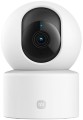 |
|---|---|---|
| Xiaomi Smart Camera C201 | Xiaomi Smart Camera C301 | |
| Compare prices 1 | Compare prices 1 | |
| TOP sellers | ||
. . | ||
| Mount | indoor | indoor |
| Body type | portable with mount | portable (desktop) |
| Connection | Wi-Fi 6 (2.4 GHz) | Wi-Fi 4 (2.4 GHz) |
Camera features | ||
| Design and features | PTZ (managed) private mode light sensor motion sensor microphone feedback speaker mobile app motion alert IR illumination card reader | PTZ (managed) private mode light sensor motion sensor microphone feedback speaker mobile app motion alert IR illumination card reader |
| Max. memory card size | 256 GB | 256 GB |
| Cloud storage | + | + |
| Number of LEDs | 6 | |
| Illumination range | 20 m | |
| Smart features | human detection animal detection | human detection |
| Smart home system integration | Google Home Xiaomi Home (Mi Home) | Google Home Mi Home |
| Voice assistant | Amazon Alexa Google Assistant | Amazon Alexa |
Matrix | ||
| Matrix type | CMOS | CMOS |
| Number of megapixels | 2 MP | 3 MP |
| Video resolution | 1920x1080 px | 2304x1296 px |
Lens | ||
| Focal type | permanent | permanent |
| Horizontal viewing angle | 106 ° | |
General | ||
| Video compression format | H.265 | H.265 |
| Power source | 5 В | 5 В |
| Operating temperature | -10 °C ~ +40 °С | -10 °C ~ +45 °С |
| NAS |  |  |
| Material | plastic | |
| Dimensions | 78x76x115 mm | 78x76x115 mm |
| Color | ||
| Added to E-Catalog | january 2026 | september 2024 |

Compare Xiaomi Smart Camera C201 and Smart Camera C301
Price comparison
You may be interested in
Xiaomi Smart Camera C201 often compared


Xiaomi Smart Camera C301 often compared


Glossary
Body type
The case type describes not only its shape, but also some layout features that can affect the functionality of the product.
— Dome. In accordance with the name, on the body of such a camera there is a characteristic transparent dome, inside of which there is a lens — and, usually, controlled by PTZ (see "Camera capabilities"). The dome not only protects the optics from various adverse factors (such as dirt or moisture), but in many models it also hides the position of the lens; for this it is darkened. Thus, the object of observation does not know where the camera is pointed, which is useful in some cases (for example, when observing a suspicious visitor in a supermarket). At the same time, for a number of reasons, this option is poorly suited for advanced optics with large dimensions.
— Directed. Directional cameras are called cameras in which the lens "looks" along the body. This arrangement allows the use of powerful lenses with good aperture and optical zoom (see below), but the cameras are also quite bulky.
— Directional ( without a lens). A variation of the directional cameras described above, which has interchangeable lenses; The lenses themselves are usually not included in the kit, they must be purchased separately. The meaning of such a configuration is that the user can independently choose optics for specific needs. This categor...y includes mostly fairly advanced models.
— Hidden. This category includes cameras of a small size, which allows them to be installed discreetly — for example, in a wall niche. However, even with an external installation (this option, usually, is also allowed), such devices are also very inconspicuous due to the mentioned compactness. By itself, the body shape of hidden cameras is most often close to directional (see above), although there may be different options.
— Desktop. Cameras designed to be mounted on a tabletop or other flat, horizontal surface. For this, an appropriate stand is provided in the design; it can have movable mounts that allow you to tilt the camera and rotate it from side to side. The main advantage of such cameras is the utmost ease of installation; this, in particular, makes them almost perfect for home use.
— Portable with fastening. In fact, it is a kind of desktop cameras (see the relevant paragraph), in which the stand can be used not only for installation on a horizontal surface, but also for wall mounting. From other "wall" varieties — hidden and directional (see relevant paragraphs) — cameras of this type differ in layout: their body is usually flat, rectangular or oval, and the lens is located on the widest edge (similar to how it is done in mobile phones ). The mount is often made movable, to adjust for tilt and/or rotation.
— Dome. In accordance with the name, on the body of such a camera there is a characteristic transparent dome, inside of which there is a lens — and, usually, controlled by PTZ (see "Camera capabilities"). The dome not only protects the optics from various adverse factors (such as dirt or moisture), but in many models it also hides the position of the lens; for this it is darkened. Thus, the object of observation does not know where the camera is pointed, which is useful in some cases (for example, when observing a suspicious visitor in a supermarket). At the same time, for a number of reasons, this option is poorly suited for advanced optics with large dimensions.
— Directed. Directional cameras are called cameras in which the lens "looks" along the body. This arrangement allows the use of powerful lenses with good aperture and optical zoom (see below), but the cameras are also quite bulky.
— Directional ( without a lens). A variation of the directional cameras described above, which has interchangeable lenses; The lenses themselves are usually not included in the kit, they must be purchased separately. The meaning of such a configuration is that the user can independently choose optics for specific needs. This categor...y includes mostly fairly advanced models.
— Hidden. This category includes cameras of a small size, which allows them to be installed discreetly — for example, in a wall niche. However, even with an external installation (this option, usually, is also allowed), such devices are also very inconspicuous due to the mentioned compactness. By itself, the body shape of hidden cameras is most often close to directional (see above), although there may be different options.
— Desktop. Cameras designed to be mounted on a tabletop or other flat, horizontal surface. For this, an appropriate stand is provided in the design; it can have movable mounts that allow you to tilt the camera and rotate it from side to side. The main advantage of such cameras is the utmost ease of installation; this, in particular, makes them almost perfect for home use.
— Portable with fastening. In fact, it is a kind of desktop cameras (see the relevant paragraph), in which the stand can be used not only for installation on a horizontal surface, but also for wall mounting. From other "wall" varieties — hidden and directional (see relevant paragraphs) — cameras of this type differ in layout: their body is usually flat, rectangular or oval, and the lens is located on the widest edge (similar to how it is done in mobile phones ). The mount is often made movable, to adjust for tilt and/or rotation.
Connection
— LAN. The LAN (Ethernet) interface was originally designed to build wired computer networks. Cameras with such a connector, as a rule, also work as network devices. The advantage of this option over the Wi-Fi described below is a higher actual throughput, over BNC — the ability to connect without additional equipment, directly to a standard network router used for a regular computer network. Of the disadvantages, one can note only the need to pull a wire, but this point is common to all wired connection options. In terms of other features, LAN is the most convenient, due to which it has become widespread in modern surveillance cameras.
— Wi-Fi. Wi-Fi connection was originally a wireless analogue of the LAN described above and was used to connect to computer networks. When working in such networks, this connection is similar to LAN in the sense that it allows the camera to work through a regular router (of course, supporting Wi-Fi). At the same time, Wi-Fi is more convenient due to the absence of wires, but with an abundance of other wireless devices connected to the router, the channel throughput and image quality can significantly deteriorate. Note that recently it has also been possible to use this connection in Direct mode - for direct connection of the camera to another device, for example, connecting the camera to a smartphone (see "Design and capabilities -...P2P"). However, this option is less common.
— BNC. Abbreviation for Bayonet Neill Concelman. A bayonet-type connector, usually used to transmit an analog video signal. Refers to professional video interfaces; special equipment is required to work with such a camera. However, cameras with this type of connector are usually in the lower price range. This is due to the limited connectivity options via BNC — it can only transmit a video signal, which limits the functionality of such cameras compared to models that work via LAN or Wi-Fi (see above).
— Aviation port. It is a round multi-pin connector designed for reliable connection of cameras. Such ports provide a stable connection even in conditions of vibration and high humidity, due to which it is used in car video surveillance systems. Power, video signal and control (for example, for PTZ cameras) can be transmitted through one aviation port, which simplifies installation and reduces the number of required cables.
— 3G / 4G. Connecting to the Internet via 3G / 4G mobile networks; as a rule, this requires installing a SIM card from a mobile operator in the camera. The speed of such networks allows, among other things, to broadcast video in fairly high resolution. So such a connection (of course, if there is coverage) is well suited not only as a backup option in case of Internet outages, but also as the main communication channel if there is no fixed Internet connection at all. A typical example of the second situation is monitoring a country house located “far from civilization”, but in an area with reliable mobile phone reception. In both cases, you can contact the camera via the Internet from anywhere on the planet.
— Wi-Fi. Wi-Fi connection was originally a wireless analogue of the LAN described above and was used to connect to computer networks. When working in such networks, this connection is similar to LAN in the sense that it allows the camera to work through a regular router (of course, supporting Wi-Fi). At the same time, Wi-Fi is more convenient due to the absence of wires, but with an abundance of other wireless devices connected to the router, the channel throughput and image quality can significantly deteriorate. Note that recently it has also been possible to use this connection in Direct mode - for direct connection of the camera to another device, for example, connecting the camera to a smartphone (see "Design and capabilities -...P2P"). However, this option is less common.
— BNC. Abbreviation for Bayonet Neill Concelman. A bayonet-type connector, usually used to transmit an analog video signal. Refers to professional video interfaces; special equipment is required to work with such a camera. However, cameras with this type of connector are usually in the lower price range. This is due to the limited connectivity options via BNC — it can only transmit a video signal, which limits the functionality of such cameras compared to models that work via LAN or Wi-Fi (see above).
— Aviation port. It is a round multi-pin connector designed for reliable connection of cameras. Such ports provide a stable connection even in conditions of vibration and high humidity, due to which it is used in car video surveillance systems. Power, video signal and control (for example, for PTZ cameras) can be transmitted through one aviation port, which simplifies installation and reduces the number of required cables.
— 3G / 4G. Connecting to the Internet via 3G / 4G mobile networks; as a rule, this requires installing a SIM card from a mobile operator in the camera. The speed of such networks allows, among other things, to broadcast video in fairly high resolution. So such a connection (of course, if there is coverage) is well suited not only as a backup option in case of Internet outages, but also as the main communication channel if there is no fixed Internet connection at all. A typical example of the second situation is monitoring a country house located “far from civilization”, but in an area with reliable mobile phone reception. In both cases, you can contact the camera via the Internet from anywhere on the planet.
Number of LEDs
The number of backlight LEDs (see "Design and capabilities") provided in the camera design.
Theoretically, more LEDs provide more power and, accordingly, range (see below) and efficiency of IR illumination or LED illumination. However, in fact, such light sources can vary markedly in performance; in addition, a lot also depends on the features of the camera itself. Therefore, in fact, this indicator is a reference, and when choosing, it makes sense to pay attention to parameters that are closer to practice — in particular, the same backlight range (see below).
Theoretically, more LEDs provide more power and, accordingly, range (see below) and efficiency of IR illumination or LED illumination. However, in fact, such light sources can vary markedly in performance; in addition, a lot also depends on the features of the camera itself. Therefore, in fact, this indicator is a reference, and when choosing, it makes sense to pay attention to parameters that are closer to practice — in particular, the same backlight range (see below).
Illumination range
Operating range of the backlight (see "Design and capabilities") installed in the surveillance camera. This term usually means the maximum distance from the camera to the observed object, at which it is able to provide a relatively high-quality and legible image in the complete absence of other light sources. Of course, the actual backlight range may differ from the claimed one, and these differences are most often in the direction of increase (for example, due to the presence of the same additional light sources). However, if the possibility of shooting with backlight is important for you, you should focus on the claimed range.
Smart features
Functions that automate the process of video monitoring, analysis and response to events, which helps to minimize the human factor and increase the efficiency of video surveillance systems.
— Perimeter protection. This option is used when deploying complex video surveillance systems with a recorder and cameras, combining the expanded functionality of intelligent video analytics capabilities for monitoring boundaries. Perimeter protection can cover various functions, for example, tracking the intersection of virtual lines, the appearance or disappearance of objects in the frame, setting up protected zones, if the boundaries of which are violated, an alarm will be activated, and so on. The full list of features should be specified separately. It is important to note that for the listed functions, analysis of objects in the frame can be used - detection of people, classification of vehicles, etc.
— Definition of a person. Cameras with this function can detect the presence of people in the frame by the characteristic outlines of their silhouettes. Once a person's presence is detected, an alarm can be activated, and moving PTZ cameras can follow people in the frame.
— Definition of a car. The ability of a video surveillance camera to automatically recognize and highlight objects in the frame that are vehicles. This can be useful for monitoring t...raffic, controlling parking, or ensuring the safety of roads within a controlled perimeter. A more advanced implementation of this function is license plate recognition (see below).
— Definition of animal. The function of identifying various “living creatures” in the frame: pets, neighbor’s cats and dogs, alien wild animals, etc. Video surveillance systems with this functionality can be used to minimize false alarms, monitor pets to make sure they are safe and in order, and to solve other similar problems.
— License plate recognition. Special tools that provide additional capabilities for reading license plates. The specific capabilities of such tools may be different in different models; they should be clarified separately. So, some cameras only read letters and numbers and transmit the information to the recorder for further processing. Others have built-in databases, so they can compare the read number with the base and provide various actions depending on the result - for example, send a signal to open the barrier if the number is “allowed”. However, in any case, cameras with this feature are well suited for objects where it is necessary to control the movement of cars - for example, parking lots (including closed service ones).
— Facial recognition. Cameras with this function are able to at least recognize the presence of faces in the frame; but the further use of this data and the special functionality of such cameras may be different. Thus, relatively simple models react only to the very fact of detecting a face, but even this provides quite extensive additional capabilities: focusing on a face, tracking a person in the frame (in moving PTZ cameras), etc. And more advanced cameras can recognize characteristic features faces by which a specific person can be identified. This functionality, among other things, allows the surveillance system to compare the faces “seen” by the camera with the stored database and take various actions based on this - for example, allow or deny access, warn about an unwanted visitor or unauthorized use of a key card, etc. P.
Note that face recognition tools can also be found in recorders to which cameras are connected. However, the presence of such functions in the cameras themselves can also be useful - especially if the existing recorder “does not shine with capabilities” in this regard, or the system does not have a recorder at all (for example, it consists of IP cameras connected via a router to a PC).
— People counting. A function that allows the camera to count the number of people in the frame; the received data is stored in its own memory and can be sent to a recorder or other external device. Note that in most models this feature is combined with the face recognition described above, thanks to which the camera is able not only to count all people in a row, but to recognize tech who are in the frame again. However, people counting can be used for both statistical and security purposes. For example, at large facilities such as office and shopping centers, it allows you to determine whether all visitors who entered the premises left it before the end of working hours.
— Perimeter protection. This option is used when deploying complex video surveillance systems with a recorder and cameras, combining the expanded functionality of intelligent video analytics capabilities for monitoring boundaries. Perimeter protection can cover various functions, for example, tracking the intersection of virtual lines, the appearance or disappearance of objects in the frame, setting up protected zones, if the boundaries of which are violated, an alarm will be activated, and so on. The full list of features should be specified separately. It is important to note that for the listed functions, analysis of objects in the frame can be used - detection of people, classification of vehicles, etc.
— Definition of a person. Cameras with this function can detect the presence of people in the frame by the characteristic outlines of their silhouettes. Once a person's presence is detected, an alarm can be activated, and moving PTZ cameras can follow people in the frame.
— Definition of a car. The ability of a video surveillance camera to automatically recognize and highlight objects in the frame that are vehicles. This can be useful for monitoring t...raffic, controlling parking, or ensuring the safety of roads within a controlled perimeter. A more advanced implementation of this function is license plate recognition (see below).
— Definition of animal. The function of identifying various “living creatures” in the frame: pets, neighbor’s cats and dogs, alien wild animals, etc. Video surveillance systems with this functionality can be used to minimize false alarms, monitor pets to make sure they are safe and in order, and to solve other similar problems.
— License plate recognition. Special tools that provide additional capabilities for reading license plates. The specific capabilities of such tools may be different in different models; they should be clarified separately. So, some cameras only read letters and numbers and transmit the information to the recorder for further processing. Others have built-in databases, so they can compare the read number with the base and provide various actions depending on the result - for example, send a signal to open the barrier if the number is “allowed”. However, in any case, cameras with this feature are well suited for objects where it is necessary to control the movement of cars - for example, parking lots (including closed service ones).
— Facial recognition. Cameras with this function are able to at least recognize the presence of faces in the frame; but the further use of this data and the special functionality of such cameras may be different. Thus, relatively simple models react only to the very fact of detecting a face, but even this provides quite extensive additional capabilities: focusing on a face, tracking a person in the frame (in moving PTZ cameras), etc. And more advanced cameras can recognize characteristic features faces by which a specific person can be identified. This functionality, among other things, allows the surveillance system to compare the faces “seen” by the camera with the stored database and take various actions based on this - for example, allow or deny access, warn about an unwanted visitor or unauthorized use of a key card, etc. P.
Note that face recognition tools can also be found in recorders to which cameras are connected. However, the presence of such functions in the cameras themselves can also be useful - especially if the existing recorder “does not shine with capabilities” in this regard, or the system does not have a recorder at all (for example, it consists of IP cameras connected via a router to a PC).
— People counting. A function that allows the camera to count the number of people in the frame; the received data is stored in its own memory and can be sent to a recorder or other external device. Note that in most models this feature is combined with the face recognition described above, thanks to which the camera is able not only to count all people in a row, but to recognize tech who are in the frame again. However, people counting can be used for both statistical and security purposes. For example, at large facilities such as office and shopping centers, it allows you to determine whether all visitors who entered the premises left it before the end of working hours.
Smart home system integration
Smart home systems that the camera is compatible with.
The general principle of all such systems is to combine various home electronics and household electrical appliances into a single complex so that all these devices can interact with each other and jointly respond to various events. As for surveillance cameras specifically, their functions in a “smart home” are mainly related to reacting to movement in the frame and broadcasting video. For example, a compatible camera can send a notification to the user’s smartphone when a motion sensor is triggered, or transmit video to a TV integrated into the home network.
Nowadays you can find different smart home platforms, the most popular are Apple HomeKit, Google Home, Amazon Alexa. However, there are other options for branded systems - as a rule, they are sold by manufacturers for their smart home and video surveillance devices. To fully work in a particular system, it is worth using cameras that have expressly stated appropriate compatibility. Also, when purchasing a compatible model, it would not hurt to clarify its specific functionality related to the “smart home”.
The general principle of all such systems is to combine various home electronics and household electrical appliances into a single complex so that all these devices can interact with each other and jointly respond to various events. As for surveillance cameras specifically, their functions in a “smart home” are mainly related to reacting to movement in the frame and broadcasting video. For example, a compatible camera can send a notification to the user’s smartphone when a motion sensor is triggered, or transmit video to a TV integrated into the home network.
Nowadays you can find different smart home platforms, the most popular are Apple HomeKit, Google Home, Amazon Alexa. However, there are other options for branded systems - as a rule, they are sold by manufacturers for their smart home and video surveillance devices. To fully work in a particular system, it is worth using cameras that have expressly stated appropriate compatibility. Also, when purchasing a compatible model, it would not hurt to clarify its specific functionality related to the “smart home”.
Voice assistant
A software assistant that accepts natural phrases and controls the smart home, multimedia, and services via speakers, hubs, TVs, and smartphones. Its strength is context and routines: with a single command it can dim the lights, close the curtains, turn on the heater, and report sensor status, and in case of an alarm it will announce the event and send a notification. Unlike a simple voice remote, the assistant understands natural speech, works with multiple devices at once, and supports routines like “I’m leaving” or “Good morning.” The most popular voice assistants today are Amazon Alexa, Apple Siri, and Google Assistant.
Number of megapixels
Camera sensor resolution in megapixels (millions of pixels).
The higher the resolution of the matrix, the higher the video resolution can be (see below), the more detailed the image is capable of providing the camera. At the same time, note that as the number of megapixels increases (without changing the size of the matrix), the size of each individual pixel decreases, which increases the likelihood of noise and deterioration in the overall image quality. Therefore, high resolution in itself is not necessarily a sign of high quality — a lot depends on other things, for example, on the size of the matrix (see above).
As for specific values, in the most modest matrices it does not exceed 1.3 MP, which corresponds to the maximum HD resolution. 2 MP sensors allow for already Full HD resolution (usually 1920x1080 or 1600x1200), 3 MP, 4 MP, 5 MP and 6 MP are capable of better resolution, but still do not reach 4K, which is typical for 8 MP.
The higher the resolution of the matrix, the higher the video resolution can be (see below), the more detailed the image is capable of providing the camera. At the same time, note that as the number of megapixels increases (without changing the size of the matrix), the size of each individual pixel decreases, which increases the likelihood of noise and deterioration in the overall image quality. Therefore, high resolution in itself is not necessarily a sign of high quality — a lot depends on other things, for example, on the size of the matrix (see above).
As for specific values, in the most modest matrices it does not exceed 1.3 MP, which corresponds to the maximum HD resolution. 2 MP sensors allow for already Full HD resolution (usually 1920x1080 or 1600x1200), 3 MP, 4 MP, 5 MP and 6 MP are capable of better resolution, but still do not reach 4K, which is typical for 8 MP.
Video resolution
The maximum video resolution that the camera can capture.
The higher the resolution of the video, the more details you can see on it, the less details will be blurry. On the other hand, high resolution means large volumes of video materials, which, accordingly, requires capacious media for their storage and fast communication channels for broadcasting video in real time. Yes, and this indicator significantly affects the cost of the camera.
The higher the resolution of the video, the more details you can see on it, the less details will be blurry. On the other hand, high resolution means large volumes of video materials, which, accordingly, requires capacious media for their storage and fast communication channels for broadcasting video in real time. Yes, and this indicator significantly affects the cost of the camera.