
Comparison Ezviz C6N vs Imou Ranger 2
Add to comparison | 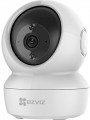 | 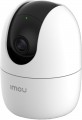 |
|---|---|---|
| Ezviz C6N | Imou Ranger 2 | |
from $109.99 | from $45.00 | |
| TOP sellers | ||
Smart tracking of an object that is moving. Alarm (siren) when motion is detected. Swivel design. Night shooting. Connection via LAN or Wi-Fi. Two-way audio communication. Silicone camera caps are sold separately. | ||
| Mount | indoor | indoor |
| Body type | dome | portable (desktop) |
| Connection | LAN Wi-Fi 4 (2.4 GHz) | LAN Wi-Fi |
Camera features | ||
| Design and features | PTZ (managed) light sensor motion sensor sound detection microphone feedback speaker mobile app motion alert IR illumination card reader | PTZ (managed) light sensor motion sensor sound detection microphone feedback speaker mobile app motion alert IR illumination card reader |
| Max. memory card size | 256 GB | 256 GB |
| Cloud storage | + | + |
| Illumination range | 10 m | 10 m |
Matrix | ||
| Matrix type | CMOS | CMOS |
| Matrix size | 1/4" | 1/2.7" |
| Number of megapixels | 2 MP | 2 MP |
| Video resolution | 1920x1080 px | 1920x1080 px |
| Frame rate | 15 fps | 25 fps |
| Aperture | f/2.4 | |
| Backlight compensation | DWDR | |
Lens | ||
| Focal type | permanent | permanent |
| Focal length | 4 mm | 3.6 mm |
| Horizontal viewing angle | 75 ° | 93 ° |
| Vertical viewing angle | 45 ° | 48 ° |
General | ||
| Video compression format | H.264 | H.264, H.265 |
| Power source | 5 В | 5 В |
| Power consumption | 5 W | |
| Operating temperature | -10 °C ~ +45 °С | -10 °C ~ +40 °С |
| Maximum humidity | 95 % | 95 % |
| Protection level | IP55 | |
| ONVIF |  |  |
| Material | plastic | plastic |
| Dimensions | 119x88x88 mm | 106x77x77 mm |
| Weight | 218 g | 238 g |
| Color | ||
| Added to E-Catalog | june 2022 | february 2020 |


Compare Ezviz C6N and Imou Ranger 2
You may be interested in
Ezviz C6N often compared


Imou Ranger 2 often compared


Glossary
Body type
The case type describes not only its shape, but also some layout features that can affect the functionality of the product.
— Dome. In accordance with the name, on the body of such a camera there is a characteristic transparent dome, inside of which there is a lens — and, usually, controlled by PTZ (see "Camera capabilities"). The dome not only protects the optics from various adverse factors (such as dirt or moisture), but in many models it also hides the position of the lens; for this it is darkened. Thus, the object of observation does not know where the camera is pointed, which is useful in some cases (for example, when observing a suspicious visitor in a supermarket). At the same time, for a number of reasons, this option is poorly suited for advanced optics with large dimensions.
— Directed. Directional cameras are called cameras in which the lens "looks" along the body. This arrangement allows the use of powerful lenses with good aperture and optical zoom (see below), but the cameras are also quite bulky.
— Directional ( without a lens). A variation of the directional cameras described above, which has interchangeable lenses; The lenses themselves are usually not included in the kit, they must be purchased separately. The meaning of such a configuration is that the user can independently choose optics for specific needs. This categor...y includes mostly fairly advanced models.
— Hidden. This category includes cameras of a small size, which allows them to be installed discreetly — for example, in a wall niche. However, even with an external installation (this option, usually, is also allowed), such devices are also very inconspicuous due to the mentioned compactness. By itself, the body shape of hidden cameras is most often close to directional (see above), although there may be different options.
— Desktop. Cameras designed to be mounted on a tabletop or other flat, horizontal surface. For this, an appropriate stand is provided in the design; it can have movable mounts that allow you to tilt the camera and rotate it from side to side. The main advantage of such cameras is the utmost ease of installation; this, in particular, makes them almost perfect for home use.
— Portable with fastening. In fact, it is a kind of desktop cameras (see the relevant paragraph), in which the stand can be used not only for installation on a horizontal surface, but also for wall mounting. From other "wall" varieties — hidden and directional (see relevant paragraphs) — cameras of this type differ in layout: their body is usually flat, rectangular or oval, and the lens is located on the widest edge (similar to how it is done in mobile phones ). The mount is often made movable, to adjust for tilt and/or rotation.
— Dome. In accordance with the name, on the body of such a camera there is a characteristic transparent dome, inside of which there is a lens — and, usually, controlled by PTZ (see "Camera capabilities"). The dome not only protects the optics from various adverse factors (such as dirt or moisture), but in many models it also hides the position of the lens; for this it is darkened. Thus, the object of observation does not know where the camera is pointed, which is useful in some cases (for example, when observing a suspicious visitor in a supermarket). At the same time, for a number of reasons, this option is poorly suited for advanced optics with large dimensions.
— Directed. Directional cameras are called cameras in which the lens "looks" along the body. This arrangement allows the use of powerful lenses with good aperture and optical zoom (see below), but the cameras are also quite bulky.
— Directional ( without a lens). A variation of the directional cameras described above, which has interchangeable lenses; The lenses themselves are usually not included in the kit, they must be purchased separately. The meaning of such a configuration is that the user can independently choose optics for specific needs. This categor...y includes mostly fairly advanced models.
— Hidden. This category includes cameras of a small size, which allows them to be installed discreetly — for example, in a wall niche. However, even with an external installation (this option, usually, is also allowed), such devices are also very inconspicuous due to the mentioned compactness. By itself, the body shape of hidden cameras is most often close to directional (see above), although there may be different options.
— Desktop. Cameras designed to be mounted on a tabletop or other flat, horizontal surface. For this, an appropriate stand is provided in the design; it can have movable mounts that allow you to tilt the camera and rotate it from side to side. The main advantage of such cameras is the utmost ease of installation; this, in particular, makes them almost perfect for home use.
— Portable with fastening. In fact, it is a kind of desktop cameras (see the relevant paragraph), in which the stand can be used not only for installation on a horizontal surface, but also for wall mounting. From other "wall" varieties — hidden and directional (see relevant paragraphs) — cameras of this type differ in layout: their body is usually flat, rectangular or oval, and the lens is located on the widest edge (similar to how it is done in mobile phones ). The mount is often made movable, to adjust for tilt and/or rotation.
Connection
— LAN. The LAN (Ethernet) interface was originally designed to build wired computer networks. Cameras with such a connector, as a rule, also work as network devices. The advantage of this option over the Wi-Fi described below is a higher actual throughput, over BNC — the ability to connect without additional equipment, directly to a standard network router used for a regular computer network. Of the disadvantages, one can note only the need to pull a wire, but this point is common to all wired connection options. In terms of other features, LAN is the most convenient, due to which it has become widespread in modern surveillance cameras.
— Wi-Fi. Wi-Fi connection was originally a wireless analogue of the LAN described above and was used to connect to computer networks. When working in such networks, this connection is similar to LAN in the sense that it allows the camera to work through a regular router (of course, supporting Wi-Fi). At the same time, Wi-Fi is more convenient due to the absence of wires, but with an abundance of other wireless devices connected to the router, the channel throughput and image quality can significantly deteriorate. Note that recently it has also been possible to use this connection in Direct mode - for direct connection of the camera to another device, for example, connecting the camera to a smartphone (see "Design and capabilities -...P2P"). However, this option is less common.
— BNC. Abbreviation for Bayonet Neill Concelman. A bayonet-type connector, usually used to transmit an analog video signal. Refers to professional video interfaces; special equipment is required to work with such a camera. However, cameras with this type of connector are usually in the lower price range. This is due to the limited connectivity options via BNC — it can only transmit a video signal, which limits the functionality of such cameras compared to models that work via LAN or Wi-Fi (see above).
— Aviation port. It is a round multi-pin connector designed for reliable connection of cameras. Such ports provide a stable connection even in conditions of vibration and high humidity, due to which it is used in car video surveillance systems. Power, video signal and control (for example, for PTZ cameras) can be transmitted through one aviation port, which simplifies installation and reduces the number of required cables.
— 3G / 4G. Connecting to the Internet via 3G / 4G mobile networks; as a rule, this requires installing a SIM card from a mobile operator in the camera. The speed of such networks allows, among other things, to broadcast video in fairly high resolution. So such a connection (of course, if there is coverage) is well suited not only as a backup option in case of Internet outages, but also as the main communication channel if there is no fixed Internet connection at all. A typical example of the second situation is monitoring a country house located “far from civilization”, but in an area with reliable mobile phone reception. In both cases, you can contact the camera via the Internet from anywhere on the planet.
— Wi-Fi. Wi-Fi connection was originally a wireless analogue of the LAN described above and was used to connect to computer networks. When working in such networks, this connection is similar to LAN in the sense that it allows the camera to work through a regular router (of course, supporting Wi-Fi). At the same time, Wi-Fi is more convenient due to the absence of wires, but with an abundance of other wireless devices connected to the router, the channel throughput and image quality can significantly deteriorate. Note that recently it has also been possible to use this connection in Direct mode - for direct connection of the camera to another device, for example, connecting the camera to a smartphone (see "Design and capabilities -...P2P"). However, this option is less common.
— BNC. Abbreviation for Bayonet Neill Concelman. A bayonet-type connector, usually used to transmit an analog video signal. Refers to professional video interfaces; special equipment is required to work with such a camera. However, cameras with this type of connector are usually in the lower price range. This is due to the limited connectivity options via BNC — it can only transmit a video signal, which limits the functionality of such cameras compared to models that work via LAN or Wi-Fi (see above).
— Aviation port. It is a round multi-pin connector designed for reliable connection of cameras. Such ports provide a stable connection even in conditions of vibration and high humidity, due to which it is used in car video surveillance systems. Power, video signal and control (for example, for PTZ cameras) can be transmitted through one aviation port, which simplifies installation and reduces the number of required cables.
— 3G / 4G. Connecting to the Internet via 3G / 4G mobile networks; as a rule, this requires installing a SIM card from a mobile operator in the camera. The speed of such networks allows, among other things, to broadcast video in fairly high resolution. So such a connection (of course, if there is coverage) is well suited not only as a backup option in case of Internet outages, but also as the main communication channel if there is no fixed Internet connection at all. A typical example of the second situation is monitoring a country house located “far from civilization”, but in an area with reliable mobile phone reception. In both cases, you can contact the camera via the Internet from anywhere on the planet.
Matrix size
The size of the matrix installed in the surveillance camera (diagonally).
In general, larger sensors (with the same resolution and sensor type) are considered more advanced: they get more light, which has a positive effect on image quality (especially in low light). On the other hand, increasing the size affects the cost of the entire device; and in some cases (for example, if the camera is not planned to be used in twilight and darkness), a relatively small sensor may be quite suitable.
As for specific dimensions, the most modest cameras in terms of this indicator have matrices of 1/4 "or less. Models with sensors of 1/3.8" - 1/3" and 1/2.9" - 1/2" are very popular, these values can be called average. And in advanced devices, diagonals and more than 1/2 "(up to 1/1.7") are found.
In general, larger sensors (with the same resolution and sensor type) are considered more advanced: they get more light, which has a positive effect on image quality (especially in low light). On the other hand, increasing the size affects the cost of the entire device; and in some cases (for example, if the camera is not planned to be used in twilight and darkness), a relatively small sensor may be quite suitable.
As for specific dimensions, the most modest cameras in terms of this indicator have matrices of 1/4 "or less. Models with sensors of 1/3.8" - 1/3" and 1/2.9" - 1/2" are very popular, these values can be called average. And in advanced devices, diagonals and more than 1/2 "(up to 1/1.7") are found.
Frame rate
The maximum frame rate in the video captured by the camera.
The higher the frame rate, the clearer the image, the less noticeable blurring when moving in the frame (especially fast). On the other hand, this indicator affects the amount of information recorded during shooting, as well as the cost of the camera itself. Therefore, it makes sense to specifically look for a video surveillance camera with high-speed shooting(45 fps and higher) only if a clear recording of fast moving objects is important to you.
The higher the frame rate, the clearer the image, the less noticeable blurring when moving in the frame (especially fast). On the other hand, this indicator affects the amount of information recorded during shooting, as well as the cost of the camera itself. Therefore, it makes sense to specifically look for a video surveillance camera with high-speed shooting(45 fps and higher) only if a clear recording of fast moving objects is important to you.
Aperture
Aperture of the lens installed in the camera.
Aperture characterizes the degree of attenuation of the light flux when passing from the front lens of the lens to the matrix. It is denoted as the ratio of the diameter of the active aperture of the lens to the focal length, while the size of the active aperture is designated as f and is taken as a unit — for example, f / 1.4 or f / 2.0. Moreover, the smaller the number in the designation, the higher the aperture (in our example, the second lens will be darker than the first). And for lenses with a variable focal length (see "Focal"), the actual aperture, usually, changes with a change in focal length; for such models, either the range of aperture values, or its maximum value, can be indicated.
By itself, this parameter characterizes, first of all, how light the image taken through the lens turns out, all other things being equal. High values are important, first of all, when shooting in low light conditions: a fast lens allows you to get a fairly high-quality image without increasing the sensitivity of the matrix, which is fraught with noise and “blurring” of the picture. On the other hand, the actual quality of camera operation (including in dark conditions) also depends on many other factors — the type and size of the matrix, signal processing features, etc. Therefore, aperture in most cases is more of a reference than a practically significant parameter.
Aperture characterizes the degree of attenuation of the light flux when passing from the front lens of the lens to the matrix. It is denoted as the ratio of the diameter of the active aperture of the lens to the focal length, while the size of the active aperture is designated as f and is taken as a unit — for example, f / 1.4 or f / 2.0. Moreover, the smaller the number in the designation, the higher the aperture (in our example, the second lens will be darker than the first). And for lenses with a variable focal length (see "Focal"), the actual aperture, usually, changes with a change in focal length; for such models, either the range of aperture values, or its maximum value, can be indicated.
By itself, this parameter characterizes, first of all, how light the image taken through the lens turns out, all other things being equal. High values are important, first of all, when shooting in low light conditions: a fast lens allows you to get a fairly high-quality image without increasing the sensitivity of the matrix, which is fraught with noise and “blurring” of the picture. On the other hand, the actual quality of camera operation (including in dark conditions) also depends on many other factors — the type and size of the matrix, signal processing features, etc. Therefore, aperture in most cases is more of a reference than a practically significant parameter.
Backlight compensation
— WDR (Wide Dynamic Range) — extended dynamic range. WDR technology combines several frames with different exposures into one picture, as a result, dark areas are brightened, and overexposures are darkened, and the output is a picture with extremely uniform lighting. The true wide dynamic range technology is called True-WDR and it is implemented in the optical circuit at the hardware level, a special microprocessor is responsible for creating and mixing exposures. A more affordable alternative to wide dynamic range is Digital-WDR technology, which equalizes lighting through software algorithms.
— DWDR (Digital Wide Dynamic Range) — extended dynamic range technology based on software brightening algorithms. DWDR brightens too dark areas of the frame, which can be completely blurred against the background of light areas. Digital brightening allows you to noticeably improve the quality of shooting in contrasting lighting conditions. Digital WDR cameras are noticeably cheaper than true True-WDR optics. Of course, the quality of digital brightening is inferior to True-WDR.
— BLC (Back Light Compensation) — backlight compensation technology. This system is based on the work of digital signal processors DSP. So, the device, relatively speaking, "breaks" the frame into many segments, making its own adjustments to each of them. Backlight compensation brightens dark areas of...the frame well. The main disadvantage of the technology is the increase in the brightness of the already bright areas of the frame, due to which overexposure may appear in the picture.
— WDR+BLC. The camcorder supports several lightening technologies at once, each of which is described in more detail above. Immediately, we note that the combination of WDR + BLC allows you to achieve an extremely clear and clear picture in almost any lighting conditions, from extreme contrast to insufficient and excessively bright.
— DWDR+BLC. The device supports two popular clarification technologies at once, each of which is described in more detail above. The presence of DWDR + BLC technologies allows the camera to effectively brighten the dark areas of the frame. Such video cameras have proven themselves well when working in low light conditions.
— DWDR (Digital Wide Dynamic Range) — extended dynamic range technology based on software brightening algorithms. DWDR brightens too dark areas of the frame, which can be completely blurred against the background of light areas. Digital brightening allows you to noticeably improve the quality of shooting in contrasting lighting conditions. Digital WDR cameras are noticeably cheaper than true True-WDR optics. Of course, the quality of digital brightening is inferior to True-WDR.
— BLC (Back Light Compensation) — backlight compensation technology. This system is based on the work of digital signal processors DSP. So, the device, relatively speaking, "breaks" the frame into many segments, making its own adjustments to each of them. Backlight compensation brightens dark areas of...the frame well. The main disadvantage of the technology is the increase in the brightness of the already bright areas of the frame, due to which overexposure may appear in the picture.
— WDR+BLC. The camcorder supports several lightening technologies at once, each of which is described in more detail above. Immediately, we note that the combination of WDR + BLC allows you to achieve an extremely clear and clear picture in almost any lighting conditions, from extreme contrast to insufficient and excessively bright.
— DWDR+BLC. The device supports two popular clarification technologies at once, each of which is described in more detail above. The presence of DWDR + BLC technologies allows the camera to effectively brighten the dark areas of the frame. Such video cameras have proven themselves well when working in low light conditions.
Focal length
Focal length of the camera lens.
The focal length is such a distance from the lens to the matrix, at which a clear image is obtained on the matrix (when the lens is focused to infinity). The viewing angles of the lens primarily depend on this indicator (see below): the smaller it is, the wider the viewing angles and the smaller the objects in the frame (and vice versa). At the same time, it should be noted that the actual viewing angle is determined not only by the focal length, but also by the size of the matrix (see above). In fact, this means that with different sizes of matrices, lenses with the same focal length will have different working angles. Therefore, only cameras with the same matrix size can be compared with each other according to this indicator. Among CCTV cameras, lenses with a focal length of 2.8 mm, 3.6 mm, 4 mm and 6 mm are considered popular.
In models with a variable focal length (see above), in this case, the range from the minimum to the maximum distance is indicated. Also, using these data, you can derive the optical magnification factor of such a lens: for this, the maximum value must be divided by the maximum (for more details, see below).
The focal length is such a distance from the lens to the matrix, at which a clear image is obtained on the matrix (when the lens is focused to infinity). The viewing angles of the lens primarily depend on this indicator (see below): the smaller it is, the wider the viewing angles and the smaller the objects in the frame (and vice versa). At the same time, it should be noted that the actual viewing angle is determined not only by the focal length, but also by the size of the matrix (see above). In fact, this means that with different sizes of matrices, lenses with the same focal length will have different working angles. Therefore, only cameras with the same matrix size can be compared with each other according to this indicator. Among CCTV cameras, lenses with a focal length of 2.8 mm, 3.6 mm, 4 mm and 6 mm are considered popular.
In models with a variable focal length (see above), in this case, the range from the minimum to the maximum distance is indicated. Also, using these data, you can derive the optical magnification factor of such a lens: for this, the maximum value must be divided by the maximum (for more details, see below).
Horizontal viewing angle
Horizontal viewing angle of the surveillance camera. For models with a variable value, the maximum value is indicated, since it is the width of the image that is important, and when zooming in, the zoom factor is more important than the angle. This paragraph also indicates the general angle of view for models with a circular field of view – in particular, cameras with a fisheye lens (see above)
The wider the viewing angle, the more space the camera captures and at the same time, the smaller the images of individual objects in the frame are obtained. Therefore, when choosing by this parameter, it is worth deciding what is more important – the ability to view a large scene or the visibility of small details in a relatively narrow field of view. Also note that with a wide field of view (100° or more), characteristic distortions can be observed at the edges of the frame, and the wider the angle, the more pronounced they are. This phenomenon can be eliminated by panoramic shooting (see "Design and features"), but this feature, in turn, complicates and increases the cost of the camera.
The wider the viewing angle, the more space the camera captures and at the same time, the smaller the images of individual objects in the frame are obtained. Therefore, when choosing by this parameter, it is worth deciding what is more important – the ability to view a large scene or the visibility of small details in a relatively narrow field of view. Also note that with a wide field of view (100° or more), characteristic distortions can be observed at the edges of the frame, and the wider the angle, the more pronounced they are. This phenomenon can be eliminated by panoramic shooting (see "Design and features"), but this feature, in turn, complicates and increases the cost of the camera.
Vertical viewing angle
Vertical viewing angle of the surveillance camera. In models with a variable value, the maximum is indicated, and the angle when zooming is not so important.
The wider the viewing angle, the more space the camera captures and at the same time, the smaller the images of individual objects in the frame are obtained. Therefore, when choosing by this parameter, it is worth deciding what is more important – the ability to view a large scene or the visibility of small details in a relatively narrow field of view.
The wider the viewing angle, the more space the camera captures and at the same time, the smaller the images of individual objects in the frame are obtained. Therefore, when choosing by this parameter, it is worth deciding what is more important – the ability to view a large scene or the visibility of small details in a relatively narrow field of view.