
Comparison ID-COOLING SE-214-XT Plus vs ID-COOLING SE-214-XT Basic
Add to comparison |  | 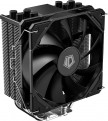 |
|---|---|---|
| ID-COOLING SE-214-XT Plus | ID-COOLING SE-214-XT Basic | |
from $17.99 | Outdated Product | |
| TOP sellers | ||
Main specs | ||
| Features | for CPU | for CPU |
| Product type | air cooler | air cooler |
| Air flow direction | sideways (dispersion) | sideways (dispersion) |
| Max. TDP | 200 W | 180 W |
Fan | ||
| Number of fans | 2 | 1 |
| Fan size | 120 mm | 120 mm |
| Fan thickness | 25 mm | 25 mm |
| Bearing | hydraulic bearing | hydraulic bearing |
| Min. RPM | 700 rpm | 700 rpm |
| Max. RPM | 1800 rpm | 1800 rpm |
| Speed controller | auto (PWM) | auto (PWM) |
| Max. air flow | 76.16 CFM | 76.16 CFM |
| Static pressure | 2.15 mm H2O | 2.16 mm H2O |
| Starting voltage | 7 В | 7 В |
| replaceable |  | |
| Min noise level | 15 dB | |
| Noise level | 35 dB | 35 dB |
| Power source | 4-pin | 4-pin |
Radiator | ||
| Heat pipes | 4 | 4 |
| Heatpipe contact | straight | straight |
| Heatsink material | aluminium / copper | aluminium / copper |
| Plate material | aluminum | aluminum |
| Socket | AMD AM4 AMD AM5 Intel 1150 Intel 1155/1156 Intel 1151 / 1151 v2 Intel 1200 Intel 1700 / 1851 | AMD AM4 AMD AM5 Intel 1150 Intel 1155/1156 Intel 1151 / 1151 v2 Intel 1200 Intel 1700 / 1851 |
General | ||
| Mount type | bilateral (backplate) | bilateral (backplate) |
| Dimensions | 124x98x150 mm | 124x72x150 mm |
| Height | 150 mm | 150 mm |
| Weight | 650 g | 500 g |
| Added to E-Catalog | march 2025 | april 2024 |


Compare ID-COOLING SE-214-XT Plus and SE-214-XT Basic
You may be interested in
ID-COOLING SE-214-XT Basic often compared


Glossary
Max. TDP
The maximum TDP provided by the cooling system. Note that this parameter is indicated only for solutions equipped with heatsinks (see "Type"); for separately made fans, the efficiency is determined by other parameters, primarily by the air flow values (see above).
TDP can be described as the amount of heat that a cooling system is able to remove from a serviced component. Accordingly, for the normal operation of the entire system, it is necessary that the TDP of the cooling system is not lower than the heat dissipation of this component (heat dissipation data is usually indicated in the detailed characteristics of the components). And it is best to select coolers with a power margin of at least 20 – 25% — this will give an additional guarantee in case of forced operation modes and emergency situations (including clogging of the case and reduced air exchange efficiency).
As for specific numbers, the most modest modern cooling systems provide TDP up to 100 W, the most advanced — up to 250 W and even higher.
TDP can be described as the amount of heat that a cooling system is able to remove from a serviced component. Accordingly, for the normal operation of the entire system, it is necessary that the TDP of the cooling system is not lower than the heat dissipation of this component (heat dissipation data is usually indicated in the detailed characteristics of the components). And it is best to select coolers with a power margin of at least 20 – 25% — this will give an additional guarantee in case of forced operation modes and emergency situations (including clogging of the case and reduced air exchange efficiency).
As for specific numbers, the most modest modern cooling systems provide TDP up to 100 W, the most advanced — up to 250 W and even higher.
Number of fans
The number of fans in the design of the cooling system. More fans provide higher efficiency (all else being equal); on the other hand, the dimensions and the noise generated during operation also increase accordingly. Also, note that other things being equal, a smaller number of large fans is considered more advanced than numerous small ones; see "Fan diameter" for details.
Static pressure
The maximum static air pressure generated by the fan during operation.
This parameter is measured as follows: if the fan is installed on a blind pipe, from which there is no air outlet, and turned on for blowing, then the pressure reached in the pipe will correspond to the static one. In fact, this parameter determines the overall efficiency of the fan: the higher the static pressure (ceteris paribus), the easier it is for the fan to “push” the required amount of air through a space with high resistance, for example, through narrow slots of a radiator or through a case full of components.
Also, this parameter is used for some specific calculations, however, these calculations are quite complex and, usually, are not necessary for an ordinary user — they are associated with nuances that are relevant mainly for computer enthusiasts. You can read more about this in special sources.
This parameter is measured as follows: if the fan is installed on a blind pipe, from which there is no air outlet, and turned on for blowing, then the pressure reached in the pipe will correspond to the static one. In fact, this parameter determines the overall efficiency of the fan: the higher the static pressure (ceteris paribus), the easier it is for the fan to “push” the required amount of air through a space with high resistance, for example, through narrow slots of a radiator or through a case full of components.
Also, this parameter is used for some specific calculations, however, these calculations are quite complex and, usually, are not necessary for an ordinary user — they are associated with nuances that are relevant mainly for computer enthusiasts. You can read more about this in special sources.
Min noise level
The lowest noise level produced by the cooling system during operation.
This parameter is indicated only for those models that have capacity control and can operate at reduced power. Accordingly, the minimum noise level is the noise level in the most “quiet” mode, the volume of work, which this model cannot be less than.
These data will be useful, first of all, to those who are trying to reduce the noise level as much as possible and, as they say, “fight for every decibel”. However, it is worth noting here that in many models the minimum values are about 15 dB, and in the quietest — only 10 – 11 dB. This volume is comparable to the rustling of leaves and is practically lost against the background of ambient noise even in a residential area at night, not to mention louder conditions, and the difference between 11 and 18 dB in this case is not significant for human perception. A comparison table for sound starting from 20 dB is given in the "Noise level" section below.
This parameter is indicated only for those models that have capacity control and can operate at reduced power. Accordingly, the minimum noise level is the noise level in the most “quiet” mode, the volume of work, which this model cannot be less than.
These data will be useful, first of all, to those who are trying to reduce the noise level as much as possible and, as they say, “fight for every decibel”. However, it is worth noting here that in many models the minimum values are about 15 dB, and in the quietest — only 10 – 11 dB. This volume is comparable to the rustling of leaves and is practically lost against the background of ambient noise even in a residential area at night, not to mention louder conditions, and the difference between 11 and 18 dB in this case is not significant for human perception. A comparison table for sound starting from 20 dB is given in the "Noise level" section below.
Dimensions
General dimensions of the cooling system. For water systems (see "Type"), this paragraph indicates the size of the external radiator (the dimensions of the water block in such devices are small, and there is no need to specify them in particular).
In general, this is a fairly obvious parameter. We only note that for case fans (see ibid.), the thickness is of particular importance — it directly depends on how much space the device will take up inside the system unit. At the same time, it is customary to refer to fans with a thin case for models in which this size does not exceed 20 mm.
In general, this is a fairly obvious parameter. We only note that for case fans (see ibid.), the thickness is of particular importance — it directly depends on how much space the device will take up inside the system unit. At the same time, it is customary to refer to fans with a thin case for models in which this size does not exceed 20 mm.