
Comparison HyperX Alloy FPS Red Switch vs Qcyber Dominator
Add to comparison | 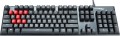 | 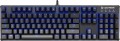 |
|---|---|---|
| HyperX Alloy FPS Red Switch | Qcyber Dominator | |
from $29.95 | Outdated Product | |
| TOP sellers | ||
| Connection | wired | wired |
| Cable length | 1.8 m | 1.5 m |
| Type | for game | for game |
| Form factor | 100% (full size) | 100% (full size) |
| Layout | ANSI | ANSI |
Keyboard | ||
| Key profile | high | high |
| Key type | classic type | classic type |
| Switch technology | mechanical | mechanical |
| Switches | Cherry MX Red (Linear) | Kailh Blue (Clicky) |
| Fn key |  | |
Features | ||
| Cyrillic colour | transparent | transparent |
| Volume control | fn | fn |
| Game mode | | |
| USB hub | 1xUSB-A | |
| Lighting | red | blue |
| Lighting effects | + | + |
Connection and power supply | ||
| Cable | USB-A removable braided | USB-A braided |
General | ||
| Skeleton keyboard | | |
| Replacement keys included | |  |
| Size | 442x129x36 mm | 436x134x42 mm |
| Weight | 1049 g | 1390 g |
| Color | ||
| Added to E-Catalog | august 2016 | june 2016 |


Compare HyperX Alloy FPS and Qcyber Dominator
You may be interested in
HyperX Alloy FPS often compared


Glossary
Cable length
The length of the cable that the keyboard is equipped with for wired connection (see "Connection type").
When choosing this parameter, you should first of all take into account the distance from the device to the connection port: a cable that is too short may simply not reach the connector, and a cable that is too long may get confused at hand and create inconvenience. As for specific values, the reference length is 1.8 m. However, there are cables both shorter and longer.
When choosing this parameter, you should first of all take into account the distance from the device to the connection port: a cable that is too short may simply not reach the connector, and a cable that is too long may get confused at hand and create inconvenience. As for specific values, the reference length is 1.8 m. However, there are cables both shorter and longer.
Switches
The model of switches (switches) used in the keyboard - switching mechanisms installed under each individual key. These details are given if the design uses advanced mechanics, positioned as a better option than traditional switches. Mostly gaming keyboards are equipped with such mechanics.
The most popular switch brands in our time are Cherry MX, considered the "classic of the genre" for high-quality mechanics; Gateron, practically not inferior to him; not so advanced, but also cheaper Kailh and Keychron, as well as ultra-budget Outemu. For all these brands, different types of switches have a different stem color, which can be used to determine the features of the keyboard. It is also worth saying that modern mechanical switches are divided into three main varieties: linear, tactile and clicky.
- Linear. Such solutions are closest to conventional membrane keyboards: the key travel is uniform along the entire length, with minimal resistance and the absence of a clear actuation point. There is an opinion that the linear "mechanics" is best suited for games where you have to deal with fast and frequent clicks; however, in practice, this moment largely depends on the personal tastes of th...e user, nothing prevents the use of such keyboards for working with texts.
- Tactile. Switches with a clearly defined actuation point - a kind of barrier to the path of the key. Such a "barrier" allows you to clearly determine by touch whether the key has worked or not. Tactile keyboards are valued primarily by tech who have to type large volumes of texts.
- Tactile-auditory (Clicky). In such switches, the actuation point is felt not only by touch, but also by ear: the actuation of the key is accompanied by a clearly audible click, which is often compared to the sound of the keys of a typewriter. Due to this, this option is also very popular among users dealing with texts. Some people consider switches of this type not very suitable for games, since they are supposedly not very convenient for frequent, fast pressing; however, a quality Clicky switch is as good as a linear switch in this regard, and the choice depends solely on personal preference. But the unequivocal disadvantages of such keyboards include a rather loud click sound, which in some situations may be superfluous.
As for specific colors, here are their features:
- Red (red). Linear type switches with minimum resistance. They are popular, in particular, among professional gamers who deal with dynamic games and try by all means to speed up their reaction to gaming events. On the other hand, a low force increases the likelihood of accidentally pressing an unnecessary button.
— Black. Another type of linear switches. They have a tighter move compared to Red, which, on the one hand, requires a little more effort, on the other hand, minimizes the chance of accidentally pressing the wrong key.
Blue. Switches in clicky format, with tactile feedback and a click.
— Brown. Switches with tactile feedback, but no "click". The Brown action is great for when you want a keyboard with tactile feedback and at the same time you want to avoid unnecessary noise (although the sound is still louder than on a membrane keyboard). In addition, it is considered a good option for tech who are just starting to get acquainted with mechanical keyboards.
— Silver. Linear switches designed for maximum operating speed. They have a very low stroke - about 1 - 1.2 mm - as well as a very small pressing force, which contributes to high speed. At the same time, the use of such a keyboard requires a certain skill, since even a small effort from an accidental touch usually leads to the operation of a key.
The most popular switch brands in our time are Cherry MX, considered the "classic of the genre" for high-quality mechanics; Gateron, practically not inferior to him; not so advanced, but also cheaper Kailh and Keychron, as well as ultra-budget Outemu. For all these brands, different types of switches have a different stem color, which can be used to determine the features of the keyboard. It is also worth saying that modern mechanical switches are divided into three main varieties: linear, tactile and clicky.
- Linear. Such solutions are closest to conventional membrane keyboards: the key travel is uniform along the entire length, with minimal resistance and the absence of a clear actuation point. There is an opinion that the linear "mechanics" is best suited for games where you have to deal with fast and frequent clicks; however, in practice, this moment largely depends on the personal tastes of th...e user, nothing prevents the use of such keyboards for working with texts.
- Tactile. Switches with a clearly defined actuation point - a kind of barrier to the path of the key. Such a "barrier" allows you to clearly determine by touch whether the key has worked or not. Tactile keyboards are valued primarily by tech who have to type large volumes of texts.
- Tactile-auditory (Clicky). In such switches, the actuation point is felt not only by touch, but also by ear: the actuation of the key is accompanied by a clearly audible click, which is often compared to the sound of the keys of a typewriter. Due to this, this option is also very popular among users dealing with texts. Some people consider switches of this type not very suitable for games, since they are supposedly not very convenient for frequent, fast pressing; however, a quality Clicky switch is as good as a linear switch in this regard, and the choice depends solely on personal preference. But the unequivocal disadvantages of such keyboards include a rather loud click sound, which in some situations may be superfluous.
As for specific colors, here are their features:
- Red (red). Linear type switches with minimum resistance. They are popular, in particular, among professional gamers who deal with dynamic games and try by all means to speed up their reaction to gaming events. On the other hand, a low force increases the likelihood of accidentally pressing an unnecessary button.
— Black. Another type of linear switches. They have a tighter move compared to Red, which, on the one hand, requires a little more effort, on the other hand, minimizes the chance of accidentally pressing the wrong key.
Blue. Switches in clicky format, with tactile feedback and a click.
— Brown. Switches with tactile feedback, but no "click". The Brown action is great for when you want a keyboard with tactile feedback and at the same time you want to avoid unnecessary noise (although the sound is still louder than on a membrane keyboard). In addition, it is considered a good option for tech who are just starting to get acquainted with mechanical keyboards.
— Silver. Linear switches designed for maximum operating speed. They have a very low stroke - about 1 - 1.2 mm - as well as a very small pressing force, which contributes to high speed. At the same time, the use of such a keyboard requires a certain skill, since even a small effort from an accidental touch usually leads to the operation of a key.
USB hub
Built-in connectors in the case allow you to connect a flash drive, a mouse, a 2.4 GHz receiver, or a cable for charging gadgets to the PC without running a wire to the main unit. Such a USB hub saves laptop ports, simplifies cable management, and is often called USB pass-through, although technically it's the same mini-hub with 1-2 ports. In most models, the speed corresponds to USB 2.0, and power is limited: connecting external SSDs and "power-hungry" accessories is not always correct; for stability, some keyboards require a second plug or USB-C with increased current. Compared to keyboards without a hub, convenience is higher, compared to a separate desktop hub, it's more compact but has more modest functionality. A practical example: a gaming laptop with two ports works with a mouse and flash drive through the keyboard's USB hub, while the keyboard itself remains connected to the PC with a single cable.
Lighting
The colour of the backlight provided in the design of the keyboard.
In general, the backlight performs two functions: practical (makes the keys more visible in low light) and aesthetic (gives the keyboard a beautiful appearance). However, it cannot be said that non-backlit keyboards will be unusable in the dark, the light from the monitor will still illuminate the buttons. The simplest version of the backlight is one-colour. In this case, specific colours can be different: for example, white is well suited for general-purpose keyboards (work or home), but other shades can be found in gaming or design models, for example, red, green, blue, purple or orange. If two or three colours are indicated for the keyboard, this may mean either the ability to switch between these colours, or that this model comes in several versions that differ in the shade of the backlight; these nuances should be clarified separately.
The most advanced options are multi-colour and RGB backlighting. Multi-colour systems are called systems in which more than three colour options are provided, sometimes with intermediate shades. And RGB-backlight all...ows you to choose almost any shade at the request of the user; in addition, the possibility of synchronization (see "Illumination with effects") is found mainly in such systems, although single-colour keyboards can also be equipped with other effects.
In general, the backlight performs two functions: practical (makes the keys more visible in low light) and aesthetic (gives the keyboard a beautiful appearance). However, it cannot be said that non-backlit keyboards will be unusable in the dark, the light from the monitor will still illuminate the buttons. The simplest version of the backlight is one-colour. In this case, specific colours can be different: for example, white is well suited for general-purpose keyboards (work or home), but other shades can be found in gaming or design models, for example, red, green, blue, purple or orange. If two or three colours are indicated for the keyboard, this may mean either the ability to switch between these colours, or that this model comes in several versions that differ in the shade of the backlight; these nuances should be clarified separately.
The most advanced options are multi-colour and RGB backlighting. Multi-colour systems are called systems in which more than three colour options are provided, sometimes with intermediate shades. And RGB-backlight all...ows you to choose almost any shade at the request of the user; in addition, the possibility of synchronization (see "Illumination with effects") is found mainly in such systems, although single-colour keyboards can also be equipped with other effects.
Cable
Features of the cable with which the device is equipped. First of all, it's worth noting the connection interface used in a wired keyboard. Namely:
— USB-A. A standard universal port for connecting peripherals, present in almost all modern computers—from desktop PCs to microcomputers. USB keyboards are the most universal, so this option is the most common today. The main disadvantage of this option is that the USB port occupied by the keyboard might be needed for another peripheral device; however, this problem is easily solved—for example, by using a USB hub or purchasing a keyboard with its own hub (see below).
— USB-C. The USB-C plug is reversible, compact, and universal, so the keyboard easily connects to modern laptops, PCs, and docking stations. There is no difference in delay and functionality compared to USB-A: in both cases, the keyboard is recognized as a common USB-HID, NKRO, and high polling rate do not depend on the type of plug. Mechanically, USB-C is usually more durable for wear (up to ~10,000 insertion cycles compared to ~1,500 for USB-A), and it is also easier to insert "by feel". Compatibility is resolved with a cable or mini-adapter A↔C, which may be included. Bottom line: if you have a free USB-C port—opt for a keyboard/cable with USB-C; if there are few "C" ports or the PC is stationary—USB-A is just as good in operation.
— PS/2. A specialized round-shaped port used for connecting keyboards and mice; modern PCs may have either two ports, one for each, or a single universal port. In any case, this connection method is convenient because all USB ports remain free; this can be important when using a large number of USB peripherals. At the same time, the PS/2 port itself is quite large and not suitable for laptops and other compact equipment, and therefore is found only in desktop PCs. Even in these cases, it is advisable to confirm the availability of PS/2 before purchasing a keyboard with such a plug.
— USB or PS/2. Generally, this means USB keyboards equipped with an adapter for PS/2 ports. The features of both interfaces are described above; here we note that this option is the most versatile, allowing for a choice of connection method depending on the situation. Furthermore, it is convenient because there are relatively few PS/2 models, and it's easier to find a suitable USB keyboard equipped with an adapter. The adapters themselves are inexpensive and do not significantly affect the device's price; naturally, they are also sold separately, although a set is often a more preferable option.
— Brand-specific. Connection using a unique plug that is not among the standard (described above) interfaces and is mainly used in technology from a specific brand, at best in some devices from third-party manufacturers. This option is quite convenient for tablet accessories (see "By Direction").
In addition to connection, the keyboard cable may have additional properties:
— Detachable.... A cable that can be disconnected from the keyboard. Almost all devices with two connection options—wired and wireless—have this feature: in wireless mode, the cable can be removed so that it doesn't get in the way. Although, there are also purely wired devices with such a cable—mainly laptop ones, where the cable is removed for convenience during transport. It is also worth noting that a universal port is most often used to connect the cable, so if necessary, the cable can be replaced with another—e.g., a longer one.
— Braided. The presence of an additional braid on the cable makes it more durable, reliable, and resistant to bends. On the other hand, the braid tends to accumulate dirt and fray with wear; because of this, the cable's casing quickly loses its marketable appearance compared to keyboards without braiding. And such a cord costs more than a regular smooth one.
— USB-A. A standard universal port for connecting peripherals, present in almost all modern computers—from desktop PCs to microcomputers. USB keyboards are the most universal, so this option is the most common today. The main disadvantage of this option is that the USB port occupied by the keyboard might be needed for another peripheral device; however, this problem is easily solved—for example, by using a USB hub or purchasing a keyboard with its own hub (see below).
— USB-C. The USB-C plug is reversible, compact, and universal, so the keyboard easily connects to modern laptops, PCs, and docking stations. There is no difference in delay and functionality compared to USB-A: in both cases, the keyboard is recognized as a common USB-HID, NKRO, and high polling rate do not depend on the type of plug. Mechanically, USB-C is usually more durable for wear (up to ~10,000 insertion cycles compared to ~1,500 for USB-A), and it is also easier to insert "by feel". Compatibility is resolved with a cable or mini-adapter A↔C, which may be included. Bottom line: if you have a free USB-C port—opt for a keyboard/cable with USB-C; if there are few "C" ports or the PC is stationary—USB-A is just as good in operation.
— PS/2. A specialized round-shaped port used for connecting keyboards and mice; modern PCs may have either two ports, one for each, or a single universal port. In any case, this connection method is convenient because all USB ports remain free; this can be important when using a large number of USB peripherals. At the same time, the PS/2 port itself is quite large and not suitable for laptops and other compact equipment, and therefore is found only in desktop PCs. Even in these cases, it is advisable to confirm the availability of PS/2 before purchasing a keyboard with such a plug.
— USB or PS/2. Generally, this means USB keyboards equipped with an adapter for PS/2 ports. The features of both interfaces are described above; here we note that this option is the most versatile, allowing for a choice of connection method depending on the situation. Furthermore, it is convenient because there are relatively few PS/2 models, and it's easier to find a suitable USB keyboard equipped with an adapter. The adapters themselves are inexpensive and do not significantly affect the device's price; naturally, they are also sold separately, although a set is often a more preferable option.
— Brand-specific. Connection using a unique plug that is not among the standard (described above) interfaces and is mainly used in technology from a specific brand, at best in some devices from third-party manufacturers. This option is quite convenient for tablet accessories (see "By Direction").
In addition to connection, the keyboard cable may have additional properties:
— Detachable.... A cable that can be disconnected from the keyboard. Almost all devices with two connection options—wired and wireless—have this feature: in wireless mode, the cable can be removed so that it doesn't get in the way. Although, there are also purely wired devices with such a cable—mainly laptop ones, where the cable is removed for convenience during transport. It is also worth noting that a universal port is most often used to connect the cable, so if necessary, the cable can be replaced with another—e.g., a longer one.
— Braided. The presence of an additional braid on the cable makes it more durable, reliable, and resistant to bends. On the other hand, the braid tends to accumulate dirt and fray with wear; because of this, the cable's casing quickly loses its marketable appearance compared to keyboards without braiding. And such a cord costs more than a regular smooth one.
Replacement keys included
The presence of interchangeable keys — more precisely, caps for keys ("keycaps") — is included in the package of the keyboard.
This feature is found mainly in gaming keyboards(see "By Direction"). Replaceable in them are usually made only individual keys, the most significant in games — in particular, WASD and arrows. For such keys, two sets of keycaps are provided — ordinary ones, in tune with the rest of the buttons, and gaming ones that stand out from the general background. Thanks to this, you can adjust the keyboard to the current format of use: for example, in games, the keys that stand out by colour are very convenient, and when typing, they can be confusing.
This feature is found mainly in gaming keyboards(see "By Direction"). Replaceable in them are usually made only individual keys, the most significant in games — in particular, WASD and arrows. For such keys, two sets of keycaps are provided — ordinary ones, in tune with the rest of the buttons, and gaming ones that stand out from the general background. Thanks to this, you can adjust the keyboard to the current format of use: for example, in games, the keys that stand out by colour are very convenient, and when typing, they can be confusing.