
Comparison AMS AF4221 vs AMS A4221
Add to comparison |  | 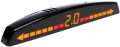 |
|---|---|---|
| AMS AF4221 | AMS A4221 | |
| Outdated Product | Outdated Product | |
| TOP sellers | ||
| Scan area | front only | rear only |
| Connection | wired | wired |
Specs | ||
| Front sensors | 4 pcs | |
| Rear sensors | 4 pcs | |
| Scan distance | 0.3 — 2.5 m | 0.3 — 2.5 m |
| Indication | LED indicators | LED indicators |
| Display colour | black | black |
| Sensors diameter | 22 mm | 22 mm |
More features | ||
| Features | digital distance indicator | digital distance indicator |
| Color | ||
| Added to E-Catalog | january 2020 | january 2020 |


Compare AMS AF4221 and A4221
You may be interested in
My comparisons
AMS A4221 often compared

Glossary
Scan area
Areas of the surrounding space that the parking sensors scan during operation.
- Back only. Actually, the ability to scan the space behind the car is found in absolutely all parking sensors, but most often this direction is the only one provided for in the design. After all, forward visibility is usually good enough not to cause problems for most drivers, and the main source of difficulty is precisely the observation of obstacles behind the car.
- Front and back. The ability to track objects both behind and in front of the car. Parking sensors with a similar coverage are designed for those who want to have maximum safety guarantees when manoeuvring. After all, despite the fact that forward visibility is usually much better than backward, low obstacles can still go unnoticed; this is especially true with a high seating position of the driver, for example, in SUVs. Also, forward scanning is useful for novice drivers, as well as for those who need to get used to a new car after using another car with significantly different dimensions. However such parking sensors are usually somewhat more expensive than “purely rear” ones.
- Back only. Actually, the ability to scan the space behind the car is found in absolutely all parking sensors, but most often this direction is the only one provided for in the design. After all, forward visibility is usually good enough not to cause problems for most drivers, and the main source of difficulty is precisely the observation of obstacles behind the car.
- Front and back. The ability to track objects both behind and in front of the car. Parking sensors with a similar coverage are designed for those who want to have maximum safety guarantees when manoeuvring. After all, despite the fact that forward visibility is usually much better than backward, low obstacles can still go unnoticed; this is especially true with a high seating position of the driver, for example, in SUVs. Also, forward scanning is useful for novice drivers, as well as for those who need to get used to a new car after using another car with significantly different dimensions. However such parking sensors are usually somewhat more expensive than “purely rear” ones.
Front sensors
The number of front sensors that are standardly supplied with the parking sensors. For the meaning of the quantity in general, see "Rear sensors". Also note here that, since forward visibility is usually much better than backward, there are often only two front sensors — to cover the most problematic viewing areas (and not the entire forward direction). However, there are also "full-format" options for 4 sensors.
Rear sensors
The number of rear sensors included in the delivery of the parking radar; usually, there are exactly as many of them as the control unit is designed for. On the one hand, the reliability of obstacle detection and the absence of dead zones depend on this indicator: the more sensors, the better the parking sensors block the corresponding direction. On the other hand, numerous sensors complicates their installation and increases the cost of the entire set. Today, 4 sensors per bumper are recognized as the optimal balance between these points, this is the number provided in the vast majority of parking sensors. A smaller number usually means entry-level models, designed for simple conditions and/or fairly experienced drivers, and a larger number — advanced devices, most often with an extended scanning area on the sides.