
Comparison Cassida H50 vs Pro Intellect 15
Add to comparison | 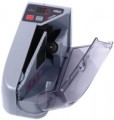 | 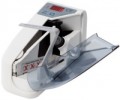 |
|---|---|---|
| Cassida H50 | Pro Intellect 15 | |
from $80.00 | from $74.00 up to $83.48 | |
| TOP sellers | ||
| Product Type | bill counter | bill counter |
Specs | ||
| Max. counting speed | 600 bills/min | 900 bills/min |
| Load Tray capacity | 100 bills | |
| Min. bills size | 120x55 mm | |
| Max. bills size | 160x105 mm | |
Features | ||
| Features | value counting | value counting |
General | ||
| Power source | mains / non chargeable batteries | mains / non chargeable batteries |
| Dimensions | 190x102x75 mm | 190x102x75 mm |
| Weight | 0.4 kg | 0.45 kg |
| Added to E-Catalog | august 2015 | july 2015 |


Compare Cassida H50 and Pro Intellect 15
You may be interested in
Cassida H50 often compared

Glossary
Max. counting speed
The highest speed that device is able to count bills (coins in the relevant models, see "Product Type"). Higher speed saves time, but it also affects the price and sometimes the size of the device respectively. Its useful to note that using additional functions (for example, sorting by face), as well as in some other cases (such as dilapidated bills), the actual counting speed may slightly decrease compared to the claimed one.
As for specific figures, speeds up to 1000 bills per minute are considered relatively low, but they are often quite enough in cases where large amounts are recalculated sporadically and high speed rate is not needed. In most counters (of all types), this indicator lies in the range from 1000 to 2000 bills per minute, and higher values found only in certain models of coin counters.
As for specific figures, speeds up to 1000 bills per minute are considered relatively low, but they are often quite enough in cases where large amounts are recalculated sporadically and high speed rate is not needed. In most counters (of all types), this indicator lies in the range from 1000 to 2000 bills per minute, and higher values found only in certain models of coin counters.
Load Tray capacity
The maximum amount of bills or coins that can fit in the pocket (tray) of the counter; in other words — the largest amount of monetary units that can be counted per one run without reloading (and when reloading money, it is worth considering the capacity of the receiving tray — see below)
Note that this parameter is quite approximate — bills can have different thickness, and furthermore, coins are usually arranged randomly. However, it is still undesirable to exceed the recommendations for capacity in order to avoid overloading the gears.
Note that this parameter is quite approximate — bills can have different thickness, and furthermore, coins are usually arranged randomly. However, it is still undesirable to exceed the recommendations for capacity in order to avoid overloading the gears.
Min. bills size
The smallest bills size that the counter can normally process. Specified by length and width, both of these parameters must be at least the minimum allowable value — otherwise the device will not be able to count properly.
Note that most modern currencies use denominations of more or less standard sizes; and with such popular currencies as the dollar or the euro, any counter is almost guaranteed to be compatible. In addition, the manufacturers of counting machines usually take into account the region where they plan to use them, and the dimensions of local money. So you have to pay attention to the allowable sizes of bills mainly in cases where the counter is planned to be used for less common currencies, the size of which may differ markedly from the average.
Note that most modern currencies use denominations of more or less standard sizes; and with such popular currencies as the dollar or the euro, any counter is almost guaranteed to be compatible. In addition, the manufacturers of counting machines usually take into account the region where they plan to use them, and the dimensions of local money. So you have to pay attention to the allowable sizes of bills mainly in cases where the counter is planned to be used for less common currencies, the size of which may differ markedly from the average.
Max. bills size
The largest bills size that the counter can normally process. It is specified by length and width, both of these parameters must be less than the maximum allowable value — otherwise the device will not be able to handle with the count.
Note that most modern currencies use denominations of more or less standard sizes; and with such popular currencies as the dollar or the euro, any counter is almost guaranteed to be compatible. In addition, the manufacturers of counting machines usually take into account the region where they plan to use them, and the dimensions of local money. So you have to pay attention to the allowable sizes of bills mainly in cases where the counter is planned to be used for less common currencies, the size of which may differ markedly from the average.
Note that most modern currencies use denominations of more or less standard sizes; and with such popular currencies as the dollar or the euro, any counter is almost guaranteed to be compatible. In addition, the manufacturers of counting machines usually take into account the region where they plan to use them, and the dimensions of local money. So you have to pay attention to the allowable sizes of bills mainly in cases where the counter is planned to be used for less common currencies, the size of which may differ markedly from the average.