
Comparison OfficePro MA511B vs OfficePro MA501
Add to comparison |  | 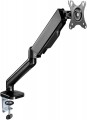 |
|---|---|---|
| OfficePro MA511B | OfficePro MA501 | |
| Outdated Product | Outdated Product | |
| TOP sellers | ||
The bracket is equipped with a quick-release VESA plate. | ||
| Type | desktop mount | desktop mount |
| Installation | universal | universal |
Specs | ||
| Minimum size | 17 " | 17 " |
| Max. size | 32 " | 32 " |
| Max. weight | 9 kg | 9 kg |
| Adjustments | for curved TV tilt turn depth adjustment slide rotation height adjustment | tilt turn depth adjustment slide rotation height adjustment |
Angles and dimensions | ||
| Upward tilt angle | 90 ° | 90 ° |
| Downward tilt angle | 90 ° | 90 ° |
| Turn angle | 360 ° | 360 ° |
| Rotation angle | 360 ° | 360 ° |
| VESA | 75x75mm 100x100 mm | 75x75mm 100x100 mm |
| Removable VESA plate |  | |
General | ||
| Cable management | | |
| Color | ||
| Added to E-Catalog | september 2025 | july 2023 |


Compare OfficePro MA511B and MA501
You may be interested in
My comparisons
OfficePro MA511B often compared


OfficePro MA501 often compared


Glossary
Adjustments
The ability to change the position of the TV installed on the mount. Adjustments make it possible to optimally adjust the location of the screen; the more there are adjustments, the wider the customization options.
— For curved TVs. Stands designed for use with curved TVs. Such TVs are becoming increasingly popular — it is believed that the curved shape has a positive effect on the image quality. Note that the dimensions and curvature of such screens can be different, so the compatibility of the stand with a specific TV has to be clarified separately.
— Tilt. The ability to adjust the tilt of the installed TV forward and backward relative to the vertical position. It will be useful if the TV is not installed at eye level, and also if the height of the audience changes (for example, if you are sitting on the sofa, then on the floor, depending on your mood).
— Turn. The ability to turn the TV around a vertical axis, from side to side. This gives a certain freedom in moving around the room — by moving to another point, you can turn the TV in the right direction and watch comfortably.
— Depth adjustment. The ability to move the TV back and forth relative to the point of attachment to the wall without changing the angle of the screen. Can be used in combination with turn — for example, if at a selected...point in the room an object on the side of the TV is blocking it, the screen can be pulled out from behind the obstruction and turned for the optimal viewing angle.
— Slide. The ability to move the TV from side to side relative to the point of attachment to the wall without changing the angle of the screen. This can be useful, for example, when rearranging: by moving the TV to the side, you can install a piece of furniture next to it that did not fit there before, without rearranging the mount itself. It can also be used in conjunction with turn, similar to depth adjustment (see above).
— Rotation. The ability to rotate the installed monitor around the horizontal axis, in other words, the ability to rotate the screen from a horizontal position (“landscape” orientation) to a vertical (“portrait”) one. In everyday use, this function is practically not in demand, and therefore is rare. At the same time, it can be useful for specialized purposes — for example, if the screen is used as a monitor and you need to work with vertically stretched materials (graphics or texts).
— Height adjustment. The ability to adjust the height of the TV on the mount. Allows you to optimally adjust the position of the screen relative to eye level, surrounding objects, etc.
— For curved TVs. Stands designed for use with curved TVs. Such TVs are becoming increasingly popular — it is believed that the curved shape has a positive effect on the image quality. Note that the dimensions and curvature of such screens can be different, so the compatibility of the stand with a specific TV has to be clarified separately.
— Tilt. The ability to adjust the tilt of the installed TV forward and backward relative to the vertical position. It will be useful if the TV is not installed at eye level, and also if the height of the audience changes (for example, if you are sitting on the sofa, then on the floor, depending on your mood).
— Turn. The ability to turn the TV around a vertical axis, from side to side. This gives a certain freedom in moving around the room — by moving to another point, you can turn the TV in the right direction and watch comfortably.
— Depth adjustment. The ability to move the TV back and forth relative to the point of attachment to the wall without changing the angle of the screen. Can be used in combination with turn — for example, if at a selected...point in the room an object on the side of the TV is blocking it, the screen can be pulled out from behind the obstruction and turned for the optimal viewing angle.
— Slide. The ability to move the TV from side to side relative to the point of attachment to the wall without changing the angle of the screen. This can be useful, for example, when rearranging: by moving the TV to the side, you can install a piece of furniture next to it that did not fit there before, without rearranging the mount itself. It can also be used in conjunction with turn, similar to depth adjustment (see above).
— Rotation. The ability to rotate the installed monitor around the horizontal axis, in other words, the ability to rotate the screen from a horizontal position (“landscape” orientation) to a vertical (“portrait”) one. In everyday use, this function is practically not in demand, and therefore is rare. At the same time, it can be useful for specialized purposes — for example, if the screen is used as a monitor and you need to work with vertically stretched materials (graphics or texts).
— Height adjustment. The ability to adjust the height of the TV on the mount. Allows you to optimally adjust the position of the screen relative to eye level, surrounding objects, etc.