
Comparison Tenda TE3L vs Xiaomi Router BE3600
Add to comparison |  | 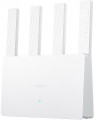 |
|---|---|---|
| Tenda TE3L | Xiaomi Router BE3600 | |
| Outdated Product | from $51.99 | |
| User reviews | ||
| TOP sellers | ||
Wi-Fi 7 support. MLO technology for frequency band aggregation. Seamless MESH roaming technology. 160 MHz bandwidth. | Ability to give priority to gaming traffic. Supports LAN and WAN aggregation. | |
| Product type | router | router |
| Data input (WAN-port) | Ethernet (RJ45) | Ethernet (RJ45) Wi-Fi |
Wireless Wi-Fi connection | ||
| Wi-Fi standards | Wi-Fi 3 (802.11g) Wi-Fi 4 (802.11n) Wi-Fi 5 (802.11ac) Wi-Fi 6 (802.11ax) Wi-Fi 6E (802.11ax) Wi-Fi 7 (802.11be) | Wi-Fi 3 (802.11g) Wi-Fi 4 (802.11n) Wi-Fi 5 (802.11ac) Wi-Fi 6 (802.11ax) Wi-Fi 6E (802.11ax) Wi-Fi 7 (802.11be) |
| Frequency band | 2.4GHz 5 GHz | 2.4GHz 5 GHz |
| Operating ranges | dual-band (2.4 GHz and 5 GHz) | dual-band (2.4 GHz and 5 GHz) |
| Wireless speed 2.4 GHz | 688 Mbps | 688 Mbps |
| Wireless speed 5 GHz | 2882 Mbps | 2882 Mbps |
| Bandwidth | 160 MHz | 160 MHz |
Connection and LAN | ||
| LAN | 3 ports 1 Gbps | 4 ports 1 Gbps, 2.5 Gbps |
| Reassignable WAN / LAN | 3 ports | 4 ports |
Antenna and transmitter | ||
| Number of antennas | 5 | 4 |
| Antenna type | external | external |
| MU-MIMO |  | |
| 2.4 GHz antennas | 2 | |
| 5 GHz antennas | 2 | |
Hardware | ||
| CPU | Qualcomm | |
| CPU cores | 2 | 4 |
| Clock Speed | 1 GHz | 1.1 GHz |
| RAM | 512 MB | 256 MB |
| Flash memory | 128 MB | |
Functions | ||
| Features | NAT MESH mode Beamforming firewall | load balancing (Dual WAN) channel reservation Link Aggregation NAT MESH mode Beamforming firewall |
| More features | DHCP server VPN DDNS DMZ | DHCP server VPN DDNS |
Security | ||
| Safety standards | WPA WEP WPA2 WPA3 | WPA WEP WPA2 WPA3 |
General | ||
| Operating temperature | 0 °C ~ +40 °C | 0 °C ~ +40 °C |
| Dimensions | 244x56x200 mm | 210x221x41 mm |
| Color | ||
| Added to E-Catalog | may 2025 | may 2024 |


Compare Tenda TE3L and Xiaomi Router BE3600
You may be interested in
My comparisons
Tenda TE3L often compared

Xiaomi Router BE3600 often compared


Glossary
Data input (WAN-port)
Methods for connecting to the Internet (or other external network, such as in bridge mode) supported by the device.
The classic, most common version of such a connection nowadays is LAN (Ethernet), but this is not limited to this. A wired connection can also be made via ADSL or SFP fiber, and wirelessly via mobile networks (using a SIM card, SIM card 5G or an external modem for 3G or 4G), as well as via Wi-Fi. Here is a more detailed description of each option:
— Ethernet (RJ45). Classic wired connection via a network cable via an RJ-45 connector. Also known as "LAN", although this designation is not entirely correct. Nowadays, it is one of the most common methods of wired Internet connection, and is also widely used in local networks. This is due to the fact that the speed of Ethernet is actually limited only by the capabilities of network controllers; at the same time, even the simplest modules support up to 100 Mbps, and in advanced equipment this value can reach 10 Gbps.
— ADSL. A technology primarily used for wired Internet connections over existing landline telephone lines. This is its main advantage — you can use ready-made lines without fiddling with laying numerous addi...tional wires; at the same time, ADSL works independently of telephone calls and does not interfere with them. At the same time, the speed of such a connection is noticeably lower than via Ethernet — even in advanced equipment it does not exceed 24 Mbps. In addition, ADSL traffic is distributed asymmetrically: full speed is achieved only when working for reception, data transmission speed is much lower, which creates problems for video communication and some other tasks. So nowadays, ADSL is gradually being replaced by more advanced standards, although the complete disappearance of this technology is still far away.
— Wi-Fi. Connect to an external data source via Wi-Fi. By definition, this format of operation is used by Wi-Fi adapters (see "Device type"), as well as by most MESH equipment. (However, if the MESH system package includes both nodes and the main control device for them, then the WAN input can be specified for the control device, and often this is not Wi-Fi). Also, this type of data input can be provided in other types of equipment — in particular, routers and access points (for example, to work in bridge or repeater mode).
— 3G modem (USB). Internet connection via 3G mobile network using a separate external modem connected to the USB port. Most often, we are talking about UMTS networks (the development of GSM mobile communications), the most common in Europe and the post-Soviet space; however, it may also be possible to use modems for CDMA networks (EV-DO technology). These nuances, as well as compatibility with specific modem models, need to be clarified separately. However, anyway, 3G may be a good option for situations where a wired Internet connection is difficult or impossible, such as in the private sector. In addition, some Wi-Fi devices with this feature are equipped with autonomous power supplies and can even be used on the go. The data transfer speed of 3G is close to broadband wired connection (from 2 to 70 Mbps with a normal signal, depending on the specific technology); however, it is less than in 4G networks (see below), but 3G coverage is more extensive, and equipment for this standard is cheaper.
— 4G (LTE) modem (USB). Internet connection via 4G mobile network (LTE) using a separate external modem connected to the USB port. The main features are similar to the 3G connection described above, adjusted for the fact that in this case more advanced fourth-generation networks are used. The data transfer rate in such networks reaches about 150 Mbps; they are not as widespread as 3G-connection, but soon we can expect a change in the situation. In addition, it should be noted that in Europe and the post-Soviet space, LTE networks are usually deployed on the basis of 3G UMTS and GSM networks; so in the absence of full-fledged 4G coverage, modems for such networks can work according to the 3G and even GSM standard.
— SIM card. Connecting to the Internet via a mobile network using a mobile operator's SIM card installed directly in the device. The specific type of supported networks depends both on the capabilities of the router and on the conditions of a particular mobile operator; however, all such equipment is compatible with at least 3G networks, and often 4G as well. The features of these networks are described in detail above (you can also read about the advantages of a mobile Internet connection there). This option is convenient because it allows you to do without a separate USB modem — you just need to purchase a SIM card, the cost of which is negligible. In addition, the use of "sim cards" has a positive effect on compactness and ease of carrying. On the other hand, the built-in mobile communication module significantly affects the overall cost — and you will have to pay for it anyway (whereas a model with support for external modems does not have to be bought immediately with a modem, such devices usually allow wired connection). Therefore, you should pay attention to this option if you initially plan to connect to the Internet through mobile networks.
- SIM card (5G). The ability to operate Wi-Fi equipment in high-speed 5G mobile networks with a peak bandwidth of up to 20 Gbps for reception and up to 10 Gbps for data transmission. Implemented via a SIM card with appropriate 5G support. This standard reduces power consumption compared to previous versions, and it also uses a number of complex solutions aimed at improving the reliability and overall quality of communication - in particular, multi-element antenna arrays (Massive MIMO) and beamforming technologies (Beamforming).
— SFP (optics). Connection via fiber optic cable of the SFP standard. Such a connection can be carried out at high speeds (measured in gigabytes per second), and the fiber, unlike the Ethernet cable, is practically insensitive to external interference. On the other hand, the support of this standard is not cheap, and its capabilities are unnecessary for domestic use. Therefore, SFP is found mainly in professional-level Wi-Fi devices.
The classic, most common version of such a connection nowadays is LAN (Ethernet), but this is not limited to this. A wired connection can also be made via ADSL or SFP fiber, and wirelessly via mobile networks (using a SIM card, SIM card 5G or an external modem for 3G or 4G), as well as via Wi-Fi. Here is a more detailed description of each option:
— Ethernet (RJ45). Classic wired connection via a network cable via an RJ-45 connector. Also known as "LAN", although this designation is not entirely correct. Nowadays, it is one of the most common methods of wired Internet connection, and is also widely used in local networks. This is due to the fact that the speed of Ethernet is actually limited only by the capabilities of network controllers; at the same time, even the simplest modules support up to 100 Mbps, and in advanced equipment this value can reach 10 Gbps.
— ADSL. A technology primarily used for wired Internet connections over existing landline telephone lines. This is its main advantage — you can use ready-made lines without fiddling with laying numerous addi...tional wires; at the same time, ADSL works independently of telephone calls and does not interfere with them. At the same time, the speed of such a connection is noticeably lower than via Ethernet — even in advanced equipment it does not exceed 24 Mbps. In addition, ADSL traffic is distributed asymmetrically: full speed is achieved only when working for reception, data transmission speed is much lower, which creates problems for video communication and some other tasks. So nowadays, ADSL is gradually being replaced by more advanced standards, although the complete disappearance of this technology is still far away.
— Wi-Fi. Connect to an external data source via Wi-Fi. By definition, this format of operation is used by Wi-Fi adapters (see "Device type"), as well as by most MESH equipment. (However, if the MESH system package includes both nodes and the main control device for them, then the WAN input can be specified for the control device, and often this is not Wi-Fi). Also, this type of data input can be provided in other types of equipment — in particular, routers and access points (for example, to work in bridge or repeater mode).
— 3G modem (USB). Internet connection via 3G mobile network using a separate external modem connected to the USB port. Most often, we are talking about UMTS networks (the development of GSM mobile communications), the most common in Europe and the post-Soviet space; however, it may also be possible to use modems for CDMA networks (EV-DO technology). These nuances, as well as compatibility with specific modem models, need to be clarified separately. However, anyway, 3G may be a good option for situations where a wired Internet connection is difficult or impossible, such as in the private sector. In addition, some Wi-Fi devices with this feature are equipped with autonomous power supplies and can even be used on the go. The data transfer speed of 3G is close to broadband wired connection (from 2 to 70 Mbps with a normal signal, depending on the specific technology); however, it is less than in 4G networks (see below), but 3G coverage is more extensive, and equipment for this standard is cheaper.
— 4G (LTE) modem (USB). Internet connection via 4G mobile network (LTE) using a separate external modem connected to the USB port. The main features are similar to the 3G connection described above, adjusted for the fact that in this case more advanced fourth-generation networks are used. The data transfer rate in such networks reaches about 150 Mbps; they are not as widespread as 3G-connection, but soon we can expect a change in the situation. In addition, it should be noted that in Europe and the post-Soviet space, LTE networks are usually deployed on the basis of 3G UMTS and GSM networks; so in the absence of full-fledged 4G coverage, modems for such networks can work according to the 3G and even GSM standard.
— SIM card. Connecting to the Internet via a mobile network using a mobile operator's SIM card installed directly in the device. The specific type of supported networks depends both on the capabilities of the router and on the conditions of a particular mobile operator; however, all such equipment is compatible with at least 3G networks, and often 4G as well. The features of these networks are described in detail above (you can also read about the advantages of a mobile Internet connection there). This option is convenient because it allows you to do without a separate USB modem — you just need to purchase a SIM card, the cost of which is negligible. In addition, the use of "sim cards" has a positive effect on compactness and ease of carrying. On the other hand, the built-in mobile communication module significantly affects the overall cost — and you will have to pay for it anyway (whereas a model with support for external modems does not have to be bought immediately with a modem, such devices usually allow wired connection). Therefore, you should pay attention to this option if you initially plan to connect to the Internet through mobile networks.
- SIM card (5G). The ability to operate Wi-Fi equipment in high-speed 5G mobile networks with a peak bandwidth of up to 20 Gbps for reception and up to 10 Gbps for data transmission. Implemented via a SIM card with appropriate 5G support. This standard reduces power consumption compared to previous versions, and it also uses a number of complex solutions aimed at improving the reliability and overall quality of communication - in particular, multi-element antenna arrays (Massive MIMO) and beamforming technologies (Beamforming).
— SFP (optics). Connection via fiber optic cable of the SFP standard. Such a connection can be carried out at high speeds (measured in gigabytes per second), and the fiber, unlike the Ethernet cable, is practically insensitive to external interference. On the other hand, the support of this standard is not cheap, and its capabilities are unnecessary for domestic use. Therefore, SFP is found mainly in professional-level Wi-Fi devices.
LAN
In this case, LAN means standard network connectors (known as RJ-45) designed for wired connection of LAN devices — PCs, servers, additional access points, etc. The number of ports corresponds to the number of devices that can be directly connected to wired equipment. way.
In terms of speed, 100 Mbps (Fast Ethernet) and 1 Gbps (Gigabit Ethernet) are the most popular options today. At the same time, thanks to the development of technology, more and more gigabit devices are being produced, although in fact this speed is critical only when transferring large amounts of information. At the same time, some models, in addition to the standard speed of the main LAN ports, may have a 2.5 Gbps, 5 Gbps and even 10 Gbps LAN port with increased bandwidth.
In terms of speed, 100 Mbps (Fast Ethernet) and 1 Gbps (Gigabit Ethernet) are the most popular options today. At the same time, thanks to the development of technology, more and more gigabit devices are being produced, although in fact this speed is critical only when transferring large amounts of information. At the same time, some models, in addition to the standard speed of the main LAN ports, may have a 2.5 Gbps, 5 Gbps and even 10 Gbps LAN port with increased bandwidth.
Reassignable WAN / LAN
Reassignable WAN / LAN port in the design of the device, which can work both with an external WAN network and with a local LAN. This solution allows you to reduce the total number of connection ports and at the same time expand the functionality of the equipment for flexible adaptation to user needs.
Number of antennas
The total number of antennas (of all types — see below) provided in the design of the device.
In modern Wi-Fi equipment, this indicator can be different: in addition to the simplest devices with 1 antenna, there are models where this number is 2, 3, 4 and even more. The point of using multiple antennas is twofold. Firstly, if there are several external devices per antenna, they have to share the bandwidth among themselves, and the actual communication speed for each subscriber drops accordingly. Secondly, such a design may also be required when communicating with one external device — to work with MU-MIMO technology (see below), which allows you to fully realize the capabilities of modern Wi-Fi standards.
Anyway, more antennas, usually, means a more advanced and functional device. On the other hand, this parameter significantly affects the cost; so specifically looking for equipment with numerous antennas makes sense mainly when the speed and stability of communication are critical.
Note that antennas intended for mobile communications may also be considered in this clause. So when choosing a model with support for mobile networks, it's ok to clarify this point.
In modern Wi-Fi equipment, this indicator can be different: in addition to the simplest devices with 1 antenna, there are models where this number is 2, 3, 4 and even more. The point of using multiple antennas is twofold. Firstly, if there are several external devices per antenna, they have to share the bandwidth among themselves, and the actual communication speed for each subscriber drops accordingly. Secondly, such a design may also be required when communicating with one external device — to work with MU-MIMO technology (see below), which allows you to fully realize the capabilities of modern Wi-Fi standards.
Anyway, more antennas, usually, means a more advanced and functional device. On the other hand, this parameter significantly affects the cost; so specifically looking for equipment with numerous antennas makes sense mainly when the speed and stability of communication are critical.
Note that antennas intended for mobile communications may also be considered in this clause. So when choosing a model with support for mobile networks, it's ok to clarify this point.
2.4 GHz antennas
The total number of antennas in the router that are responsible for communication in the 2.4 GHz band. For details about the number of antennas, see "Total antennas", about the range — "Frequency range".
5 GHz antennas
The total number of antennas in the router that are responsible for communication in the 5 GHz band. For details about the number of antennas, see "Total antennas", about the range — "Frequency range".
CPU
The model of the processor installed in the device. The processor is responsible for processing network traffic and running software. Knowing its name, you can get more detailed data on the speed capabilities of the equipment and understand how much such a powerful or, on the contrary, mediocre element is needed on board. In new models of Wi-Fi equipment, coprocessors or so-called NPU modules are often installed, which relieve the load from the main processor.
Most often, Wi-Fi equipment is equipped with processors from Broadcom, MediaTek, Realtek and Qualcomm.
Most often, Wi-Fi equipment is equipped with processors from Broadcom, MediaTek, Realtek and Qualcomm.
CPU cores
The number of cores in the processor installed in the device. The core in this case refers to the part of the processor that executes one thread of instructions. Accordingly, the presence of multiple cores (there are 2-core models, 3 and on 4 cores) allows you to work with multiple threads simultaneously, which has a positive effect on performance.
Clock Speed
The number of cycles per second that the processor produces in its normal operating mode. A clock is a single electrical impulse used to process data and synchronize the processor with the rest of the computer system. Different operations may require fractions of a clock or several clocks, but anyway, the clock frequency is one of the main parameters characterizing the performance and speed of the processor — all other things being equal, a processor with a higher clock frequency will work faster and better cope with significant loads.