
Comparison Realme Buds T200 Lite vs Realme Buds T310
Add to comparison |  | 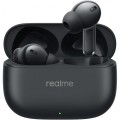 |
|---|---|---|
| Realme Buds T200 Lite | Realme Buds T310 | |
| Compare prices 1 | from $49.99 | |
| TOP sellers | ||
Long battery life (with case). | Active noise cancellation. Long battery life (with case). | |
Connection and design | ||
| Design | in-ear | in-ear |
| Connection type | wireless | wireless |
| Connection | Bluetooth v5.4 | Bluetooth v5.4 |
| Range | 10 m | 10 m |
Specs | ||
| Game mode (low input lag) |  | |
| Audio delay | 45 ms | |
| Frequency range | 20 – 20000 Hz | 20 – 20000 Hz |
| Speaker size | 12.4 mm | 12.4 mm |
| Emitter type | dynamic | dynamic |
Microphone specs | ||
| Microphone | built into the case | built into the case |
| Number of microphones | 2 pcs in each earphone | |
| Microphone noise canceling | ENC | ENC |
Features | ||
| Mobile app | |  |
| Noise cancellation | ANC | |
| Transparent mode | | |
| Multipoint | | |
| Codec support | AAC | AAC |
Power supply | ||
| Power source | battery | battery |
| Charging time | 2 h | |
| Operating time (music) | 7 h | 6 h |
| Operating time (no noise canceling) | 9 h | |
| Operating time (with case) | 48 h | 26 h |
| Battery life (with case, without ANC) | 40 h | |
| Fast charge | 10 minutes for 5 hours of work | 10 minutes for 5 hours of work |
| Charging port | USB-C | USB-C |
General | ||
| Touch control | | |
| Waterproof | IPX4 | IP55 |
| Weight | 4 g | |
| In box | silicone tips 3 pairs charging case | silicone tips 3 pairs charging case |
| Added to E-Catalog | july 2025 | october 2024 |



Compare Realme Buds T200 Lite and Buds T310
Price comparison
You may be interested in
My comparisons
Realme Buds T200 Lite often compared


Realme Buds T310 often compared


Glossary
Audio delay
Sound delay in wireless headphones is a natural process caused by the specifics of audio data transmission over Bluetooth. It can be either almost imperceptible or clearly interfere with comfortable gameplay or watching video content. This paragraph provides the declared sound delay time in milliseconds, which is written in the technical specifications for a particular headphone model.
Number of microphones
The number of microphones in headphones indicates how many separate microphone capsules are used in the headset for voice transmission and sound processing algorithms. In simple models, there is one microphone, which is sufficient for occasional calls in a quiet room. More advanced TWS, office, and gaming headsets have 2–3 microphones per earbud: some "listen" to the voice, others to the surrounding noise, so the electronics can better eliminate interference and make speech clearer to the listener. A large number of microphones is especially important during conversations outdoors, on public transport, in an open-plan office, and for features like wind noise reduction or precise sound direction detection in gaming models. For instance, a headset with multiple microphones will transmit a voice much better during a conference call or online gaming than basic headphones with one microphone, though it may be slightly more expensive.
Mobile app
The ability to operate the functions and settings of headphones through a mobile application for a smartphone or tablet. Communication between the device and gadgets is usually carried out via the Bluetooth wireless protocol. The mobile application may provide tools for flexible sound settings (equalizer, bass boost, etc.), switching noise reduction and transparency modes, reassigning buttons and gestures, finding lost headphones, etc. Also, the ability to update the headphone firmware is often implemented through the mobile application.
Noise cancellation
A system that reduces the influence of ambient noise on the audibility of sound through headphones. "Noise reduction" with the help of a separate microphone (or several micro) "listens" to external sounds and sends the same sounds to the headphones, but in antiphase. Due to this, the noise heard by the ears is attenuated almost to zero and the user can enjoy the sound of the headphones without interference even in a rather “loud” environment. For filtering in headphones, Active Noise Cancellation (ANC) and Environment Noise Cancellation (ENC) systems are used. The first suppresses all the noise around the listener, the second - reduces the noise level of the environment. Active noise cancellation affects the purity of the sound, but the noise from the outside spoils the picture when listening to audio tracks even more.
Also in the headphones there is an adaptive active noise reduction system Adaptive ANC, aimed at automatically adjusting the sound of the headphones depending on the level of ambient noise. In a noisy environment (for example, when traveling on the subway), the Adaptive ANC system enhances the work of “noise reduction”, in the absence of loud sounds from outside, it weakens the noise reduction.
Also in the headphones there is an adaptive active noise reduction system Adaptive ANC, aimed at automatically adjusting the sound of the headphones depending on the level of ambient noise. In a noisy environment (for example, when traveling on the subway), the Adaptive ANC system enhances the work of “noise reduction”, in the absence of loud sounds from outside, it weakens the noise reduction.
Transparent mode
A feature that allows the user to hear the sounds of the surrounding world without removing the headphones.
This possibility is relevant mainly for models with a high degree of sound insulation; so the transparent mode can be found mainly among in-ear models, as well as overhead "ears" of the Over Ear format in a closed acoustic design. A special microphone is responsible for the operation of the function, which “listens” to the surrounding sounds and broadcasts them to the headphones. In Talk Through mode, you can, for example, listen to the interlocutor or control the environment on a busy street. And some headphones with this feature also have more advanced functions, including automatic adjustment to the situation: such models turn on on their own to transmit speech, “hearing” the loud voice of a person nearby. Individual headphones react to loud street noises in the transparent Ambient Aware mode — it means broadcasting noises through the speaker that can be potential danger signals (screams, car signals, etc.).
Note that most models with Talk through also have an active noise reduction function (see above), and the “transparent mode” in them is one of the noise reduction modes. However, exceptions to this rule are possible — technically transparent mode does not have to be combined with noise reduction.
This possibility is relevant mainly for models with a high degree of sound insulation; so the transparent mode can be found mainly among in-ear models, as well as overhead "ears" of the Over Ear format in a closed acoustic design. A special microphone is responsible for the operation of the function, which “listens” to the surrounding sounds and broadcasts them to the headphones. In Talk Through mode, you can, for example, listen to the interlocutor or control the environment on a busy street. And some headphones with this feature also have more advanced functions, including automatic adjustment to the situation: such models turn on on their own to transmit speech, “hearing” the loud voice of a person nearby. Individual headphones react to loud street noises in the transparent Ambient Aware mode — it means broadcasting noises through the speaker that can be potential danger signals (screams, car signals, etc.).
Note that most models with Talk through also have an active noise reduction function (see above), and the “transparent mode” in them is one of the noise reduction modes. However, exceptions to this rule are possible — technically transparent mode does not have to be combined with noise reduction.
Charging time
The time required to fully charge the battery in properly powered headphones (see above).
In this case, we mean the battery charging time from 0 to 100% when using a standard charger (or a third-party charger with identical characteristics). Accordingly, in fact, this indicator may differ from the claimed one, depending on the specifics of the situation. However, in general, it is quite possible to evaluate different models and compare them with each other: headphones with a shorter claimed charging time will in fact charge faster (ceteris paribus).
Also note that an increase in battery capacity (and headphone battery life) inevitably implies an increase in charging time. To compensate for this moment, special fast charging technologies can be used — however, they affect the cost and require the use of specialized charger.
In this case, we mean the battery charging time from 0 to 100% when using a standard charger (or a third-party charger with identical characteristics). Accordingly, in fact, this indicator may differ from the claimed one, depending on the specifics of the situation. However, in general, it is quite possible to evaluate different models and compare them with each other: headphones with a shorter claimed charging time will in fact charge faster (ceteris paribus).
Also note that an increase in battery capacity (and headphone battery life) inevitably implies an increase in charging time. To compensate for this moment, special fast charging technologies can be used — however, they affect the cost and require the use of specialized charger.
Operating time (music)
The declared operating time of headphones with autonomous power supply (see above) when listening to music on a single battery charge or a set of batteries.
As a rule, the characteristics indicate a certain average operating time in music listening mode, for standard conditions; in practice, it will depend on the intensity of use, volume level and other operating parameters, and in models with replaceable batteries - also on the quality of specific batteries. However, based on the stated time, you can fairly reliably assess the autonomy of the selected headphones and compare them with other models. As for specific values, relatively “short-lived” devices have a battery life of up to 8 hours, a figure of 8 – 12 hours can be called quite good, 12 – 20 hours – very good, and in the most “long-lasting” headphones the operating time can exceed 20 hours.
As a rule, the characteristics indicate a certain average operating time in music listening mode, for standard conditions; in practice, it will depend on the intensity of use, volume level and other operating parameters, and in models with replaceable batteries - also on the quality of specific batteries. However, based on the stated time, you can fairly reliably assess the autonomy of the selected headphones and compare them with other models. As for specific values, relatively “short-lived” devices have a battery life of up to 8 hours, a figure of 8 – 12 hours can be called quite good, 12 – 20 hours – very good, and in the most “long-lasting” headphones the operating time can exceed 20 hours.
Operating time (no noise canceling)
How long does the active noise canceling headphones (see above) last on a single battery charge (or a set of batteries) when noise canceling is not used.
This function is quite “gluttonous” in terms of battery consumption, up to half of the total energy consumed by the headphones can go to its work. Thus, models with noise reduction can indicate both overall battery life (see "Operating time"), and battery life with the noise reduction turned off.
This function is quite “gluttonous” in terms of battery consumption, up to half of the total energy consumed by the headphones can go to its work. Thus, models with noise reduction can indicate both overall battery life (see "Operating time"), and battery life with the noise reduction turned off.
Operating time (with case)
The maximum operating time of TWS headphones, taking into account recharging with a native case. But this time is not continuous use, it takes into account breaks for "refueling". Anyway, this parameter allows you to understand for how long you can leave the network (for example, how many nights to spend in a tent to the accompaniment of your favorite artist).