
Comparison JBL Tune 245NC vs JBL Wave Beam 2
Add to comparison | 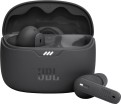 | 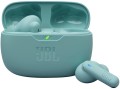 |
|---|---|---|
| JBL Tune 245NC | JBL Wave Beam 2 | |
from $59.95 | Outdated Product | |
| User reviews | ||
| TOP sellers | ||
Active noise cancellation, good battery life. | Active noise cancellation. Long battery life. | |
Connection and design | ||
| Design | in-ear | in-ear |
| Connection type | wireless | wireless |
| Connection | Bluetooth v5.3 | Bluetooth v5.3 |
| Range | 10 m | 10 m |
Specs | ||
| Impedance | 16 Ohm | 16 Ohm |
| Frequency range | 20 – 20000 Hz | 20 – 20000 Hz |
| Sensitivity | 97 dB | 100 dB |
| Speaker size | 6 mm | 8 mm |
| Emitter type | dynamic | dynamic |
Microphone specs | ||
| Microphone | built into the case | built into the case |
| Number of microphones | 4 pcs | 4 pcs |
| Sensitivity | -38 dB | |
| Microphone noise canceling | ENC | |
Features | ||
| Mobile app |  | |
| Volume control | |  |
| Bass Boost | | |
| Noise cancellation | ANC | ANC |
| Transparent mode | | |
| Multipoint | | |
Power supply | ||
| Power source | battery | battery |
| Headphone battery capacity | 70 mAh | 50 mAh |
| Case battery capacity | 750 mAh | 550 mAh |
| Charging time | 2 h | 2 h |
| Operating time (music) | 10 h | 8 h |
| Operating time (talk) | 6 h | 5.5 h |
| Operating time (no noise canceling) | 12 h | 10 h |
| Operating time (with case) | 48 h | 40 h |
| Fast charge | 15 min for 4 hours of work | 10 minutes for 3 hours of work |
| Charging port | USB-C | USB-C |
General | ||
| Touch control | | |
| Waterproof | IP54 | IP54 |
| Weight | 5 g | 4 g |
| In box | silicone tips 3 pairs charging case | silicone tips 3 pairs charging case |
| Color | ||
| Added to E-Catalog | february 2025 | november 2024 |


Compare JBL Tune 245NC and Wave Beam 2
You may be interested in
JBL Tune 245NC often compared


JBL Wave Beam 2 often compared


Glossary
Sensitivity
Rated headphone sensitivity. Technically, this is the volume at which they sound when a certain standard signal from the amplifier is connected to them. Thus, sensitivity is one of the parameters that determine the overall volume of the headphones: the higher it is, the louder the sound will be with the same input signal level and other things being equal. However, we must not forget that the volume level also depends on the resistance (impedance, see above); moreover, it is worth choosing “ears” for a specific device first by impedance, and only then by sensitivity. In this case, one parameter can be compensated for by another: for example, a model with high resistance and high sensitivity can work even on a relatively weak amplifier.
As for specific figures, headphones with indicators of 100 dB or less are designed mainly for use in a quiet environment (in some similar models, the sensitivity does not exceed 90 dB). For use on the street, in transport and other similar conditions, it is desirable to have more sensitive headphones — about 101 – 105 dB, or even 110 dB. And in some models, this figure can reach 116 – 120 dB. and even more.
It is also worth noting that this parameter is relevant only for a wired connection according to the analogue standard — for example, via a 3.5 mm mini-...jack. When using digital interfaces like USB and wireless channels like Bluetooth, the sound is processed in the built-in headphone converter, and if you plan to mainly use this kind of application, you can not pay much attention to sensitivity.
As for specific figures, headphones with indicators of 100 dB or less are designed mainly for use in a quiet environment (in some similar models, the sensitivity does not exceed 90 dB). For use on the street, in transport and other similar conditions, it is desirable to have more sensitive headphones — about 101 – 105 dB, or even 110 dB. And in some models, this figure can reach 116 – 120 dB. and even more.
It is also worth noting that this parameter is relevant only for a wired connection according to the analogue standard — for example, via a 3.5 mm mini-...jack. When using digital interfaces like USB and wireless channels like Bluetooth, the sound is processed in the built-in headphone converter, and if you plan to mainly use this kind of application, you can not pay much attention to sensitivity.
Speaker size
The diameter of the speaker installed in the headphones; models with multiple drivers (see "Number of drivers"), usually, the size of the largest speaker is taken into account, other dimensions can be specified in the notes.
In general, this parameter is relevant primarily for over-ear headphones (see "Design"). In them, emitters can have different sizes; the larger it is, the more saturated the sound is and the better the speaker reproduces the bass, however, large emitters have a corresponding effect on the dimensions, weight and price of the headphones. But in-ear "ears" and earbuds, by definition, have very small speakers, and rich bass in them is achieved due to other design features.
In general, this parameter is relevant primarily for over-ear headphones (see "Design"). In them, emitters can have different sizes; the larger it is, the more saturated the sound is and the better the speaker reproduces the bass, however, large emitters have a corresponding effect on the dimensions, weight and price of the headphones. But in-ear "ears" and earbuds, by definition, have very small speakers, and rich bass in them is achieved due to other design features.
Sensitivity
The sensitivity of the headphone's own microphone.
The more sensitive the microphone, the higher the signal level from it, at the same sound volume, and the better this model is suitable for picking up quiet sounds. Conversely, low sensitivity filters out background noise. At the same time, we note that these nuances are important mainly in professional work with sound. And for simple tasks like voice communication over the phone or via the Internet, sensitivity does not really matter: in headphones of this specialization, it is selected in such a way as to ensure that the microphone is guaranteed to work.
The more sensitive the microphone, the higher the signal level from it, at the same sound volume, and the better this model is suitable for picking up quiet sounds. Conversely, low sensitivity filters out background noise. At the same time, we note that these nuances are important mainly in professional work with sound. And for simple tasks like voice communication over the phone or via the Internet, sensitivity does not really matter: in headphones of this specialization, it is selected in such a way as to ensure that the microphone is guaranteed to work.
Microphone noise canceling
The presence of a noise reduction system in its own headphone microphone.
In accordance with the name, such a system is designed to eliminate extraneous noise - primarily during conversations. It is usually based on an electronic filter that passes the sound of a human voice and cuts off background sounds such as city noise, the rumble of wind in the microphone grille, etc. As a result, even in noisy environments, thanks to the noise reduction of the microphone, speech is clear and intelligible; True, the system inevitably introduces distortions into the final sound, but they are not critical in this case.
— ENC. ENC (Environment Noise Cancellation) technology significantly reduces ambient noise with directional microphones. It is used both in gaming devices so that gamers can easily communicate in voice chat, and in TWS earphone models so that you can comfortably talk on the phone in a noisy environment.
— cVc. Microphone noise reduction cVc (Clear Voice Capture) is an advanced technology that is found mainly in expensive headphone models. cVc algorithms effectively suppress echo and noise from the environment. Sound processing using this technology is carried out at several levels at once - the algorithm determines the reference signal-to-noise level, automatically adjusts speech to the desired volume level, applies adaptive equalizers to process the entire voice, as well as specialized filters to remove...low-frequency bubbling, sibilants and hissing.
In accordance with the name, such a system is designed to eliminate extraneous noise - primarily during conversations. It is usually based on an electronic filter that passes the sound of a human voice and cuts off background sounds such as city noise, the rumble of wind in the microphone grille, etc. As a result, even in noisy environments, thanks to the noise reduction of the microphone, speech is clear and intelligible; True, the system inevitably introduces distortions into the final sound, but they are not critical in this case.
— ENC. ENC (Environment Noise Cancellation) technology significantly reduces ambient noise with directional microphones. It is used both in gaming devices so that gamers can easily communicate in voice chat, and in TWS earphone models so that you can comfortably talk on the phone in a noisy environment.
— cVc. Microphone noise reduction cVc (Clear Voice Capture) is an advanced technology that is found mainly in expensive headphone models. cVc algorithms effectively suppress echo and noise from the environment. Sound processing using this technology is carried out at several levels at once - the algorithm determines the reference signal-to-noise level, automatically adjusts speech to the desired volume level, applies adaptive equalizers to process the entire voice, as well as specialized filters to remove...low-frequency bubbling, sibilants and hissing.
Volume control
The headphones have their own volume control. Such a regulator can be placed both on the wire and on one of the cups (the latter is typical for wireless models). Anyway, this function allows you to easily adjust the volume: for this you do not need to go into the computer settings, press the buttons on the player or smartphone, etc., just use the control at hand. On the other hand, additional equipment complicates and increases the cost of the design, and also increases the likelihood of distortion. In light of the latter, volume control is almost never found in professional headphones.
Bass Boost
Bass boost function for powerful and rich bass. Often implemented as a single button, with which you can actually "turn the bass on and off." Bass Boost is more convenient than adjusting low frequencies with an equalizer; in addition, various special technologies can be used to enhance the bass.
Headphone battery capacity
The capacity of the battery installed in the headphones of the corresponding design (see "Power").
Theoretically, a higher capacity allows to achieve greater battery life, but in fact, the operating time also depends on the power consumption of the headphones — and it can be very different, depending on the characteristics and design features. So this parameter is secondary, and when choosing it is worth paying attention not so much to the battery capacity, but to the directly claimed operating time (see below).
Theoretically, a higher capacity allows to achieve greater battery life, but in fact, the operating time also depends on the power consumption of the headphones — and it can be very different, depending on the characteristics and design features. So this parameter is secondary, and when choosing it is worth paying attention not so much to the battery capacity, but to the directly claimed operating time (see below).
Case battery capacity
The capacity of the battery installed in the case (case) for headphones.
This parameter is relevant only for true wireless models (see "Cable type"). Recall that these headphones are charged from a case, which is usually equipped with its own battery and actually works in standalone power bank mode. Knowing the capacity of the battery in the case and in the headphones, you can estimate how many charges of the “ears” will last for one charge of the case. However, it should be taken into account that in the process of charging the headphones, part of the energy is inevitably spent on third-party losses, and the effective capacity of the case turns out to be somewhere 1.6 times less than the claimed one. This is the starting point for calculations: for example, a 300 mAh case will actually be able to transfer 300 / 1.6 = 187 mAh of energy to the headphones, and 30 mAh “ears” from such a battery can be fully charged about 6 times (187 / 30 ≈ 6).
This parameter is relevant only for true wireless models (see "Cable type"). Recall that these headphones are charged from a case, which is usually equipped with its own battery and actually works in standalone power bank mode. Knowing the capacity of the battery in the case and in the headphones, you can estimate how many charges of the “ears” will last for one charge of the case. However, it should be taken into account that in the process of charging the headphones, part of the energy is inevitably spent on third-party losses, and the effective capacity of the case turns out to be somewhere 1.6 times less than the claimed one. This is the starting point for calculations: for example, a 300 mAh case will actually be able to transfer 300 / 1.6 = 187 mAh of energy to the headphones, and 30 mAh “ears” from such a battery can be fully charged about 6 times (187 / 30 ≈ 6).
Operating time (music)
The declared operating time of headphones with autonomous power supply (see above) when listening to music on a single battery charge or a set of batteries.
As a rule, the characteristics indicate a certain average operating time in music listening mode, for standard conditions; in practice, it will depend on the intensity of use, volume level and other operating parameters, and in models with replaceable batteries - also on the quality of specific batteries. However, based on the stated time, you can fairly reliably assess the autonomy of the selected headphones and compare them with other models. As for specific values, relatively “short-lived” devices have a battery life of up to 8 hours, a figure of 8 – 12 hours can be called quite good, 12 – 20 hours – very good, and in the most “long-lasting” headphones the operating time can exceed 20 hours.
As a rule, the characteristics indicate a certain average operating time in music listening mode, for standard conditions; in practice, it will depend on the intensity of use, volume level and other operating parameters, and in models with replaceable batteries - also on the quality of specific batteries. However, based on the stated time, you can fairly reliably assess the autonomy of the selected headphones and compare them with other models. As for specific values, relatively “short-lived” devices have a battery life of up to 8 hours, a figure of 8 – 12 hours can be called quite good, 12 – 20 hours – very good, and in the most “long-lasting” headphones the operating time can exceed 20 hours.