
Comparison Electrolux LFG825K black vs Electrolux LFG716R black
Add to comparison |  | 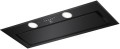 |
|---|---|---|
| Electrolux LFG825K black | Electrolux LFG716R black | |
| Outdated Product | Outdated Product | |
| TOP sellers | ||
The "Breeze" function — the hood operates at minimum speed and automatically turns off after 60 minutes. | ||
| Product type | built-in (in cabinet) | built-in (in cabinet) |
| Design | fully integrated | fully integrated |
Specs | ||
| Modes | extraction / recirculation | extraction / recirculation |
| Motor power | 230 W | 250 W |
| Flow of air (extraction) | 430 m³/h | 580 m³/h |
| Flow of air (intensive mode) | 650 m³/h | 700 m³/h |
| Minimum noise level | 46 dB | 54 dB |
| Max. noise level | 67 dB | 67 dB |
| Number of speeds | 3 | 3 |
| Number of motors | 1 | 1 |
Filtration | ||
| Grease filter | aluminium | aluminium |
| Ability to install carbon filter |  | |
| Carbon filter model | MCFB84ST, MCFB85PL | ECFFB01 |
| Filter indicator | |  |
Features | ||
| Lighting | LED lamps | LED lamp |
| Controls | push-buttons | touch controls |
| Sleep timer | | |
| Hob to hood | | |
| Perimeter suction | | |
More specs | ||
| Energy class | A | A |
| Duct diameter | 150 mm | 150 mm |
| Height (max) | 43.6 cm | 33.1 cm |
| Width | 54.2 cm | 54 cm |
| Depth | 30 cm | 30 cm |
| Weight | 11.1 kg | |
| Country of origin | Italy | |
| Color | ||
| Added to E-Catalog | december 2025 | october 2020 |


Compare Electrolux LFG825K and LFG716R
You may be interested in
My comparisons
Electrolux LFG716R often compared


Glossary
Motor power
The power of the hood at maximum speed.
The more powerful the device, the more performant it is, usually. However, there is no rigid dependence here, and hoods of the same power may differ in actual performance. So it is worth evaluating power consumption in terms of power first of all: the lower this indicator, the more economical the device. And when evaluating performance, you need to look not so much at power as at the directly claimed flow of the air (see below).
The more powerful the device, the more performant it is, usually. However, there is no rigid dependence here, and hoods of the same power may differ in actual performance. So it is worth evaluating power consumption in terms of power first of all: the lower this indicator, the more economical the device. And when evaluating performance, you need to look not so much at power as at the directly claimed flow of the air (see below).
Flow of air (extraction)
The performance of the hood in extraction mode at maximum speed shows the real possibilities for air purification. Since this parameter is several times less than the motor performance (maximum performance), not all manufacturers indicate this value, trying to present large and beautiful numbers. A similar situation can be observed among other devices. For example, in vacuum cleaners, the total power is many times greater than the suction power; in acoustics, mediocre brands prefer to list peak power instead of nominal power. Therefore, motor performance and extraction performance can not be compared. However, high-performance motors will also give high performance in extraction mode. And it may well be that the conditional Bosch with an extraction performance of 300 m³/h will be better than another hood with a maximum motor performance of 500 m³/h.
Flow of air (intensive mode)
Extraction flow of the air when using intensive mode. This mode is used in case of emergency on the stove, such as burnt food, spilt liquid, etc., which give off a lot of smoke and an extremely unpleasant smell. In turn, the intensive mode forces the hood to run at maximum speed, thereby increasing its performance even more (compared to performance at maximum speed). However, this function is activated for a short time (so the motor does not burn out). Therefore this mode is not considered standard, and it will not be possible to use it in everyday cooking.
Minimum noise level
The volume at which the device operates in the quietest mode. Usually (but not necessarily) it is the minimum power mode.
The decibels in which the noise level is measured are non-linear units, so it is easiest to use comparison tables to estimate a specific value. Here is the simplest table for minimum noise in modern hoods:
— 20 dB. Almost inaudible. The volume of a whisper at a distance of 1 m, the sound background in an open field on a calm day.
— 30 dB. The whisper, the ticking of the clock. The maximum noise level allowed for residential premises at night.
— 40 dB. The volume of normal human speech. The maximum permissible sound background (permanent) for living quarters during the day.
— 50 dB. Conversation of several people in medium tones.
— 60 dB. Loud talk.
— 65 – 68 dB — background noise on a city street, a vacuum cleaner engine at a distance of 2 – 3 m. The highest noise level among modern hoods is typical for powerful performant models.
When choosing according to this indicator, note that, other things being equal, a quieter device will, accordingly, cost more.
The decibels in which the noise level is measured are non-linear units, so it is easiest to use comparison tables to estimate a specific value. Here is the simplest table for minimum noise in modern hoods:
— 20 dB. Almost inaudible. The volume of a whisper at a distance of 1 m, the sound background in an open field on a calm day.
— 30 dB. The whisper, the ticking of the clock. The maximum noise level allowed for residential premises at night.
— 40 dB. The volume of normal human speech. The maximum permissible sound background (permanent) for living quarters during the day.
— 50 dB. Conversation of several people in medium tones.
— 60 dB. Loud talk.
— 65 – 68 dB — background noise on a city street, a vacuum cleaner engine at a distance of 2 – 3 m. The highest noise level among modern hoods is typical for powerful performant models.
When choosing according to this indicator, note that, other things being equal, a quieter device will, accordingly, cost more.
Carbon filter model
The model of the carbon filter compatible with the hood. For more information about such a filter, see "Ability to install carbon filter". Here we note that the carbon filter is not always supplied in a kit, and its service life is limited, periodic replacement is required. Anyway, the data on the filter model makes it much easier to find.
Filter indicator
The presence of an indicator signaling the clogging of the filter and the need to clean/replace it. Both grease and carbon filters can be equipped with such an indicator (see above for the filters themselves). One of the options for such an indicator is a pattern applied to the filter surface itself, and a signal about the need for replacement may be the disappearance or, conversely, the appearance of the pattern. A more advanced option is a timer that tracks the total operating time and gives a signal when the filter resource is exhausted.
Lighting
Lighting method provided as standard in the hood.
— Incandescent lamp. The simplest and most affordable of modern lighting sources. The main advantage of incandescent lamps is their low cost. In addition, they give a fairly eye-pleasing light in warm colours. On the other hand, such lamps are the most energy-intensive. Besides, they get very hot during operation.
— Halogen lamp. An improved version of the incandescent lamps described above. They are distinguished by higher brightness at lower power consumption while also having a spectrum of luminescence that is pleasing to the eye. At the same time, halogen lamps are still inferior in terms of efficiency to fluorescent and LED lamps.
— Fluorescent lamp. Also known as "fluorescent light bulbs" or "energy-saving light bulbs". One of the advantages of such lamps is just low power consumption — many times lower than that of incandescent lamps (although higher than that of LEDs). The light from fluorescent lamps is white, rather cold; this can be both an advantage and a disadvantage, depending on personal preferences and interior features. But of the unambiguous shortcomings, it is worth noting that most of these lamps contain mercury vapour in the flask; because of this, failed light bulbs must be disposed of according to special rules, and a broken lamp can become a source of health problems.
— Light-emitting diodes (LED). The most advanced of mod...ern lighting sources. LEDs are highly energy-efficient. They are more economical than incandescent lamps, and they practically do not heat up during operation. The light from such sources is neutral white, which is quite suitable for most cases. The disadvantage of LEDs is a rather high price.
Note that many modern hoods allow you to replace a regular light source — for example, a halogen lamp can be changed to a fluorescent or LED lamp with the same base.
— Incandescent lamp. The simplest and most affordable of modern lighting sources. The main advantage of incandescent lamps is their low cost. In addition, they give a fairly eye-pleasing light in warm colours. On the other hand, such lamps are the most energy-intensive. Besides, they get very hot during operation.
— Halogen lamp. An improved version of the incandescent lamps described above. They are distinguished by higher brightness at lower power consumption while also having a spectrum of luminescence that is pleasing to the eye. At the same time, halogen lamps are still inferior in terms of efficiency to fluorescent and LED lamps.
— Fluorescent lamp. Also known as "fluorescent light bulbs" or "energy-saving light bulbs". One of the advantages of such lamps is just low power consumption — many times lower than that of incandescent lamps (although higher than that of LEDs). The light from fluorescent lamps is white, rather cold; this can be both an advantage and a disadvantage, depending on personal preferences and interior features. But of the unambiguous shortcomings, it is worth noting that most of these lamps contain mercury vapour in the flask; because of this, failed light bulbs must be disposed of according to special rules, and a broken lamp can become a source of health problems.
— Light-emitting diodes (LED). The most advanced of mod...ern lighting sources. LEDs are highly energy-efficient. They are more economical than incandescent lamps, and they practically do not heat up during operation. The light from such sources is neutral white, which is quite suitable for most cases. The disadvantage of LEDs is a rather high price.
Note that many modern hoods allow you to replace a regular light source — for example, a halogen lamp can be changed to a fluorescent or LED lamp with the same base.
Controls
The control method provided in the hood.
— Push-buttons. The most popular control method in modern hoods can be provided in devices of any functionality and price category — from low-cost models, where buttons directly control the motor, to high-end solutions with advanced electronic circuits.
— Rotary knobs. Control with rotary knobs, sometimes supplemented by buttons or touch sensors. A rather specific option found mainly in high-end hoods, where rotary knobs are part of the design.
— Slider. Control using the lever moved on the special panel. Usually, only power is regulated in this way: the farther the slider is from the neutral position, the more air the hood draws. A fairly universal control method, found in hoods of all price categories.
— Touch controls. Control using touch panels is considered a sign of expensive high-end hoods. It is because it makes sense to use such panels mainly with advanced control electronics and they are poorly suited for low-cost devices. From a practical point of view, the touch controls are remarkable for their ease of use and ease of cleaning: a light touch is enough to give a command, and the panel itself has no slots or protrusions, making it easy to clean dirt.
— Push-buttons. The most popular control method in modern hoods can be provided in devices of any functionality and price category — from low-cost models, where buttons directly control the motor, to high-end solutions with advanced electronic circuits.
— Rotary knobs. Control with rotary knobs, sometimes supplemented by buttons or touch sensors. A rather specific option found mainly in high-end hoods, where rotary knobs are part of the design.
— Slider. Control using the lever moved on the special panel. Usually, only power is regulated in this way: the farther the slider is from the neutral position, the more air the hood draws. A fairly universal control method, found in hoods of all price categories.
— Touch controls. Control using touch panels is considered a sign of expensive high-end hoods. It is because it makes sense to use such panels mainly with advanced control electronics and they are poorly suited for low-cost devices. From a practical point of view, the touch controls are remarkable for their ease of use and ease of cleaning: a light touch is enough to give a command, and the panel itself has no slots or protrusions, making it easy to clean dirt.
Sleep timer
A timer that automatically turns off the hood after a predetermined time. With such a system, you do not need to wait until the completion of ventilation and turn off the device manually — just set the timer, and you can safely leave the kitchen on your own business; the hood will turn itself off at the right time.