
Comparison Agent 010 X vs Agent 007 X
Add to comparison |  | 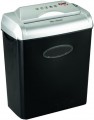 |
|---|---|---|
| Agent 010 X | Agent 007 X | |
from $86.16 | from $61.84 | |
| TOP sellers | ||
| Security level (DIN 66399) | P-4 | P-4 |
Specs | ||
| Shredding Items | staples paper clips credit cards CDs/DVDs | staples paper clips |
| Cut Style | cross | cross |
| Fragment sizes | 4x45 mm | 4x45 mm |
| Gap Size | 226 mm | 226 mm |
| Shredding speed | 70 mm/s | 50 mm/s |
| Sheets per load | 10 | 7 |
| Duty cycle | 2 min | 2 min |
| Break time | 20 min | 40 min |
| Wastebin capacity | 25 L | 13 L |
| Features | auto start/stop reverse overheat protection | auto start/stop reverse overheat protection |
General | ||
| Noise level | 65 dB | 65 dB |
| Dimensions (HxWxD) | 420x343x246 mm | 390x330x174 mm |
| Weight | 13 kg | |
| Added to E-Catalog | september 2013 | september 2013 |


Compare Agent 010 X and 007 X
You may be interested in
Agent 007 X often compared

Glossary
Shredding Items
Types of media and materials that the shredder can utilize. Note that, by definition, all such devices are capable of working with paper documents, so paper is not mentioned in this paragraph (some models are generally only compatible with paper and do not allow using other materials). However, shredders with the ability to utilize various additional items are more common — mainly staplers, paper clips, credit cards and/or CDs/DVDs. Here are the features of each of these options:
— Staples. An auxiliary function designed to ensure that stapled materials do not have to be separated before being loaded into the shredder. Allows you to significantly save time when utilizing of such materials, especially in large volumes; also provides a correct operation guarantee in case of accidental contact with the staples.
— Paper clips. Paper clips are removed much easier than staplers and there is no problem with them even with a large amount of documents. Therefore, this function is rather an insurance against getting such a clip into the device along with the document.
— Credit cards. The ability to recycle various plastic cards with magnetic media — credit cards, passes, etc. This feature at least prevents the illegal use of such cards, and with a high security level it allows you to...keep the fact of the existence of a card in secret. Actually, the security level for such utilization is indicated in the generally accepted standard DIN 66399, as like as for paper, and there are seven of them:
— Staples. An auxiliary function designed to ensure that stapled materials do not have to be separated before being loaded into the shredder. Allows you to significantly save time when utilizing of such materials, especially in large volumes; also provides a correct operation guarantee in case of accidental contact with the staples.
— Paper clips. Paper clips are removed much easier than staplers and there is no problem with them even with a large amount of documents. Therefore, this function is rather an insurance against getting such a clip into the device along with the document.
— Credit cards. The ability to recycle various plastic cards with magnetic media — credit cards, passes, etc. This feature at least prevents the illegal use of such cards, and with a high security level it allows you to...keep the fact of the existence of a card in secret. Actually, the security level for such utilization is indicated in the generally accepted standard DIN 66399, as like as for paper, and there are seven of them:
- 1 — the card remains intact, its surface is mechanically damaged;
- 2 — the card is cut into pieces with an area of less than 2000 mm²;
- 3 — size of pieces less than 320 mm²;
- 4 — less than 160 mm²;
- 5 — less than 30 mm²;
- 6 — less than 10 mm²;
- 7 — less than 2.5 mm².
- 1 — the disk is cut into pieces with an area of less than 2000 mm²;
- 2 — less than 800 mm²;
- 3 — less than 160 mm²
- 4 — less than 30 mm²;
- 5 — less than 10 mm²;
- 6 — less than 5 mm²;
- 7 — less than 0.2 mm².
Shredding speed
The speed that processed unit moves through the shredding mechanism during utilization. Accordingly, the higher this indicator, the higher the productivity of the shredder and the more units it is able to shred in a certain time. Knowing the volume of the documents to be shredded, you can easily determine the time required for batch utilization: for example, with a speed of 45 mm/s, one load of standard A4 sheets (length 297 mm) will require 297/45=6.6 s.
However, it should be taken into account that this parameter is usually indicated for paper of a certain density — 80 g/m² (standard office paper) or even 70 g/m², depending on the manufacturer. When working with thicker paper, as well as other materials (see "Shredding Items"), the shredding rate may be significantly lower than stated.
However, it should be taken into account that this parameter is usually indicated for paper of a certain density — 80 g/m² (standard office paper) or even 70 g/m², depending on the manufacturer. When working with thicker paper, as well as other materials (see "Shredding Items"), the shredding rate may be significantly lower than stated.
Sheets per load
The number of sheets that the shredder is capable of processing at one time — in other words, the largest size of a stack of sheets that can be loaded into the device. Most modern shredders can handle multiple sheets; up to 5 pcs at a time is considered a very limited indicator, up to 10 pcs — a small one, 11 – 15 pcs can be called an average value, 16 – 20 pcs — quite good, and in the most powerful models this figure exceeds 20 pcs.
Note that this parameter is given for paper of a certain grammage (and, accordingly, thickness). At the same time, the East European standard for office paper is a grammage of 80 g/m², and in many European countries thinner paper is used with a grammage of 70 g/m², and it is for it that the capacity of many shredders is indicated. Therefore, if this moment is not specified in the specs, it is best to load the shredder not up to limit values, making a margin of 1 sheet per 8 sheets of capacity — 1 sheet with a stack thickness of up to 8 sheets, 2 sheets with a stack thickness of 8 to 16 sheets, etc. However, other conditions for density may be specified in the user manual.
Also note that the number of sheets per load is determined by manufacturers based on the results of tests under perfect conditions — in the absence of staples on paper, with low humidity,...optimal voltage in the mains, perfect sharpening of knives, etc. In fact, any deviation from these indicators affect some decrease in efficiency.
Note that this parameter is given for paper of a certain grammage (and, accordingly, thickness). At the same time, the East European standard for office paper is a grammage of 80 g/m², and in many European countries thinner paper is used with a grammage of 70 g/m², and it is for it that the capacity of many shredders is indicated. Therefore, if this moment is not specified in the specs, it is best to load the shredder not up to limit values, making a margin of 1 sheet per 8 sheets of capacity — 1 sheet with a stack thickness of up to 8 sheets, 2 sheets with a stack thickness of 8 to 16 sheets, etc. However, other conditions for density may be specified in the user manual.
Also note that the number of sheets per load is determined by manufacturers based on the results of tests under perfect conditions — in the absence of staples on paper, with low humidity,...optimal voltage in the mains, perfect sharpening of knives, etc. In fact, any deviation from these indicators affect some decrease in efficiency.
Break time
The minimum break time required by the shredder after a full cycle of work (see above).
A break is required so that the motor and mechanisms of the device can cool down after the intense loads that they are subjected to during operation. Moreover, if the operating time was less than a full cycle, then the break can also be made shorter; however, if the device has worked for more than half of the cycle, for a full assurance it is still worth to take a break for all the time intended for it. Some models may provide other recommendations in this regard — they should be specified in user's manual.
A break is required so that the motor and mechanisms of the device can cool down after the intense loads that they are subjected to during operation. Moreover, if the operating time was less than a full cycle, then the break can also be made shorter; however, if the device has worked for more than half of the cycle, for a full assurance it is still worth to take a break for all the time intended for it. Some models may provide other recommendations in this regard — they should be specified in user's manual.
Wastebin capacity
The volume of the waste bin that is filling with shredded materials after passing through the shredder. The larger it is, the less often you will have to empty the basket; at the same time, large containers increase both the weight and dimensions and the cost rate of the device. For comparison: the volume of a standard household bucket is about 10 liters, a shredder with a basket of such a capacity will have dimensions of about 35x30x15 cm and belongs to the entry level in terms of capacity.