
Comparison Naturehike MJ300 vs Naturehike M300
Add to comparison |  | 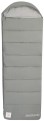 |
|---|---|---|
| Naturehike MJ300 | Naturehike M300 | |
| Outdated Product | from $59.99 | |
| TOP sellers | ||
| By features | camping | camping |
| Type | bag-cocoon | blanket bag |
| Suitable for | universal | universal |
| Seasonality | spring/autumn | spring/autumn |
| Weight | 1.1 kg | 1.5 kg |
Temperature and materials | ||
| comfort t° (for men) | 4 °C | 6 °C |
| t° limit (for men) | -1 °C | 1 °C |
| comfort t° (for women) | 4 °C | 6 °C |
| t° limit (for women) | -1 °C | 1 °C |
| extreme t° | -17 °C | -13 °C |
| External material | polyester | polyester |
| Inner material | polyester | cotton |
| Insulation | synthetics | |
| Insulation layers | 1 | 1 |
Features | ||
| Equipment | canopy insulated zip (fastener) compression bag | removable hood fastening possibility inner pocket insulated zip (fastener) drying loops compression bag |
| Zipper | side | side |
General | ||
| Bag dimensions | 205x75 cm | 220x80x68 cm |
| Recommended height, up to | 185 cm | |
| Dimensions (folded) | 35x23x23 cm | 43x25x25 cm |
| Volume (folded) | 26.9 l | |
| Color | ||
| Added to E-Catalog | september 2025 | may 2024 |


Compare Naturehike MJ300 and M300
You may be interested in
My comparisons
Naturehike M300 often compared


Glossary
Type
- Cocoon bag. Cocoon bags have an uneven width: they are wider at the shoulders, and narrow towards the legs. This form is considered optimal for keeping warm due to the small (compared to a blanket bag) area of \u200b\u200bthe outer surface of the sleeping bag, as well as the fact that it is quite dense to lie in a cocoon. As a consequence, most camping and expedition sleeping bags are of this type (see "Intended Use"). The disadvantage of cocoons is somewhat less comfort than blanket bags.
- Blanket bag. Bags of this type are rectangular in shape, with a uniform width along the entire length. They are somewhat less suitable for low temperatures than cocoons, however, they are more convenient and versatile: there is more free space in the bag itself, and the design usually allows you to unzip it completely and use it as a blanket or bedding.
- Bag-overalls. Sleeping bag, made, in accordance with the name, in the form of overalls and having sleeves and legs. In such a product, you can not only sleep, but also move around the camp; some manufacturers directly position the overalls as a solution for tech "who hate to get out of a warm sleeping bag in the morning." Such “clothing”, as a rule, is not an obstacle either during passive recreation like gatherings around a fire, or even during active activities like chopping firewood. The design usually provides...cutouts for the hands, as well as removable "boots" that can be removed before putting on more serious shoes or used as "slippers" for walking a few meters. In terms of direction (see above), overalls are usually camping bags - more traditional designs are better suited for trekking and even more expeditionary use.
— Bivouac. A bivouac bag is a windproof and waterproof cover for a sleeping bag. Initially, the bivouac was created for mountain climbing and winter hiking. Bivi come with an arch at the head and without it. Bivouac bags are made of breathable membrane fabric. They allow you to use sleeping bags with rugs or mats of different seasonality. The bivouac takes up minimal space in a backpack, is light in weight, does not require selection of an installation site, and dries quickly after rain. This attribute of tourist ammunition will come in handy for tech who do not want to take a tent on a hike or sleep under an awning.
- Blanket bag. Bags of this type are rectangular in shape, with a uniform width along the entire length. They are somewhat less suitable for low temperatures than cocoons, however, they are more convenient and versatile: there is more free space in the bag itself, and the design usually allows you to unzip it completely and use it as a blanket or bedding.
- Bag-overalls. Sleeping bag, made, in accordance with the name, in the form of overalls and having sleeves and legs. In such a product, you can not only sleep, but also move around the camp; some manufacturers directly position the overalls as a solution for tech "who hate to get out of a warm sleeping bag in the morning." Such “clothing”, as a rule, is not an obstacle either during passive recreation like gatherings around a fire, or even during active activities like chopping firewood. The design usually provides...cutouts for the hands, as well as removable "boots" that can be removed before putting on more serious shoes or used as "slippers" for walking a few meters. In terms of direction (see above), overalls are usually camping bags - more traditional designs are better suited for trekking and even more expeditionary use.
— Bivouac. A bivouac bag is a windproof and waterproof cover for a sleeping bag. Initially, the bivouac was created for mountain climbing and winter hiking. Bivi come with an arch at the head and without it. Bivouac bags are made of breathable membrane fabric. They allow you to use sleeping bags with rugs or mats of different seasonality. The bivouac takes up minimal space in a backpack, is light in weight, does not require selection of an installation site, and dries quickly after rain. This attribute of tourist ammunition will come in handy for tech who do not want to take a tent on a hike or sleep under an awning.
Weight
Since a sleeping bag is a travel outfit, its weight can be one of the key characteristics. Two points should be taken into account here: firstly, more insulation usually requires more material and increases weight, and secondly, warm models with low weight are much more expensive than heavier options with the same temperature characteristics.
Also, when choosing a sleeping bag, you should decide what exactly you are buying it for. If we are talking about picnics, festivals and other simple trips to nature without long walks, or if you plan to carry equipment by car, you can not pay much attention to weight, focus on other characteristics. If you plan to go on long hiking or cycling trips, you should choose a model with a minimum weight.
As for specific numbers, most modern sleeping bags are in the range of 1.1 – 1.5 kg or 1.6 – 2 kg, although there are quite a few ultra-light models — 1 kg or less. An indicator of 2.1 – 2.5 kg is already considered quite significant, and a weight of 2.6 – 3 kg or more is found mainly in two types of sleeping bags: separate expeditionary models with a high degree of insulation, as well as double products.
Also, when choosing a sleeping bag, you should decide what exactly you are buying it for. If we are talking about picnics, festivals and other simple trips to nature without long walks, or if you plan to carry equipment by car, you can not pay much attention to weight, focus on other characteristics. If you plan to go on long hiking or cycling trips, you should choose a model with a minimum weight.
As for specific numbers, most modern sleeping bags are in the range of 1.1 – 1.5 kg or 1.6 – 2 kg, although there are quite a few ultra-light models — 1 kg or less. An indicator of 2.1 – 2.5 kg is already considered quite significant, and a weight of 2.6 – 3 kg or more is found mainly in two types of sleeping bags: separate expeditionary models with a high degree of insulation, as well as double products.
comfort t° (for men)
Some manufacturers use their own criteria to designate this temperature; however, they predominantly use the accepted standard. According to it, the comfort temperature is the lowest ambient temperature at which a man in thermal underwear can comfortably sleep in a sleeping bag all night (a minimum of 8 hours) without waking from the cold, in a relaxed position. Naturally, actual comfort will depend on the individual's body and preparation.
t° limit (for men)
Some manufacturers use their own criteria to define this temperature, but the generally accepted standard is predominantly used. According to this standard, the comfort limit temperature is the lowest ambient air temperature at which a man in thermal underwear can sleep in a sleeping bag all night (at least 8 hours) in a heat-conserving position (curled up in the "fetal position"), maintaining thermal balance. Naturally, in each individual case, comfort will also depend on the characteristics of the individual's body and the tourist's preparation.
comfort t° (for women)
Some manufacturers use their own criteria to designate this temperature, but predominantly, the common standard is used. According to it, the comfort temperature is the lowest ambient air temperature at which a woman in thermal underwear can sleep comfortably, without waking up from the cold, in a sleeping bag throughout the night (at least 8 hours) in a relaxed position. Of course, actual comfort will depend on the individual's body characteristics and specific person's preparation.
t° limit (for women)
Some manufacturers use their own criteria to indicate this temperature, but the generally accepted standard is predominantly used. According to this standard, the comfort limit temperature is the lowest ambient air temperature at which a woman in thermal underwear can sleep in a sleeping bag for the entire night (at least 8 hours) in a heat-conserving position (curled up), maintaining thermal balance. Naturally, comfort will also depend on the individual characteristics of the organism and the preparation of the tourist in each specific case.
extreme t°
Extreme temperature of this sleeping bag.
Some manufacturers use their own criteria to designate this temperature, but predominantly a commonly accepted standard is used. According to it, the extreme temperature is the temperature at which a prepared female traveler with a sturdy build (height 160 cm, weight 60 kg) in thermal underwear can spend the night (at least 6 hours) in the sleeping bag in a heat-conserving position ("curled up") without the risk of hypothermia. These criteria are based on the considerations that a person's tolerance to cold depends on gender (women feel colder than men), body build (slim people are more sensitive to cold), and preparation. It should be noted here that if you are not accustomed to camping conditions, the extreme temperature should be considered as the lowest temperature at which the sleeping bag can be used without life risk. Comfort is not guaranteed, and there is a high chance of hypothermia; therefore, in such temperatures, not only quality thermal wear might be needed but also additional insulation.
Some manufacturers use their own criteria to designate this temperature, but predominantly a commonly accepted standard is used. According to it, the extreme temperature is the temperature at which a prepared female traveler with a sturdy build (height 160 cm, weight 60 kg) in thermal underwear can spend the night (at least 6 hours) in the sleeping bag in a heat-conserving position ("curled up") without the risk of hypothermia. These criteria are based on the considerations that a person's tolerance to cold depends on gender (women feel colder than men), body build (slim people are more sensitive to cold), and preparation. It should be noted here that if you are not accustomed to camping conditions, the extreme temperature should be considered as the lowest temperature at which the sleeping bag can be used without life risk. Comfort is not guaranteed, and there is a high chance of hypothermia; therefore, in such temperatures, not only quality thermal wear might be needed but also additional insulation.
Inner material
— Polyester. Synthetic material. The advantages of polyester are good water-repellent properties, strength and durability. On the other hand, it, like many synthetic materials, is not very pleasant to the touch and can cause some discomfort, especially in warm weather, when you can sleep in one underwear.
— Flannel. Natural fabric of cotton or wool type. It is pleasant to the touch and quite versatile: it is well suited for both warm and even hot weather (due to naturalness), and for cold weather (it saves heat well). The disadvantages of flannel are the tendency to wear (the appearance of "pellets") with prolonged use, as well as high hygroscopicity — the fabric absorbs moisture well and dries for a long time.
— Cotton. Cotton, like flannel, belongs to natural materials and is well suited for use in hot weather, however, the thermal insulation of such an “insider” is significantly lower. Among the other advantages of cotton, it is worth noting strength, resistance to water, temperature extremes and light (although it may turn yellow in the light); of the shortcomings is hygroscopicity (although less than that of flannel).
— Polycotton. Combined material based on a combination of polyester and cotton in varying proportions. Designed to combine the advantages of both materials. Polycotton is strong, durable,...has good water repellency while being nicer to the touch than pure polyester and is better for use in hot weather.
— Fleece. Synthetic material, widely used for the manufacture of warm clothing. It has the appropriate characteristics, in particular it is light, retains heat well, including in a wet state; passes the evaporated moisture ("breathes"), does not accumulate it and dries quickly. At the same time, fleece is somewhat less durable than the rest of the synthetics, and also catches fire easily, therefore it requires some caution in the presence of fires and other sources of fire nearby.
— Nylon. A synthetic material similar in most properties to polyester (see above), but somewhat less durable and resistant to moisture (tends to stretch when wet). It is used mainly in inexpensive models of sleeping bags.
— Flannel. Natural fabric of cotton or wool type. It is pleasant to the touch and quite versatile: it is well suited for both warm and even hot weather (due to naturalness), and for cold weather (it saves heat well). The disadvantages of flannel are the tendency to wear (the appearance of "pellets") with prolonged use, as well as high hygroscopicity — the fabric absorbs moisture well and dries for a long time.
— Cotton. Cotton, like flannel, belongs to natural materials and is well suited for use in hot weather, however, the thermal insulation of such an “insider” is significantly lower. Among the other advantages of cotton, it is worth noting strength, resistance to water, temperature extremes and light (although it may turn yellow in the light); of the shortcomings is hygroscopicity (although less than that of flannel).
— Polycotton. Combined material based on a combination of polyester and cotton in varying proportions. Designed to combine the advantages of both materials. Polycotton is strong, durable,...has good water repellency while being nicer to the touch than pure polyester and is better for use in hot weather.
— Fleece. Synthetic material, widely used for the manufacture of warm clothing. It has the appropriate characteristics, in particular it is light, retains heat well, including in a wet state; passes the evaporated moisture ("breathes"), does not accumulate it and dries quickly. At the same time, fleece is somewhat less durable than the rest of the synthetics, and also catches fire easily, therefore it requires some caution in the presence of fires and other sources of fire nearby.
— Nylon. A synthetic material similar in most properties to polyester (see above), but somewhat less durable and resistant to moisture (tends to stretch when wet). It is used mainly in inexpensive models of sleeping bags.
Insulation
— Synthetic. Insulation based on synthetic fibers, usually polyester. The main advantage of this material is its resistance to moisture: when wet, it not only retains its strength but also continues to maintain most of its thermal insulation properties, and drying such a sleeping bag is easy — when hung, most of the water drains off in the first few minutes. Additionally, synthetic materials do not cause allergies. On the other hand, the overall thermal insulation of such sleeping bags is somewhat lower than that of down, and prolonged storage in a compression sack further reduces it due to fiber compression. Modern sleeping bags may use short and long synthetic fibers; the first option generally has better characteristics, while the second is significantly cheaper.
— Down. Natural duck or goose down is mainly used in premium-class sleeping bags. With smaller dimensions and weight than synthetic materials, this material has significantly better thermal insulation. On the other hand, down is very sensitive to moisture, losing its insulating properties when wet and drying quite slowly. Therefore, many down bags have special water-repellent coatings and/or come with synthetic waterproof covers. The prices of such sleeping bags are noticeably higher than synthetic ones. Overall, down bags are considered suitable primarily for winter hikes and mountain climbing. It is also worth noting that people prone t...o allergies should use this material with caution.
— Combined. This category includes sleeping bags based on high-quality synthetic materials designed to replace down (see above). Such materials are comparable to down in terms of insulation, lightness, and compactness, while lacking the main drawback — sensitivity to moisture: they do not absorb water and dry significantly faster. However, the price of such sleeping bags is accordingly higher.
— Cotton. Sleeping bags with cotton filling provide comfort and good thermoregulation due to the natural properties of the material. Cotton is soft, hypoallergenic, and pleasant to the skin, making these bags suitable for people with sensitive skin. However, cotton filling is less effective at retaining heat compared to synthetic materials and dries slowly when wet, making it less practical for hiking in damp or cold weather. These bags are more suitable for camping in dry and moderate climates.
— Down. Natural duck or goose down is mainly used in premium-class sleeping bags. With smaller dimensions and weight than synthetic materials, this material has significantly better thermal insulation. On the other hand, down is very sensitive to moisture, losing its insulating properties when wet and drying quite slowly. Therefore, many down bags have special water-repellent coatings and/or come with synthetic waterproof covers. The prices of such sleeping bags are noticeably higher than synthetic ones. Overall, down bags are considered suitable primarily for winter hikes and mountain climbing. It is also worth noting that people prone t...o allergies should use this material with caution.
— Combined. This category includes sleeping bags based on high-quality synthetic materials designed to replace down (see above). Such materials are comparable to down in terms of insulation, lightness, and compactness, while lacking the main drawback — sensitivity to moisture: they do not absorb water and dry significantly faster. However, the price of such sleeping bags is accordingly higher.
— Cotton. Sleeping bags with cotton filling provide comfort and good thermoregulation due to the natural properties of the material. Cotton is soft, hypoallergenic, and pleasant to the skin, making these bags suitable for people with sensitive skin. However, cotton filling is less effective at retaining heat compared to synthetic materials and dries slowly when wet, making it less practical for hiking in damp or cold weather. These bags are more suitable for camping in dry and moderate climates.