
Comparison Kivi 40F720QB vs Kivi 40F710QB
Add to comparison |  | 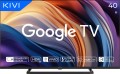 |
|---|---|---|
| Kivi 40F720QB | Kivi 40F710QB | |
| Outdated Product | Outdated Product | |
| User reviews | ||
| TOP sellers | ||
| Size | 40 " | 40 " |
| Operating system | Google TV (Android TV) | Google TV (Android TV) |
Display | ||
| Matrix | QLED | IPS |
| Backlight type | Direct LED | Direct LED |
| Screen surface | glossy | glossy |
| Resolution | 1920x1080 px | 1920x1080 px |
| Static contrast | 1 800:1 | |
| Frame rate | 50/60 Hz | 50/60 Hz |
| HDR support | HDR10 | HDR10 |
| Brightness / contrast enhancement |  |  |
Multimedia | ||
| Sound power | 16 W | 20 W |
| Number of speakers | 2 | 2 |
| Audio decoders | Dolby Audio | Dolby Audio |
| Digital tuner | DVB-T2 (terrestrial) DVB-C (cable) | DVB-T2 (terrestrial) DVB-C (cable) |
Features | ||
| Features | Wi-Fi Google Cast (Chromecast) Bluetooth v5.1 voice control Google Assistant | Wi-Fi Google Cast (Chromecast) Bluetooth v5.1 voice control Google Assistant |
Connectors | ||
| HDMI | 3 | 3 |
| HDMI technologies | ARC | ARC, CEC |
| Additional inputs | USB-A 2 pcs LAN composite AV input | USB-A 2 pcs LAN composite AV input |
| Outputs | mini-Jack (3.5 mm) headphones optical | mini-Jack (3.5 mm) headphones optical |
General | ||
| RAM | 1.5 GB | |
| Built-in memory | 8 GB | 8 GB |
| Wall mount | VESA 200x200 mm | VESA 200x200 mm |
| Stand shape | 2 separate legs | monolithic |
| Power consumption | 87 W | |
| Energy efficiency class | A | |
| Dimensions (WxHxD) | 892x573x200 mm | 892x542x223 mm |
| Dimensions without stand (WxHxD) | 892x509x86 mm | 892x509x86 mm |
| Weight | 5.3 kg | 5.3 kg |
| Color | ||
| Added to E-Catalog | august 2025 | december 2024 |


Compare Kivi 40F720QB and 40F710QB
You may be interested in
Kivi 40F720QB often compared

Kivi 40F710QB often compared


Glossary
Matrix
The type of matrix used in the TV. Among them, OLED, QLED, QD-OLED and NanoCell deserve the most attention, which are found in TVs of the relevant price category. Now more about each of them and other more classic options:
— OLED. TVs with screens that use organic light-emitting diodes — OLED. Such LEDs can be used both to illuminate a traditional LCD matrix, and as elements from which a screen is built. In the first case, the advantages of OLED over traditional LED are compactness, extremely low power consumption, backlight uniformity, as well as excellent brightness and contrast ratios. And in matrices, consisting entirely of OLED, these advantages are even more pronounced. The main disadvantages of OLED TVs are the high price (which, however, is constantly decreasing as the technology develops and improves), as well as the susceptibility of organic pixels to burn-in during long-term broadcast of static images or pictures with static elements (TV channel logo, information panel, etc.).
— QLED. TVs with screens using "quantum dot" technology — QLED. Such screens differ from conventional LED matrices in the design of the backlight: multilayer colour filters in such a backlight are replaced with a thin-film light-transmitting coating based on nanoparticles, and traditional white LEDs are replaced with blue ones. This a...llows to achieve a significant increase in brightness and colour saturation at the same time as improving the quality of colour reproduction, besides, it reduces the thickness and reduces the power consumption of the screen. The disadvantage of QLED matrices is traditional — the high price.
— QD-OLED. A kind of hybrid version of matrices that combine “quantum dots” (Quantum Dot) and organic light-emitting diodes (OLED) in one bottle. The QD-OLED modification was introduced by Samsung at the end of 2021 in response to advanced OLED panels from LG. The technology takes the best from QLED and OLED: it is based on blue LEDs, self-luminous pixels (instead of external backlighting) and “quantum dots”, which play the role of colour filters, but at the same time practically do not attenuate the light (unlike traditional filters) . Thanks to the use of a number of advanced solutions, the creators managed to achieve very impressive characteristics, significantly superior to many other OLED matrices. Among them are high peak brightness from 1000 nits (cd/m²), excellent contrast and black depth, as well as colour coverage of over 90% according to the BT.2020 standard and more than 120% according to DCI-P3. Such matrices are found mainly in flagship TV panels.
— IPS. A type of matrix originally designed for high quality colour rendering. Indeed, IPS screens produce bright and rich colours, have a good colour gamut, and demonstrate wide viewing angles. The initial disadvantage of this technology was the low response time, but in modern modifications of IPS this point has been practically eliminated. Matrices of this type are very popular in the advanced budget and mid-price segment of TV panels.
— *VA. In this case, we mean one of the varieties of VA (Vertical Alignment) type matrices - MVA, PVA, Super PVA, etc. Specific varieties may vary slightly in properties, but they all have common features. In fact, *VA matrices are a more affordable alternative to IPS panels: they are relatively inexpensive, provide fairly good colour reproduction and viewing angles of up to 178°. The main disadvantage of such screens is the long response time, but in modern models this has been practically eliminated thanks to the constant improvement of technology. *VA matrices are used in TVs that are positioned as functional and at the same time affordable models.
— PLS. In fact, it is one of the varieties of the IPS matrices described above, developed by Samsung. According to the manufacturer, in such matrices it was possible to achieve higher brightness and contrast than in traditional IPS, as well as to slightly reduce the cost.
— NanoCell. Matrix based on quantum dots. This type of matrix is used in LG TVs and was first introduced in 2017. NanoCell matrices use the structure of classic LCD displays. But unlike the latter, they use so-called quantum dots instead of the classic general backlight, which provide monochromatic light. NanoCell technology reduces power consumption while increasing colour gamut and viewing angle. It is worth noting separately that NanoCell matrices are not the only ones using quantum dot technology. Similar solutions are offered by: Samsung (QLED matrix), Sony (Triluminos matrix), Hisense (ULED).
— OLED. TVs with screens that use organic light-emitting diodes — OLED. Such LEDs can be used both to illuminate a traditional LCD matrix, and as elements from which a screen is built. In the first case, the advantages of OLED over traditional LED are compactness, extremely low power consumption, backlight uniformity, as well as excellent brightness and contrast ratios. And in matrices, consisting entirely of OLED, these advantages are even more pronounced. The main disadvantages of OLED TVs are the high price (which, however, is constantly decreasing as the technology develops and improves), as well as the susceptibility of organic pixels to burn-in during long-term broadcast of static images or pictures with static elements (TV channel logo, information panel, etc.).
— QLED. TVs with screens using "quantum dot" technology — QLED. Such screens differ from conventional LED matrices in the design of the backlight: multilayer colour filters in such a backlight are replaced with a thin-film light-transmitting coating based on nanoparticles, and traditional white LEDs are replaced with blue ones. This a...llows to achieve a significant increase in brightness and colour saturation at the same time as improving the quality of colour reproduction, besides, it reduces the thickness and reduces the power consumption of the screen. The disadvantage of QLED matrices is traditional — the high price.
— QD-OLED. A kind of hybrid version of matrices that combine “quantum dots” (Quantum Dot) and organic light-emitting diodes (OLED) in one bottle. The QD-OLED modification was introduced by Samsung at the end of 2021 in response to advanced OLED panels from LG. The technology takes the best from QLED and OLED: it is based on blue LEDs, self-luminous pixels (instead of external backlighting) and “quantum dots”, which play the role of colour filters, but at the same time practically do not attenuate the light (unlike traditional filters) . Thanks to the use of a number of advanced solutions, the creators managed to achieve very impressive characteristics, significantly superior to many other OLED matrices. Among them are high peak brightness from 1000 nits (cd/m²), excellent contrast and black depth, as well as colour coverage of over 90% according to the BT.2020 standard and more than 120% according to DCI-P3. Such matrices are found mainly in flagship TV panels.
— IPS. A type of matrix originally designed for high quality colour rendering. Indeed, IPS screens produce bright and rich colours, have a good colour gamut, and demonstrate wide viewing angles. The initial disadvantage of this technology was the low response time, but in modern modifications of IPS this point has been practically eliminated. Matrices of this type are very popular in the advanced budget and mid-price segment of TV panels.
— *VA. In this case, we mean one of the varieties of VA (Vertical Alignment) type matrices - MVA, PVA, Super PVA, etc. Specific varieties may vary slightly in properties, but they all have common features. In fact, *VA matrices are a more affordable alternative to IPS panels: they are relatively inexpensive, provide fairly good colour reproduction and viewing angles of up to 178°. The main disadvantage of such screens is the long response time, but in modern models this has been practically eliminated thanks to the constant improvement of technology. *VA matrices are used in TVs that are positioned as functional and at the same time affordable models.
— PLS. In fact, it is one of the varieties of the IPS matrices described above, developed by Samsung. According to the manufacturer, in such matrices it was possible to achieve higher brightness and contrast than in traditional IPS, as well as to slightly reduce the cost.
— NanoCell. Matrix based on quantum dots. This type of matrix is used in LG TVs and was first introduced in 2017. NanoCell matrices use the structure of classic LCD displays. But unlike the latter, they use so-called quantum dots instead of the classic general backlight, which provide monochromatic light. NanoCell technology reduces power consumption while increasing colour gamut and viewing angle. It is worth noting separately that NanoCell matrices are not the only ones using quantum dot technology. Similar solutions are offered by: Samsung (QLED matrix), Sony (Triluminos matrix), Hisense (ULED).
Static contrast
The level of static contrast provided by the TV screen.
Contrast in a general sense is the ratio in brightness between the brightest whites and the darkest blacks that the screen can produce. Other things being equal, the higher the screen contrast, the better the quality of colour reproduction and detail, the lower the likelihood that it will be impossible to see details in too bright or too dark areas of the image. Static contrast, on the other hand, describes the maximum difference in brightness that can be achieved within one frame without changing the brightness of the image — this is its difference from dynamic contrast (see below).
The values of static contrast are much lower than those of dynamic, but this characteristic is the most "honest". It is on it that the properties of the image seen on the screen at a particular moment depend, it is describes the basic properties of the screen, without taking into account the software tricks provided by the manufacturer in the hardware of the TV.
Contrast in a general sense is the ratio in brightness between the brightest whites and the darkest blacks that the screen can produce. Other things being equal, the higher the screen contrast, the better the quality of colour reproduction and detail, the lower the likelihood that it will be impossible to see details in too bright or too dark areas of the image. Static contrast, on the other hand, describes the maximum difference in brightness that can be achieved within one frame without changing the brightness of the image — this is its difference from dynamic contrast (see below).
The values of static contrast are much lower than those of dynamic, but this characteristic is the most "honest". It is on it that the properties of the image seen on the screen at a particular moment depend, it is describes the basic properties of the screen, without taking into account the software tricks provided by the manufacturer in the hardware of the TV.
Brightness / contrast enhancement
TV support for one or another brightness / contrast enhancement technology.
Usually, in this case, software image processing is implied, in such a way as to improve brightness and/or contrast (if necessary). Specific processing methods may be different — in particular, in some cases we are actually talking about turning standard content into HDR (see above), and some manufacturers do not specify technical details at all. The effectiveness of different technologies can also be different, and besides, it is highly dependent on the specific content: in some cases, the improvement will be obvious, in others it may be almost imperceptible. Also note that this feature is not always useful, so in most models it is turned off.
Usually, in this case, software image processing is implied, in such a way as to improve brightness and/or contrast (if necessary). Specific processing methods may be different — in particular, in some cases we are actually talking about turning standard content into HDR (see above), and some manufacturers do not specify technical details at all. The effectiveness of different technologies can also be different, and besides, it is highly dependent on the specific content: in some cases, the improvement will be obvious, in others it may be almost imperceptible. Also note that this feature is not always useful, so in most models it is turned off.
Sound power
The nominal power of the sound produced by the TV's sound system.
The larger the screen and the greater the estimated distance to the viewer, the more powerful the sound system must be in order to be heard normally. Manufacturers take this moment into account, moreover, most often they also provide a solid volume margin. So if a TV is bought for home viewing in a quiet, calm environment, you can not pay much attention to the sound power: it is guaranteed to be enough for such a usage. It makes sense to specifically look for models with high-power speakers for a noisy environment — for example, a cafe or other public space. Detailed recommendations on this matter can be found in special sources, but here we note that even in such cases, connecting external speakers can be a good alternative.
The larger the screen and the greater the estimated distance to the viewer, the more powerful the sound system must be in order to be heard normally. Manufacturers take this moment into account, moreover, most often they also provide a solid volume margin. So if a TV is bought for home viewing in a quiet, calm environment, you can not pay much attention to the sound power: it is guaranteed to be enough for such a usage. It makes sense to specifically look for models with high-power speakers for a noisy environment — for example, a cafe or other public space. Detailed recommendations on this matter can be found in special sources, but here we note that even in such cases, connecting external speakers can be a good alternative.
HDMI technologies
— VRR. VRR (Variable Refresh Rate) adaptive frame rate synchronization technology allows you to adjust the refresh rate of the image on the TV screen in real time in accordance with the frame rate output by the game console or connected computer. The function ensures smooth rendering of dynamic scenes, eliminates frame breaks, and guarantees comfortable and stable gameplay. Realizable technology with standard HDMI v 2.1.
— ALLM. Automatic low latency mode for games (Auto Low Latency Mode). The TV switches to game mode when it detects a game console connection. Reducing the output delay on the TV panel screen is provided by suspending part of the image processing functions. The ALLM mode can also be useful for karaoke and video calls.
eARC. HDMI v 2.1 has an enhanced eARC (enhanced Audio Return Channel). The technology allows you to send higher quality audio from your TV to your soundbar or AV receiver. It claims to support the latest high bit rate audio formats up to 192 kHz, uncompressed 5.1 and 7.1, and 32-channel uncompressed audio. eARC also supports Dolby TrueHD, DTS-HD Master Audio, DTS:X, Dolby Atmos.
— CEC. The CEC (Consumer Electronics Control) system is designed for remote control of equipment connected to the TV using a single remote control. The devices are connected to the TV panel using an HDMI cable.
— ALLM. Automatic low latency mode for games (Auto Low Latency Mode). The TV switches to game mode when it detects a game console connection. Reducing the output delay on the TV panel screen is provided by suspending part of the image processing functions. The ALLM mode can also be useful for karaoke and video calls.
eARC. HDMI v 2.1 has an enhanced eARC (enhanced Audio Return Channel). The technology allows you to send higher quality audio from your TV to your soundbar or AV receiver. It claims to support the latest high bit rate audio formats up to 192 kHz, uncompressed 5.1 and 7.1, and 32-channel uncompressed audio. eARC also supports Dolby TrueHD, DTS-HD Master Audio, DTS:X, Dolby Atmos.
— CEC. The CEC (Consumer Electronics Control) system is designed for remote control of equipment connected to the TV using a single remote control. The devices are connected to the TV panel using an HDMI cable.
RAM
The amount of random access memory (RAM) installed in the TV.
In general, this volume is selected by the manufacturer in such a way that the device can normally cope with the tasks that are claimed for it. On the other hand, all else being equal, more RAM ( 3 GB, 4 GB or more) usually means faster performance. This parameter is especially important if the TV runs on Android: such firmware allows the installation of additional applications that may have rather high requirements for RAM. However, TVs with 2 GB of RAM and below can also not be discounted — they just can't pull high-demanding applications. But do not forget that this is a TV, not a laptop.
In general, this volume is selected by the manufacturer in such a way that the device can normally cope with the tasks that are claimed for it. On the other hand, all else being equal, more RAM ( 3 GB, 4 GB or more) usually means faster performance. This parameter is especially important if the TV runs on Android: such firmware allows the installation of additional applications that may have rather high requirements for RAM. However, TVs with 2 GB of RAM and below can also not be discounted — they just can't pull high-demanding applications. But do not forget that this is a TV, not a laptop.
Stand shape
— 2 separate legs. Two legs as support are usually located on different sides of the lower face of the TV panel body. Such a design involves placing the TV on a large flat surface that extends along the entire lower side of the device. The TV is often more stable on two "legs" than on one leg.
— 1 leg on the platform. A support for the TV with a round or rectangular platform, which is in contact with the surface of the TV panel (table, stand, etc.) with its entire plane.
— 1 leg with supports. Stands of this kind consist of a single leg and a base of various geometric shapes that holds the TV. This solution ensures reliable stability of the TV panel, and in terms of design, it is a stylish element of the design of the structure.
— Monolithic. A solid stand with two or more attachment points to the bottom of the TV and monolithic frames as a solid support for installing the TV panel on a flat surface of a table or stand.
— 1 leg on the platform. A support for the TV with a round or rectangular platform, which is in contact with the surface of the TV panel (table, stand, etc.) with its entire plane.
— 1 leg with supports. Stands of this kind consist of a single leg and a base of various geometric shapes that holds the TV. This solution ensures reliable stability of the TV panel, and in terms of design, it is a stylish element of the design of the structure.
— Monolithic. A solid stand with two or more attachment points to the bottom of the TV and monolithic frames as a solid support for installing the TV panel on a flat surface of a table or stand.
Power consumption
The electrical power normally consumed by the TV. This parameter strongly depends on the screen size and sound power (see above), however, it can be determined by other parameters — primarily additional features and technologies implemented in the design. It is worth noting that most modern LCD TVs are quite economical, and most often this parameter does not play a significant role — in most cases, power consumption is about several tens of watts. And even large models with a diagonal of 70 – 90" consume about 200 – 300 W — this can be compared with the system unit of a low-power desktop PC.
Energy efficiency class
The energy efficiency class characterizes how efficiently the TV consumes electricity. Initially, the classes were denoted by simple Latin letters — A (the most efficient), B, C. However, later improved classes “A+ ”, “A++”, etc. appeared (the more "pluses", the more efficient the device).
The energy class will generally affect the price accordingly, but this difference will eventually pay off with lower electricity bills.
The energy class will generally affect the price accordingly, but this difference will eventually pay off with lower electricity bills.