
Comparison Kemot SER-2000 2 kVA / 1500 W vs Volt Polska AVR-2000VA 2 kVA / 1500 W
Add to comparison |  | 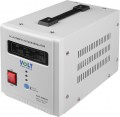 |
|---|---|---|
| Kemot SER-2000 2 kVA / 1500 W | Volt Polska AVR-2000VA 2 kVA / 1500 W | |
| Outdated Product | Outdated Product | |
| TOP sellers | ||
| AVR type | relay | relay |
| Input voltage | 230V (1 phase) | 230V (1 phase) |
| Power | 1500 W | 1500 W |
| Power | 2 kVA | 2 kVA |
Specs | ||
| Input voltage range | 150 – 270 В | 150 – 270 В |
| Output voltage accuracy (±) | 5 % | 8 % |
| Efficiency | 98 % | |
| Voltmeter | digital | digital |
Sockets | ||
| Grounded sockets | 2 | 2 |
Protection levels | ||
| Protection | overheating short circuit overload over / under voltage | overheating short circuit overload over / under voltage |
General | ||
| Installation | floor | floor |
| Cooling | passive | passive |
| Carrying handle |  | |
| Dimensions (HxWxD) | 145x235x170 mm | 170x146x237 mm |
| Weight | 4 kg | 3.9 kg |
| Added to E-Catalog | august 2025 | may 2022 |


Compare Kemot SER-2000 and Volt Polska AVR-2000VA
You may be interested in
Kemot SER-2000 often compared


Volt Polska AVR-2000VA often compared


Glossary
Output voltage accuracy (±)
The largest deviation from the nominal output voltage (230 V or 400 V, depending on the number of phases), which the regulator allows when operating in the normal input voltage range (see above). The smaller this deviation, the more efficiently the device works, the more accurately it adapts to “changes in the situation” and the less voltage fluctuations the connected load is exposed to.
When choosing for this parameter, it is worth considering first of all how demanding the connected devices are for voltage stability. On the one hand, high stability is good for any device, on the other hand, it usually means a high price. Accordingly, it usually does not make sense to buy an advanced stabilizer for an unpretentious load like light bulbs and heaters, but for sensitive devices like audio systems or computers, it can be very useful.
When choosing for this parameter, it is worth considering first of all how demanding the connected devices are for voltage stability. On the one hand, high stability is good for any device, on the other hand, it usually means a high price. Accordingly, it usually does not make sense to buy an advanced stabilizer for an unpretentious load like light bulbs and heaters, but for sensitive devices like audio systems or computers, it can be very useful.
Efficiency
The efficiency of the stabilizer is the ratio, expressed as a percentage, between the amount of electricity at the output of the device to the amount of energy at the input. In other words, efficiency describes how much of the energy received from the network the device transfers to the connected load without loss. And losses during operation will be inevitable — firstly, not a single transformer is perfect, and secondly, the control circuits of the stabilizer also require a certain amount of energy to work. At the same time, all these costs are quite small, and even in relatively simple modern models, the efficiency can reach 97-98%.