
Comparison Aruna SR 500 0.5 kVA / 300 W vs Logicpower LPT-500RL 0.5 kVA / 350 W
Add to comparison | 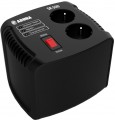 | 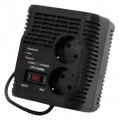 |
|---|---|---|
| Aruna SR 500 0.5 kVA / 300 W | Logicpower LPT-500RL 0.5 kVA / 350 W | |
| Outdated Product | from $26.48 | |
| TOP sellers | ||
| AVR type | relay | relay |
| Input voltage | 230V (1 phase) | 230V (1 phase) |
| Power | 300 W | 350 W |
| Power | 0.5 kVA | 0.5 kVA |
Specs | ||
| Input voltage range | 150 – 275 В | 160-250 В |
| Output voltage accuracy (±) | 10 % | 5 % |
| Efficiency | 98 % | 98 % |
| Voltmeter | in absent | in absent |
Sockets | ||
| Grounded sockets | 2 | 2 |
Protection levels | ||
| Protection | overheating short circuit overload over / under voltage | short circuit over / under voltage |
General | ||
| Installation | wall floor | floor |
| Cooling | passive | passive |
| IP protection rating | 20 | |
| Dimensions (HxWxD) | 150x125x125 mm | |
| Weight | 1.8 kg | 1.67 kg |
| Added to E-Catalog | september 2019 | september 2014 |


Compare Aruna SR 500 and Logicpower LPT-500RL
You may be interested in
My comparisons
Aruna SR 500 often compared


Logicpower LPT-500RL often compared


Glossary
Power
The maximum active power load permissible for this model.
Active power is the power consumed by AC devices for useful work or heat generation. Additionally, such devices consume reactive power — used for the function of specific components, primarily capacitors and inductive coils. The apparent power, measured in volt-amperes (kilovolt-amperes), is the sum of active and reactive power; see below for more on that. Here, we note that in simple household situations, active power data in watts is usually sufficient for calculations. This parameter is considered key when choosing voltage stabilizers for washing machines and for dishwashers: for the former, an optimal power range is from 2 to 5 kW, and for the latter, from 1.8 to 2.5 kW.
Regardless, the total active power of the connected load should not exceed the figures specified in the stabilizer's specifications. For full assurance, it's wise to have some reserve, though it shouldn't be too large — increasing permissible power significantly affects the size, weight, and price of the device. It's also worth mentioning that there are formulas to convert active power consumption to apparent power, considering the type of connected electrical appliance; these formulas can be found in specialized sources.
It should be noted that manufacturers don't always specify power in watts, sometimes only providing values in kVA. In such case...s, we apply an approximate conversion. Overall, while the value is approximate, it adequately describes the stabilizer's capabilities and helps match specific needs.
Active power is the power consumed by AC devices for useful work or heat generation. Additionally, such devices consume reactive power — used for the function of specific components, primarily capacitors and inductive coils. The apparent power, measured in volt-amperes (kilovolt-amperes), is the sum of active and reactive power; see below for more on that. Here, we note that in simple household situations, active power data in watts is usually sufficient for calculations. This parameter is considered key when choosing voltage stabilizers for washing machines and for dishwashers: for the former, an optimal power range is from 2 to 5 kW, and for the latter, from 1.8 to 2.5 kW.
Regardless, the total active power of the connected load should not exceed the figures specified in the stabilizer's specifications. For full assurance, it's wise to have some reserve, though it shouldn't be too large — increasing permissible power significantly affects the size, weight, and price of the device. It's also worth mentioning that there are formulas to convert active power consumption to apparent power, considering the type of connected electrical appliance; these formulas can be found in specialized sources.
It should be noted that manufacturers don't always specify power in watts, sometimes only providing values in kVA. In such case...s, we apply an approximate conversion. Overall, while the value is approximate, it adequately describes the stabilizer's capabilities and helps match specific needs.
Input voltage range
The voltage range at the input of the stabilizer, at which it is able to operate in normal mode and supply a constant voltage of 230 or 400 V to the load (depending on the number of phases, see above). The wider this range — the more versatile the device, the more serious power surges it can extinguish without going beyond the standard operating parameters. However, note that this parameter is not the only, and not even far from the main indicator of the quality of work: a lot also depends on the accuracy of the output voltage and the response speed (see both points below).
Also note that some models may have several modes of operation (for example, with 230 V, 230 V or 240 V output). In this case, the characteristics indicate the "general" input voltage range, from the smallest minimum to the largest maximum; the actual ranges for each particular mode will vary.
In addition, there are stabilizers that can operate outside the nominal input voltage range: with a slight deviation beyond its limits, the device provides relatively safe output indicators (also with some deviations from the nominal 230 or 400 V), but if the drop or rise becomes critical, it works appropriate protection (see below).
Also note that some models may have several modes of operation (for example, with 230 V, 230 V or 240 V output). In this case, the characteristics indicate the "general" input voltage range, from the smallest minimum to the largest maximum; the actual ranges for each particular mode will vary.
In addition, there are stabilizers that can operate outside the nominal input voltage range: with a slight deviation beyond its limits, the device provides relatively safe output indicators (also with some deviations from the nominal 230 or 400 V), but if the drop or rise becomes critical, it works appropriate protection (see below).
Output voltage accuracy (±)
The largest deviation from the nominal output voltage (230 V or 400 V, depending on the number of phases), which the regulator allows when operating in the normal input voltage range (see above). The smaller this deviation, the more efficiently the device works, the more accurately it adapts to “changes in the situation” and the less voltage fluctuations the connected load is exposed to.
When choosing for this parameter, it is worth considering first of all how demanding the connected devices are for voltage stability. On the one hand, high stability is good for any device, on the other hand, it usually means a high price. Accordingly, it usually does not make sense to buy an advanced stabilizer for an unpretentious load like light bulbs and heaters, but for sensitive devices like audio systems or computers, it can be very useful.
When choosing for this parameter, it is worth considering first of all how demanding the connected devices are for voltage stability. On the one hand, high stability is good for any device, on the other hand, it usually means a high price. Accordingly, it usually does not make sense to buy an advanced stabilizer for an unpretentious load like light bulbs and heaters, but for sensitive devices like audio systems or computers, it can be very useful.
Protection
- From overheating. Protection that prevents the critical temperature rise of individual components of the stabilizer - for example, in case of overload, short circuit or failure in the cooling system. When a certain temperature value is exceeded, it turns off the device in order to avoid breakdowns and fires. Such systems are especially important for semiconductor types of stabilizers - thyristor and triac(see above). And in some models, this function can be supplemented by a temperature increase signal - it works at a temperature close to critical.
- From high-frequency interference. This protection dampens incoming high-frequency interference, preventing them from affecting the operation of devices connected to the stabilizer. Such interference can occur, for example, from electric motors, welding machines, etc. So, in audio systems, high-frequency distortion causes an unpleasant background from the speakers. RFI protection filters out these distortions, providing a smooth sine wave output.
- Against short circuit. A system that protects the stabilizer in the event of short circuits in the connected load. A short circuit is a situation when the resistance in the circuit becomes close to zero; this leads to a sharp increase in current strength, overloads the power grid and the stabilizer itself, and also creates a ri...sk of breakdown or even fire. In order to avoid unpleasant consequences, appropriate protection is provided: it disconnects the load in case of a significant excess of the current in it. This feature is almost mandatory in modern stabilizers.
- From overload. Safety system in case of stabilizer overload - that is, a situation when the total power of the connected load becomes greater than the corresponding indicators of the device itself (see "Power"). The reason for this situation may be, for example, the inclusion of an additional consumer or a change in the operating mode of one of the existing ones. Unlike the short circuit described above, when overloaded, all electrical appliances work normally, the stabilizer itself is abnormal, which can lead to its failure or even fire. To avoid this, overload protection is applied. Its specific implementation may be different. In some models, the load is turned off immediately, in others - after a certain time after the warning signal, which gives the user the opportunity to reduce power consumption and avoid system tripping.
- From over / under voltage. A system that protects the device from too low or too high input voltage. A significant overshoot of the input voltage range (see above) is dangerous not only by the risk of damage to the stabilizer itself: under such conditions, the device’s capabilities are not enough to fully protect the connected load, which can result in trouble for it. And this function prevents such consequences: if the input voltage goes beyond the permissible values (they may be wider than the operating values, see “Input voltage range”), the stabilizer is disconnected from the network. At the same time, some of its functions may remain operational - for example, a voltmeter that allows you to assess the "state of affairs" in the network at the input. And in some models there is a function to automatically turn on when the voltage returns to operating limits.
- From high-frequency interference. This protection dampens incoming high-frequency interference, preventing them from affecting the operation of devices connected to the stabilizer. Such interference can occur, for example, from electric motors, welding machines, etc. So, in audio systems, high-frequency distortion causes an unpleasant background from the speakers. RFI protection filters out these distortions, providing a smooth sine wave output.
- Against short circuit. A system that protects the stabilizer in the event of short circuits in the connected load. A short circuit is a situation when the resistance in the circuit becomes close to zero; this leads to a sharp increase in current strength, overloads the power grid and the stabilizer itself, and also creates a ri...sk of breakdown or even fire. In order to avoid unpleasant consequences, appropriate protection is provided: it disconnects the load in case of a significant excess of the current in it. This feature is almost mandatory in modern stabilizers.
- From overload. Safety system in case of stabilizer overload - that is, a situation when the total power of the connected load becomes greater than the corresponding indicators of the device itself (see "Power"). The reason for this situation may be, for example, the inclusion of an additional consumer or a change in the operating mode of one of the existing ones. Unlike the short circuit described above, when overloaded, all electrical appliances work normally, the stabilizer itself is abnormal, which can lead to its failure or even fire. To avoid this, overload protection is applied. Its specific implementation may be different. In some models, the load is turned off immediately, in others - after a certain time after the warning signal, which gives the user the opportunity to reduce power consumption and avoid system tripping.
- From over / under voltage. A system that protects the device from too low or too high input voltage. A significant overshoot of the input voltage range (see above) is dangerous not only by the risk of damage to the stabilizer itself: under such conditions, the device’s capabilities are not enough to fully protect the connected load, which can result in trouble for it. And this function prevents such consequences: if the input voltage goes beyond the permissible values (they may be wider than the operating values, see “Input voltage range”), the stabilizer is disconnected from the network. At the same time, some of its functions may remain operational - for example, a voltmeter that allows you to assess the "state of affairs" in the network at the input. And in some models there is a function to automatically turn on when the voltage returns to operating limits.
Installation
— Wall mounted. This option includes two installation methods. The first, classic option is hanging with the help of “ears” on screws, studs or other similar devices. Thanks to this, the device does not take up space on the floor, in addition, the owner can choose the installation height; this is especially useful in cramped conditions. The disadvantage of this method, compared with the floor, can be called the need to "hollow the walls" and less suitability for moving from place to place; in addition, it is poorly suited for powerful heavy vehicles. The second type of wall-mounted devices are compact low-power models (usually a voltage relay — see "Device"), plugged into a socket not through a wire, but with a plug on the case itself. In fact, such a device is mounted directly on the outlet and does not require special installation.
— Outdoor. Floor models favorably differ from wall models in simplicity and ease of installation: in fact, apart from a flat surface, nothing else is needed for them. The role of such a surface can be played not only by the floor, but also by a shelf, countertop, etc. (the main thing is that such a design can withstand the weight of the stabilizer), and the installation itself is limited only to moving the stabilizer to the desired point in the room. In addition, the ease of moving from place to place is limited only by the mentioned weight, and it can be almost anything. Thanks to this, among the floor...models there are options for any available power and "tricks". The main disadvantage of this method is the need for space under the stabilizer on the floor or other surface.
Note that some models allow both wall and floor installation as standard. Such a device can be useful, for example, if you have not yet decided on a specific option, or if the situation can change at any time. In addition, it is technically possible to put the wall model on the floor, and equip the floor model with mounts and hang it on the wall, but usually such tricks at least do not make sense, or even lead to unpleasant consequences (such as overheating or breakage of the mounts).
— Outdoor. Floor models favorably differ from wall models in simplicity and ease of installation: in fact, apart from a flat surface, nothing else is needed for them. The role of such a surface can be played not only by the floor, but also by a shelf, countertop, etc. (the main thing is that such a design can withstand the weight of the stabilizer), and the installation itself is limited only to moving the stabilizer to the desired point in the room. In addition, the ease of moving from place to place is limited only by the mentioned weight, and it can be almost anything. Thanks to this, among the floor...models there are options for any available power and "tricks". The main disadvantage of this method is the need for space under the stabilizer on the floor or other surface.
Note that some models allow both wall and floor installation as standard. Such a device can be useful, for example, if you have not yet decided on a specific option, or if the situation can change at any time. In addition, it is technically possible to put the wall model on the floor, and equip the floor model with mounts and hang it on the wall, but usually such tricks at least do not make sense, or even lead to unpleasant consequences (such as overheating or breakage of the mounts).
IP protection rating
The degree of protection of the internal components of the stabilizer from various undesirable influences from the outside — first of all, from the ingress of moisture and foreign objects. The IP (ingress protection) standard is used to describe the protection provided by an enclosure.
In marking according to this standard, two digits are usually used — for example, IP54. The first digit describes the degree of protection against various solid objects (up to and including sand and dust). Its specific meanings may be as follows:
1 — protection against objects measuring 50 mm or more (for comparison: the average male fist will no longer pass even through the largest hole in such a case).
2 — from objects with a size of 12.5 mm or more (comparable to the thickness of a finger on a hand).
3 — from objects with a size of 2.5 mm or more (we can talk about protection against accidental contact with most standard tools).
4 — from objects with a size of 1 mm or more (for example, most wires).
5 — medium degree of protection against dust (it is allowed to get inside a certain amount of dust that does not affect the operation of the device).
6 — the maximum degree of protection against dust (its ingress is practically excluded).
The second digit, respectively, describes the resistance to moisture:
1 — minimum degree of protection — the device, placed in the working position, is resistant to individual drops falling vertica...lly on it.
2 — vertical drops are allowed when the device deviates from the working position by less than 15 °.
3 — splashes flying at an angle of up to 60 ° from the vertical are allowed; rain protection.
4 — resistance to splashes from any direction; wind and rain protection.
5 — resistance to water jets; protection from heavy rains, storms.
6 — short-term ingress of large volumes of water is allowed — for example, when a wave hits.
7 — the possibility of short-term immersion under water to a shallow depth (up to 1 m).
8 — the ability to work at a depth of 1 m and for a longer time.
One of the numbers can be replaced by the letter X — this usually means that the device does not have official certification in the corresponding direction of protection. In some cases, this suggests that there is no such protection at all — for example, the IP2X case is most likely not designed for any water ingress at all. However, it can be the other way around — for example, IPX7: a housing with the ability to submerge under water will certainly be well protected from dust, even if this is not officially announced.
Of course, it is worth choosing an option for this parameter, first of all, taking into account the expected operating conditions: for example, for a dry utility room, water protection is useless (it will only cost extra money), but in a damp basement, such a case can be very out of place. However, note that no protection provides absolute guarantees and does not eliminate the need to comply with safety rules.
In marking according to this standard, two digits are usually used — for example, IP54. The first digit describes the degree of protection against various solid objects (up to and including sand and dust). Its specific meanings may be as follows:
1 — protection against objects measuring 50 mm or more (for comparison: the average male fist will no longer pass even through the largest hole in such a case).
2 — from objects with a size of 12.5 mm or more (comparable to the thickness of a finger on a hand).
3 — from objects with a size of 2.5 mm or more (we can talk about protection against accidental contact with most standard tools).
4 — from objects with a size of 1 mm or more (for example, most wires).
5 — medium degree of protection against dust (it is allowed to get inside a certain amount of dust that does not affect the operation of the device).
6 — the maximum degree of protection against dust (its ingress is practically excluded).
The second digit, respectively, describes the resistance to moisture:
1 — minimum degree of protection — the device, placed in the working position, is resistant to individual drops falling vertica...lly on it.
2 — vertical drops are allowed when the device deviates from the working position by less than 15 °.
3 — splashes flying at an angle of up to 60 ° from the vertical are allowed; rain protection.
4 — resistance to splashes from any direction; wind and rain protection.
5 — resistance to water jets; protection from heavy rains, storms.
6 — short-term ingress of large volumes of water is allowed — for example, when a wave hits.
7 — the possibility of short-term immersion under water to a shallow depth (up to 1 m).
8 — the ability to work at a depth of 1 m and for a longer time.
One of the numbers can be replaced by the letter X — this usually means that the device does not have official certification in the corresponding direction of protection. In some cases, this suggests that there is no such protection at all — for example, the IP2X case is most likely not designed for any water ingress at all. However, it can be the other way around — for example, IPX7: a housing with the ability to submerge under water will certainly be well protected from dust, even if this is not officially announced.
Of course, it is worth choosing an option for this parameter, first of all, taking into account the expected operating conditions: for example, for a dry utility room, water protection is useless (it will only cost extra money), but in a damp basement, such a case can be very out of place. However, note that no protection provides absolute guarantees and does not eliminate the need to comply with safety rules.