
Comparison Crosman MK-177 vs Crosman M4-177
Add to comparison | 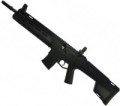 | 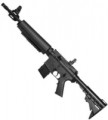 |
|---|---|---|
| Crosman MK-177 | Crosman M4-177 | |
from $119.60 up to $132.24 | Compare prices 1 | |
| User reviews | ||
| TOP sellers | ||
| Type | multicompression | multicompression |
Specs | ||
| Caliber | 4.5 mm | 4.5 mm |
| Muzzle velocity | 230 m/sec | 200 m/sec |
| Cocking system | shutter | shutter |
| Barrel | rifled | rifled |
| Charging | multiply charged | multiply charged |
| Type of ammunition | bullets and balls | bullets and balls |
| Magazine capacity | 5 pcs | 5 pcs |
More features | ||
| Sighting device | aiming bar and front sight | aiming bar and front sight |
| Scope mount | weaver/Picatinny rail | weaver/Picatinny rail |
| handguard with straps |  |  |
| Fuse | auto | manual |
| Adjustable trigger | | |
| Recoil pad/stock adjustment | | |
General | ||
| Total length | 838 mm | 863 mm |
| Stock material | plastic | plastic |
| Weight | 1.6 kg | 1.6 kg |
| Added to E-Catalog | april 2014 | august 2013 |



Compare Crosman MK-177 and M4-177
Price comparison
You may be interested in
Crosman MK-177 often compared


Crosman M4-177 often compared

Glossary
Muzzle velocity
The muzzle velocity provided by the rifle - that is, the speed of the bullet as it exits the barrel.
All other things being equal, a higher bullet speed provides greater range and accuracy, and also simplifies aiming at long distances: the bullet flies along a smoother trajectory and requires fewer adjustments in height, and the influence of side winds decreases with increasing speed. On the other hand, this indicator directly affects the price of the rifle; and in some countries, legal restrictions on the ownership of pneumatic weapons are also related to the muzzle velocity of the bullet.
As for specific values, in the weakest modern rifles the initial speed does not exceed 150 m/s, and in the most powerful it can be 300 - 350 m/s or even more(remember, the speed of sound is 330 m/s). In general, for recreational shooting at short distances, this parameter is not particularly important, and detailed recommendations for choosing pneumatics for more specific situations can be found in special sources. Let us only note that in AEG electric drives (see “Type”) the initial speed extremely rarely exceeds 150 m/s, but this is done solely for safety reasons: such “weapons” are intended for military-tactical games and initially involve shooting at people, and the high speed would be unsafe for players even with protective equipment.
It is also wor...th considering that this indicator is not strictly defined. In any type of pneumatic it depends on the weight of the bullet (the lighter the faster); therefore, in the characteristics it is usually customary to indicate a certain average velocity for standard ammunition (usually weighing 0.5 g, in AEG - 0.2 g). In addition, in multi-compression rifles the actual speed of the bullet is determined by the degree of inflation, in gas-cylinder rifles it is determined by the ambient temperature, and in PCP models it is possible to achieve higher speeds than declared by replacing the air with a special gas (for example, helium). Nevertheless, this characteristic makes it possible to evaluate the capabilities of the rifle and compare it with other models, including those that differ in type.
All other things being equal, a higher bullet speed provides greater range and accuracy, and also simplifies aiming at long distances: the bullet flies along a smoother trajectory and requires fewer adjustments in height, and the influence of side winds decreases with increasing speed. On the other hand, this indicator directly affects the price of the rifle; and in some countries, legal restrictions on the ownership of pneumatic weapons are also related to the muzzle velocity of the bullet.
As for specific values, in the weakest modern rifles the initial speed does not exceed 150 m/s, and in the most powerful it can be 300 - 350 m/s or even more(remember, the speed of sound is 330 m/s). In general, for recreational shooting at short distances, this parameter is not particularly important, and detailed recommendations for choosing pneumatics for more specific situations can be found in special sources. Let us only note that in AEG electric drives (see “Type”) the initial speed extremely rarely exceeds 150 m/s, but this is done solely for safety reasons: such “weapons” are intended for military-tactical games and initially involve shooting at people, and the high speed would be unsafe for players even with protective equipment.
It is also wor...th considering that this indicator is not strictly defined. In any type of pneumatic it depends on the weight of the bullet (the lighter the faster); therefore, in the characteristics it is usually customary to indicate a certain average velocity for standard ammunition (usually weighing 0.5 g, in AEG - 0.2 g). In addition, in multi-compression rifles the actual speed of the bullet is determined by the degree of inflation, in gas-cylinder rifles it is determined by the ambient temperature, and in PCP models it is possible to achieve higher speeds than declared by replacing the air with a special gas (for example, helium). Nevertheless, this characteristic makes it possible to evaluate the capabilities of the rifle and compare it with other models, including those that differ in type.
Fuse
The type of safety provided in the design of the rifle.
Recall that the fuse is a device that prevents an unwanted shot. In air rifles, such a device can be automatic or manual, and in some models it is absent altogether. Here are the features of each option:
— Manual. Fuse, switched on and off exclusively manually, at the will of the shooter. The most common variety — such mechanisms are as simple and inexpensive as possible. They are somewhat less safe than automatic ones (see below) and require more careful attention; however, it is not difficult to develop the skill to properly handle the manual safety. And in multi-shot models, the advantage of manual safety over automatic is that there is no need to make unnecessary actions between shots.
— Automatic. A fuse that, at a certain moment, works automatically, without additional actions on the part of the shooter. Most often, such systems operate in this way: the weapon automatically becomes on the safety lock after the trigger is cocked, and in order to make a shot, you must first turn off the safety lock manually. This provides more safety than in the manual systems described above: if the shooter forgets about the fuse, the shot will not happen anyway. Particularly popular are automatic safety locks in cocked rifles due to a broken barrel (see "Cocking System"): such a mechanism does not allow you to pull the trigger until the shooter has completed relo...ading. But in other types of pneumatics, this option is rare.
In addition, this category may include systems that are not fuses in the original sense of the word — for example, a mechanism that prevents the bullet from feeding into the chamber of a PCP rifle (see “Type”) if there is already a charge there.
— Is absent. No separate fuse. A similar design is found in two varieties of air rifles. The first is low-cost models with a spring principle of operation (including those with a gas spring; see "Type"). In such models, the fuse is abandoned solely to simplify and reduce the cost of construction; it is worth buying such a rifle only if the future owner knows the safety rules when handling weapons.
The second type of pneumatics without fuses are high-end PCP rifles designed for professional shooters. Similarly, the role of the "fuse" when using such weapons is played exclusively by the skills and experience of the user himself.
Recall that the fuse is a device that prevents an unwanted shot. In air rifles, such a device can be automatic or manual, and in some models it is absent altogether. Here are the features of each option:
— Manual. Fuse, switched on and off exclusively manually, at the will of the shooter. The most common variety — such mechanisms are as simple and inexpensive as possible. They are somewhat less safe than automatic ones (see below) and require more careful attention; however, it is not difficult to develop the skill to properly handle the manual safety. And in multi-shot models, the advantage of manual safety over automatic is that there is no need to make unnecessary actions between shots.
— Automatic. A fuse that, at a certain moment, works automatically, without additional actions on the part of the shooter. Most often, such systems operate in this way: the weapon automatically becomes on the safety lock after the trigger is cocked, and in order to make a shot, you must first turn off the safety lock manually. This provides more safety than in the manual systems described above: if the shooter forgets about the fuse, the shot will not happen anyway. Particularly popular are automatic safety locks in cocked rifles due to a broken barrel (see "Cocking System"): such a mechanism does not allow you to pull the trigger until the shooter has completed relo...ading. But in other types of pneumatics, this option is rare.
In addition, this category may include systems that are not fuses in the original sense of the word — for example, a mechanism that prevents the bullet from feeding into the chamber of a PCP rifle (see “Type”) if there is already a charge there.
— Is absent. No separate fuse. A similar design is found in two varieties of air rifles. The first is low-cost models with a spring principle of operation (including those with a gas spring; see "Type"). In such models, the fuse is abandoned solely to simplify and reduce the cost of construction; it is worth buying such a rifle only if the future owner knows the safety rules when handling weapons.
The second type of pneumatics without fuses are high-end PCP rifles designed for professional shooters. Similarly, the role of the "fuse" when using such weapons is played exclusively by the skills and experience of the user himself.
Recoil pad/stock adjustment
The ability to adjust the back of the stock mounted in the rifle.
Most often, we are talking about adjusting the length, which allows you to adjust the length of the butt to the growth and, accordingly, the length of the hands of a particular user. In some models, such adjustment is carried out due to the telescopic design of the butt itself, in others, interchangeable or retractable butt pads are provided. Anyway, this feature provides additional comfort when shooting. And it will be especially useful in two cases: if several people of different builds use the same rifle and if they have to shoot at different times of the year (in the latter case, the ability to adjust the stock depending on the thickness of the layer of clothing is useful).
In addition, more specific adjustments can be provided in modern pneumatics — for example, moving the butt plate up or down, used when shooting from non-standard positions or as an analogue of cheek adjustment (see above).
Most often, we are talking about adjusting the length, which allows you to adjust the length of the butt to the growth and, accordingly, the length of the hands of a particular user. In some models, such adjustment is carried out due to the telescopic design of the butt itself, in others, interchangeable or retractable butt pads are provided. Anyway, this feature provides additional comfort when shooting. And it will be especially useful in two cases: if several people of different builds use the same rifle and if they have to shoot at different times of the year (in the latter case, the ability to adjust the stock depending on the thickness of the layer of clothing is useful).
In addition, more specific adjustments can be provided in modern pneumatics — for example, moving the butt plate up or down, used when shooting from non-standard positions or as an analogue of cheek adjustment (see above).