
Comparison REAL-EL X-700 vs Camry CR 1183
Add to comparison | 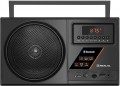 | 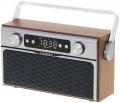 |
|---|---|---|
| REAL-EL X-700 | Camry CR 1183 | |
| Outdated Product | Outdated Product | |
| User reviews | ||
| TOP sellers | ||
Bluetooth 5.0. | Bluetooth 5.0 | |
| Device type | radio | radio |
| Dial type | digital | |
| Dial shape | rectangular | |
Specs | ||
| Tuner type | digital | digital |
| Radio | FM | FM |
| Stations memory | 50 pcs | |
| Playback | Bluetooth v 5.0 USB-A card reader line input | Bluetooth v 5.0 USB-A card reader line input |
| Speaker power | 7 W | 16 W |
| Time format | 12/24 hour | |
General | ||
| Power source | cordless | cordless |
| Battery capacity | 1200 mAh | 2600 mAh |
| Radio charging connector | microUSB | microUSB |
| Symbols colour | white | |
| Material | plastic | plastic, wood |
| Size | 280x90x160 mm | 285x200x110 mm |
| Weight | 1000 g | 580 g |
| Color | ||
| Added to E-Catalog | march 2023 | march 2023 |


Compare REAL-EL X-700 and Camry CR 1183
You may be interested in
REAL-EL X-700 often compared


Camry CR 1183 often compared

Glossary
Dial type
Dial type — the field on which the time itself is displayed (as well as other data, if such a possibility is provided).
— Digital. The name of such dials is due to the fact that the time on them is displayed on the LCD screen directly in the form of numbers — for example, "03:12" or "14:45". Watches with such dials are often referred to as "electronic": in terms of the basic principle of the mechanism, they do not differ from quartz watches with hands (see "Type of movement"), but electronic circuits, not mechanics, are responsible for the operation of the dial. The main advantage of LCD screens is the abundance of features: in addition to numbers, they can display almost any auxiliary data, and the main block of numbers can be used in different modes — for example, switch from clock to calendar or other standard time (for more details, see "Functions / features”), change the time display format (see below), etc. Therefore, this option is considered optimal for watches with extensive additional functionality. It is also worth noting that the digital dial allows even a simple model to look like an advanced electronic device. This option, in fact, has no global practical disadvantages — except that some users may consider it less aesthetic and stylish than an arrow dial.
— Arrow. The traditional dial with arrows, which are responsible for displaying the...time; the set of hands includes at least an hour and a minute, but a second is often provided as well. Pointer dials are found among both mechanical and quartz watches (see "Type of mechanism"). They are not as versatile as the digital ones described above: the dial itself can only display time, and additional functions require auxiliary equipment (for example, a calendar is most often made in the form of a characteristic window with a date display). In addition, some features in such watches are not implemented as well as in digital ones — for example, the alarm clock cannot be set to the nearest minute; and some are not available at all (for example, switchable time format, see below). On the other hand, pointer dials are highly valued by lovers of "watch classics".
— Flip-flop. The dials of this type are similar to flip calendars: they are based on sets of separate “pages”, which are responsible for displaying the time (only in this case, the “pages” are made not of paper, but of hard material, such as plastic). Time is displayed in numbers, as in digital options (see above); and when changing numbers, the corresponding plate falls down, revealing the next number. Watches with such equipment have an original appearance and stand out noticeably among most modern models, but from a practical point of view, they have no advantages even over analog models (not to mention digital ones). In addition, each change of numbers, usually, is accompanied by a characteristic click; and if it is quite easy to get used to the uniform ticking of ordinary watches, then problems can arise with every minute clicks. With all this, the design of the dial turns out to be quite complex and expensive. As a result, this option has become widespread mainly among fashion models of the elite class.
— Mixed. A dial that combines a digital LCD display and traditional hands. Each of these options is described in more detail above, and their combination allows you to provide an abundance of possibilities, while preserving the classic look of the watch as much as possible. On the other hand, for a number of reasons, this option is not very popular among desktop models — in most cases it is more convenient to provide one version of the dial and focus on one thing (on functionality or design), rather than combine two types.
— Digital. The name of such dials is due to the fact that the time on them is displayed on the LCD screen directly in the form of numbers — for example, "03:12" or "14:45". Watches with such dials are often referred to as "electronic": in terms of the basic principle of the mechanism, they do not differ from quartz watches with hands (see "Type of movement"), but electronic circuits, not mechanics, are responsible for the operation of the dial. The main advantage of LCD screens is the abundance of features: in addition to numbers, they can display almost any auxiliary data, and the main block of numbers can be used in different modes — for example, switch from clock to calendar or other standard time (for more details, see "Functions / features”), change the time display format (see below), etc. Therefore, this option is considered optimal for watches with extensive additional functionality. It is also worth noting that the digital dial allows even a simple model to look like an advanced electronic device. This option, in fact, has no global practical disadvantages — except that some users may consider it less aesthetic and stylish than an arrow dial.
— Arrow. The traditional dial with arrows, which are responsible for displaying the...time; the set of hands includes at least an hour and a minute, but a second is often provided as well. Pointer dials are found among both mechanical and quartz watches (see "Type of mechanism"). They are not as versatile as the digital ones described above: the dial itself can only display time, and additional functions require auxiliary equipment (for example, a calendar is most often made in the form of a characteristic window with a date display). In addition, some features in such watches are not implemented as well as in digital ones — for example, the alarm clock cannot be set to the nearest minute; and some are not available at all (for example, switchable time format, see below). On the other hand, pointer dials are highly valued by lovers of "watch classics".
— Flip-flop. The dials of this type are similar to flip calendars: they are based on sets of separate “pages”, which are responsible for displaying the time (only in this case, the “pages” are made not of paper, but of hard material, such as plastic). Time is displayed in numbers, as in digital options (see above); and when changing numbers, the corresponding plate falls down, revealing the next number. Watches with such equipment have an original appearance and stand out noticeably among most modern models, but from a practical point of view, they have no advantages even over analog models (not to mention digital ones). In addition, each change of numbers, usually, is accompanied by a characteristic click; and if it is quite easy to get used to the uniform ticking of ordinary watches, then problems can arise with every minute clicks. With all this, the design of the dial turns out to be quite complex and expensive. As a result, this option has become widespread mainly among fashion models of the elite class.
— Mixed. A dial that combines a digital LCD display and traditional hands. Each of these options is described in more detail above, and their combination allows you to provide an abundance of possibilities, while preserving the classic look of the watch as much as possible. On the other hand, for a number of reasons, this option is not very popular among desktop models — in most cases it is more convenient to provide one version of the dial and focus on one thing (on functionality or design), rather than combine two types.
Dial shape
Clock face shape. This parameter affects only the appearance of the device and is practically not related to the functionality. Therefore, you can choose a watch according to the shape of the dial only for aesthetic reasons.
Note that although the traditional shape for a pointer dial (see “Dial Type”) is round or rounded (oval), this is not limited to square / rectangular options. With digital, the situation is similar: in addition to the classics in the form of a rectangle, other forms are also used.
Note that although the traditional shape for a pointer dial (see “Dial Type”) is round or rounded (oval), this is not limited to square / rectangular options. With digital, the situation is similar: in addition to the classics in the form of a rectangle, other forms are also used.
Stations memory
Number of stations, i.e. certain fixed frequencies, which can be stored in the receiver's memory. This greatly simplifies tuning: by fine tuning the frequency once, in the future you can turn on the desired station by simply selecting it from the list (and in some models, it is enough to press a separate button once). The memory is usually found in receivers with a digital tuner (see "Tuner type").
Speaker power
The maximum power output of the receiver speaker(s) in normal operation, without overload. The higher the rated power, the higher the sound volume, but louder devices and energy require more.
Time format
The format in which the time is displayed on the clock face.
— 12 hours. A format that enumerates individual hours (time intervals) from 1 to 12. Since there are 24 hours in a day, this numbering covers only half of the day. This option is traditional for hand dials (see "Dial type") — historically, the full circle of the hour hand corresponds exactly to 12 o'clock, and it is from this principle that both watchmakers and watch users around the world today proceed. However, it can also be found in other types of dials. Theoretically, this option may require clarification — roughly speaking, "7 o'clock — in the morning or in the evening?" — however, in the vast majority of cases, the answer to such a question is clear immediately, from the context of the situation. But when using an alarm clock (see "Functions / Capabilities") in such a watch, you have to be especially careful: if, for example, at 6 pm you set the signal time to 8 am, the alarm clock will go off at 8 pm, because the clock itself "does not distinguish" between morning and evening.
— 24 hour. A full 24-hour format, provides numbering of hours from 1 to 24 (more precisely, from 0 to 23, because exactly 24 hours are considered zero of the next day). Thus, when looking at the clock, in principle, there is no question whether we are talking about the time of "morning" or "evening": for example, 7.00 will unambiguously correspond to morning, and "7 pm" will be designated as 19.00. At th...e same time, we note that such clarification can be provided in other ways — namely, the 12-hour scale, which has additional indicators AM (ante meridiem, "before noon") and PM (post meridiem, "after noon"). Therefore, models with such modified 12-hour scales are also classified as 24-hour models in our catalog. This format is used in all types of dials, except for arrows.
— 12/24 hour. This category includes watches that have the ability to switch between a full 24-hour clock and a 12-hour clock with "AM/PM" qualifiers. Formally, both of these types of scales are 24-hour scales (and are described in detail in the relevant paragraph above); the same designation is used to emphasize the possibility of switching formats.
— 12 hours. A format that enumerates individual hours (time intervals) from 1 to 12. Since there are 24 hours in a day, this numbering covers only half of the day. This option is traditional for hand dials (see "Dial type") — historically, the full circle of the hour hand corresponds exactly to 12 o'clock, and it is from this principle that both watchmakers and watch users around the world today proceed. However, it can also be found in other types of dials. Theoretically, this option may require clarification — roughly speaking, "7 o'clock — in the morning or in the evening?" — however, in the vast majority of cases, the answer to such a question is clear immediately, from the context of the situation. But when using an alarm clock (see "Functions / Capabilities") in such a watch, you have to be especially careful: if, for example, at 6 pm you set the signal time to 8 am, the alarm clock will go off at 8 pm, because the clock itself "does not distinguish" between morning and evening.
— 24 hour. A full 24-hour format, provides numbering of hours from 1 to 24 (more precisely, from 0 to 23, because exactly 24 hours are considered zero of the next day). Thus, when looking at the clock, in principle, there is no question whether we are talking about the time of "morning" or "evening": for example, 7.00 will unambiguously correspond to morning, and "7 pm" will be designated as 19.00. At th...e same time, we note that such clarification can be provided in other ways — namely, the 12-hour scale, which has additional indicators AM (ante meridiem, "before noon") and PM (post meridiem, "after noon"). Therefore, models with such modified 12-hour scales are also classified as 24-hour models in our catalog. This format is used in all types of dials, except for arrows.
— 12/24 hour. This category includes watches that have the ability to switch between a full 24-hour clock and a 12-hour clock with "AM/PM" qualifiers. Formally, both of these types of scales are 24-hour scales (and are described in detail in the relevant paragraph above); the same designation is used to emphasize the possibility of switching formats.
Battery capacity
Theoretically, a higher capacity allows for greater autonomy, but in practice, operating time also depends on power consumption - and it can be very different, depending on the characteristics and design features.
Symbols colour
The colour of the characters displayed on the digital watch face screen (see "Watch Type"). Classic LCDs, most often used as such dials, have black characters — a variant familiar to almost anyone who has dealt with electronic watches. However, modern table clocks may provide other colour options — white, red, blue, green, orange(yellow), etc.; such colours are usually a sign that the dial uses permanently lit indicators and can be seen in the dark without additional illumination.
Some models of "coloured" watches are available in several versions that differ in the colour of the characters. But the colour change function, usually, is not found — it is quite difficult and expensive to provide such a setting in LCD screens that play the role of dials.
Some models of "coloured" watches are available in several versions that differ in the colour of the characters. But the colour change function, usually, is not found — it is quite difficult and expensive to provide such a setting in LCD screens that play the role of dials.
Material
The most popular material option for housings today is plastic. At a low cost, it is quite strong and reliable, can have any colour and a very complex shape, which allows you to create devices with a variety of designs. Therefore, this material is used in all price categories of table clocks.
In addition, there are other options; they, usually, indicate that the watch is created with an emphasis not only on functionality, but also on an attractive appearance. For example, upscale models with pointer dials often use wood to emphasize the traditional design. Metal(mainly steel) can be found both in classic and original designs ( watches in glass). And in the most expensive, "image" devices, the main value of which is precisely the appearance, bronze, brass, gilding, marble and other similar premium materials are also used.
In addition, there are other options; they, usually, indicate that the watch is created with an emphasis not only on functionality, but also on an attractive appearance. For example, upscale models with pointer dials often use wood to emphasize the traditional design. Metal(mainly steel) can be found both in classic and original designs ( watches in glass). And in the most expensive, "image" devices, the main value of which is precisely the appearance, bronze, brass, gilding, marble and other similar premium materials are also used.