
Comparison Razor A5 Air vs Razor A6
Add to comparison |  | 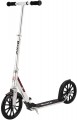 |
|---|---|---|
| Razor A5 Air | Razor A6 | |
from $139.67 | from $169.46 | |
| TOP sellers | ||
Large inflatable wheels. Handlebar height adjustment. Parking deck. Improved permeability. | ||
| Product type | scooter | scooter |
| Max. load | 100 kg | 100 kg |
| Age, from | 8 years | 5 years |
Design | ||
| Number of wheels | 2 wheels | 2 wheels |
| Handlebar type | T-bar | T-bar |
| Deck material | aluminium | aluminium |
| Front wheel size | 20 cm | 25 cm |
| Rear wheel(s) size | 20 cm | 25 cm |
| Wheels | inflatable | polyurethane |
| Bearings | ABEC 5 | |
| Rear brake | foot | foot |
Features | ||
| Features | foldable handlebar height adjustment stand | foldable handlebar height adjustment stand |
General | ||
| Max. height | 98 cm | 108 cm |
| Footspace | 34 cm | 34 cm |
| Size | 89x43x98 cm | 98x43x108 cm |
| Weight | 5.1 kg | 5 kg |
| Color | ||
| Added to E-Catalog | may 2017 | april 2017 |


Compare Razor A5 Air and A6
You may be interested in
My comparisons
Razor A6 often compared


Glossary
Age, from
The minimum age at which a child can be entrusted with a scooter. These recommendations are quite approximate, but it is highly not recommended to deviate from them. In the case of electric scooters (see "Type"), it is worth considering that in some countries, to control such devices, you need rights obtained from a certain age; so when buying a similar model, it's ok to clarify the requirements of traffic rules.
The allowable load directly depends on the age group; according to this criterion, modern scooters can be divided into children's(permissible load up to 50 kg), teenage(from 50 to 80 kg), and adults(80 kg or more).
The allowable load directly depends on the age group; according to this criterion, modern scooters can be divided into children's(permissible load up to 50 kg), teenage(from 50 to 80 kg), and adults(80 kg or more).
Front wheel size
The diameter of the front wheel(s) of the scooter.
This parameter is selected by the manufacturer depending on the type, age category and general purpose of the scooter. If we compare similar models with different wheel diameters, then it is worth considering that the larger the wheels, the better they work on the bumps in the road, and the higher the cross-country ability. And small wheels, in turn, are great for smooth asphalt and dynamic driving, they easily accelerate and allow you to make sharp turns.
This parameter is selected by the manufacturer depending on the type, age category and general purpose of the scooter. If we compare similar models with different wheel diameters, then it is worth considering that the larger the wheels, the better they work on the bumps in the road, and the higher the cross-country ability. And small wheels, in turn, are great for smooth asphalt and dynamic driving, they easily accelerate and allow you to make sharp turns.
Rear wheel(s) size
The diameter of the rear wheel(s) of the scooter. See "Front wheel diameter" for details on the value of this parameter.
Wheels
— Polyurethane. Wheels with solid polyurethane tyres. This material provides good cushioning, high-quality grip and, at the same time, good rolling; it is resistant to temperature extremes and damage, durable, while it is inexpensive. Due to this, polyurethane wheels are the most popular nowadays, they can be installed even in fairly advanced models of scooters — in particular, sports ones.
— Rubber. In this case, we mean wheels with a solid rubber tyre (inflatable wheels are moved to a separate category). According to the main characteristics, rubber is similar to the polyurethane described above, and in some moments even surpasses it. So, such tyres do not make noise, smooth out the roughness of the asphalt well, have excellent grip and provide high braking efficiency. On the other hand, this material is less durable and does not tolerate temperature extremes, and therefore is used much less frequently.
— Silicone. Wheels with a solid tyre made of silicone. These tyres are quite soft; this, on the one hand, worsens the rolling compared to the same polyurethane, on the other hand, it provides excellent cushioning. At the same time, silicone is short-lived and wears out quickly, especially under high loads; therefore, wheels made of this material are quite rare and are considered suitable mainly for children's scooters.
— Plastic.... Plastic has a low cost, besides, it can be given almost any colour. On the other hand, hard plastic wheels do not provide cushioning, are very noisy and generally not suitable for fast driving. Therefore, this material is found exclusively in models for kids; while the overall quality and reliability of plastic is highly dependent on the price category.
— Inflatable. The most advanced type of wheels are found in modern scooters. Wheels of this type have an inflatable tyre (as in bicycles), which provides excellent shock absorption and good grip. The disadvantages of inflatable tyres, in addition to the price, include sensitivity to punctures and increased maintenance complexity: you need to monitor the pressure and, if necessary, inflate the tyre.
— Rubber. In this case, we mean wheels with a solid rubber tyre (inflatable wheels are moved to a separate category). According to the main characteristics, rubber is similar to the polyurethane described above, and in some moments even surpasses it. So, such tyres do not make noise, smooth out the roughness of the asphalt well, have excellent grip and provide high braking efficiency. On the other hand, this material is less durable and does not tolerate temperature extremes, and therefore is used much less frequently.
— Silicone. Wheels with a solid tyre made of silicone. These tyres are quite soft; this, on the one hand, worsens the rolling compared to the same polyurethane, on the other hand, it provides excellent cushioning. At the same time, silicone is short-lived and wears out quickly, especially under high loads; therefore, wheels made of this material are quite rare and are considered suitable mainly for children's scooters.
— Plastic.... Plastic has a low cost, besides, it can be given almost any colour. On the other hand, hard plastic wheels do not provide cushioning, are very noisy and generally not suitable for fast driving. Therefore, this material is found exclusively in models for kids; while the overall quality and reliability of plastic is highly dependent on the price category.
— Inflatable. The most advanced type of wheels are found in modern scooters. Wheels of this type have an inflatable tyre (as in bicycles), which provides excellent shock absorption and good grip. The disadvantages of inflatable tyres, in addition to the price, include sensitivity to punctures and increased maintenance complexity: you need to monitor the pressure and, if necessary, inflate the tyre.
Bearings
Bearings that the scooter is equipped with. This paragraph usually indicates not the model/brand, but the class of bearings according to the ABEC standard. Standard options for modern scooters are ABEC 5, ABEC 7, and ABEC 9 ; the higher the number, the higher the quality and accuracy of the part.
There is an opinion that better bearings allow you to accelerate better and go faster. This is partly true, but acceleration and speed are highly dependent on a number of other points — the size and material of the wheels, the weight of the scooter, etc. So models with bearings of the same class can differ markedly in speed characteristics. But what this indicator unambiguously affects is durability and price: high accuracy affects the cost, but such bearings last longer and carry loads better.
Also note that for relatively simple use, ABEC 5 class bearings are quite enough. It makes sense to specifically look for a model with ABEC 7 or ABEC 9 only if you need a scooter for advanced stunts or professional high-speed riding. However, if the selected model has high-quality bearings, it will not be worse from them anyway.
There is an opinion that better bearings allow you to accelerate better and go faster. This is partly true, but acceleration and speed are highly dependent on a number of other points — the size and material of the wheels, the weight of the scooter, etc. So models with bearings of the same class can differ markedly in speed characteristics. But what this indicator unambiguously affects is durability and price: high accuracy affects the cost, but such bearings last longer and carry loads better.
Also note that for relatively simple use, ABEC 5 class bearings are quite enough. It makes sense to specifically look for a model with ABEC 7 or ABEC 9 only if you need a scooter for advanced stunts or professional high-speed riding. However, if the selected model has high-quality bearings, it will not be worse from them anyway.
Max. height
The maximum height to which the height-adjustable handlebar can be set (or just the height of the handlebar in the working position, if height adjustment is not provided).
The height of the handlebars should be such that the rider can stand on the deck straight, without bending his back, and hold on to the handles with slightly bent arms. At the same time, there is no unambiguous relationship between this parameter and the height of the rider. So the perfect option to determine the optimal height is to try it yourself, and then choose a scooter based on the result.
The height of the handlebars should be such that the rider can stand on the deck straight, without bending his back, and hold on to the handles with slightly bent arms. At the same time, there is no unambiguous relationship between this parameter and the height of the rider. So the perfect option to determine the optimal height is to try it yourself, and then choose a scooter based on the result.
Weight
The total weight of the scooter; for electric models it is the total operating weight is indicated, with batteries installed.
This option has two meanings. Thus, lighter scooters accelerate and manoeuvre better and require less effort from the user. In turn, more massive models maintain speed longer and are more stable on the course. In addition, note that less weight, other things being equal, means either less strength or more cost.
The lightest modern scooters weigh less than 2 kg — these are mostly relatively inexpensive classic models and kickboards (see "Type"). Sports models already have a weight of 2.5 kg, and often more. The most massive among non-self-propelled models are scooters — from 5 kg. And electric scooters inevitably turn out to be heavy due to motors and batteries, their mass can reach 10 kg or even more.
This option has two meanings. Thus, lighter scooters accelerate and manoeuvre better and require less effort from the user. In turn, more massive models maintain speed longer and are more stable on the course. In addition, note that less weight, other things being equal, means either less strength or more cost.
The lightest modern scooters weigh less than 2 kg — these are mostly relatively inexpensive classic models and kickboards (see "Type"). Sports models already have a weight of 2.5 kg, and often more. The most massive among non-self-propelled models are scooters — from 5 kg. And electric scooters inevitably turn out to be heavy due to motors and batteries, their mass can reach 10 kg or even more.