
Comparison Bergamont Roxter 5.0 2017 frame XS vs Haibike Edition 7.40 2016
Add to comparison | 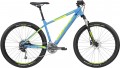 | 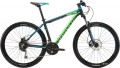 |
|---|---|---|
| Bergamont Roxter 5.0 2017 frame XS | Haibike Edition 7.40 2016 | |
from $777.60 | from $612.08 | |
| TOP sellers | ||
27 speeds. Shimano Deore body kit. Hydraulic fork lockout. Internal cable routing. Powerful hydraulic brakes. Many frame sizes to suit any height. | ||
| Model year | 2017 | 2016 |
| Type | mountain (MTB) | mountain (MTB) |
Frame and suspension | ||
| Frame size | XS | |
| Frame material | aluminium | aluminium |
| Suspension | hardtail | hardtail |
| Suspension type (fork) | oil-spring | oil-spring |
| Fork travel | 100 mm | 100 mm |
| Fork lockout |  | |
Wheels and brakes | ||
| Wheel size | 27.5 " | 27.5 " |
| Tyre | Schwalbe Smart Sam | Haibike MTB |
| Rim material | aluminium | aluminium |
| Rim | double wall | double wall |
| Front brake | hydraulic disc | hydraulic disc |
| Rear brake | hydraulic disc | hydraulic disc |
| Front hub model | Shimano Tourney | XLC Alu Disc |
| Rear hub model | Shimano Tourney | XLC Alu Disc |
Handlebar and transmission | ||
| Speeds | 27 | 27 |
| Chainrings | 3 | 3 |
| Freewheel cogs | 9 | 9 |
| Freewheel/cassette model | Shimano Deore | SRAM PG920 |
| Bottom bracket model | Shimano ES300 | VP-BC73T |
| Front derailleur | Shimano Deore | Shimano Deore |
| Rear derailleur | Shimano Deore | Shimano Deore |
| Shifter type | trigger | trigger |
| Shifter model | Shimano Deore | Shimano Deore |
| Chain model | KMC X9 | FSA CN-906N |
| Handlebar type | straight | straight |
| Stem | BGM Comp | XLC A-Head |
| Handlebar model | BGM Comp | XLC Lowriser |
General | ||
| Equipment | chain guard | |
| Saddle model | BGM Pro Sport | Haibike MTB |
| Pedal model | Wellgo LU-895DU | VP 992 |
| Weight | 14 kg | 13.9 kg |
| Color | ||
| Added to E-Catalog | march 2017 | february 2016 |


Compare Bergamont Roxter 5.0 2017 frame XS and Haibike Edition 7.40 2016
You may be interested in
My comparisons
Bergamont Roxter 5.0 2017 frame XS often compared

Glossary
Model year
The year to which the manufacturer classifies the bicycle (more precisely, the model range that includes this model).
The significance of this parameter is that the model range is updated every year, and two bicycles with the same name, but from different years, can differ significantly in characteristics and equipment. At the same time, new models ( 2026, 2025) usually cost more, and older ones ( 2024, 2023, etc.) are sold at reduced prices.
It is worth considering that a later year of manufacture in itself does not necessarily mean more advanced characteristics - manufacturers can change them in the direction of simplification. So the model of previous years may be in no way inferior to the new bike.
The significance of this parameter is that the model range is updated every year, and two bicycles with the same name, but from different years, can differ significantly in characteristics and equipment. At the same time, new models ( 2026, 2025) usually cost more, and older ones ( 2024, 2023, etc.) are sold at reduced prices.
It is worth considering that a later year of manufacture in itself does not necessarily mean more advanced characteristics - manufacturers can change them in the direction of simplification. So the model of previous years may be in no way inferior to the new bike.
Frame size
Frame size refers to the distance from the saddle attachment point to the bottom bracket attachment point (axles with gears and pedals). The main parameters that determine the choice of a bike for frame size are the height of the user, the purpose of the bike and the intended riding style.It is also worth considering the female frame, which is lowered, which allows you to ride comfortably even in a skirt or dress.
User height is the most significant factor. In general, the taller the user, the larger the frame should be. The universal formula that allows you to calculate a specific size is as follows: the length of the leg from the groin to the heel in centimeters must be multiplied by 0.6, and then divided by 2.5 — you get the approximate size of the frame in inches. But in the characteristics of brands, the frame can also be indicated in the usual form for measuring size XXS, XS, S, M, L, XL and XXL.
However, note that this value is very arbitrary and approximate, it can only be used for simple bicycles not intended for extreme driving (for example, city bikes, see "Destination"). If you choose a more specialized model (mountain, road, BMX) — it is better to refer to the tables for th...e appropriate type, because. sizes for one height can vary significantly depending on the destination. In addition, different manufacturers have different frame geometry and measurement methods, and therefore, for the most accurate selection, it is recommended to use the manufacturers' own tables.
Note that the optimal frame size is not absolute — in most cases, for the same height, “neighboring” sizes are quite suitable. And here it is worth paying attention to the intended driving style. It is believed that small, well-controlled frames are better suited for extreme variant, and larger and more stable ones are better suited for long-term calm movement.
User height is the most significant factor. In general, the taller the user, the larger the frame should be. The universal formula that allows you to calculate a specific size is as follows: the length of the leg from the groin to the heel in centimeters must be multiplied by 0.6, and then divided by 2.5 — you get the approximate size of the frame in inches. But in the characteristics of brands, the frame can also be indicated in the usual form for measuring size XXS, XS, S, M, L, XL and XXL.
However, note that this value is very arbitrary and approximate, it can only be used for simple bicycles not intended for extreme driving (for example, city bikes, see "Destination"). If you choose a more specialized model (mountain, road, BMX) — it is better to refer to the tables for th...e appropriate type, because. sizes for one height can vary significantly depending on the destination. In addition, different manufacturers have different frame geometry and measurement methods, and therefore, for the most accurate selection, it is recommended to use the manufacturers' own tables.
Note that the optimal frame size is not absolute — in most cases, for the same height, “neighboring” sizes are quite suitable. And here it is worth paying attention to the intended driving style. It is believed that small, well-controlled frames are better suited for extreme variant, and larger and more stable ones are better suited for long-term calm movement.
Tyre
Tyre model supplied with the bike as standard. Different tyres have different purposes and characteristics; knowing the tyre model, you can clarify these points and check how they correspond to your wishes. This is especially important when choosing a machine for serious cycling.
Front hub model
The model of the hub used in the front wheel of a bicycle.
The hub is the central part in the wheel through which the axis of rotation passes. Features of the behavior of a bicycle depend on its characteristics, in particular, “rolling” (the ability to move by inertia, without pedaling). Knowing the model of the front hub, you can clarify its characteristics according to the manufacturer's documentation, find reviews from other users, etc., in order to determine how this model suits you.
The hub is the central part in the wheel through which the axis of rotation passes. Features of the behavior of a bicycle depend on its characteristics, in particular, “rolling” (the ability to move by inertia, without pedaling). Knowing the model of the front hub, you can clarify its characteristics according to the manufacturer's documentation, find reviews from other users, etc., in order to determine how this model suits you.
Rear hub model
Model of the hub used in the rear wheel of a bicycle. See Front Hub Model for details.
Freewheel/cassette model
Model of a cassette — a system of rear wheel gears — mounted on a bicycle. Cassettes of different models differ in characteristics and can belong to different classes — from entry-level to professional. Knowing the cassette model, you can get acquainted with its features in more detail (according to official documentation, reviews, user reviews, etc.). This is especially important when choosing a bike for professional cycling.
Bottom bracket model
Model of the carriage installed on the bike as standard. The bottom bracket is the part that connects the system (front sprockets with pedals) and the frame; roughly speaking — an axle with bearings.
For details on the meaning of the model of a particular part, see "Cassette Model".
For details on the meaning of the model of a particular part, see "Cassette Model".
Chain model
Model of the chain supplied as standard with the bike. For details on the value of the Model parameter for any part, see Cassette Model
Stem
Features of the handlebar stem (see " Stem Adjustment ") installed on the bike. Here, both the offset model and its individual characteristics, most often the length and diameter, can be indicated. The stem itself can be either a separate part or an integral part of the steering wheel itself (the so-called integrated stem); the latter option is convenient in that the steering wheel cannot be skewed (unless broken), respectively, there is no need for centering.
As for the parameters, the rider’s landing depends on the length — the longer the takeaway, the more you will have to lean forward (ceteris paribus); strength and resistance to loads are directly related to the diameter; See “Cassette Model” for details on why the model name may be needed. It is worth noting that these parameters are important primarily for keen enthusiasts who pay attention to the smallest details in the characteristics of the machine; for most users, even advanced ones, such trifles are unlikely to be useful.
As for the parameters, the rider’s landing depends on the length — the longer the takeaway, the more you will have to lean forward (ceteris paribus); strength and resistance to loads are directly related to the diameter; See “Cassette Model” for details on why the model name may be needed. It is worth noting that these parameters are important primarily for keen enthusiasts who pay attention to the smallest details in the characteristics of the machine; for most users, even advanced ones, such trifles are unlikely to be useful.