
Comparison Karcher WD 4 vs Karcher WD 2
Add to comparison | 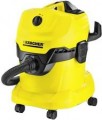 | 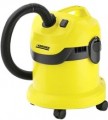 |
|---|---|---|
| Karcher WD 4 | Karcher WD 2 | |
from $200.49 | from $105.63 | |
| User reviews | ||
| TOP sellers | ||
Great suction power. The volume of the dust collector is 12 liters. Two nozzles included. | ||
| Type | workshop | workshop |
| Source of power | mains | mains |
| Cleaning type | dry | dry |
| Water suction |  | |
| Dust collector | container / bag | container / bag |
Specs | ||
| Motor power | 1000 W | 1000 W |
| Dust collector capacity | 20 L | 12 L |
| Cartridge filter |  | |
Nozzles included | ||
| Nozzle functions | for the floor crevice | for the floor crevice |
More specs | ||
| Compatible bags (dust collectors) | 2.863-006.0 | 2.863-314.0 |
| Noise level | 77 dB | |
| Tube type | non telescopic | non telescopic |
| Nozzle compartment | | |
| Cord length | 5 m | 4 m |
| Dimensions (HxWxD) | 53x37x38 cm | 43x33.7x36.9 cm |
| Weight | 7.1 kg | 4.5 kg |
| Color | ||
| Added to E-Catalog | march 2016 | january 2016 |


Compare Karcher WD 4 and WD 2
You may be interested in
My comparisons
Karcher WD 4 often compared


Karcher WD 2 often compared


Glossary
Dust collector capacity
The nominal volume of the dust collector installed in the vacuum cleaner.
This indicator largely depends on the type of unit (see above). For example, in most handheld household models, the capacity does not exceed 0.5 L. The volume of the container in upright vacuum cleaners can be somewhat larger — among the first variety there are quite a few models for 1 – 2 liters or even more, and among the second — by 0.6 – 1 liter and a little more. For conventional vacuum cleaners, the minimum figure is actually about 0.8 – 1 L; dust collectors for 1 – 2 L and 2 – 4 L are very popular in such devices; the maximum capacity is actually 4 – 6 liters — units of a similar layout, but with a larger capacity, are usually referred to as household ones. In turn, relatively small containers are occasionally found among workshop models. However, in vacuum cleaners of this type, the capacity is generally quite large — it can reach 26 – 50 liters or even more ; the same applies to industrial (construction) units.
In general, a larger dust container allows you to work longer without interruptions. On the other hand, a capacious container itself takes up more space and, accordingly, affects the size, weight and price. So when choosing this paramete...r, it is worth considering the actual features of the use of a vacuum cleaner. Here we can give such an example: for a full-scale cleaning of an average city apartment, a capacity of about 1 – 1.5 litres is required. Thus, say, a 4-litre bag allows you to carry out two such cleanings with sufficient efficiency without unloading the vacuum cleaner. There are more detailed recommendations regarding the optimal volume of the dust collector, including specific cleaning options. These recommendations can be found in special sources.
This indicator largely depends on the type of unit (see above). For example, in most handheld household models, the capacity does not exceed 0.5 L. The volume of the container in upright vacuum cleaners can be somewhat larger — among the first variety there are quite a few models for 1 – 2 liters or even more, and among the second — by 0.6 – 1 liter and a little more. For conventional vacuum cleaners, the minimum figure is actually about 0.8 – 1 L; dust collectors for 1 – 2 L and 2 – 4 L are very popular in such devices; the maximum capacity is actually 4 – 6 liters — units of a similar layout, but with a larger capacity, are usually referred to as household ones. In turn, relatively small containers are occasionally found among workshop models. However, in vacuum cleaners of this type, the capacity is generally quite large — it can reach 26 – 50 liters or even more ; the same applies to industrial (construction) units.
In general, a larger dust container allows you to work longer without interruptions. On the other hand, a capacious container itself takes up more space and, accordingly, affects the size, weight and price. So when choosing this paramete...r, it is worth considering the actual features of the use of a vacuum cleaner. Here we can give such an example: for a full-scale cleaning of an average city apartment, a capacity of about 1 – 1.5 litres is required. Thus, say, a 4-litre bag allows you to carry out two such cleanings with sufficient efficiency without unloading the vacuum cleaner. There are more detailed recommendations regarding the optimal volume of the dust collector, including specific cleaning options. These recommendations can be found in special sources.
Cartridge filter
The presence of a cartridge filter in the design of the vacuum cleaner.
Such a filter has the form of a ribbed (corrugated) cylinder made of special porous paper. One of its key advantages is the ease of cleaning: in relatively simple models, it is enough to remove the filter element from the vacuum cleaner and shake it out well. In more advanced units, self-cleaning may be provided at all (see below). In addition, such equipment allows you to do without a special bag (see "Dust collector") and use a simple container to collect dirt. On the other hand, cartridge filters are quite bulky and, due to their design features, are poorly suited for general purpose vacuum cleaners. So you can find such equipment mainly in specialized professional units — industrial, workshop, for fireplaces (see "Product type").
Such a filter has the form of a ribbed (corrugated) cylinder made of special porous paper. One of its key advantages is the ease of cleaning: in relatively simple models, it is enough to remove the filter element from the vacuum cleaner and shake it out well. In more advanced units, self-cleaning may be provided at all (see below). In addition, such equipment allows you to do without a special bag (see "Dust collector") and use a simple container to collect dirt. On the other hand, cartridge filters are quite bulky and, due to their design features, are poorly suited for general purpose vacuum cleaners. So you can find such equipment mainly in specialized professional units — industrial, workshop, for fireplaces (see "Product type").
Compatible bags (dust collectors)
Models of replacement bags and/or other containers for waste (see "Dust collector") with which the vacuum cleaner is compatible.
This moment does not affect the functionality of the vacuum cleaner itself. However, knowing the model of the dust collector makes it much easier to find a spare or replacement dust collector. At the same time, we note that compatible models of such containers may differ markedly in specifications from the ones in the box. For example, many fabric bag vacuum cleaners also accept disposable paper bags; and some units are initially equipped with a dust collector of one type. However, if desired, they allow you to buy and install a dust collector of another type (for example, replace the bag with an aquafilter).
This moment does not affect the functionality of the vacuum cleaner itself. However, knowing the model of the dust collector makes it much easier to find a spare or replacement dust collector. At the same time, we note that compatible models of such containers may differ markedly in specifications from the ones in the box. For example, many fabric bag vacuum cleaners also accept disposable paper bags; and some units are initially equipped with a dust collector of one type. However, if desired, they allow you to buy and install a dust collector of another type (for example, replace the bag with an aquafilter).
Noise level
The noise level produced by the vacuum cleaner during operation. Usually, the value for normal operation at maximum engine power is indicated here. With less power, the loudness of the unit may be lower, but the key is precisely the maximum indicator.
Regarding specific numbers, keep in mind that the decibel used to measure the noise level is a non-linear quantity. Therefore, it is worth evaluating specific indicators using special comparative tables. In general, vacuum cleaners are quite noisy appliances; so in this case, models are considered quiet if this indicator does not exceed 65 dB — this is the level of a loud conversation between 2 – 3 people at a distance of 1 m. The quietest of these models give out only 40 dB — this is the average volume of a person’s speech in normal tones (and the minimum volume allowed for constant noise sources in living quarters during the day). For louder units, the comparison table looks like this:
— 66 – 70 dB — loud conversations between several groups of people at a distance of about 1 m;
— 71 – 75 dB — the volume of a cry or laughter in full voice at a distance of about 1 m;
— 76 – 80 dB — the volume of a mechanical alarm clock or the engine of an old truck;
— more than 80 dB — a very high noise level, exceeding the level of a loud scr...eam; when working with a vacuum cleaner having such specifications for a long time, it is highly desirable to use hearing protection.
Also note that the noise level largely depends on the engine power, as well as some other features (for example, it is strongly affected by the presence of an aquafilter — see "Dust collector"). At the same time, there is no hard connection here, and units with a similar set of specifications can differ markedly in actual loudness. In such cases, when choosing here, it is worth proceeding from the fact that a quieter vacuum cleaner will be more comfortable to use. However, it will most likely cost noticeably more.
Regarding specific numbers, keep in mind that the decibel used to measure the noise level is a non-linear quantity. Therefore, it is worth evaluating specific indicators using special comparative tables. In general, vacuum cleaners are quite noisy appliances; so in this case, models are considered quiet if this indicator does not exceed 65 dB — this is the level of a loud conversation between 2 – 3 people at a distance of 1 m. The quietest of these models give out only 40 dB — this is the average volume of a person’s speech in normal tones (and the minimum volume allowed for constant noise sources in living quarters during the day). For louder units, the comparison table looks like this:
— 66 – 70 dB — loud conversations between several groups of people at a distance of about 1 m;
— 71 – 75 dB — the volume of a cry or laughter in full voice at a distance of about 1 m;
— 76 – 80 dB — the volume of a mechanical alarm clock or the engine of an old truck;
— more than 80 dB — a very high noise level, exceeding the level of a loud scr...eam; when working with a vacuum cleaner having such specifications for a long time, it is highly desirable to use hearing protection.
Also note that the noise level largely depends on the engine power, as well as some other features (for example, it is strongly affected by the presence of an aquafilter — see "Dust collector"). At the same time, there is no hard connection here, and units with a similar set of specifications can differ markedly in actual loudness. In such cases, when choosing here, it is worth proceeding from the fact that a quieter vacuum cleaner will be more comfortable to use. However, it will most likely cost noticeably more.
Nozzle compartment
The presence in the vacuum cleaner of a special device for storing nozzles and sometimes other accessories.
Such a device can be either a compartment in the case or a set of external fasteners; the latter, in particular, is quite common in industrial vacuum cleaners (see "Type"). Anyway, the attachment compartment makes it much easier to store and transport various accessories: they are not scattered or lost, and you do not need to look for a separate package for them. However, such a compartment is often not intended for all nozzles and accessories but only for the smallest ones. However, even in such cases, it makes life much easier for the user. The disadvantages of such equipment include the fact that it inevitably affects the dimensions of the case. However, in full-size vacuum cleaners — conventional, industrial, for workshop (see "Type") — this disadvantage is often not important.
Such a device can be either a compartment in the case or a set of external fasteners; the latter, in particular, is quite common in industrial vacuum cleaners (see "Type"). Anyway, the attachment compartment makes it much easier to store and transport various accessories: they are not scattered or lost, and you do not need to look for a separate package for them. However, such a compartment is often not intended for all nozzles and accessories but only for the smallest ones. However, even in such cases, it makes life much easier for the user. The disadvantages of such equipment include the fact that it inevitably affects the dimensions of the case. However, in full-size vacuum cleaners — conventional, industrial, for workshop (see "Type") — this disadvantage is often not important.
Cord length
The length of the power cord that is equipped with a vacuum cleaner powered by an outlet.
Here we note that manufacturers select the specific length of the cord depending on the general purpose of the unit. In general, the length of 4 – 5 m and less can be called small, 5 – 6 m — medium, 6 – 7 m and 7 – 8 m — more than average, and in some models this figure is more than 8 m. However, a lot depends on the specifics of the vacuum cleaner. For example, among conventional units there are many models with a 4-5 m wire (this is enough for cleaning on the scale of an apartment, a private house or a small office space), but for industrial solutions this is a very limited indicator.
Keep in mind that a longer power cord is not always more convenient. On the one hand, it provides more freedom when working. On the other hand, it can create inconvenience at a short distance from the outlet as well as during storage/transportation. In addition, you can use an extension cord to work away from the outlet. So when choosing, you need to take into account the specific needs of the use of a vacuum cleaner. Detailed recommendations for different situations can be found in special sources.
Here we note that manufacturers select the specific length of the cord depending on the general purpose of the unit. In general, the length of 4 – 5 m and less can be called small, 5 – 6 m — medium, 6 – 7 m and 7 – 8 m — more than average, and in some models this figure is more than 8 m. However, a lot depends on the specifics of the vacuum cleaner. For example, among conventional units there are many models with a 4-5 m wire (this is enough for cleaning on the scale of an apartment, a private house or a small office space), but for industrial solutions this is a very limited indicator.
Keep in mind that a longer power cord is not always more convenient. On the one hand, it provides more freedom when working. On the other hand, it can create inconvenience at a short distance from the outlet as well as during storage/transportation. In addition, you can use an extension cord to work away from the outlet. So when choosing, you need to take into account the specific needs of the use of a vacuum cleaner. Detailed recommendations for different situations can be found in special sources.