
Comparison Dreame G10 Pro vs Dreame H12 Pro
Add to comparison |  | 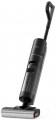 |
|---|---|---|
| Dreame G10 Pro | Dreame H12 Pro | |
| Compare prices 2 | Compare prices 4 | |
| TOP sellers | ||
Automatic increase in power when contamination is detected. Roller self-cleaning mode. Voice notifications. | ||
| Type | vertical | vertical |
| Source of power | battery | battery |
| Cleaning type | dry and wet | dry and wet |
| Water suction |  | |
| Dust collector | container | container |
Specs | ||
| Motor power | 300 W | |
| Suction force | 16000 Pa | |
| Dust collector capacity | 0.7 L | 0.7 L |
| Water tank capacity | 0.9 L | 0.9 L |
| Power adjustment | on handle | on handle |
| Automatic power control |  | |
| Dust collector indicator | | |
| Fine filter | HEPA | |
Nozzles included | ||
| Nozzle functions | floor polisher (for wiping) | floor polisher (for wiping) |
Docking station | ||
| Charging station | floor | floor |
| Nozzle self-cleaning | | |
Battery | ||
| Battery capacity | 4 Ah | |
| Battery run time | 35 min | 35 min |
| Charging time | 3 h | |
| Charge level indicator | | |
More specs | ||
| Display | | |
| Dimensions (HxWxD) | 136.2x40.2x36.8 cm | |
| Weight | 4.9 kg | |
| Color | ||
| Added to E-Catalog | may 2025 | april 2023 |


Compare Dreame G10 Pro and H12 Pro
Price comparison
You may be interested in
My comparisons
Dreame H12 Pro often compared


Glossary
Motor power
Rated power consumed by the vacuum cleaner. In models with power adjustment (see below), the maximum value is taken into account in this case. We are talking about the characteristics of the installed motor, which is the main, and in most vacuum cleaners, the only consumer of energy.
Higher power increases suction force and improves overall cleaning efficiency. In addition, a more powerful unit is easier to equip with a capacious dust collector. On the other hand, only vacuum cleaners of the same type with the same types of dust collectors can be directly compared by this parameter (see above for both). And even in such cases, the actual suction force (see below) may be different — and it is it that determines the real efficiency. However, the total power also allows you to generally evaluate the capabilities of the vacuum cleaner, including in comparison: a 1500 W model will significantly outperform its 800 W counterpart in efficiency (although it is impossible to say exactly by how much). But what definitely depends on this indicator is energy consumption.
As for specific power values, they are largely related to the type of device. For example, handheld models and uproght units have low power — less than 1500 W(and often noticeably less). Such values are quite popular among other types of vacuum cleaners (conventional, industrial, workshop, etc.), but among them there are already more solid indicators — 1500 – 1750 W..., 1750 – 2000 W and even more than 2000 W.
Higher power increases suction force and improves overall cleaning efficiency. In addition, a more powerful unit is easier to equip with a capacious dust collector. On the other hand, only vacuum cleaners of the same type with the same types of dust collectors can be directly compared by this parameter (see above for both). And even in such cases, the actual suction force (see below) may be different — and it is it that determines the real efficiency. However, the total power also allows you to generally evaluate the capabilities of the vacuum cleaner, including in comparison: a 1500 W model will significantly outperform its 800 W counterpart in efficiency (although it is impossible to say exactly by how much). But what definitely depends on this indicator is energy consumption.
As for specific power values, they are largely related to the type of device. For example, handheld models and uproght units have low power — less than 1500 W(and often noticeably less). Such values are quite popular among other types of vacuum cleaners (conventional, industrial, workshop, etc.), but among them there are already more solid indicators — 1500 – 1750 W..., 1750 – 2000 W and even more than 2000 W.
Suction force
The suction force provided by the vacuum cleaner. It is indicated by the maximum vacuum (negative pressure) that the unit can create at the working nozzle.
Note that this parameter is sometimes confused with the suction power described above, which is indicated in watts. Yes, suction force to some extent determines the efficiency of the unit. However, this efficiency also depends on the performance (airflow). And the suction power, indicated in watts, takes into account both of these parameters — it is determined by multiplying the suction force by the performance (see above for more details). For this reason, there is no strict relationship between this force and suction power: for example, a vacuum of 25,000 Pa can be found in models with 250 W, 200 W and even 150 W of power.
As for the practical significance of this spec, in general, a higher suction force allows you to work more efficiently with high resistance. For example, when processing carpets with a long pile. On the other hand, more pascals (with the same number of watts) means less airflow and, accordingly, less efficiency for large amounts of work at low resistance (for example, cleaning large rooms with parquet floors). Thus, it makes sense to pay attention to this indicator mainly in cases where high suction force is fundamental for you. In other cases, it is worth evaluating the capabilities of the vacuum cleaner in terms of suction power in watts.
Note that for a number of...reasons, the suction power is most often specified for robot vacuum cleaners (see “Produc type”). For such models, a value of 1500 Pa and below is considered very small, 1500 – 2000 Pa — medium, 2000 – 2500 Pa — high, more than 2500 Pa — very high.
It is also worth mentioning that the indication of suction force is often used as a publicity trick — to improve the impression of the product. For example, the suction power of 150 watts in itself is quite modest. But at the same time, the suction force of such a vacuum cleaner can be 25,000 Pa — a very impressive figure, especially for an inexperienced buyer, but having a very indirect relation to real efficiency. Especially often, such tricks are used among upright models and the already mentioned robots — these varieties initially do not differ in high power in watts. For many of these units, the characteristics only indicate the vacuum in pascals without specifying the suction power. It further enhances the impression: for example, in the specs of a modest robot, the figure "3000 Pa" looks much more impressive than "40 W". However, such figures have a very weak relation to the real capabilities of the unit and if they are not supplemented by data on suction power in watts, they should be considered solely as bait for a not particularly sophisticated buyer.
Note that this parameter is sometimes confused with the suction power described above, which is indicated in watts. Yes, suction force to some extent determines the efficiency of the unit. However, this efficiency also depends on the performance (airflow). And the suction power, indicated in watts, takes into account both of these parameters — it is determined by multiplying the suction force by the performance (see above for more details). For this reason, there is no strict relationship between this force and suction power: for example, a vacuum of 25,000 Pa can be found in models with 250 W, 200 W and even 150 W of power.
As for the practical significance of this spec, in general, a higher suction force allows you to work more efficiently with high resistance. For example, when processing carpets with a long pile. On the other hand, more pascals (with the same number of watts) means less airflow and, accordingly, less efficiency for large amounts of work at low resistance (for example, cleaning large rooms with parquet floors). Thus, it makes sense to pay attention to this indicator mainly in cases where high suction force is fundamental for you. In other cases, it is worth evaluating the capabilities of the vacuum cleaner in terms of suction power in watts.
Note that for a number of...reasons, the suction power is most often specified for robot vacuum cleaners (see “Produc type”). For such models, a value of 1500 Pa and below is considered very small, 1500 – 2000 Pa — medium, 2000 – 2500 Pa — high, more than 2500 Pa — very high.
It is also worth mentioning that the indication of suction force is often used as a publicity trick — to improve the impression of the product. For example, the suction power of 150 watts in itself is quite modest. But at the same time, the suction force of such a vacuum cleaner can be 25,000 Pa — a very impressive figure, especially for an inexperienced buyer, but having a very indirect relation to real efficiency. Especially often, such tricks are used among upright models and the already mentioned robots — these varieties initially do not differ in high power in watts. For many of these units, the characteristics only indicate the vacuum in pascals without specifying the suction power. It further enhances the impression: for example, in the specs of a modest robot, the figure "3000 Pa" looks much more impressive than "40 W". However, such figures have a very weak relation to the real capabilities of the unit and if they are not supplemented by data on suction power in watts, they should be considered solely as bait for a not particularly sophisticated buyer.
Automatic power control
The function where the vacuum cleaner automatically adjusts the suction power depending on the surface, amount of debris, or engine load. On a smooth floor, it can operate quieter and more efficiently, while on a carpet, when cleaning pet hair or large amounts of dust, it automatically increases the suction power.
This setting is convenient because the user does not need to manually switch modes when moving from tiles to carpet or from light dust to more complicated debris. In cordless models, power autoregulation also helps to use battery charge more wisely, as high power is only activated where it is really needed.
This setting is convenient because the user does not need to manually switch modes when moving from tiles to carpet or from light dust to more complicated debris. In cordless models, power autoregulation also helps to use battery charge more wisely, as high power is only activated where it is really needed.
Dust collector indicator
Presence in the vacuum cleaner dust collector filling indicator.
The general meaning of this function is already clear from the name: it is an indicator that informs the user about the fullness of the dust collector. At the same time, we note that the features of the operation of such a pointer may be different. The simplest option is a mechanical or electrical device that works when the amount of debris in the dust collector approaches a critical level. More advanced indicators can show a specific degree of filling at any time. In advanced vacuum cleaners, complex electronic systems can be used with values displayed on a display or a light indicator.
This function is most popular in models with bags (see "Dust collector") since without an indicator it would be necessary to control the fullness of such a vacuum cleaner manually — by opening the dust collector compartment and checking by touch how tightly the bag is filled. In cyclone systems, fill indicators are very rare and in aquafilters — even less often: both there and there, transparent materials are often used to allow you to see the amount of debris inside without opening the vacuum cleaner.
The general meaning of this function is already clear from the name: it is an indicator that informs the user about the fullness of the dust collector. At the same time, we note that the features of the operation of such a pointer may be different. The simplest option is a mechanical or electrical device that works when the amount of debris in the dust collector approaches a critical level. More advanced indicators can show a specific degree of filling at any time. In advanced vacuum cleaners, complex electronic systems can be used with values displayed on a display or a light indicator.
This function is most popular in models with bags (see "Dust collector") since without an indicator it would be necessary to control the fullness of such a vacuum cleaner manually — by opening the dust collector compartment and checking by touch how tightly the bag is filled. In cyclone systems, fill indicators are very rare and in aquafilters — even less often: both there and there, transparent materials are often used to allow you to see the amount of debris inside without opening the vacuum cleaner.
Fine filter
The presence of a HEPA fine filter in the vacuum cleaner; also in this paragraph, the specific class of this filter is often specified.
HEPA (High Efficiency Particulate Absorbing) filters are designed to purify the air from the smallest mechanical contaminants — up to tenths of a micron in size. It allows you to trap not only fine dust but even bacteria. For comparison: the size of most bacteria starts at 0.5 microns, and the effectiveness of HEPA filters is evaluated by the ability to retain particles with a size of 0.1 – 0.3 microns. The most advanced such filters ( class 13 and above) are able to remove more than 99.9% of these particles from the air. Here is a more detailed description of the different classes:
— HEPA 10 – traps at least 85% of particles with a size of 0.1 – 0.3 microns;
— HEPA 11 – at least 95% of such particles;
— HEPA 12 – not less than 99.5%;
— HEPA 13 – not less than 99.95%;
— HEPA 14 – not less than 99.995%;
Note that pollution with a size of 0.1 – 0.3 microns is the worst-kept by HEPA filters, so with particles of other sizes (both larger and smaller), the efficiency of such elements will be even higher.
Regarding the choice for this parameter, it is worth noting that, in fact, it does not always make sense to pursue a high filtration class. For example, during wet cleaning with a washing vacuum cleaner (see abov...e), the HEPA filter, in fact, is not needed at all (in many models, it is recommended to remove it altogether for such cases). So if you plan to use such a vacuum cleaner mainly for washing, you can ignore this parameter. Another specific case is industrial units (see "Type"): they are often used for rough cleaning of large debris, where thorough air filtration is not required.
HEPA (High Efficiency Particulate Absorbing) filters are designed to purify the air from the smallest mechanical contaminants — up to tenths of a micron in size. It allows you to trap not only fine dust but even bacteria. For comparison: the size of most bacteria starts at 0.5 microns, and the effectiveness of HEPA filters is evaluated by the ability to retain particles with a size of 0.1 – 0.3 microns. The most advanced such filters ( class 13 and above) are able to remove more than 99.9% of these particles from the air. Here is a more detailed description of the different classes:
— HEPA 10 – traps at least 85% of particles with a size of 0.1 – 0.3 microns;
— HEPA 11 – at least 95% of such particles;
— HEPA 12 – not less than 99.5%;
— HEPA 13 – not less than 99.95%;
— HEPA 14 – not less than 99.995%;
Note that pollution with a size of 0.1 – 0.3 microns is the worst-kept by HEPA filters, so with particles of other sizes (both larger and smaller), the efficiency of such elements will be even higher.
Regarding the choice for this parameter, it is worth noting that, in fact, it does not always make sense to pursue a high filtration class. For example, during wet cleaning with a washing vacuum cleaner (see abov...e), the HEPA filter, in fact, is not needed at all (in many models, it is recommended to remove it altogether for such cases). So if you plan to use such a vacuum cleaner mainly for washing, you can ignore this parameter. Another specific case is industrial units (see "Type"): they are often used for rough cleaning of large debris, where thorough air filtration is not required.
Battery capacity
Theoretically, a larger battery allows you to work longer without recharging. However, there are nuances. Firstly, the actual battery life of the unit will also depend on its type, power and some features of the functionality. Secondly, the actual battery capacity is determined not only by this indicator but also by the voltage in volts. So if these batteries differ in voltage, you need to convert their capacity into watt-hours and use this data when comparing. These calculations are described in more detail in special sources.
In light of all this, only vacuum cleaners with similar specifications can be directly compared in terms of battery capacity. And it is best to evaluate the actual battery life by the directly claimed operating time.
In light of all this, only vacuum cleaners with similar specifications can be directly compared in terms of battery capacity. And it is best to evaluate the actual battery life by the directly claimed operating time.
Charging time
The time required to charge the cordless vacuum cleaner fully (see "Power supply").
Larger batteries tend to take longer to charge. On the other hand, modern batteries can use various solutions that speed up the process, so there is no strict dependence here.
Separately, we note that the speed of charging batteries is usually uneven: at first, the process is fast, then it gradually slows down. So if, for example, the specifications indicate a charging time of 2 hours, then charging from 0 to 50% will take a little less than an hour, and from 50% to 100% the remaining time.
Larger batteries tend to take longer to charge. On the other hand, modern batteries can use various solutions that speed up the process, so there is no strict dependence here.
Separately, we note that the speed of charging batteries is usually uneven: at first, the process is fast, then it gradually slows down. So if, for example, the specifications indicate a charging time of 2 hours, then charging from 0 to 50% will take a little less than an hour, and from 50% to 100% the remaining time.