
Comparison Bosch SPV 4EMX65K vs Beko DIS 35021
Add to comparison | 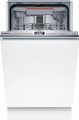 | 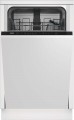 |
|---|---|---|
| Bosch SPV 4EMX65K | Beko DIS 35021 | |
| Outdated Product | Outdated Product | |
| TOP sellers | ||
| Type of instalation | fully integrated | fully integrated |
| Number of place settings | 10 | 10 |
| Water consumption | 7 L | 12 L |
| Dryer type | with heat exchanger | condenser |
| Auto door opening |  |  |
| Cutlery tray | | |
| Inverter motor | | |
| Energy class (new) | D | |
| Energy class | A++ | |
| Noise level | 45 dB | 49 dB |
| Noise class | C | |
Washing functions | ||
| Number of programmes | 6 | 5 |
| Washing modes | custom programme pre-rinse automatic eco intensive quiet self-cleaning 60 minutes | half load quick wash eco intensive Quick&Shine, Clean&Shine |
| 3-in-1 tablets use | | |
More features | ||
| Delayed start timer | | |
| End-of-cycle signal | | |
| Beam on floor | + | |
| Salt indicator | | |
| Rinse aid indicator | | |
| Leak protection | | |
| Hot water supply | | |
| Upper basket adjustment | | |
More specs | ||
| Controls | push-buttons | push-buttons |
| Control from smartphone (Wi-Fi) | | |
| Display | LED | LED |
| Dimensions (HxWxD) | 81.5x44.8x55 cm | 81.8x44.8x55 cm |
| Cut-out height | 815 mm | 820 mm |
| Cut-out width | 450 mm | 450 mm |
| Cut-out depth | 550 mm | 550 mm |
| Country of origin | Germany | |
| Added to E-Catalog | october 2023 | november 2020 |


Compare Bosch SPV 4EMX65K and Beko DIS 35021
You may be interested in
Bosch SPV 4EMX65K often compared


Beko DIS 35021 often compared


Glossary
Water consumption
The amount of water used by the dishwasher in one washing cycle. Usually, it is indicated for a standard cycle — at full load, without pre-rinsing, etc. Accordingly, in special modes, the consumption may differ from the indicated one.
The lower the consumption — it better; this is especially true for those who consume water by metres or who have a limited supply of water (for example, it is drawn from a well with a low productivity). On the other hand, a reduction in consumption can have a negative effect on the quality of the wash. So, choosing an economical dishwasher, you should pay attention to the washing class (see below). In addition, only models of the same capacity can be compared in terms of consumption — after all, the more dishes, the more water is required to wash them.
The lower the consumption — it better; this is especially true for those who consume water by metres or who have a limited supply of water (for example, it is drawn from a well with a low productivity). On the other hand, a reduction in consumption can have a negative effect on the quality of the wash. So, choosing an economical dishwasher, you should pay attention to the washing class (see below). In addition, only models of the same capacity can be compared in terms of consumption — after all, the more dishes, the more water is required to wash them.
Dryer type
The dishwasher has a drying function. Drying can occur both due to the natural evaporation of water from the surface of the dishes (condensation drying), and due to its blowing with heated air; the first option is more economical, since it does not require energy and there is also an improved one — with a heat exchanger; the second, in turn, provides faster drying. The recently introduced new type of Zeolith drying combines two methods, as it first collects residual moisture and then converts it into heat, which dries the dishes and belongs to premium segment models. Note that not all dishwashers are capable of drying dishes to dryness; see drying class for details.
Auto door opening
Auto door opening at the end of the programme. This function not only provides additional convenience, but also plays the role of a signal about the end of work; in addition, the open door helps to speed up drying — excess moisture escapes through it.
Cutlery tray
Separate cutlery tray for loading (spoons, forks, knives, etc.) into the dishwasher. Such a device is more convenient than a common basket: it allows you to load cutlery separately from the rest of the dishes, while the contents of the tray are compactly located in the “seats” specially designed for this. And the quality of washing is often higher than when using a common basket.
Inverter motor
The presence of an inverter motor in the design of the dishwasher.
Inverter motors are brushless and have higher efficiency, lower noise levels, and improved safety due to the absence of brushes. However, they are more expensive compared to conventional motors.
Inverter motors are brushless and have higher efficiency, lower noise levels, and improved safety due to the absence of brushes. However, they are more expensive compared to conventional motors.
Energy class (new)
This parameter characterizes the efficiency of electricity consumption by a dishwasher. Classes are denotet in Latin letters from A to G, in ascending order of energy consumption. Actually, more energy-efficient models have not been added to the A class, which eventually received the marking A +, A ++, A +++. Further development of technology has made it possible to go even further, and in order not to produce pluses in energy efficiency marking, manufacturers returned to the previous indices from G to A in March 2021, where А is the most energy efficient dishwasher. But also class B, C, D and even E are also quite economical (no worse than A +++). Accordingly, the 2021 models will have modern markings, while older models will be marked in the same way.
Energy class
The energy efficiency class characterizes the the economy of a dishwasher's electricity consumption. Initially, the classes were denoted in Latin letters from A (high degree of economy) to G (high consumption). But later, with the development of energy saving technologies, more advanced classes than A appeared. They are denoted by the letter A with a certain number of pluses (A+, A++, etc.); the more benefits, the higher the economy. Most modern built-in dishwashers comply with energy classes from A to A+++(the last is 30% more economical than the original class A). More high consumption models, such as classes B and C, are much rarer and gradually disappear.
More economical models cost more, but the difference can be recouped in energy savings. Also note that the energy consumption class does not describe efficiency in general, but in comparison with other similar models; therefore, the actual consumption of a small class A device may be lower than that of a large class A++ model.
More economical models cost more, but the difference can be recouped in energy savings. Also note that the energy consumption class does not describe efficiency in general, but in comparison with other similar models; therefore, the actual consumption of a small class A device may be lower than that of a large class A++ model.
Noise level
The approximate noise level produced by the dishwasher during operation. In modern models, this parameter can range from 37 – 39 dB (muffled human voice) to 59 – 60 dB (loud conversation); more detailed decoding of what sound corresponds to a particular number of decibels can be found in special tables. Anyway, the low noise level contributes to the comfortable use of the device. It is especially important if the dishwasher is to be used at night (for example, if there are reduced electricity rates at night).
Noise class
Allows people to decode the values of the noise level in decibels. It is marked in Latin letters like other classes, where A is the quietest class of dishwashers.