
Comparison LG 24MT49DF vs LG 24MT49VF
Add to comparison | 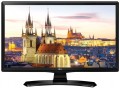 | 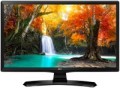 |
|---|---|---|
| LG 24MT49DF | LG 24MT49VF | |
| Outdated Product | Outdated Product | |
| TOP sellers | ||
| Size | 24 " | 24 " |
Display | ||
| Matrix | *VA | *VA |
| Screen surface | anti-glare | anti-glare |
| Resolution | 1366x768 px | 1366x768 px |
| Brightness | 250 cd/m² | |
| Static contrast | 1 000:1 | |
| Dynamic contrast | 5 000 000:1 | |
| Response time | 5 ms | |
| Frame rate | 50/60 Hz | 50/60 Hz |
Multimedia | ||
| Sound power | 10 W | 10 W |
| Number of speakers | 2 | 2 |
| Digital tuner | DVB-C (cable) | DVB-T2 (terrestrial) DVB-C (cable) DVB-S2 (satellite) |
| Picture-in-picture |  | |
Connectors | ||
| HDMI | 1 | 1 |
| Additional inputs | USB-A | USB-A |
General | ||
| Wall mount | VESA 75x75 mm | VESA 75x75 mm |
| Power consumption | 28 W | |
| Dimensions (WxHxD) | 556x393x143 mm | 556x387x146 mm |
| Dimensions without stand (WxHxD) | 556x345x56 mm | 556x345x53 mm |
| Weight | 3.5 kg | 3.4 kg |
| Color | ||
| Added to E-Catalog | august 2017 | june 2017 |


Compare LG 24MT49DF and 24MT49VF
You may be interested in
LG 24MT49VF often compared


Glossary
Brightness
The maximum brightness of the image provided by the TV screen.
The image on the screen should be bright enough so that you do not have to strain your eyes unnecessarily to view it. However, too high brightness is undesirable — it will also lead to fatigue. The optimal brightness level depends on the surrounding conditions: the more intense the ambient light, the brighter the TV screen should be. So, on a sunny day, the screen may have to be “turned up” to the maximum, and in the evening, in dimmed light, a relatively dim image will be more comfortable. In addition note that large screens require higher brightness, since they are designed for a greater distance from the viewer.
Thus, the higher the number in this paragraph, the greater the margin of brightness this model has, the better it will show itself in intense ambient light. The lowest indicator sufficient for more or less comfortable viewing in any conditions is 300 cd/m² for models with a diagonal of up to 32", 400 cd/m² for models in the range of 32 – 55" and 600 cd/m² for large screens of 60" and more. In this case, the brightness margin anyway will not be superfluous. But with lower indicators, you may have to darken the room somewhat for comfortable viewing.
The image on the screen should be bright enough so that you do not have to strain your eyes unnecessarily to view it. However, too high brightness is undesirable — it will also lead to fatigue. The optimal brightness level depends on the surrounding conditions: the more intense the ambient light, the brighter the TV screen should be. So, on a sunny day, the screen may have to be “turned up” to the maximum, and in the evening, in dimmed light, a relatively dim image will be more comfortable. In addition note that large screens require higher brightness, since they are designed for a greater distance from the viewer.
Thus, the higher the number in this paragraph, the greater the margin of brightness this model has, the better it will show itself in intense ambient light. The lowest indicator sufficient for more or less comfortable viewing in any conditions is 300 cd/m² for models with a diagonal of up to 32", 400 cd/m² for models in the range of 32 – 55" and 600 cd/m² for large screens of 60" and more. In this case, the brightness margin anyway will not be superfluous. But with lower indicators, you may have to darken the room somewhat for comfortable viewing.
Static contrast
The level of static contrast provided by the TV screen.
Contrast in a general sense is the ratio in brightness between the brightest whites and the darkest blacks that the screen can produce. Other things being equal, the higher the screen contrast, the better the quality of colour reproduction and detail, the lower the likelihood that it will be impossible to see details in too bright or too dark areas of the image. Static contrast, on the other hand, describes the maximum difference in brightness that can be achieved within one frame without changing the brightness of the image — this is its difference from dynamic contrast (see below).
The values of static contrast are much lower than those of dynamic, but this characteristic is the most "honest". It is on it that the properties of the image seen on the screen at a particular moment depend, it is describes the basic properties of the screen, without taking into account the software tricks provided by the manufacturer in the hardware of the TV.
Contrast in a general sense is the ratio in brightness between the brightest whites and the darkest blacks that the screen can produce. Other things being equal, the higher the screen contrast, the better the quality of colour reproduction and detail, the lower the likelihood that it will be impossible to see details in too bright or too dark areas of the image. Static contrast, on the other hand, describes the maximum difference in brightness that can be achieved within one frame without changing the brightness of the image — this is its difference from dynamic contrast (see below).
The values of static contrast are much lower than those of dynamic, but this characteristic is the most "honest". It is on it that the properties of the image seen on the screen at a particular moment depend, it is describes the basic properties of the screen, without taking into account the software tricks provided by the manufacturer in the hardware of the TV.
Dynamic contrast
The level of dynamic contrast provided by the TV screen.
Contrast in a general sense is the ratio in brightness between the brightest whites and the darkest blacks that the screen can produce. Other things being equal, the higher the screen contrast, the better the quality of colour reproduction and detail, the lower the likelihood that it will be impossible to see details in too bright or too dark areas of the image. Formally, the main characteristic of screens is static contrast (see above), but even in advanced matrices it is relatively low. Therefore, manufacturers went to the trick, introducing such a characteristic as "dynamic contrast".
Dynamic contrast ratio is the difference between the brightest whites at the highest screen brightness settings and the darkest blacks at the lowest. These contrast ratios can be quite impressive—much higher than static—however, it is impossible to achieve such values within a single frame, and dynamic contrast ratio is stated more for promotional purposes than for describing the actual specifications of the screen. However, it cannot be said that this indicator is completely unrelated to reality. The fact is that many TVs use automatic brightness control, which changes the settings depending on the characteristics of the image. This control is based on the fact that when displaying bright scenes, there is no need to provide a deep black level, and in dark scenes, high brightness of light areas is not needed — th...ese are the features of the human eye. This means that in bright scenes you can increase the overall brightness, and in dark scenes you can reduce it; the maximum brightness difference achievable in this mode of operation is precisely described by dynamic contrast.
Contrast in a general sense is the ratio in brightness between the brightest whites and the darkest blacks that the screen can produce. Other things being equal, the higher the screen contrast, the better the quality of colour reproduction and detail, the lower the likelihood that it will be impossible to see details in too bright or too dark areas of the image. Formally, the main characteristic of screens is static contrast (see above), but even in advanced matrices it is relatively low. Therefore, manufacturers went to the trick, introducing such a characteristic as "dynamic contrast".
Dynamic contrast ratio is the difference between the brightest whites at the highest screen brightness settings and the darkest blacks at the lowest. These contrast ratios can be quite impressive—much higher than static—however, it is impossible to achieve such values within a single frame, and dynamic contrast ratio is stated more for promotional purposes than for describing the actual specifications of the screen. However, it cannot be said that this indicator is completely unrelated to reality. The fact is that many TVs use automatic brightness control, which changes the settings depending on the characteristics of the image. This control is based on the fact that when displaying bright scenes, there is no need to provide a deep black level, and in dark scenes, high brightness of light areas is not needed — th...ese are the features of the human eye. This means that in bright scenes you can increase the overall brightness, and in dark scenes you can reduce it; the maximum brightness difference achievable in this mode of operation is precisely described by dynamic contrast.
Response time
The response time can be described as the maximum time required for each pixel of the screen to change brightness, in other words, the longest time from the receipt of a control signal to the pixel until it switches to the specified mode. The actual switching time may be less — if the brightness changes slightly, it can be calculated in microseconds. However, it is the longest time that matters — it describes the guaranteed response speed of each pixel.
First of all, the frame rate is directly related to the response time (see the relevant paragraph): the lower the response time, the higher the frame rate can be provided on this sensor. However, the actual frame rate may be less than the theoretical maximum, it all depends on the TV. Also note that the overall image quality in dynamic scenes depends primarily on the frame rate. Therefore, we can say that the response time is an auxiliary parameter: the average user rarely needs this data, and in the specifications they are given mainly for advertising purposes.
First of all, the frame rate is directly related to the response time (see the relevant paragraph): the lower the response time, the higher the frame rate can be provided on this sensor. However, the actual frame rate may be less than the theoretical maximum, it all depends on the TV. Also note that the overall image quality in dynamic scenes depends primarily on the frame rate. Therefore, we can say that the response time is an auxiliary parameter: the average user rarely needs this data, and in the specifications they are given mainly for advertising purposes.
Digital tuner
Types of digital tuners (receivers) provided for in the design of the TV.
Such tuners are necessary for receiving digital TV broadcasts; for normal operation, the broadcast standard must match the type of tuner (with some exceptions, see below). Note that the receivers are also available as separate devices; however, it is easier (and often cheaper) to buy a TV with a built-in tuner of the desired format. In modern TV you can find terrestrial tuners DVB-T2, cable DVB-C and satellite DVB-S and DVB-S2, here are their main features:
— DVB-T2 (terrestrial). The main modern standard for digital broadcasting. Such broadcasting has a number of advantages over traditional analogue broadcasting: it allows higher resolution and multi-channel audio transmission, with better sound and picture quality, and this quality is fully preserved until the signal weakens to a critical level. However, in some countries digital terrestrial broadcasting is just being put into operation, so it will not hurt to check the availability of DVB-T2 coverage in your area.
— DVB-C (cable). The main modern standard for digital broadcasting in cable networks. Despite the advent of the more advanced DVB-C2, it still continues to be widely used, and most likely this situation will not change for a long time.
— DVB-S (satellite). The first...generation of the digital DVB standard for satellite broadcasting. Nowadays, it is relatively rare due to the advent of a more advanced DVB-S2, which is also backwards compatible with the original DVB-S.
— DVB-S2 (satellite). The most advanced and popular of today's digital satellite broadcasting standards. Being the heir to DVB-S, has retained compatibility with it; therefore, manufacturers often limit themselves to installing only a DVB-S2 tuner on their TVs — it allows you to receive both major satellite broadcast formats.
Such tuners are necessary for receiving digital TV broadcasts; for normal operation, the broadcast standard must match the type of tuner (with some exceptions, see below). Note that the receivers are also available as separate devices; however, it is easier (and often cheaper) to buy a TV with a built-in tuner of the desired format. In modern TV you can find terrestrial tuners DVB-T2, cable DVB-C and satellite DVB-S and DVB-S2, here are their main features:
— DVB-T2 (terrestrial). The main modern standard for digital broadcasting. Such broadcasting has a number of advantages over traditional analogue broadcasting: it allows higher resolution and multi-channel audio transmission, with better sound and picture quality, and this quality is fully preserved until the signal weakens to a critical level. However, in some countries digital terrestrial broadcasting is just being put into operation, so it will not hurt to check the availability of DVB-T2 coverage in your area.
— DVB-C (cable). The main modern standard for digital broadcasting in cable networks. Despite the advent of the more advanced DVB-C2, it still continues to be widely used, and most likely this situation will not change for a long time.
— DVB-S (satellite). The first...generation of the digital DVB standard for satellite broadcasting. Nowadays, it is relatively rare due to the advent of a more advanced DVB-S2, which is also backwards compatible with the original DVB-S.
— DVB-S2 (satellite). The most advanced and popular of today's digital satellite broadcasting standards. Being the heir to DVB-S, has retained compatibility with it; therefore, manufacturers often limit themselves to installing only a DVB-S2 tuner on their TVs — it allows you to receive both major satellite broadcast formats.
Power consumption
The electrical power normally consumed by the TV. This parameter strongly depends on the screen size and sound power (see above), however, it can be determined by other parameters — primarily additional features and technologies implemented in the design. It is worth noting that most modern LCD TVs are quite economical, and most often this parameter does not play a significant role — in most cases, power consumption is about several tens of watts. And even large models with a diagonal of 70 – 90" consume about 200 – 300 W — this can be compared with the system unit of a low-power desktop PC.