
Comparison TAGA Harmony TA-400MIC vs Yamaha A-S201
Add to comparison | 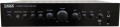 | 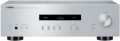 |
|---|---|---|
| TAGA Harmony TA-400MIC | Yamaha A-S201 | |
from $230.00 | from $393.00 | |
| User reviews | ||
| TOP sellers | ||
ByPass Direct mode. 4 pairs of acoustic plugs. Recorder. Customizable standby. Fixed power cable. Lack of loudness. | ||
| Device type | integrated amplifier | integrated amplifier |
| Features | concert | |
| Element base | transistor | transistor |
Amplifier parameters | ||
| Number of channels | 2 | 2 |
| Frequency range | 30 – 20000 Hz | 20 – 20000 Hz |
| Power per channel (8Ω) | 60 W | 125 W |
| Power per channel (6Ω) | 150 W | |
| Power per channel (4Ω) | 90 W | 165 W |
| Power per channel (2Ω) | 180 W | |
| Signal to noise ratio | 77 dB | 100 dB |
| Signal to noise ratio (Phono MM/MC) | 75 dB | |
| Harmonic distortion | 2 % | 0.2 % |
Channel sensitivity / impedance | ||
| Line input | 500 mV 47 kOhm | |
| Phono MM/MC | 10 mV 47 kOhm | |
| REC output | 500 mV 2.2 kOhm | |
Connectors | ||
| Inputs | Phono | |
| RCA | 3 pairs | 4 pairs |
| For acoustics | 4 шт | 4 шт |
| REC (to recorder) | 1 pairs | |
| On headphones | 6.35 mm (Jack) | |
| Front panel | audio input jack headphone output | display headphone output |
Features | ||
| Adjustments | bass control treble adjustment balance adjustment input sensitivity adjustment level adjustment | bass control treble adjustment balance adjustment level adjustment |
| More features | additional speaker connect Bi-Wiring | By-pass/Direct auto power off ММ phono stage additional speaker connect Bi-Wiring |
General | ||
| Remote control |  |  |
| PSU | internal | internal |
| Power consumption | 250 W | 175 W |
| Dimensions (WxDxH) | 420x317x91 mm | 435x333x141 mm |
| Weight | 6.3 kg | 6.7 kg |
| Color | ||
| Added to E-Catalog | february 2017 | january 2014 |


Compare TAGA Harmony TA-400MIC and Yamaha A-S201
You may be interested in
My comparisons
TAGA Harmony TA-400MIC often compared

Yamaha A-S201 often compared


Glossary
Features
— Concert. Professional amplifiers designed to work at concerts and other similar events. Their main external difference from home models is rack mounting; for almost all concert models, the mounting size is indicated in the characteristics (see below). In terms of performance, the main difference is the high power, in some models exceeding 1000 watts per channel even at 8 ohm load. You can also note a rather restrained design — where such a technique is used, the appearance is far from being of paramount importance.
— Informational. Amplifiers designed for use in public address systems — at stations, airports, shopping centers, etc. One of the features of this application is that passive loudspeakers can be located at a great distance from the amplifier — tens or even hundreds of metres. The standard way to ensure signal transmission over such a distance is to use transformers at the output of the amplifier and at the inputs of the loudspeakers. Such a "transformer" connection can be carried out according to the standards 100/70 V and 50/25 V; in fact, the presence of at least one type of output is mandatory for power amplifiers and integrated amplifiers (see "Type") for this purpose. However, preamplifiers can also be produced for information. Also note that some data models support only one audio channel; and multi-channel often provide the ability to quickly turn...on and off individual channels — this allows you to organize broadcasting in separate zones.
— Concert / informational. Devices that combine the capabilities of the two types of amplifiers mentioned in the name (for more details on each, see above). Almost all are rack-mounted (among purely informational models this is less common). They can also be single-channel, and there are quite a few such solutions.
— Informational. Amplifiers designed for use in public address systems — at stations, airports, shopping centers, etc. One of the features of this application is that passive loudspeakers can be located at a great distance from the amplifier — tens or even hundreds of metres. The standard way to ensure signal transmission over such a distance is to use transformers at the output of the amplifier and at the inputs of the loudspeakers. Such a "transformer" connection can be carried out according to the standards 100/70 V and 50/25 V; in fact, the presence of at least one type of output is mandatory for power amplifiers and integrated amplifiers (see "Type") for this purpose. However, preamplifiers can also be produced for information. Also note that some data models support only one audio channel; and multi-channel often provide the ability to quickly turn...on and off individual channels — this allows you to organize broadcasting in separate zones.
— Concert / informational. Devices that combine the capabilities of the two types of amplifiers mentioned in the name (for more details on each, see above). Almost all are rack-mounted (among purely informational models this is less common). They can also be single-channel, and there are quite a few such solutions.
Frequency range
The range of audio frequencies that the amplifier is capable of handling. The wider this range, the more complete the overall picture of the sound, the less likely it is that too high or low frequencies will be “cut off” by the output amplifier. However, note that the range of sound audible to a person is on average from 16 Hz to 20 kHz; There are some deviations from this norm, but they are small. At the same time, modern Hi-Fi and Hi-End technology can have a much wider range — most often it is a kind of "side effect" of high-end circuits. Some manufacturers may use this property for promotional purposes, but it does not carry practical value in itself.
Note that even within the audible range it does not always make sense to chase the maximum coverage. It is worth, for example, to take into account that the actually audible sound cannot be better than the speakers are capable of giving out; therefore, for a speaker system with a lower threshold of, say, 70 Hz, there is no need to look for an amplifier with this figure of 16 Hz. Also, do not forget that a wide frequency range in itself does not absolutely guarantee high sound quality — it is associated with a huge number of other factors.
Note that even within the audible range it does not always make sense to chase the maximum coverage. It is worth, for example, to take into account that the actually audible sound cannot be better than the speakers are capable of giving out; therefore, for a speaker system with a lower threshold of, say, 70 Hz, there is no need to look for an amplifier with this figure of 16 Hz. Also, do not forget that a wide frequency range in itself does not absolutely guarantee high sound quality — it is associated with a huge number of other factors.
Power per channel (8Ω)
The nominal sound power output by the amplifier per channel when operating with a load having a dynamic resistance (impedance) of 8 ohms. In our catalog, this parameter is indicated for the mode when all channels of the amplifier work under load (see "Number of channels"); in the presence of unused channels, the rated power may be slightly higher, but this mode cannot be called standard.
Rated power can be simply described as the highest output signal power at which the amplifier is able to work stably for a long time (at least an hour) without negative consequences. These are average figures, because in fact, the audio signal is by definition unstable, and individual level jumps can significantly exceed the rated power. However, it is she who is the main basis for assessing the overall loudness of the sound.
This indicator also determines which speakers can be connected to the amplifier: their rated power should not be lower than that of the amplifier.
According to the laws of electrodynamics, with different dynamic load resistance, the output power of the amplifier will also be different. In modern speakers, the standard values \u200b\u200bare 8, 6, 4 and 2 Ohms, and power levels are indicated for them.
Rated power can be simply described as the highest output signal power at which the amplifier is able to work stably for a long time (at least an hour) without negative consequences. These are average figures, because in fact, the audio signal is by definition unstable, and individual level jumps can significantly exceed the rated power. However, it is she who is the main basis for assessing the overall loudness of the sound.
This indicator also determines which speakers can be connected to the amplifier: their rated power should not be lower than that of the amplifier.
According to the laws of electrodynamics, with different dynamic load resistance, the output power of the amplifier will also be different. In modern speakers, the standard values \u200b\u200bare 8, 6, 4 and 2 Ohms, and power levels are indicated for them.
Power per channel (6Ω)
The nominal sound power output by the amplifier per channel when a load with a dynamic resistance (impedance) of 6 ohms is connected to it. See Power per Channel (8Ω) for more information on power rating and its relationship to impedance.
Power per channel (4Ω)
The nominal sound power output by the amplifier per channel when a load with a dynamic resistance (impedance) of 4 ohms is connected to it. See Power per Channel (8Ω) for more information on power rating and its relationship to impedance.
Power per channel (2Ω)
The nominal sound power output by the amplifier per channel when a load with a dynamic resistance (impedance) of 2 ohms is connected to it. See Power per Channel (8Ω) for more information on power rating and its relationship to impedance.
Signal to noise ratio
In itself, the signal-to-noise ratio is the ratio of the level of pure sound produced by the amplifier to the level of extraneous noise that occurs during its operation. This parameter is the main indicator of the overall sound quality — and very clear, because. its measurement takes into account almost all the noise that affects the sound in normal operating conditions. A level of 70 – 80 dB in modern amplifiers can be considered acceptable, 80 – 90 dB is not bad, and for advanced audiophile-class devices, a signal-to-noise ratio of at least 100 dB is considered mandatory.
If the specifications do not specify for which output the signal-to-noise ratio is indicated, it usually means its value for the linear input (see "RCA (par)"). This is quite enough to evaluate the quality of the device for this parameter. However, some manufacturers indicate it for other inputs — Main, Phono; see below for more on this.
If the specifications do not specify for which output the signal-to-noise ratio is indicated, it usually means its value for the linear input (see "RCA (par)"). This is quite enough to evaluate the quality of the device for this parameter. However, some manufacturers indicate it for other inputs — Main, Phono; see below for more on this.
Signal to noise ratio (Phono MM/MC)
signal-to-noise ratio when the amplifier is driven through the Phono input. This interface is for connecting turntables; its features are described in the “Inputs” section below, and for the meaning of any signal-to-noise ratio, see the corresponding section above.
Harmonic distortion
This indicator describes the amount of non-linear distortion introduced by the amplifier into the processed signal. Such distortions are not necessarily perceived as extraneous noise, but they degrade the quality of the sound anyway — for example, they can make it more deaf. It is almost impossible to avoid them, but it can be reduced to levels inaudible to the human ear.
As a result, the harmonic distortion factor (harmonics) is one of the main parameters describing the overall sound quality in Hi-Fi and Hi-End amplifiers. The lower it is, the clearer the sound. Hundredths of a percent are considered a good indicator for modern amplifiers, thousandths and below are excellent. The exceptions are tube and hybrid models, for which rather high harmonic coefficients are allowed; see "Element base" for more details.
As a result, the harmonic distortion factor (harmonics) is one of the main parameters describing the overall sound quality in Hi-Fi and Hi-End amplifiers. The lower it is, the clearer the sound. Hundredths of a percent are considered a good indicator for modern amplifiers, thousandths and below are excellent. The exceptions are tube and hybrid models, for which rather high harmonic coefficients are allowed; see "Element base" for more details.