
Comparison Focusrite Clarett+ 2Pre vs Universal Audio Volt 276
Add to comparison | 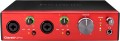 | 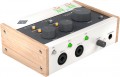 |
|---|---|---|
| Focusrite Clarett+ 2Pre | Universal Audio Volt 276 | |
| Compare prices 3 | Compare prices 12 | |
| TOP sellers | ||
Built-in mic preamp with Vintage Preamp to emulate the sound of a Universal Audio 610 tube preamp. Built-in analog FET compressor based on the renowned UA 1176 compressor with 3 expert presets. The power supply is not included in the package. | ||
| Form factor | desktop | desktop |
| Number of channels | 10 in 4 out | 2 in 2 out |
| Connection | USB 2.0 type C | USB 2.0 type C |
| DAC | 24 bit 192 kHz | 24 bit 192 kHz |
| Frequency range | 20 – 20000 Hz | |
| Preamplifier | 2 pcs | 2 pcs |
Inputs | ||
| Total Jack / XLR audio inputs | x2 Combo XLR | x2 Combo XLR |
| Microphone | Combo XLR 2 pcs | Combo XLR 2 pcs |
| Instrument | Combo XLR 2 pcs | Combo XLR 2 pcs |
| Line | Combo XLR 2 pcs | Combo XLR 2 pcs |
| Optical | S/PDIF / x1 ADAT | |
| MIDI in | 1 | 1 |
Outputs | ||
| Total Jack/XLR audio outputs | Jack x5 | Jack x3 |
| Main | Jack (6.35 mm) 2 pcs | |
| Line | Jack x4 | |
| MIDI out | 1 | 1 |
| Headphones | Jack x1 | Jack x1 |
Features | ||
| Phantom power |  | |
| ASIO | | |
| Loopback | |  |
| Front headphone output | | |
| Headphone level adjustment | | |
| Software included | Ableton Live Lite, 3 months Pro Tools Artist, Hitmaker | Ableton Live Lite, Softube Marshall Plexi Classic Amp Softube Time & Tone Bundle, |
General | ||
| ОС | Windows / macOS / iPadOS | Windows / macOS / iOS / iPadOS |
| Power supply | USB / mains | USB / mains |
| External power supply | | |
| Dimensions (WxDxH) | 210x161x55 mm | 184x130x66 mm |
| Weight | 1.11 kg | 0.79 kg |
| Color | ||
| Added to E-Catalog | august 2023 | june 2023 |



Compare Focusrite Clarett+ 2Pre and Universal Audio Volt 276
Price comparison
You may be interested in
Focusrite Clarett+ 2Pre often compared


Universal Audio Volt 276 often compared


Glossary
Number of channels
The number of input and output channels that the audio interface is equipped with. See below for more details on each type.
— Input channels. Input (in) channels on audio interfaces designate the number of different audio signals a device can accept for recording overnight. Their number plays a decisive role in multi-channel sound recording, connecting several instruments or vocals at the same time. When choosing an audio interface, consider not only the number of input channels, but also the types of connectors (see “Inputs”).
— Output channels. Output channels output (out) is the number of audio signals that can be sent to other devices or equipment for playback. The outputs of the audio interface can be used to connect to amplifiers, monitors, speaker systems, headphones, etc. A large number of output channels will come in handy when creating sound mixes, multi-channel recording or multitasking in a studio environment. For simpler tasks, it is enough to have from 2 to 4 output channels. When choosing an audio interface, consider not only the number of output channels, but also the types of connectors (see “Outputs”).
— Input channels. Input (in) channels on audio interfaces designate the number of different audio signals a device can accept for recording overnight. Their number plays a decisive role in multi-channel sound recording, connecting several instruments or vocals at the same time. When choosing an audio interface, consider not only the number of input channels, but also the types of connectors (see “Inputs”).
— Output channels. Output channels output (out) is the number of audio signals that can be sent to other devices or equipment for playback. The outputs of the audio interface can be used to connect to amplifiers, monitors, speaker systems, headphones, etc. A large number of output channels will come in handy when creating sound mixes, multi-channel recording or multitasking in a studio environment. For simpler tasks, it is enough to have from 2 to 4 output channels. When choosing an audio interface, consider not only the number of output channels, but also the types of connectors (see “Outputs”).
Frequency range
The audio frequency range supported by the device. Most often we are talking about the range of frequencies that a device can produce in an analog audio output signal.
In general, the wider the frequency range, the fuller the sound, the lower the likelihood that the audio interface will “cut off” the upper or lower frequencies. However, it must be taken into account that the human ear is capable of hearing sounds at frequencies from 16 to 22,000 Hz, and the upper limit decreases with age. So from a practical point of view, it makes no sense to provide a wider range in audio technology. And the impressive numbers found in high-end devices are rather a “side effect” of advanced electronic circuits and are given in the specifications mainly for advertising purposes. Also remember that the overall sound quality is affected by many other factors besides frequency range.
In general, the wider the frequency range, the fuller the sound, the lower the likelihood that the audio interface will “cut off” the upper or lower frequencies. However, it must be taken into account that the human ear is capable of hearing sounds at frequencies from 16 to 22,000 Hz, and the upper limit decreases with age. So from a practical point of view, it makes no sense to provide a wider range in audio technology. And the impressive numbers found in high-end devices are rather a “side effect” of advanced electronic circuits and are given in the specifications mainly for advertising purposes. Also remember that the overall sound quality is affected by many other factors besides frequency range.
Optical
Input for digital audio signal transmitted via TOSLINK fiber optic cable. The optical interface has the same capabilities as the coaxial input (see the corresponding paragraph) - in particular, it allows you to transmit multi-channel audio. The key difference and main advantage of this connection is its complete insensitivity to electromagnetic interference. On the other hand, fiber optic cable is quite fragile and sensitive to damage - it must be protected from strong pressure and kinks.
Total Jack/XLR audio outputs
— Total audio outputs Jack / XLR. The total number of analog audio outputs such as Jack (6.35 mm) and/or XLR (this interface can be combined with a “jack”). Note that such connectors can play the role of both the Main output and the linear output. For more details, see the relevant paragraphs.
— mini-Jack. The standard 3.5 mm mini-Jack is usually used in audio interfaces as an analog (line) output for two stereo channels, as well as as an output for connecting headphones (see the corresponding paragraphs).
— mini-Jack. The standard 3.5 mm mini-Jack is usually used in audio interfaces as an analog (line) output for two stereo channels, as well as as an output for connecting headphones (see the corresponding paragraphs).
Main
Through the Main outputs it is supposed to transmit signals from the audio interface to external devices for playing and recording sound. In everyday use, there are models with one type of Main connector, as well as with several varieties (for example, Jack (6.35 mm), XLR, RCA, or Jack (6.35 mm) / RCA, or Jack (6.35 mm) / XLR).
— Jack (6.35 mm). Output for transmitting analog audio signal. Structurally similar to the popular mini-Jack, but differs from it in its larger dimensions. As a result, Jack type plugs (6.35 mm) are used primarily in high-end stationary audio equipment. Outputs of this type usually operate on a “one channel per connector” principle (i.e., to transmit stereo sound you will need to use two Jack sockets). Also, this interface often provides a balanced connection - a connection in a special format that allows the use of long wires without compromising the signal quality (due to the suppression of interference in the wire itself). However, the Jack connection (6.35 mm) may also be unbalanced.
- XLR. Another type of output for transmitting an analog signal using a balanced connection. It allows the use of long cable lengths without compromising the quality of data exchange - external interference is absorbed directly in the cable. Often the connector is combined with a Jack interface (6.5 mm). The XLR is equipped with a locking lock and three contacts. A single three-pin an...alog cable can only carry one channel of audio, so a standard XLR output typically consists of two jacks, stereo left and right.
- RCA. Jacks for coaxial cables with characteristic plugs, popularly known as “tulips”. One cable in analog format can transmit one channel of audio. The standard output of this type consists of two connectors - for the left and right stereo channels. On the other hand, RCA does not provide the possibility of a balanced connection, which is why it is inferior to other options in noise immunity, has noticeable limitations on cable length and is poorly suitable for professional use. Nevertheless, “tulips” have become very widespread in entry-level and mid-level stationary audio equipment.
— Jack (6.35 mm). Output for transmitting analog audio signal. Structurally similar to the popular mini-Jack, but differs from it in its larger dimensions. As a result, Jack type plugs (6.35 mm) are used primarily in high-end stationary audio equipment. Outputs of this type usually operate on a “one channel per connector” principle (i.e., to transmit stereo sound you will need to use two Jack sockets). Also, this interface often provides a balanced connection - a connection in a special format that allows the use of long wires without compromising the signal quality (due to the suppression of interference in the wire itself). However, the Jack connection (6.35 mm) may also be unbalanced.
- XLR. Another type of output for transmitting an analog signal using a balanced connection. It allows the use of long cable lengths without compromising the quality of data exchange - external interference is absorbed directly in the cable. Often the connector is combined with a Jack interface (6.5 mm). The XLR is equipped with a locking lock and three contacts. A single three-pin an...alog cable can only carry one channel of audio, so a standard XLR output typically consists of two jacks, stereo left and right.
- RCA. Jacks for coaxial cables with characteristic plugs, popularly known as “tulips”. One cable in analog format can transmit one channel of audio. The standard output of this type consists of two connectors - for the left and right stereo channels. On the other hand, RCA does not provide the possibility of a balanced connection, which is why it is inferior to other options in noise immunity, has noticeable limitations on cable length and is poorly suitable for professional use. Nevertheless, “tulips” have become very widespread in entry-level and mid-level stationary audio equipment.
Line
The type of line output provided in the audio interface design. It outputs a line-level analog audio signal. This interface is mainly used for connecting recording devices, outputting a signal to playback equipment or to an external amplifier. And the types of connectors used for linear output can be as follows:
— mini-Jack (3.5 mm). A standard socket for the popular mini-Jack plug (3.5 mm), used as a line output. This connector is mainly used to connect some models of active speakers, while two stereo channels are usually output through one mini-Jack (3.5 mm). Note that headphone outputs, which also use a mini-Jack, are considered separately - see the corresponding paragraph.
— Jack (6.35 mm). A larger analogue of the mini-Jack connector (3.5 mm) for outputting an analog stereo signal. The Jack output provides a more reliable and noise-free connection, making it ideal for professional applications. Effective protection against interference is possible with a balanced connection method. To save space, the 6.35 mm output can be combined with an XLR connector (see the corresponding paragraph). The disadvantage of this design is the impossibility of using both interfaces simultaneously. Jack line outputs (6.35 mm) adhere to the “one channel per connector” principle.
- XLR. A round three-pin connector for outputting a line-level analog audio signal, oft...en with a balanced connection type. Transmission is carried out over three wires instead of two, and during it the noise induced on the wire is eliminated. This allows the use of fairly long cables without compromising the “purity” of the signal, making this type of connection excellent for professional audio equipment. XLR is also considered a professional interface, both due to the ability to work with a balanced signal and due to increased reliability: such connectors are often equipped with locks to secure the plugs.
- RCA. Analog linear audio output using RCA connectors - so-called “tulips” (due to the characteristic shape of the plugs). The standard output of this type consists of two connectors - for the left and right stereo channels. Also note that RCA connectors can be used in other output interfaces, but they have their own names.
— mini-Jack (3.5 mm). A standard socket for the popular mini-Jack plug (3.5 mm), used as a line output. This connector is mainly used to connect some models of active speakers, while two stereo channels are usually output through one mini-Jack (3.5 mm). Note that headphone outputs, which also use a mini-Jack, are considered separately - see the corresponding paragraph.
— Jack (6.35 mm). A larger analogue of the mini-Jack connector (3.5 mm) for outputting an analog stereo signal. The Jack output provides a more reliable and noise-free connection, making it ideal for professional applications. Effective protection against interference is possible with a balanced connection method. To save space, the 6.35 mm output can be combined with an XLR connector (see the corresponding paragraph). The disadvantage of this design is the impossibility of using both interfaces simultaneously. Jack line outputs (6.35 mm) adhere to the “one channel per connector” principle.
- XLR. A round three-pin connector for outputting a line-level analog audio signal, oft...en with a balanced connection type. Transmission is carried out over three wires instead of two, and during it the noise induced on the wire is eliminated. This allows the use of fairly long cables without compromising the “purity” of the signal, making this type of connection excellent for professional audio equipment. XLR is also considered a professional interface, both due to the ability to work with a balanced signal and due to increased reliability: such connectors are often equipped with locks to secure the plugs.
- RCA. Analog linear audio output using RCA connectors - so-called “tulips” (due to the characteristic shape of the plugs). The standard output of this type consists of two connectors - for the left and right stereo channels. Also note that RCA connectors can be used in other output interfaces, but they have their own names.
Loopback
The Loopback function allows you to combine the signal from connected microphones, instruments and other line-level sources with background music, audio tracks and other sounds played on the connected equipment (usually a computer). Loopback will come in handy when recording virtual instruments, podcasts, streaming, etc.
Software included
The software included with your audio interface may vary depending on the make and model. The vast majority of it is represented by drivers, utilities for managing the device, software for recording and editing sound, virtual instruments or effects, and all kinds of plugins. It is advisable to clarify separately which specific software components are included in the audio interface package.
ОС
Supported operating systems ensure device compatibility with computers running different platforms. The following options are widespread in audio interfaces:
-Windows. The vast majority of audio interfaces provide drivers and software for compatibility with the popular Windows operating system. At the same time, it is important to clarify the supported OS versions - in modern realities, these are Windows 10 and Windows 11.
- macOS. Support for working with Apple computers and laptops that use the proprietary macOS platform.
- iOS. The ability to work with mobile applications for creating and processing sound, implemented when using Apple smartphones running the iOS operating system.
- iPadOS. In this version, the audio interfaces support work with Apple tablets running the proprietary iPadOS operating system.
- Android. Compatibility of the audio interface with mobile devices based on the popular Android platform. This involves using mobile versions of applications for creating and processing sound.
- Linux. Support for the Linux platform is less common among audio interfaces, and not all devices provide official drivers for this operating system.
—Chrome. The device is compatible...with laptops running the Chrome OS operating system. These are rarely found in common use, but they do occur.
-Windows. The vast majority of audio interfaces provide drivers and software for compatibility with the popular Windows operating system. At the same time, it is important to clarify the supported OS versions - in modern realities, these are Windows 10 and Windows 11.
- macOS. Support for working with Apple computers and laptops that use the proprietary macOS platform.
- iOS. The ability to work with mobile applications for creating and processing sound, implemented when using Apple smartphones running the iOS operating system.
- iPadOS. In this version, the audio interfaces support work with Apple tablets running the proprietary iPadOS operating system.
- Android. Compatibility of the audio interface with mobile devices based on the popular Android platform. This involves using mobile versions of applications for creating and processing sound.
- Linux. Support for the Linux platform is less common among audio interfaces, and not all devices provide official drivers for this operating system.
—Chrome. The device is compatible...with laptops running the Chrome OS operating system. These are rarely found in common use, but they do occur.