
Comparison Universal Audio Volt 476P vs Universal Audio Volt 476
Add to comparison | 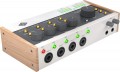 | 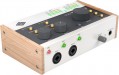 |
|---|---|---|
| Universal Audio Volt 476P | Universal Audio Volt 476 | |
| Compare prices 2 | Compare prices 7 | |
| TOP sellers | ||
Built-in mic preamp with Vintage Preamp to emulate the sound of a Universal Audio 610 tube preamp. Built-in analog FET compressor based on the renowned UA 1176 compressor with 3 expert presets. | Built-in mic preamp with Vintage Preamp to emulate the sound of a Universal Audio 610 tube preamp. Built-in analog FET compressor based on the renowned UA 1176 compressor with 3 expert presets. | |
| Form factor | desktop | desktop |
| Number of channels | 4 in 4 out | 4 in 4 out |
| Connection | USB 2.0 type C | USB 2.0 type C |
| DAC | 24 bit 192 kHz | 24 bit 192 kHz |
| Frequency range | 20 – 20000 Hz | 20 – 20000 Hz |
| Preamplifier | 4 pcs | 2 pcs |
Inputs | ||
| Total Jack / XLR audio inputs | Combo XLR 4 pcs | Combo XLR 2 pcs and Jack 2 pcs |
| Microphone | x4 Combo XLR | Combo XLR 2 pcs |
| Instrument | Combo XLR 4 pcs | Combo XLR 2 pcs |
| Line | Combo XLR 4 pcs | Combo XLR x2 and Jack x2 |
| MIDI in | 1 | 1 |
Outputs | ||
| Total Jack/XLR audio outputs | Jack x8 | Jack x7 |
| Main | Jack (6.35 mm) 2 pcs | Jack (6.35 mm) 2 pcs |
| Line | Jack x4 | Jack x4 |
| MIDI out | 1 | 1 |
| To monitors | Jack x2 | Jack x2 |
| Headphones | Jack x2 | Jack x1 |
Features | ||
| Phantom power |  | |
| ASIO | | |
| Front headphone output | | |
| Headphone level adjustment | | |
| Software included | Ableton Live Lite, Softube Marshall Plexi Classic Amp Softube Time & Tone Bundle, | Ableton Live Lite, Softube Marshall Plexi Classic Amp Softube Time & Tone Bundle, |
General | ||
| ОС | Windows / macOS / iOS / iPadOS | Windows / macOS / iOS / iPadOS |
| Power supply | USB / mains | USB / mains |
| External power supply | | |
| Dimensions (WxDxH) | 212x132x66 mm | 212x132x66 mm |
| Weight | 0.92 kg | 0.92 kg |
| Color | ||
| Added to E-Catalog | june 2023 | june 2023 |



Compare Universal Audio Volt 476P and Volt 476
Price comparison
You may be interested in
Universal Audio Volt 476P often compared

Universal Audio Volt 476 often compared


Glossary
Preamplifier
The number of preamplifiers in the design of an audio interface, designed to work with a weak signal - which directly comes from a microphone, pickup, etc. Each preamp corresponds to one low-level input channel. For example, if an audio interface has four preamps, it can simultaneously process signals from four microphones or other devices connected to those preamps. Professional studio audio interfaces are often equipped with a large number of preamps to provide flexibility and the ability to record from a large number of sources simultaneously.
Total Jack / XLR audio inputs
— Total audio inputs Jack / XLR. The total number of analog audio inputs such as Jack (6.35 mm) and/or XLR (this interface can be combined with a “jack”). Note that such connectors can play the role of both a line input and a microphone or instrument input. For more details, see the relevant paragraphs.
— mini-Jack. The standard 3.5 mm mini-Jack is usually used in audio interfaces as an analog (line) input for two stereo channels, as well as as a microphone audio input (see the corresponding paragraphs).
— mini-Jack. The standard 3.5 mm mini-Jack is usually used in audio interfaces as an analog (line) input for two stereo channels, as well as as a microphone audio input (see the corresponding paragraphs).
Microphone
An input jack used to record audio from a microphone, which may transmit low signal levels and requires amplification. It often includes a microphone preamplifier - it amplifies a weak signal to a level that is suitable for recording or processing in an audio interface. The most common types of microphone inputs are:
— mini-Jack (3.5 mm). The standard mini-Jack audio connector (3.5 mm) provides average signal quality, which is why it is poorly suited for professional tasks such as studio recording. As a result, the “purely microphone” variety of the 3.5 mm jack is relatively rare, but still has a right to exist. It is also worth considering that microphones can use mini-Jack plugs for different numbers of contacts (from 2 to 4).
— Jack (6.35 mm). The shape and arrangement of contacts of Jack sockets (6.35 mm) are similar to the corresponding varieties of the 3.5 mm standard, but they are larger in size. Due to the larger contact area and less tendency to interference, plugs of this format are found in microphones of all price categories. In addition, a balanced connection is often made through the 6.35 mm jack - a special type of connection used in professional audio equipment that allows signal transmission even over fairly long wires without interference.
- XLR. In audio equipment, three-pin XLR connectors are most often used to connect a micropho...ne. XLR provides a reliable and tight connection, and the interface sockets often have locks to secure the plugs. Connection through this connector is also carried out in a balanced way - using three wires instead of two. The peculiarity of this signal transmission is that external interference is filtered, in fact, by the wire itself, which allows you to transmit a high-quality audio signal even with long cable lengths. Often the XLR connector can be combined with Jack (6.35 mm).
— mini-Jack (3.5 mm). The standard mini-Jack audio connector (3.5 mm) provides average signal quality, which is why it is poorly suited for professional tasks such as studio recording. As a result, the “purely microphone” variety of the 3.5 mm jack is relatively rare, but still has a right to exist. It is also worth considering that microphones can use mini-Jack plugs for different numbers of contacts (from 2 to 4).
— Jack (6.35 mm). The shape and arrangement of contacts of Jack sockets (6.35 mm) are similar to the corresponding varieties of the 3.5 mm standard, but they are larger in size. Due to the larger contact area and less tendency to interference, plugs of this format are found in microphones of all price categories. In addition, a balanced connection is often made through the 6.35 mm jack - a special type of connection used in professional audio equipment that allows signal transmission even over fairly long wires without interference.
- XLR. In audio equipment, three-pin XLR connectors are most often used to connect a micropho...ne. XLR provides a reliable and tight connection, and the interface sockets often have locks to secure the plugs. Connection through this connector is also carried out in a balanced way - using three wires instead of two. The peculiarity of this signal transmission is that external interference is filtered, in fact, by the wire itself, which allows you to transmit a high-quality audio signal even with long cable lengths. Often the XLR connector can be combined with Jack (6.35 mm).
Instrument
Connectors used to connect musical instruments (acoustic or bass guitars, keyboards, etc.). Most often they are made in the form of 6.35 mm Jack format sockets, but there are other options (see below). The audio signal from pickups has its own specific characteristics, so the instrument input typically features a higher input level and special impedance matching to ensure optimal sound quality.
— Jack (6.35 mm). Jack sockets (6.35 mm) are most widely used as instrument audio input. They are very large in size, thereby ensuring tighter contact, and support a balanced connection (for transmitting a high-quality signal without interference over fairly long wires). The number of Jack connectors (6.5 mm) usually corresponds to the number of tools that can be simultaneously connected to the device.
- XLR. A characteristic round connector, often combined with a Jack interface (6.5 mm). XLR is equipped with a locking lock and three contacts (there are other options in terms of quantity, but they are practically not found). The connector is used to transmit an analog signal through a balanced connection, which provides high immunity to interference - sufficient for professional use.
— Jack (6.35 mm). Jack sockets (6.35 mm) are most widely used as instrument audio input. They are very large in size, thereby ensuring tighter contact, and support a balanced connection (for transmitting a high-quality signal without interference over fairly long wires). The number of Jack connectors (6.5 mm) usually corresponds to the number of tools that can be simultaneously connected to the device.
- XLR. A characteristic round connector, often combined with a Jack interface (6.5 mm). XLR is equipped with a locking lock and three contacts (there are other options in terms of quantity, but they are practically not found). The connector is used to transmit an analog signal through a balanced connection, which provides high immunity to interference - sufficient for professional use.
Line
The type of line input provided in the device. Uses the line input to feed audio from an external source to the audio interface.
The following types of connectors can be used for line input:
— mini-Jack (3.5 mm). A socket for a standard mini-Jack plug (3.5 mm). The connector serves as an audio input for two stereo channels. It is designed primarily for portable electronics such as smartphones, pocket players, etc. In stationary devices, Jack (6.35 mm), XLR and RCA are more popular.
— Jack (6.35 mm). A common audio connector for transmitting an analog signal. In design, this type of socket is as similar as possible to a mini-Jack (3.5 mm), but differs in size. Jack connector (6.5 mm) provides tight contact and is less susceptible to interference. It also supports a balanced connection - high-quality transmission of audio signals over fairly long wires with effective protection against interference.
- XLR. The XLR standard is considered professional - not only because of the high quality of signal transmission, but also because of its fairly large size and the presence of locks for securely securing the plugs. However, only one channel of audio can be transmitted over one cable, so XLR outputs are usually installed in pairs - based on stereo sound. Also note that these connectors can be combined with Jack sockets (6.35 mm). They also allow y...ou to implement a connection in a balanced format with a high degree of noise immunity and the use of fairly long wires without affecting the frequency of the analog signal.
- RCA. Connector for coaxial cable with tulip type plug. The standard RCA input consists of two jacks - for stereo sound, left and right channel. One analog RCA connector can only transmit one channel of audio, so the number of such connectors corresponds to the number of channels supported by the device.
The following types of connectors can be used for line input:
— mini-Jack (3.5 mm). A socket for a standard mini-Jack plug (3.5 mm). The connector serves as an audio input for two stereo channels. It is designed primarily for portable electronics such as smartphones, pocket players, etc. In stationary devices, Jack (6.35 mm), XLR and RCA are more popular.
— Jack (6.35 mm). A common audio connector for transmitting an analog signal. In design, this type of socket is as similar as possible to a mini-Jack (3.5 mm), but differs in size. Jack connector (6.5 mm) provides tight contact and is less susceptible to interference. It also supports a balanced connection - high-quality transmission of audio signals over fairly long wires with effective protection against interference.
- XLR. The XLR standard is considered professional - not only because of the high quality of signal transmission, but also because of its fairly large size and the presence of locks for securely securing the plugs. However, only one channel of audio can be transmitted over one cable, so XLR outputs are usually installed in pairs - based on stereo sound. Also note that these connectors can be combined with Jack sockets (6.35 mm). They also allow y...ou to implement a connection in a balanced format with a high degree of noise immunity and the use of fairly long wires without affecting the frequency of the analog signal.
- RCA. Connector for coaxial cable with tulip type plug. The standard RCA input consists of two jacks - for stereo sound, left and right channel. One analog RCA connector can only transmit one channel of audio, so the number of such connectors corresponds to the number of channels supported by the device.
Total Jack/XLR audio outputs
— Total audio outputs Jack / XLR. The total number of analog audio outputs such as Jack (6.35 mm) and/or XLR (this interface can be combined with a “jack”). Note that such connectors can play the role of both the Main output and the linear output. For more details, see the relevant paragraphs.
— mini-Jack. The standard 3.5 mm mini-Jack is usually used in audio interfaces as an analog (line) output for two stereo channels, as well as as an output for connecting headphones (see the corresponding paragraphs).
— mini-Jack. The standard 3.5 mm mini-Jack is usually used in audio interfaces as an analog (line) output for two stereo channels, as well as as an output for connecting headphones (see the corresponding paragraphs).
Headphones
The device has a separate output for connecting headphones. Most often, its role is played by the classic mini-Jack connector (3.5 mm). However, there are models with several outputs. They, along with mini-Jack, can use other connectors. Headphone connections serve a variety of purposes - some devices actually act as high-end external headphone amplifiers, while others allow you to control the sound sent to the outputs.