
Comparison DTZ 560DN vs DTZ 570B
Add to comparison |  | 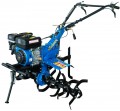 |
|---|---|---|
| DTZ 560DN | DTZ 570B | |
| Outdated Product | Outdated Product | |
| User reviews | ||
| TOP sellers | ||
| Motor type | diesel | petrol |
Soil cultivation | ||
| Working width | 114 cm | 115 cm |
| Working depth | 20 cm | 30 cm |
| Number of blades | 8 | 8 |
| Speed rotation | 130 rpm | |
Design characteristics | ||
| Design | power take-off shaft handle height adjustment adjustable by side handle | power take-off shaft handle height adjustment adjustable by side handle |
| Reducer | gear | gear |
| Gears | 3 forward / 1 back | 3 forward / 1 back |
Motor | ||
| ICE type | 4-stroke | 4-stroke |
| Motor model | 178F | ДБ 170F |
| Engine size | 296 cm³ | 207 cm³ |
| Motor power | 6 hp | 7 hp |
| Motor power | 5200 W | |
| Fuel consumption | 2 L/h | |
| Fuel tank volume | 4 L | 4 L |
| Crankcase oil capacity | 1.3 L | 0.6 L |
| Start type | manual | manual |
| Engine-cooling system | air | air |
General | ||
| Wheels diameter | 45 cm | |
| Dimensions | 160x114x80 cm | |
| Weight | 118 kg | 115 kg |
| Added to E-Catalog | february 2023 | september 2018 |


Compare DTZ 560DN and 570B
You may be interested in
DTZ 570B often compared


Glossary
Motor type
— Petrol. Internal combustion engine on gasoline. Such engines have good power, are easy to operate and are not limited by the length of the power cord (like electric ones). Their disadvantages are a significant noise level, exhaust emissions and the need to purchase fuels and lubricants, as a result - a fairly high cost of operation. However, most walk-behind tractors and cultivators have gasoline engines.
— Diesel. An internal combustion engine similar in design to a gasoline engine, but with a number of differences in the operating principle and, as a result, in operation. Thus, it is fueled with diesel fuel, which is somewhat cheaper than gasoline. Diesel engines have good torque at low speeds, due to which they are well suited for heavy work (plowing, transporting goods). On the other hand, they are not without drawbacks - high cost of repair and high requirements for fuel purity. As a result, diesel walk-behind tractors and cultivators are less common.
— Corded electric. Electric motors powered by an electrical network, most often a regular household 230 V. The advantages of all electric motors over gasoline/diesel ones are, in particular, low cost (including in operation), smaller dimensions and weight, ease of maintenance (almost none required), low noise level and absence of exhaust gases. On the other hand, their power is relatively low — even for...models powered by the network it does not exceed 3 kW. Therefore, electric units are mainly made for small volumes of work, which are more like cultivators than full-fledged walk-behind tractors. It is also worth noting here that when powered by the network, the mobility of the unit is limited by the length of the power cord. On the other hand, models with such power are generally more powerful than battery-powered ones, with similar power — lighter and cheaper, and the operating time is practically unlimited.
— Battery. Electric motors powered by batteries. The main features of electric motors are generally described above, and battery power makes the unit as autonomous as possible, independent of sockets and the length of the power cord. At the same time, models with such power are even less powerful than devices connected to the network - most of them do not even reach 1.5 kW. In addition, the battery affects the weight and cost of the unit, and the operating time is limited; charging the battery takes a lot of time and still requires a power source. So it makes sense to use cultivators of this type only when the volume of work is small and there are no sockets nearby; such situations occur extremely rarely, so this option has not become widespread.
— Diesel. An internal combustion engine similar in design to a gasoline engine, but with a number of differences in the operating principle and, as a result, in operation. Thus, it is fueled with diesel fuel, which is somewhat cheaper than gasoline. Diesel engines have good torque at low speeds, due to which they are well suited for heavy work (plowing, transporting goods). On the other hand, they are not without drawbacks - high cost of repair and high requirements for fuel purity. As a result, diesel walk-behind tractors and cultivators are less common.
— Corded electric. Electric motors powered by an electrical network, most often a regular household 230 V. The advantages of all electric motors over gasoline/diesel ones are, in particular, low cost (including in operation), smaller dimensions and weight, ease of maintenance (almost none required), low noise level and absence of exhaust gases. On the other hand, their power is relatively low — even for...models powered by the network it does not exceed 3 kW. Therefore, electric units are mainly made for small volumes of work, which are more like cultivators than full-fledged walk-behind tractors. It is also worth noting here that when powered by the network, the mobility of the unit is limited by the length of the power cord. On the other hand, models with such power are generally more powerful than battery-powered ones, with similar power — lighter and cheaper, and the operating time is practically unlimited.
— Battery. Electric motors powered by batteries. The main features of electric motors are generally described above, and battery power makes the unit as autonomous as possible, independent of sockets and the length of the power cord. At the same time, models with such power are even less powerful than devices connected to the network - most of them do not even reach 1.5 kW. In addition, the battery affects the weight and cost of the unit, and the operating time is limited; charging the battery takes a lot of time and still requires a power source. So it makes sense to use cultivators of this type only when the volume of work is small and there are no sockets nearby; such situations occur extremely rarely, so this option has not become widespread.
Working width
The maximum width of the strip of land processed by the machine in one pass.
The large width makes it easier to work in large open areas, allowing them to be dealt with faster. At the same time, it is easier to deal with bottlenecks and hard-to-reach nooks and crannies with a small working width — a large unit may simply not fit where a smaller one will pass without problems. So it is worth choosing according to this indicator, taking into account the features of the planned work. If we talk about specific numbers, then in the smallest models the capture width does not exceed 50 cm, in the largest it can be 1 m or more, a value from 50 to 75 cm can be called average, and from 75 cm to 1 m — above average.
Also note that some models allow you to expand the processing width by installing additional cutters. However, note that the wider the band, the more power is needed for efficient operation. It is believed that for the full use of the two-wheel tractor, it must produce at least 1 hp. for every 20 cm of width; however, for loose soils and shallow depths, smaller values are sufficient.
The large width makes it easier to work in large open areas, allowing them to be dealt with faster. At the same time, it is easier to deal with bottlenecks and hard-to-reach nooks and crannies with a small working width — a large unit may simply not fit where a smaller one will pass without problems. So it is worth choosing according to this indicator, taking into account the features of the planned work. If we talk about specific numbers, then in the smallest models the capture width does not exceed 50 cm, in the largest it can be 1 m or more, a value from 50 to 75 cm can be called average, and from 75 cm to 1 m — above average.
Also note that some models allow you to expand the processing width by installing additional cutters. However, note that the wider the band, the more power is needed for efficient operation. It is believed that for the full use of the two-wheel tractor, it must produce at least 1 hp. for every 20 cm of width; however, for loose soils and shallow depths, smaller values are sufficient.
Working depth
The maximum processing depth provided by the unit. In cultivators with non-replaceable cutters, this parameter is determined primarily by the cutter diameter, in walk-behind tractors designed for active cutters (see below) - by design features (in such models, even high power does not guarantee a large working depth). The most limited indicator in modern walk-behind tractors is up to 20 cm, and a value from 21 to 25 cm can be called small. However, often even such capabilities are quite sufficient. A depth of 26 to 30 cm already provides quite extensive capabilities, and the most advanced models are capable of "biting into the ground" more than 30 cm.
In any case, the optimal processing depth depends on the type and condition of the soil, as well as the crops for which the soil is being prepared; detailed recommendations on this matter can be found in specialized sources. So it does not always make sense to look for a model with maximum depth - especially since such capabilities require high power. It should also be noted that in many units the depth can be adjusted.
In any case, the optimal processing depth depends on the type and condition of the soil, as well as the crops for which the soil is being prepared; detailed recommendations on this matter can be found in specialized sources. So it does not always make sense to look for a model with maximum depth - especially since such capabilities require high power. It should also be noted that in many units the depth can be adjusted.
Speed rotation
The speed of rotation of the cutters provided by the two-wheel tractor in normal operation. For models with several gears and, accordingly, several speed options, this paragraph usually gives the maximum speed.
The value of this parameter directly depends on the type of cutter used in the two-wheel tractor. In models with active rototillers (see below), only the intensity of cultivation and the degree of crushing of the soil depend on the rotation speed; it is believed that it should be at least 270 – 280 rpm. And in motor cultivators, where the cutter is installed on the power axis of the unit (the so-called axial structure), the overall speed of movement will also depend on its speed — and it should not be too high, otherwise the user simply will not keep up with the unit. In such models, manufacturers select the rotation speed depending on the diameter of the cutter so that the speed of the machine in the end is less than 6 – 7 km/h. Therefore, in large motor cultivators, the rotation speed usually does not exceed 130 rpm, and in compact battery models with small diameter cutters, it can reach 300 rpm and even more.
The value of this parameter directly depends on the type of cutter used in the two-wheel tractor. In models with active rototillers (see below), only the intensity of cultivation and the degree of crushing of the soil depend on the rotation speed; it is believed that it should be at least 270 – 280 rpm. And in motor cultivators, where the cutter is installed on the power axis of the unit (the so-called axial structure), the overall speed of movement will also depend on its speed — and it should not be too high, otherwise the user simply will not keep up with the unit. In such models, manufacturers select the rotation speed depending on the diameter of the cutter so that the speed of the machine in the end is less than 6 – 7 km/h. Therefore, in large motor cultivators, the rotation speed usually does not exceed 130 rpm, and in compact battery models with small diameter cutters, it can reach 300 rpm and even more.
Motor model
Model of the engine installed in the two-wheel tractor / cultivator. The main performance data of the engine is usually indicated in the general data for the unit. However, knowing the exact name of the motor, you can find more detailed information on it — starting from specific data like torque or revolutions and ending with reviews and reviews. Also, data on the engine model can be useful when searching for spare parts or consumables.
Engine size
The working volume of the gasoline or diesel engine of the cultivator / two-wheel tractor. For an internal combustion engine of the same type (see "Type of internal combustion engine"), power and fuel consumption usually directly depend on the volume. Also, the classification of a two-wheel tractor as a vehicle according to the traffic rules of a particular country may depend on the engine volume; you should pay attention to this if you plan to use the unit as a tractor and drive on roads.
Motor power
Horsepower of two-wheel tractor/cultivator motor. The basic unit of power nowadays is watt, however for petrol and diesel engines (see "Motor type") the more traditional designation in horsepower is often used. 1 hp is approximately equal to 735 watts.
More powerful motor allows achieving higher productivity, width and depth of processing. On the other hand, high power significantly affects the price, weight and dimensions of the unit, as well as the consumption of electricity/fuel. In light of this, the engine characteristics are selected by the manufacturer taking into account what "weight category" the walk-behind tractor belongs to. The most limited modern units have a power of up to 2 hp, in the heaviest and most advanced this figure can exceed 13 hp ; 4 - 7 hp can be called an average indicator, and 2 - 4 hp and 7 - 13 hp are below and above average, respectively.
Detailed recommendations on the optimal power for a given situation can be found in specialized sources.
More powerful motor allows achieving higher productivity, width and depth of processing. On the other hand, high power significantly affects the price, weight and dimensions of the unit, as well as the consumption of electricity/fuel. In light of this, the engine characteristics are selected by the manufacturer taking into account what "weight category" the walk-behind tractor belongs to. The most limited modern units have a power of up to 2 hp, in the heaviest and most advanced this figure can exceed 13 hp ; 4 - 7 hp can be called an average indicator, and 2 - 4 hp and 7 - 13 hp are below and above average, respectively.
Detailed recommendations on the optimal power for a given situation can be found in specialized sources.
Motor power
The power of the two-wheel tractor/cultivator engine in watts. This designation is usually used for electric engines, but can also be used for petrol/diesel engines, along with horsepower (for more information, see the "Motor power" section above).
More powerful motor allows achieving higher productivity, width and depth of processing. On the other hand, high power significantly affects the price, weight and dimensions of the unit, as well as the consumption of electricity / fuel. In light of this, the engine power is selected by the manufacturer taking into account what "weight category" the walk-behind tractor belongs to, what characteristics it should show. So, the lightest models have a power of up to 1.5 kW, this is the device that is best suited for a small area of 6 - 8 acres. Walk-behind tractors up to 3 kW can cope with 10 - 15 acres, a power of 3.5 - 5 kW is suitable for a plot of 50 acres to a couple of hectares. Units for 5 - 10 kW are already classified as professional level, they can "tame" spaces of 7 - 10 hectares; and the heaviest and most powerful modern walk-behind tractors have a power of more than 10 kW.
More powerful motor allows achieving higher productivity, width and depth of processing. On the other hand, high power significantly affects the price, weight and dimensions of the unit, as well as the consumption of electricity / fuel. In light of this, the engine power is selected by the manufacturer taking into account what "weight category" the walk-behind tractor belongs to, what characteristics it should show. So, the lightest models have a power of up to 1.5 kW, this is the device that is best suited for a small area of 6 - 8 acres. Walk-behind tractors up to 3 kW can cope with 10 - 15 acres, a power of 3.5 - 5 kW is suitable for a plot of 50 acres to a couple of hectares. Units for 5 - 10 kW are already classified as professional level, they can "tame" spaces of 7 - 10 hectares; and the heaviest and most powerful modern walk-behind tractors have a power of more than 10 kW.
Fuel consumption
The average amount of fuel consumed by the gasoline or diesel engine (see "Engine type") of the cultivator/two-wheel tractor per hour of operation. This value is rather conditional, because depending on the mode of operation, fuel consumption may vary in one direction or another; however, in general, it provides an estimate of the approximate amount of fuel required for a given operating time.