
Comparison LG 24MT49S vs LG 24MT48S
Add to comparison | 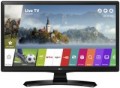 | 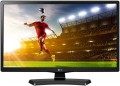 |
|---|---|---|
| LG 24MT49S | LG 24MT48S | |
| Outdated Product | from $253.76 up to $279.99 | |
| TOP sellers | ||
| Size | 24 " | 24 " |
| Operating system | Smart TV (proprietary system) | Smart TV (proprietary system) |
Display | ||
| Matrix | *VA | |
| Screen surface | anti-glare | anti-glare |
| Resolution | 1366x768 px | 1366x768 px |
| Brightness | 200 cd/m² | 250 cd/m² |
| Static contrast | 1 000:1 | 1 000:1 |
| Dynamic contrast | 5 000 000:1 | |
| Response time | 14 ms | 8 ms |
| Frame rate | 50/60 Hz | |
Multimedia | ||
| Sound power | 10 W | 10 W |
| Number of speakers | 2 | 2 |
| Digital tuner | DVB-T2 (terrestrial) DVB-C (cable) DVB-S2 (satellite) | DVB-T2 (terrestrial) DVB-C (cable) DVB-S2 (satellite) |
Features | ||
| Features | Wi-Fi Miracast | Wi-Fi Miracast |
Connectors | ||
| HDMI | 2 | 2 |
| Additional inputs | USB-A LAN component composite AV input | USB-A LAN component composite AV input |
| Outputs | mini-Jack (3.5 mm) headphones optical | mini-Jack (3.5 mm) headphones optical |
General | ||
| Wall mount | VESA 75x75 mm | VESA 75x75 mm |
| Power consumption | 25 W | 26 W |
| Dimensions (WxHxD) | 556x387x146 mm | 556x387.3x146.3 mm |
| Dimensions without stand (WxHxD) | 556x345x53 mm | 556x345.2x53.1 mm |
| Weight | 3.4 kg | 3.4 kg |
| Color | ||
| Added to E-Catalog | june 2017 | august 2016 |


Compare LG 24MT49S and 24MT48S
You may be interested in
My comparisons
LG 24MT49S often compared


Glossary
Matrix
The type of matrix used in the TV. Among them, OLED, QLED, QD-OLED and NanoCell deserve the most attention, which are found in TVs of the relevant price category. Now more about each of them and other more classic options:
— OLED. TVs with screens that use organic light-emitting diodes — OLED. Such LEDs can be used both to illuminate a traditional LCD matrix, and as elements from which a screen is built. In the first case, the advantages of OLED over traditional LED are compactness, extremely low power consumption, backlight uniformity, as well as excellent brightness and contrast ratios. And in matrices, consisting entirely of OLED, these advantages are even more pronounced. The main disadvantages of OLED TVs are the high price (which, however, is constantly decreasing as the technology develops and improves), as well as the susceptibility of organic pixels to burn-in during long-term broadcast of static images or pictures with static elements (TV channel logo, information panel, etc.).
— QLED. TVs with screens using "quantum dot" technology — QLED. Such screens differ from conventional LED matrices in the design of the backlight: multilayer colour filters in such a backlight are replaced with a thin-film light-transmitting coating based on nanoparticles, and traditional white LEDs are replaced with blue ones. This a...llows to achieve a significant increase in brightness and colour saturation at the same time as improving the quality of colour reproduction, besides, it reduces the thickness and reduces the power consumption of the screen. The disadvantage of QLED matrices is traditional — the high price.
— QD-OLED. A kind of hybrid version of matrices that combine “quantum dots” (Quantum Dot) and organic light-emitting diodes (OLED) in one bottle. The QD-OLED modification was introduced by Samsung at the end of 2021 in response to advanced OLED panels from LG. The technology takes the best from QLED and OLED: it is based on blue LEDs, self-luminous pixels (instead of external backlighting) and “quantum dots”, which play the role of colour filters, but at the same time practically do not attenuate the light (unlike traditional filters) . Thanks to the use of a number of advanced solutions, the creators managed to achieve very impressive characteristics, significantly superior to many other OLED matrices. Among them are high peak brightness from 1000 nits (cd/m²), excellent contrast and black depth, as well as colour coverage of over 90% according to the BT.2020 standard and more than 120% according to DCI-P3. Such matrices are found mainly in flagship TV panels.
— IPS. A type of matrix originally designed for high quality colour rendering. Indeed, IPS screens produce bright and rich colours, have a good colour gamut, and demonstrate wide viewing angles. The initial disadvantage of this technology was the low response time, but in modern modifications of IPS this point has been practically eliminated. Matrices of this type are very popular in the advanced budget and mid-price segment of TV panels.
— *VA. In this case, we mean one of the varieties of VA (Vertical Alignment) type matrices - MVA, PVA, Super PVA, etc. Specific varieties may vary slightly in properties, but they all have common features. In fact, *VA matrices are a more affordable alternative to IPS panels: they are relatively inexpensive, provide fairly good colour reproduction and viewing angles of up to 178°. The main disadvantage of such screens is the long response time, but in modern models this has been practically eliminated thanks to the constant improvement of technology. *VA matrices are used in TVs that are positioned as functional and at the same time affordable models.
— PLS. In fact, it is one of the varieties of the IPS matrices described above, developed by Samsung. According to the manufacturer, in such matrices it was possible to achieve higher brightness and contrast than in traditional IPS, as well as to slightly reduce the cost.
— NanoCell. Matrix based on quantum dots. This type of matrix is used in LG TVs and was first introduced in 2017. NanoCell matrices use the structure of classic LCD displays. But unlike the latter, they use so-called quantum dots instead of the classic general backlight, which provide monochromatic light. NanoCell technology reduces power consumption while increasing colour gamut and viewing angle. It is worth noting separately that NanoCell matrices are not the only ones using quantum dot technology. Similar solutions are offered by: Samsung (QLED matrix), Sony (Triluminos matrix), Hisense (ULED).
— OLED. TVs with screens that use organic light-emitting diodes — OLED. Such LEDs can be used both to illuminate a traditional LCD matrix, and as elements from which a screen is built. In the first case, the advantages of OLED over traditional LED are compactness, extremely low power consumption, backlight uniformity, as well as excellent brightness and contrast ratios. And in matrices, consisting entirely of OLED, these advantages are even more pronounced. The main disadvantages of OLED TVs are the high price (which, however, is constantly decreasing as the technology develops and improves), as well as the susceptibility of organic pixels to burn-in during long-term broadcast of static images or pictures with static elements (TV channel logo, information panel, etc.).
— QLED. TVs with screens using "quantum dot" technology — QLED. Such screens differ from conventional LED matrices in the design of the backlight: multilayer colour filters in such a backlight are replaced with a thin-film light-transmitting coating based on nanoparticles, and traditional white LEDs are replaced with blue ones. This a...llows to achieve a significant increase in brightness and colour saturation at the same time as improving the quality of colour reproduction, besides, it reduces the thickness and reduces the power consumption of the screen. The disadvantage of QLED matrices is traditional — the high price.
— QD-OLED. A kind of hybrid version of matrices that combine “quantum dots” (Quantum Dot) and organic light-emitting diodes (OLED) in one bottle. The QD-OLED modification was introduced by Samsung at the end of 2021 in response to advanced OLED panels from LG. The technology takes the best from QLED and OLED: it is based on blue LEDs, self-luminous pixels (instead of external backlighting) and “quantum dots”, which play the role of colour filters, but at the same time practically do not attenuate the light (unlike traditional filters) . Thanks to the use of a number of advanced solutions, the creators managed to achieve very impressive characteristics, significantly superior to many other OLED matrices. Among them are high peak brightness from 1000 nits (cd/m²), excellent contrast and black depth, as well as colour coverage of over 90% according to the BT.2020 standard and more than 120% according to DCI-P3. Such matrices are found mainly in flagship TV panels.
— IPS. A type of matrix originally designed for high quality colour rendering. Indeed, IPS screens produce bright and rich colours, have a good colour gamut, and demonstrate wide viewing angles. The initial disadvantage of this technology was the low response time, but in modern modifications of IPS this point has been practically eliminated. Matrices of this type are very popular in the advanced budget and mid-price segment of TV panels.
— *VA. In this case, we mean one of the varieties of VA (Vertical Alignment) type matrices - MVA, PVA, Super PVA, etc. Specific varieties may vary slightly in properties, but they all have common features. In fact, *VA matrices are a more affordable alternative to IPS panels: they are relatively inexpensive, provide fairly good colour reproduction and viewing angles of up to 178°. The main disadvantage of such screens is the long response time, but in modern models this has been practically eliminated thanks to the constant improvement of technology. *VA matrices are used in TVs that are positioned as functional and at the same time affordable models.
— PLS. In fact, it is one of the varieties of the IPS matrices described above, developed by Samsung. According to the manufacturer, in such matrices it was possible to achieve higher brightness and contrast than in traditional IPS, as well as to slightly reduce the cost.
— NanoCell. Matrix based on quantum dots. This type of matrix is used in LG TVs and was first introduced in 2017. NanoCell matrices use the structure of classic LCD displays. But unlike the latter, they use so-called quantum dots instead of the classic general backlight, which provide monochromatic light. NanoCell technology reduces power consumption while increasing colour gamut and viewing angle. It is worth noting separately that NanoCell matrices are not the only ones using quantum dot technology. Similar solutions are offered by: Samsung (QLED matrix), Sony (Triluminos matrix), Hisense (ULED).
Brightness
The maximum brightness of the image provided by the TV screen.
The image on the screen should be bright enough so that you do not have to strain your eyes unnecessarily to view it. However, too high brightness is undesirable — it will also lead to fatigue. The optimal brightness level depends on the surrounding conditions: the more intense the ambient light, the brighter the TV screen should be. So, on a sunny day, the screen may have to be “turned up” to the maximum, and in the evening, in dimmed light, a relatively dim image will be more comfortable. In addition note that large screens require higher brightness, since they are designed for a greater distance from the viewer.
Thus, the higher the number in this paragraph, the greater the margin of brightness this model has, the better it will show itself in intense ambient light. The lowest indicator sufficient for more or less comfortable viewing in any conditions is 300 cd/m² for models with a diagonal of up to 32", 400 cd/m² for models in the range of 32 – 55" and 600 cd/m² for large screens of 60" and more. In this case, the brightness margin anyway will not be superfluous. But with lower indicators, you may have to darken the room somewhat for comfortable viewing.
The image on the screen should be bright enough so that you do not have to strain your eyes unnecessarily to view it. However, too high brightness is undesirable — it will also lead to fatigue. The optimal brightness level depends on the surrounding conditions: the more intense the ambient light, the brighter the TV screen should be. So, on a sunny day, the screen may have to be “turned up” to the maximum, and in the evening, in dimmed light, a relatively dim image will be more comfortable. In addition note that large screens require higher brightness, since they are designed for a greater distance from the viewer.
Thus, the higher the number in this paragraph, the greater the margin of brightness this model has, the better it will show itself in intense ambient light. The lowest indicator sufficient for more or less comfortable viewing in any conditions is 300 cd/m² for models with a diagonal of up to 32", 400 cd/m² for models in the range of 32 – 55" and 600 cd/m² for large screens of 60" and more. In this case, the brightness margin anyway will not be superfluous. But with lower indicators, you may have to darken the room somewhat for comfortable viewing.
Dynamic contrast
The level of dynamic contrast provided by the TV screen.
Contrast in a general sense is the ratio in brightness between the brightest whites and the darkest blacks that the screen can produce. Other things being equal, the higher the screen contrast, the better the quality of colour reproduction and detail, the lower the likelihood that it will be impossible to see details in too bright or too dark areas of the image. Formally, the main characteristic of screens is static contrast (see above), but even in advanced matrices it is relatively low. Therefore, manufacturers went to the trick, introducing such a characteristic as "dynamic contrast".
Dynamic contrast ratio is the difference between the brightest whites at the highest screen brightness settings and the darkest blacks at the lowest. These contrast ratios can be quite impressive—much higher than static—however, it is impossible to achieve such values within a single frame, and dynamic contrast ratio is stated more for promotional purposes than for describing the actual specifications of the screen. However, it cannot be said that this indicator is completely unrelated to reality. The fact is that many TVs use automatic brightness control, which changes the settings depending on the characteristics of the image. This control is based on the fact that when displaying bright scenes, there is no need to provide a deep black level, and in dark scenes, high brightness of light areas is not needed — th...ese are the features of the human eye. This means that in bright scenes you can increase the overall brightness, and in dark scenes you can reduce it; the maximum brightness difference achievable in this mode of operation is precisely described by dynamic contrast.
Contrast in a general sense is the ratio in brightness between the brightest whites and the darkest blacks that the screen can produce. Other things being equal, the higher the screen contrast, the better the quality of colour reproduction and detail, the lower the likelihood that it will be impossible to see details in too bright or too dark areas of the image. Formally, the main characteristic of screens is static contrast (see above), but even in advanced matrices it is relatively low. Therefore, manufacturers went to the trick, introducing such a characteristic as "dynamic contrast".
Dynamic contrast ratio is the difference between the brightest whites at the highest screen brightness settings and the darkest blacks at the lowest. These contrast ratios can be quite impressive—much higher than static—however, it is impossible to achieve such values within a single frame, and dynamic contrast ratio is stated more for promotional purposes than for describing the actual specifications of the screen. However, it cannot be said that this indicator is completely unrelated to reality. The fact is that many TVs use automatic brightness control, which changes the settings depending on the characteristics of the image. This control is based on the fact that when displaying bright scenes, there is no need to provide a deep black level, and in dark scenes, high brightness of light areas is not needed — th...ese are the features of the human eye. This means that in bright scenes you can increase the overall brightness, and in dark scenes you can reduce it; the maximum brightness difference achievable in this mode of operation is precisely described by dynamic contrast.
Response time
The response time can be described as the maximum time required for each pixel of the screen to change brightness, in other words, the longest time from the receipt of a control signal to the pixel until it switches to the specified mode. The actual switching time may be less — if the brightness changes slightly, it can be calculated in microseconds. However, it is the longest time that matters — it describes the guaranteed response speed of each pixel.
First of all, the frame rate is directly related to the response time (see the relevant paragraph): the lower the response time, the higher the frame rate can be provided on this sensor. However, the actual frame rate may be less than the theoretical maximum, it all depends on the TV. Also note that the overall image quality in dynamic scenes depends primarily on the frame rate. Therefore, we can say that the response time is an auxiliary parameter: the average user rarely needs this data, and in the specifications they are given mainly for advertising purposes.
First of all, the frame rate is directly related to the response time (see the relevant paragraph): the lower the response time, the higher the frame rate can be provided on this sensor. However, the actual frame rate may be less than the theoretical maximum, it all depends on the TV. Also note that the overall image quality in dynamic scenes depends primarily on the frame rate. Therefore, we can say that the response time is an auxiliary parameter: the average user rarely needs this data, and in the specifications they are given mainly for advertising purposes.
Frame rate
The true panel frequency of a TV without marketing enhancements and interpolation; today there are two classes: 50/60 Hz and 100/120 Hz. The pair of 50 and 60 Hz exists due to historical video signal standards (Europe 25/50, USA/Asia 30/60), with modern TVs typically accepting both. It is reasonable to consider the 100/120 Hz pair as one: it is the same high-end hardware platform, simply operating in multiples of its "native" content (100 Hz for 50 Hz sources, 120 Hz for 60 Hz). This class provides smoother motion in sports and 24p movies (at 120 Hz — in a multiple of 5:5 without stuttering) and unlocks 4K@120 Hz/VRR for gaming; 50/60 Hz remains the basic option for TV and streaming without gaming ambitions.
Power consumption
The electrical power normally consumed by the TV. This parameter strongly depends on the screen size and sound power (see above), however, it can be determined by other parameters — primarily additional features and technologies implemented in the design. It is worth noting that most modern LCD TVs are quite economical, and most often this parameter does not play a significant role — in most cases, power consumption is about several tens of watts. And even large models with a diagonal of 70 – 90" consume about 200 – 300 W — this can be compared with the system unit of a low-power desktop PC.