
Comparison Olympus WS-883 vs Olympus WS-882
Add to comparison | 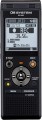 | 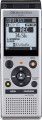 |
|---|---|---|
| Olympus WS-883 | Olympus WS-882 | |
| Compare prices 1 | Compare prices 1 | |
| TOP sellers | ||
Noise suppression. Balancing the volume of voices during playback. | Noise suppression. Balancing the volume of voices during playback. | |
| Type | recorder | recorder |
| Built-in memory | 8 GB | 4 GB |
| Memory card slot |  | |
| Memory card type | microSDHC | microSDHC |
| Max. memory card size | 32 GB | 32 GB |
Recording | ||
| Microphone type | stereo (A/B) | stereo (A/B) |
| Microphone | built-in/external | built-in/external |
| External microphone connector | mini-Jack 3.5 mm | mini-Jack 3.5 mm |
| Recording format | MP3 | MP3 |
| Max. recording quality (MP3) | 128 kbps | 128 kbps |
| Maximum recording time | 2080 h | 1040 h |
| Frequency range | 40 – 17000 Hz | 70 – 17000 Hz |
| Features | microphone sensitivity change record quality change voice activation record labels | microphone sensitivity change record quality change voice activation record labels |
More features | ||
| Additional features | computer connect MP3 player built-in speaker headphone output | computer connect MP3 player built-in speaker headphone output |
General | ||
| LCD display | | |
| Display backlight | | |
| Power source | 2xAAA | 2xAAA |
| Battery indicator | | |
| Dimensions (HxWxT) | 111x39x18 mm | 111x39x18 mm |
| Weight | 77 g | 77 g |
| Added to E-Catalog | september 2023 | september 2023 |

Compare Olympus WS-883 and WS-882
Price comparison
You may be interested in
Olympus WS-883 often compared


Olympus WS-882 often compared

Glossary
Built-in memory
The capacity of the voice recorder's own storage. The larger the built-in memory, the more material can be recorded on the recorder without the need to free up memory or use additional cards. This parameter is also important if you want to use the device also as a portable flash drive (many modern models allow this).
Maximum recording time
The maximum continuous recording time for the voice recorder. It depends primarily on the amount of memory (see "Built-in memory", "Memory card slot"), it is also directly related to the recording quality: the higher the quality, the more space the material occupies and the shorter the maximum recording time. In this regard, manufacturers usually indicate in the specifications the maximum possible recording time, that is, the recording time with minimum quality; with higher quality and time will be less.
Frequency range
The range of sound frequencies that the recorder is capable of perceiving and recording. A person is able to hear sound on average from 16 Hz to 20 kHz, but the range of the actual human voice is much narrower — approximately 100-3500 Hz. Therefore, if you plan to use a voice recorder to record speech, these frequencies will be enough. If the purpose of the recorder is not limited to this, you should pay attention to models with a wider range — and in this case, the wider it is, the fuller and richer the recording will be.