
Comparison Kicx HeadShot M65 vs EDGE EDPRO6B-E6
Add to comparison | 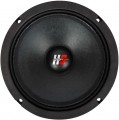 | 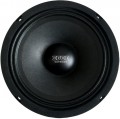 |
|---|---|---|
| Kicx HeadShot M65 | EDGE EDPRO6B-E6 | |
| Outdated Product | Outdated Product | |
| User reviews | ||
| TOP sellers | ||
| Application area | car | car |
| Type | midrange / midwoofer | midrange / midwoofer |
| Size | 6.5" (16.5 cm) | 6.5" (16.5 cm) |
| Number of bands | 1 | 1 |
Specs | ||
| Rated power | 150 W | 75 W |
| Max. power | 300 W | 300 W |
| Frequency range | 110 – 15000 Hz | 150 – 8000 Hz |
| Impedance | 4 Ohm | 3 Ohm |
| Sensitivity | 100 dB | 91 dB |
| Added to E-Catalog | october 2019 | june 2017 |


Compare Kicx HeadShot M65 and EDGE EDPRO6B-E6
You may be interested in
Kicx HeadShot M65 often compared


EDGE EDPRO6B-E6 often compared


Glossary
Rated power
Rated power of the acoustic system. Most often, the average (root mean square) sound power is indicated as rated.
The most obvious point related to this characteristic is the volume of sound: the more powerful the sound system, the louder the sound it can produce, all other things being equal. In addition, compatibility with an external amplifier depends on this indicator: its power should not exceed the power of the sound system, otherwise overloads and damage to the speakers are possible.
The most obvious point related to this characteristic is the volume of sound: the more powerful the sound system, the louder the sound it can produce, all other things being equal. In addition, compatibility with an external amplifier depends on this indicator: its power should not exceed the power of the sound system, otherwise overloads and damage to the speakers are possible.
Frequency range
The total audio frequency range reproduced by all speaker speakers.
Obviously, this range should not be too narrow, so that the acoustics do not cut off the lower and/or upper frequency limits of the reproduced sound. At the same time, the human ear perceives sound within 16 Hz - 22 kHz, and it simply does not make sense to provide speakers with a wider frequency range. We also recall that in mid-frequency acoustics and tweeters, reproducible frequencies are limited due to specialization (for more details, see "Type"). And the overall sound quality will depend not only on this indicator, but also on a number of other features.
Obviously, this range should not be too narrow, so that the acoustics do not cut off the lower and/or upper frequency limits of the reproduced sound. At the same time, the human ear perceives sound within 16 Hz - 22 kHz, and it simply does not make sense to provide speakers with a wider frequency range. We also recall that in mid-frequency acoustics and tweeters, reproducible frequencies are limited due to specialization (for more details, see "Type"). And the overall sound quality will depend not only on this indicator, but also on a number of other features.
Impedance
The term "impedance" refers to the electrical resistance of AC systems whose DC resistance is very low, such as loudspeakers. In modern car audio, the most common impedance is 2, 4 or 8 ohms. This parameter has practically no effect on the sound quality — it serves to select the optimal combination of acoustics and an external amplifier. If the speaker impedance is higher than that for which the amplifier is designed, the sound will be quieter than necessary, and if the impedance is lower, distortion in the sound is possible.
Sensitivity
This parameter determines the volume of the sound of a particular speaker when a certain standard signal is fed to it. Typically, this is considered a 1 W signal with a frequency of 1000 Hz. The higher the sensitivity, the less the speaker is demanding on the power of the amplifier. So, it is believed that for acoustics connected directly to the car radio, the sensitivity should be 80 dB or more; for less sensitive systems it is recommended to use a separate amplifier.