
Comparison Yadea KS5 Pro vs Yadea KS5
Add to comparison | 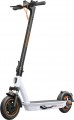 | 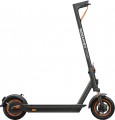 |
|---|---|---|
| Yadea KS5 Pro | Yadea KS5 | |
from $894.47 | from $763.13 | |
| TOP sellers | ||
Connection to a smartphone | ||
| Max. load | 110 kg | 110 kg |
| Foldable design |  | |
Performance | ||
| Range | 60 km | 40 km |
| Power | 500 W | 350 W |
| Max. speed | 34 km/h | 29 km/h |
| Speed modes | 3 | 3 |
| Pedestrian mode |  | |
| Max. climbing angle | 11 ° | 9 ° |
| Drive | rear | rear |
| Wheels | rubber solid 10 " | rubber solid 10 " |
| Suspension | front | front |
| Front brake | drum | drum |
| Rear brake | disc | disc |
| Regenerative | | |
Battery | ||
| Battery capacity | 15.6 Ah | 10.4 Ah |
| Voltage | 36 В | 36 В |
| Full charge time | 8 h | 5.5 h |
Features | ||
| App control | | |
| Headlight | | |
| Brake lights | | |
| Signal / bell | | |
| Stand | | |
| Dustproof, waterproof | IP54 | IP54 |
General | ||
| Frame material | aluminium | aluminium |
| Size | 118.5x48.5x125 cm | 114.5x121 cm |
| Weight | 17.2 kg | 16.6 kg |
| Added to E-Catalog | february 2022 | february 2022 |


Compare Yadea KS5 Pro and KS5
Electric scooters Yadea KS5 Pro and Yadea KS5 have similar features, but there are key differences. The KS5 Pro offers a greater range of 60 km and a motor power of 500 W, allowing it to reach a maximum speed of 34 km/h, while the KS5 has a range of 40 km and a power of 350 W with a maximum speed of 29 km/h. The Pro also has a higher maximum climbing grade (11° compared to 9° for the KS5). The charging time for the KS5 Pro is 8 hours, whereas the KS5 charges in just 5.5 hours. Both scooters have similar features, such as a display and smartphone connectivity, but the KS5 Pro may be more preferable for those seeking greater power and travel distance.
You may be interested in
My comparisons
Yadea KS5 Pro often compared

Yadea KS5 often compared

Glossary
Range
The maximum distance that an electric scooter can travel on a single battery charge.
Usually the range is indicated for a flat road and driving only on an electric motor, without the help of a rider. So this indicator is quite conditional, in practice, the distance of the trip may be either less or more, depending on the characteristics of the road and driving style. Nevertheless, according to the claimed range, it is quite possible to estimate the autonomy of different models and compare them with each other.
Note that a large range (more than 50 km) requires capacious batteries, which affects the dimensions and weight of the device. The real need for such autonomy is not required so often, especially since many electric scooters are quite capable of driving in the usual way, without the use of an electric motor.
Usually the range is indicated for a flat road and driving only on an electric motor, without the help of a rider. So this indicator is quite conditional, in practice, the distance of the trip may be either less or more, depending on the characteristics of the road and driving style. Nevertheless, according to the claimed range, it is quite possible to estimate the autonomy of different models and compare them with each other.
Note that a large range (more than 50 km) requires capacious batteries, which affects the dimensions and weight of the device. The real need for such autonomy is not required so often, especially since many electric scooters are quite capable of driving in the usual way, without the use of an electric motor.
Power
The power of the motor installed in the electric scooter. In models with two motors (one per wheel), their total power is usually indicated.
A more powerful motor, on the one hand, has a positive effect on the speed and acceleration characteristics; on the other hand, it affects the cost of the device and requires more capacious batteries, which affect both the price and weight. In addition, at acceleration and low speeds, the scooter can be “helped” by pushing off with your foot. Therefore, in most modern models, the motor power is low — most often in range of 250 W, 300 W, 350 W. Power of 500 W is considered quite high, it allows you to reach speeds of 40 km/h and even higher. In the most advanced models, power is already measured in kilowatts, and the maximum speed can exceed 80 km/h; however, such "monsters" cost accordingly.
However, power also affects the ability to drive a vehicle, because depending on the country, various traffic rules are provided for driving a scooter.
A more powerful motor, on the one hand, has a positive effect on the speed and acceleration characteristics; on the other hand, it affects the cost of the device and requires more capacious batteries, which affect both the price and weight. In addition, at acceleration and low speeds, the scooter can be “helped” by pushing off with your foot. Therefore, in most modern models, the motor power is low — most often in range of 250 W, 300 W, 350 W. Power of 500 W is considered quite high, it allows you to reach speeds of 40 km/h and even higher. In the most advanced models, power is already measured in kilowatts, and the maximum speed can exceed 80 km/h; however, such "monsters" cost accordingly.
However, power also affects the ability to drive a vehicle, because depending on the country, various traffic rules are provided for driving a scooter.
Max. speed
A high top speed gives you more riding options and reduces travel time. However, it requires powerful motors and capacious batteries, which affects the price and weight of the scooter. In addition, the faster the scooter, the more careful you need to be when driving. Therefore, most of the electric scooters have a speed of 25 km / h or a little more - 30 km / h.
Pedestrian mode
The slowest speed mode (approximately from 0 to 5 – 6 km/h), is ideal for use in crowded places, for children and beginners. It controls the e-scooter while it moves at a safe speed for pedestrians to avoid collisions on crowded sidewalks. Pedestrian mode is also suitable for leisurely walks and side-by-side trips with walking frien
Max. climbing angle
The maximum climbing angle that an electric scooter can overcome on engine power alone, without the help of legs. Models with engines of the same power may differ in this indicator (due to the difference in torque and wheel size).
Note that in the specifications the angle is usually indicated in degrees, while on road signs it is given as a percentage (1% corresponds to a rise of 1 m for every 100 m of horizontal movement). However, this moment is not particularly critical: if you often have to overcome a certain hill, you can clarify its slope by converting percentages into degrees (and vice versa) according to special tables. In addition, if the angle turns out to be too large, nothing prevents you from helping the scooter with your foot, in extreme cases, to overcome the climb on foot.
Note that in the specifications the angle is usually indicated in degrees, while on road signs it is given as a percentage (1% corresponds to a rise of 1 m for every 100 m of horizontal movement). However, this moment is not particularly critical: if you often have to overcome a certain hill, you can clarify its slope by converting percentages into degrees (and vice versa) according to special tables. In addition, if the angle turns out to be too large, nothing prevents you from helping the scooter with your foot, in extreme cases, to overcome the climb on foot.
Battery capacity
Battery capacity installed in the electric scooter.
Theoretically, a higher battery capacity allows for a longer range, but in fact, not everything is so clear. Firstly, motors of even the same power can differ in efficiency; secondly, the actual amount of energy stored in the battery depends not only on the capacity in amp-hours but also on the voltage in volts. So this parameter is secondary, and when choosing, it is worth focusing not so much on the battery capacity, but on the directly claimed range. You can compare capacity only for models with similar characteristics and the same supply voltage.
Theoretically, a higher battery capacity allows for a longer range, but in fact, not everything is so clear. Firstly, motors of even the same power can differ in efficiency; secondly, the actual amount of energy stored in the battery depends not only on the capacity in amp-hours but also on the voltage in volts. So this parameter is secondary, and when choosing, it is worth focusing not so much on the battery capacity, but on the directly claimed range. You can compare capacity only for models with similar characteristics and the same supply voltage.
Full charge time
Time to fully charge the battery from zero to 100%.
The more powerful the device, the more capacious batteries it needs and, as a rule, the longer the charging time. In the heaviest models, it can reach 20 hours. However, such indicators are rare - most electric scooters are charged for a maximum of 8-9 hours, which allows you to put the device on charge “from evening to morning”.
The more powerful the device, the more capacious batteries it needs and, as a rule, the longer the charging time. In the heaviest models, it can reach 20 hours. However, such indicators are rare - most electric scooters are charged for a maximum of 8-9 hours, which allows you to put the device on charge “from evening to morning”.