
Comparison VR Shinecon SC-G10 vs Carl Zeiss Cinemizer Oled
Add to comparison | 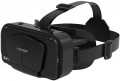 |  |
|---|---|---|
| VR Shinecon SC-G10 | Carl Zeiss Cinemizer Oled | |
| Outdated Product | from $272.00 | |
| User reviews | ||
| TOP sellers | ||
| Device type | VR glasses for phone | 3D video glasses |
| Purpose (compatibility) | Android iOS (iPhone) | Windows MacOS Android iOS (iPhone) PlayStation Xbox |
Specs | ||
| Max. phone screen size | 7.2 " | |
| Screen resolution | 870x500 px | |
| Field of view | 85 ° | 30 ° |
| Lens distance adjusting |  | |
| Pupillary distance adjustment | | |
Multimedia | ||
| Bluetooth | + | |
| Headphones |  | |
General | ||
| Control | button controls | |
| Operating time | 40 h | |
| Material | plastic | plastic |
| Dimensions (HxWxD) | 176x96x125 mm | 36x160190 mm |
| Weight | 205 g | 120 g |
| Added to E-Catalog | october 2022 | february 2017 |


Compare VR Shinecon SC-G10 and Carl Zeiss Cinemizer Oled
You may be interested in
My comparisons
VR Shinecon SC-G10 often compared


Glossary
Device type
— VR glasses. Headsets or goggles that display images directly in front of your eyes and block out the real world, creating the sensation that you are inside a virtual space. Through VR glasses, you don't see the room around you but rather a digital world: games, simulators, virtual cinemas. VR glasses completely block your real view and create a feeling of being "inside" the scene, so comfortable fit, good resolution, and refresh rate are important to reduce motion sickness and eye strain. Such devices are used by gamers, fans of car and flight simulators, and are also applied in training and 3D presentations of technology or real estate.
— MR glasses. Mixed reality devices that combine VR elements with display hints and allow virtual objects to "live" in the real space, considering the floor, walls, and furniture. In MR glasses, a 3D model can stand on a real table, and the user can walk around it, view it from different angles, and interact with gestures or controllers. MR glasses are suitable for engineering, interior design, medicine, and staff training.
— FPV goggles. Specialized goggles for first-person view flights that display real-time images from a drone camera or other remote-controlled devices. Unlike VR glasses, FPV goggles are almost always "geared" towards one task — providing the pilot with the most direct and minimally delayed image...for precise drone control, especially in racing or freestyle. Here, low signal latency, comfortable fit, transmitter compatibility, and support for the required video format are important.
— 3D video glasses. Compact glasses or mini headsets that create the effect of immersive images and a large screen before your eyes but without typical "gamer" VR functionality. They can connect to a laptop, media player, console and display movies, series, 3D content, or regular video, making viewing more private. Unlike FPV goggles, which show live footage from a drone, 3D video glasses are optimized for media content: the quality of the matrix, contrast, and comfort for long-term use are important. They are chosen by movie enthusiasts, frequently traveling users, and those who don't want to allocate space for a large TV.
— MR glasses. Mixed reality devices that combine VR elements with display hints and allow virtual objects to "live" in the real space, considering the floor, walls, and furniture. In MR glasses, a 3D model can stand on a real table, and the user can walk around it, view it from different angles, and interact with gestures or controllers. MR glasses are suitable for engineering, interior design, medicine, and staff training.
— FPV goggles. Specialized goggles for first-person view flights that display real-time images from a drone camera or other remote-controlled devices. Unlike VR glasses, FPV goggles are almost always "geared" towards one task — providing the pilot with the most direct and minimally delayed image...for precise drone control, especially in racing or freestyle. Here, low signal latency, comfortable fit, transmitter compatibility, and support for the required video format are important.
— 3D video glasses. Compact glasses or mini headsets that create the effect of immersive images and a large screen before your eyes but without typical "gamer" VR functionality. They can connect to a laptop, media player, console and display movies, series, 3D content, or regular video, making viewing more private. Unlike FPV goggles, which show live footage from a drone, 3D video glasses are optimized for media content: the quality of the matrix, contrast, and comfort for long-term use are important. They are chosen by movie enthusiasts, frequently traveling users, and those who don't want to allocate space for a large TV.
Purpose (compatibility)
The signal source in VR headsets reveals where exactly the image comes from and who performs the main "heavy" graphic processing. In one case, the image is generated by a powerful PC or console, in another — a mobile phone, and for FPV goggles, the signal comes directly from the drone via a radio channel. Stand-alone devices that do not require connection to external gadgets deserve special mention. The chosen signal source affects the image quality, latency, the range of available games and applications, as well as how the VR headset is connected — via cable, Wi-Fi, Bluetooth, or through a specialized transmitter.
— Stand-alone Device. VR headsets where the headset itself acts as the signal source: it has a mobile processor, video chip, memory, and its own operating system inside, so the image is generated directly in the headset, not on a computer or phone. The user wears the headset, connects to Wi-Fi, and launches games and apps from the built-in store — no wires, no PC, and no mandatory smartphone at hand. Such solutions are closer in power to a good Android smartphone and fall short of a Windows PC setup, but are noticeably more convenient than mobile headsets, where everything is tied to the phone: no need to insert the device into the casing, monitor heating, or charge two devices at once. Stand-alone VR headsets are especially suitable for everyday games, fitness, and education, where freedom of movement and ease of launc...h are more important than maximum graphic settings.
— Android. VR headsets are tied to Google's mobile platform and work either in tandem with a smartphone or independently as an Android stand-alone device. In the first case, the phone is inserted into the headset casing or connected to it wirelessly, forming the image and transmitting it to the headset's screens, in the second case, the headset contains a built-in chipset, memory, and app store, and the phone is used only for setup and streaming. This signal source makes VR mobile: a smartphone and headset are enough to run simple games, 360 videos, and educational apps without a powerful PC, but in terms of graphics, these solutions fall short of full-fledged PC and console systems.
— iOS (iPhone). Similar in concept to Android, but tailored to the Apple ecosystem and iPhone smartphones. In this case, the VR headset receives an image either from the phone itself, installed in the headset casing, or through a special streaming/mirroring mode from the iPhone via Wi-Fi or Lightning/USB-C cable. iOS support means that the user can access a large number of applications, 360 videos, and educational content from the App Store, while the system is generally simpler and more reliable in setup, but the choice of "real" VR games is smaller than in the Android or Windows world.
— Windows. VR headsets work in conjunction with a PC running Windows, which is fully responsible for 3D graphics output. Typically, the headset connects via USB-C / DisplayPort or via Wi-Fi in streaming mode, and the headset acts as a "display with sensors." This signal source provides the most advanced VR gaming: major gaming platforms, simulators, mods are supported, and the quality and stability depend on the computer's graphics card and processor.
— MacOS. VR headsets can receive images from Apple computers — iMac, MacBook, and other models with macOS. Here, VR is more often used for demonstrations, design, 3D viewing, and professional applications than hardcore gaming, so stable integration and proper driver operation are more important than maximum performance. Connection is usually through USB-C / Thunderbolt and specialized software, and the choice of native VR content for macOS is noticeably more modest than for Windows.
— PlayStation. VR headsets are designed to work with PS4 or PS5 consoles, which render all graphics. Proprietary HDMI/USB connections and Sony's own protocols are used here, and the headset itself is optimized for the console's ecosystem. This option provides a predictable experience: PS VR games are carefully adapted to the specific model of headset, latency is minimal, and the user does not need to think about drivers or hardware configuration.
— Xbox. The Xbox signal source implies compatibility with the console in display mode or via an intermediate PC. In the traditional sense, Xbox lacks complete VR support, so the headset is more often used as an external display rather than a comprehensive VR solution with game space tracking. If the manufacturer still declares Xbox as a signal source, it is worth carefully studying the description: most often these are specific scenarios like a "cinema" or streaming output, rather than full VR projects.
— Drone (quadcopter). A separate class of VR headsets where the image comes directly from the drone's camera in real-time via radio channel. Such goggles have a receiver operating on specific frequencies and protocols inside, so compatibility is usually strictly tied to a specific system: the headset "understands" only those video transmitters and modules for which it was originally designed. The main task here is to ensure minimal latency so the pilot can safely and accurately control the drone "first-person" rather than launching ordinary games, and it is crucial to check in advance whether the goggles will work correctly with your FPV set or if it will require changing the camera/transmitter to the required standard.
— Stand-alone Device. VR headsets where the headset itself acts as the signal source: it has a mobile processor, video chip, memory, and its own operating system inside, so the image is generated directly in the headset, not on a computer or phone. The user wears the headset, connects to Wi-Fi, and launches games and apps from the built-in store — no wires, no PC, and no mandatory smartphone at hand. Such solutions are closer in power to a good Android smartphone and fall short of a Windows PC setup, but are noticeably more convenient than mobile headsets, where everything is tied to the phone: no need to insert the device into the casing, monitor heating, or charge two devices at once. Stand-alone VR headsets are especially suitable for everyday games, fitness, and education, where freedom of movement and ease of launc...h are more important than maximum graphic settings.
— Android. VR headsets are tied to Google's mobile platform and work either in tandem with a smartphone or independently as an Android stand-alone device. In the first case, the phone is inserted into the headset casing or connected to it wirelessly, forming the image and transmitting it to the headset's screens, in the second case, the headset contains a built-in chipset, memory, and app store, and the phone is used only for setup and streaming. This signal source makes VR mobile: a smartphone and headset are enough to run simple games, 360 videos, and educational apps without a powerful PC, but in terms of graphics, these solutions fall short of full-fledged PC and console systems.
— iOS (iPhone). Similar in concept to Android, but tailored to the Apple ecosystem and iPhone smartphones. In this case, the VR headset receives an image either from the phone itself, installed in the headset casing, or through a special streaming/mirroring mode from the iPhone via Wi-Fi or Lightning/USB-C cable. iOS support means that the user can access a large number of applications, 360 videos, and educational content from the App Store, while the system is generally simpler and more reliable in setup, but the choice of "real" VR games is smaller than in the Android or Windows world.
— Windows. VR headsets work in conjunction with a PC running Windows, which is fully responsible for 3D graphics output. Typically, the headset connects via USB-C / DisplayPort or via Wi-Fi in streaming mode, and the headset acts as a "display with sensors." This signal source provides the most advanced VR gaming: major gaming platforms, simulators, mods are supported, and the quality and stability depend on the computer's graphics card and processor.
— MacOS. VR headsets can receive images from Apple computers — iMac, MacBook, and other models with macOS. Here, VR is more often used for demonstrations, design, 3D viewing, and professional applications than hardcore gaming, so stable integration and proper driver operation are more important than maximum performance. Connection is usually through USB-C / Thunderbolt and specialized software, and the choice of native VR content for macOS is noticeably more modest than for Windows.
— PlayStation. VR headsets are designed to work with PS4 or PS5 consoles, which render all graphics. Proprietary HDMI/USB connections and Sony's own protocols are used here, and the headset itself is optimized for the console's ecosystem. This option provides a predictable experience: PS VR games are carefully adapted to the specific model of headset, latency is minimal, and the user does not need to think about drivers or hardware configuration.
— Xbox. The Xbox signal source implies compatibility with the console in display mode or via an intermediate PC. In the traditional sense, Xbox lacks complete VR support, so the headset is more often used as an external display rather than a comprehensive VR solution with game space tracking. If the manufacturer still declares Xbox as a signal source, it is worth carefully studying the description: most often these are specific scenarios like a "cinema" or streaming output, rather than full VR projects.
— Drone (quadcopter). A separate class of VR headsets where the image comes directly from the drone's camera in real-time via radio channel. Such goggles have a receiver operating on specific frequencies and protocols inside, so compatibility is usually strictly tied to a specific system: the headset "understands" only those video transmitters and modules for which it was originally designed. The main task here is to ensure minimal latency so the pilot can safely and accurately control the drone "first-person" rather than launching ordinary games, and it is crucial to check in advance whether the goggles will work correctly with your FPV set or if it will require changing the camera/transmitter to the required standard.
Max. phone screen size
The largest diagonal of a smartphone compatible with the corresponding glasses (see "Intended use"). Note that this parameter can be specified both for universal models that do not have specialization for specific mobile phones, and for gadgets for specific devices (for more details, see "Compatible phone models"). The maximum diagonal is connected both with the features of the optics and with the physical dimensions of the "seat" for a mobile phone — a gadget that is too large simply does not fit there.
Note that even the smallest glasses for smartphones work quite correctly with devices with a diagonal of 5 – 5.5 ". So it makes sense to pay attention to this parameter if your device has a larger screen size. Nowadays, you can find glasses for gadgets 5.6 – 6 " and even 6" or more.
Note that even the smallest glasses for smartphones work quite correctly with devices with a diagonal of 5 – 5.5 ". So it makes sense to pay attention to this parameter if your device has a larger screen size. Nowadays, you can find glasses for gadgets 5.6 – 6 " and even 6" or more.
Screen resolution
Resolution of built-in displays in glasses equipped with such equipment — that is, models for PC / consoles, as well as standalone devices (see "Intended use").
The higher the resolution, the more smooth and detailed the “picture” is given out by glasses, all other things being equal. Thanks to the development of technology nowadays, models with Full HD (1920x1080) screens and even higher resolutions are not uncommon. On the other hand, this parameter significantly affects the cost of points. In addition, it is worth remembering that in order to fully work with high-resolution displays, you need powerful graphics capable of playing relevant content. In the case of glasses for PCs and set-top boxes, this puts forward corresponding requirements for external devices, and in standalone models you have to use advanced integrated video adapters (which affects the cost even more).
The higher the resolution, the more smooth and detailed the “picture” is given out by glasses, all other things being equal. Thanks to the development of technology nowadays, models with Full HD (1920x1080) screens and even higher resolutions are not uncommon. On the other hand, this parameter significantly affects the cost of points. In addition, it is worth remembering that in order to fully work with high-resolution displays, you need powerful graphics capable of playing relevant content. In the case of glasses for PCs and set-top boxes, this puts forward corresponding requirements for external devices, and in standalone models you have to use advanced integrated video adapters (which affects the cost even more).
Field of view
The viewing angle provided by virtual reality glasses is the angular size of the space that falls into the user's field of view. Usually, the characteristics indicate the size of this space horizontally; however, if you need the most accurate information, this point needs to be specified separately.
The wider the viewing angle — the more the game space the user can see without turning his head, the more powerful the immersion effect and the less likely that the image will be subject to the "tunnel vision" effect. On the other hand, making the field of view too wide also does not make sense, given the characteristics of the human eye. In general, a large viewing angle is considered to be an angle of 100° or more. On the other hand, there are models where this indicator is 30° or even less — these are, usually, specific devices (for example, drone piloting glasses and augmented reality glasses), where such characteristics are quite justified given the overall functionality.
The wider the viewing angle — the more the game space the user can see without turning his head, the more powerful the immersion effect and the less likely that the image will be subject to the "tunnel vision" effect. On the other hand, making the field of view too wide also does not make sense, given the characteristics of the human eye. In general, a large viewing angle is considered to be an angle of 100° or more. On the other hand, there are models where this indicator is 30° or even less — these are, usually, specific devices (for example, drone piloting glasses and augmented reality glasses), where such characteristics are quite justified given the overall functionality.
Bluetooth
The presence of a Bluetooth module in the glasses; The Bluetooth version to which this module corresponds can also be specified here.
Bluetooth is a technology created for direct wireless connection between various devices. This technology is found in all types of VR glasses (see “Purpose”), although most models with its support are independent devices. In any case, the most popular way to use Bluetooth in virtual reality glasses is to broadcast sound wirelessly. Moreover, the format of such a broadcast may be different, depending on the specifics of the glasses themselves. Thus, standalone devices broadcast the reproduced sound to external headphones. Models for PCs and smartphones may have built-in headphones, and here the sound is transmitted via Bluetooth to the glasses from an external device; Audio from the built-in microphone can be transmitted in the opposite direction.
In addition, there are other possible ways to use Bluetooth, such as directly exchanging files with another device or connecting game controllers. Such capabilities are found exclusively in stand-alone glasses; the specific functionality for each model should be clarified separately.
As for the versions, the oldest one used in VR glasses today is Bluetooth 3.0, the newest is Bluetooth 5.0. However, the differences between different versions for such devices are not fundamental; this information is provided mainly for reference purposes.
Bluetooth is a technology created for direct wireless connection between various devices. This technology is found in all types of VR glasses (see “Purpose”), although most models with its support are independent devices. In any case, the most popular way to use Bluetooth in virtual reality glasses is to broadcast sound wirelessly. Moreover, the format of such a broadcast may be different, depending on the specifics of the glasses themselves. Thus, standalone devices broadcast the reproduced sound to external headphones. Models for PCs and smartphones may have built-in headphones, and here the sound is transmitted via Bluetooth to the glasses from an external device; Audio from the built-in microphone can be transmitted in the opposite direction.
In addition, there are other possible ways to use Bluetooth, such as directly exchanging files with another device or connecting game controllers. Such capabilities are found exclusively in stand-alone glasses; the specific functionality for each model should be clarified separately.
As for the versions, the oldest one used in VR glasses today is Bluetooth 3.0, the newest is Bluetooth 5.0. However, the differences between different versions for such devices are not fundamental; this information is provided mainly for reference purposes.
Headphones
The presence of your own headphones in the design or delivery of virtual reality glasses.
A full-fledged "immersion" in the virtual world requires not only a picture on the screen, but also an appropriate sound accompaniment, for which headphones are the best option. However, glasses take up quite a lot of space on the head, and not all “ears” can be comfortably combined with them (this is especially noticeable on large over-ear headphones). In addition, when connecting headphones with a wire, there may be problems related to the length and/or location of the audio cable. Thus, some models provide this function. These models can have any purpose (see above); most of these are for PC/console glasses, but headphones are also popular in standalone devices. Also note that some glasses use speakers located in the ear area; such speakers are also considered headphones in this case.
An alternative to the bundled "ears" is a headphone output; however, there are models with both functions at once — either folding / removable cups or the simplest speakers mentioned above play the role of headphones in them.
A full-fledged "immersion" in the virtual world requires not only a picture on the screen, but also an appropriate sound accompaniment, for which headphones are the best option. However, glasses take up quite a lot of space on the head, and not all “ears” can be comfortably combined with them (this is especially noticeable on large over-ear headphones). In addition, when connecting headphones with a wire, there may be problems related to the length and/or location of the audio cable. Thus, some models provide this function. These models can have any purpose (see above); most of these are for PC/console glasses, but headphones are also popular in standalone devices. Also note that some glasses use speakers located in the ear area; such speakers are also considered headphones in this case.
An alternative to the bundled "ears" is a headphone output; however, there are models with both functions at once — either folding / removable cups or the simplest speakers mentioned above play the role of headphones in them.
Control
The type of control provided in the design of the glasses.
Note that in this case we are talking exclusively about our own controls installed directly on the body of the glasses; many models are equipped with external controllers (see "Remote control"), but they are not taken into account in this case.
- Button. Control with classic buttons. The main advantage of this option is simplicity and low cost, while its functionality is quite enough to work with basic functions like menu navigation. On the other hand, the buttons require some effort when pressed, which can be somewhat inconvenient, especially when using the controls intensively. However, most often this disadvantage is still not fundamental.
- Touch. Control using sensors that are sensitive to touch and do not require pressing (unlike buttons). In the simplest models, these are separate sensors, the functions of which are similar to the same buttons. In more advanced devices, entire touch panels can be provided, for example, allowing you to control the cursor visible through the glasses and use special gestures. Anyway, this type of control is more advanced than push-button, however, it is more expensive, and therefore less common.
Note that in this case we are talking exclusively about our own controls installed directly on the body of the glasses; many models are equipped with external controllers (see "Remote control"), but they are not taken into account in this case.
- Button. Control with classic buttons. The main advantage of this option is simplicity and low cost, while its functionality is quite enough to work with basic functions like menu navigation. On the other hand, the buttons require some effort when pressed, which can be somewhat inconvenient, especially when using the controls intensively. However, most often this disadvantage is still not fundamental.
- Touch. Control using sensors that are sensitive to touch and do not require pressing (unlike buttons). In the simplest models, these are separate sensors, the functions of which are similar to the same buttons. In more advanced devices, entire touch panels can be provided, for example, allowing you to control the cursor visible through the glasses and use special gestures. Anyway, this type of control is more advanced than push-button, however, it is more expensive, and therefore less common.