
Comparison HTC Vive Focus 3 vs HTC Vive Focus Plus
Add to comparison | 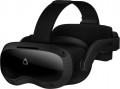 | 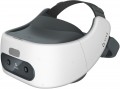 |
|---|---|---|
| HTC Vive Focus 3 | HTC Vive Focus Plus | |
| Compare prices 1 | Compare prices 1 | |
| TOP sellers | ||
| Device type | VR glasses | VR glasses |
| Purpose (compatibility) | autonomous device Windows | autonomous device Windows |
Specs | ||
| Screen resolution | 2448x2448 px | 2880x1600 px |
| Field of view | 120 ° | 110 ° |
| Built-in memory | 128 GB | 32 GB |
| RAM | 8 GB | 4 GB |
| CPU | Qualcomm Snapdragon 835 | |
| Refresh rate | 90 fps | 75 fps |
| 6DoF motion tracking |  | |
| Accelerometer | | |
| Gyroscope | | |
| Proximity sensor | |  |
| Lens distance adjusting | | |
| Pupillary distance adjustment | | |
Multimedia | ||
| Card reader | | |
| USB-C | 5Gbps | + |
| Bluetooth | v 5.2 | + |
| Wi-Fi | Wi-Fi 6 (802.11ax) | Wi-Fi 5 (802.11ac) |
| Microphone | | |
| Headphones | | |
| Headphone output | | |
General | ||
| Control | button controls | |
| Controller | | |
| Track camera | | |
| Operating time | 15 h | 3 h |
| Material | plastic | plastic |
| Dimensions (HxWxD) | 240x200x115 mm | |
| Weight | 695 g | |
| Added to E-Catalog | july 2021 | november 2019 |

Compare HTC Vive Focus 3 and Vive Focus Plus
Price comparison
You may be interested in
My comparisons
HTC Vive Focus 3 often compared


HTC Vive Focus Plus often compared


Glossary
Screen resolution
Resolution of built-in displays in glasses equipped with such equipment — that is, models for PC / consoles, as well as standalone devices (see "Intended use").
The higher the resolution, the more smooth and detailed the “picture” is given out by glasses, all other things being equal. Thanks to the development of technology nowadays, models with Full HD (1920x1080) screens and even higher resolutions are not uncommon. On the other hand, this parameter significantly affects the cost of points. In addition, it is worth remembering that in order to fully work with high-resolution displays, you need powerful graphics capable of playing relevant content. In the case of glasses for PCs and set-top boxes, this puts forward corresponding requirements for external devices, and in standalone models you have to use advanced integrated video adapters (which affects the cost even more).
The higher the resolution, the more smooth and detailed the “picture” is given out by glasses, all other things being equal. Thanks to the development of technology nowadays, models with Full HD (1920x1080) screens and even higher resolutions are not uncommon. On the other hand, this parameter significantly affects the cost of points. In addition, it is worth remembering that in order to fully work with high-resolution displays, you need powerful graphics capable of playing relevant content. In the case of glasses for PCs and set-top boxes, this puts forward corresponding requirements for external devices, and in standalone models you have to use advanced integrated video adapters (which affects the cost even more).
Field of view
The viewing angle provided by virtual reality glasses is the angular size of the space that falls into the user's field of view. Usually, the characteristics indicate the size of this space horizontally; however, if you need the most accurate information, this point needs to be specified separately.
The wider the viewing angle — the more the game space the user can see without turning his head, the more powerful the immersion effect and the less likely that the image will be subject to the "tunnel vision" effect. On the other hand, making the field of view too wide also does not make sense, given the characteristics of the human eye. In general, a large viewing angle is considered to be an angle of 100° or more. On the other hand, there are models where this indicator is 30° or even less — these are, usually, specific devices (for example, drone piloting glasses and augmented reality glasses), where such characteristics are quite justified given the overall functionality.
The wider the viewing angle — the more the game space the user can see without turning his head, the more powerful the immersion effect and the less likely that the image will be subject to the "tunnel vision" effect. On the other hand, making the field of view too wide also does not make sense, given the characteristics of the human eye. In general, a large viewing angle is considered to be an angle of 100° or more. On the other hand, there are models where this indicator is 30° or even less — these are, usually, specific devices (for example, drone piloting glasses and augmented reality glasses), where such characteristics are quite justified given the overall functionality.
Built-in memory
The size of the built-in storage installed in the glasses.
Such storage is only found in standalone devices (see "Purpose")—it's used for storing firmware and various additional content (applications, panoramic movies, etc.). The larger the storage size, the more content can be stored on the device; on the other hand, this characteristic directly impacts the price. It's also worth considering that some models allow the built-in storage to be expanded with a memory card (see "Card Reader" for more details).
For modern virtual reality glasses, the minimum storage size is 16 GB—installing smaller storage is technically impractical. In advanced models, this capacity can reach 128 GB.
Such storage is only found in standalone devices (see "Purpose")—it's used for storing firmware and various additional content (applications, panoramic movies, etc.). The larger the storage size, the more content can be stored on the device; on the other hand, this characteristic directly impacts the price. It's also worth considering that some models allow the built-in storage to be expanded with a memory card (see "Card Reader" for more details).
For modern virtual reality glasses, the minimum storage size is 16 GB—installing smaller storage is technically impractical. In advanced models, this capacity can reach 128 GB.
RAM
The amount of random access memory (RAM) installed in glasses.
This parameter is relevant only for independent devices (see "Intended use"). Theoretically, the more RAM in the gadget, the higher its power, the faster it is able to work and the better it handles with “heavy” tasks. However, in fact, this characteristic has more reference than practical value. Firstly, the capabilities of standalone glasses are also highly dependent on the processor and video adapter used. Secondly, the amount of memory is selected in such a way that the glasses are guaranteed to be able to cope with the tasks for which they were originally intended. Actually, problems can only arise with the launch of very demanding applications or resource-intensive video (for example, 4K panoramic videos); so paying attention to the amount of RAM makes sense only if you plan to use glasses for such purposes.
As for specific volumes, they in modern devices range from 2 to 4 GB.
This parameter is relevant only for independent devices (see "Intended use"). Theoretically, the more RAM in the gadget, the higher its power, the faster it is able to work and the better it handles with “heavy” tasks. However, in fact, this characteristic has more reference than practical value. Firstly, the capabilities of standalone glasses are also highly dependent on the processor and video adapter used. Secondly, the amount of memory is selected in such a way that the glasses are guaranteed to be able to cope with the tasks for which they were originally intended. Actually, problems can only arise with the launch of very demanding applications or resource-intensive video (for example, 4K panoramic videos); so paying attention to the amount of RAM makes sense only if you plan to use glasses for such purposes.
As for specific volumes, they in modern devices range from 2 to 4 GB.
CPU
The model of the processor installed in the glasses.
This information is indicated mainly for stand-alone devices (see "Intended use") — it is in them that the capabilities of the glasses as a whole directly depend on the processor model. And knowing the name of the chip, you can find detailed data on it and evaluate its effectiveness. At the same time, in fact, such a need arises extremely rarely: manufacturers choose processors in such a way that glasses can be used for their main purpose without any problems. So when choosing, you should pay attention to more practical parameters — display resolution, refresh rate, etc.
This information is indicated mainly for stand-alone devices (see "Intended use") — it is in them that the capabilities of the glasses as a whole directly depend on the processor model. And knowing the name of the chip, you can find detailed data on it and evaluate its effectiveness. At the same time, in fact, such a need arises extremely rarely: manufacturers choose processors in such a way that glasses can be used for their main purpose without any problems. So when choosing, you should pay attention to more practical parameters — display resolution, refresh rate, etc.
Refresh rate
The refresh rate supported by the glasses' built-in screens, in simple terms, is the maximum frame rate that the screens are capable of delivering.
Recall that screens are provided in models for PC / consoles and in stand-alone devices (see "Intended use"). And the quality of the picture directly depends on this indicator: other things being equal, a higher frame rate provides a smoother image, without jerks and with good detail in dynamic scenes. The flip side of these benefits is an increase in price.
It is also worth considering that in some cases the actual frame rate will not be limited by the capabilities of the glasses, but by the characteristics of the external device or the properties of the content being played. For example, a relatively weak PC graphics card may not be able to pull out a high frame rate signal, or a certain frame rate may be set in the game and not provide boosting. Therefore, you should not chase after large values and points with a frequency of 90 fps will be enough.
Recall that screens are provided in models for PC / consoles and in stand-alone devices (see "Intended use"). And the quality of the picture directly depends on this indicator: other things being equal, a higher frame rate provides a smoother image, without jerks and with good detail in dynamic scenes. The flip side of these benefits is an increase in price.
It is also worth considering that in some cases the actual frame rate will not be limited by the capabilities of the glasses, but by the characteristics of the external device or the properties of the content being played. For example, a relatively weak PC graphics card may not be able to pull out a high frame rate signal, or a certain frame rate may be set in the game and not provide boosting. Therefore, you should not chase after large values and points with a frequency of 90 fps will be enough.
Proximity sensor
The presence of a sensor in the glasses that reacts to approaching the user's face.
A similar sensor is used to automatically switch between operating and standby modes: for example, when the user takes off the glasses, the sensor turns off the built-in screens (or the phone, if it is connected to the glasses via a connector), saving battery power and equipment life, and when put on, it turns on points for full functionality.
A similar sensor is used to automatically switch between operating and standby modes: for example, when the user takes off the glasses, the sensor turns off the built-in screens (or the phone, if it is connected to the glasses via a connector), saving battery power and equipment life, and when put on, it turns on points for full functionality.
USB-C
Presence of a USB-C port in glasses. This is a relatively new type of USB port, with miniature size (slightly larger than microUSB) and a convenient reversible design, allowing the plug to be connected either way. It can be found in glasses of different purposes and, accordingly, designed for various applications. For example, in models for PCs/consoles, this port is used similarly to traditional USB-A — for main connection, alongside HDMI or DisplayPort interfaces. In standalone devices, in turn, USB-C is mainly intended for battery charging and connection to a computer for direct file exchange, settings management, firmware updates, etc.
It should also be noted that this section might specify the USB version that the USB-C port corresponds to. Currently, two versions are relevant — 5Gbps and 10Gbps; for VR glasses, the difference between them is generally not significant.
It should also be noted that this section might specify the USB version that the USB-C port corresponds to. Currently, two versions are relevant — 5Gbps and 10Gbps; for VR glasses, the difference between them is generally not significant.
Bluetooth
The presence of a Bluetooth module in the glasses; The Bluetooth version to which this module corresponds can also be specified here.
Bluetooth is a technology created for direct wireless connection between various devices. This technology is found in all types of VR glasses (see “Purpose”), although most models with its support are independent devices. In any case, the most popular way to use Bluetooth in virtual reality glasses is to broadcast sound wirelessly. Moreover, the format of such a broadcast may be different, depending on the specifics of the glasses themselves. Thus, standalone devices broadcast the reproduced sound to external headphones. Models for PCs and smartphones may have built-in headphones, and here the sound is transmitted via Bluetooth to the glasses from an external device; Audio from the built-in microphone can be transmitted in the opposite direction.
In addition, there are other possible ways to use Bluetooth, such as directly exchanging files with another device or connecting game controllers. Such capabilities are found exclusively in stand-alone glasses; the specific functionality for each model should be clarified separately.
As for the versions, the oldest one used in VR glasses today is Bluetooth 3.0, the newest is Bluetooth 5.0. However, the differences between different versions for such devices are not fundamental; this information is provided mainly for reference purposes.
Bluetooth is a technology created for direct wireless connection between various devices. This technology is found in all types of VR glasses (see “Purpose”), although most models with its support are independent devices. In any case, the most popular way to use Bluetooth in virtual reality glasses is to broadcast sound wirelessly. Moreover, the format of such a broadcast may be different, depending on the specifics of the glasses themselves. Thus, standalone devices broadcast the reproduced sound to external headphones. Models for PCs and smartphones may have built-in headphones, and here the sound is transmitted via Bluetooth to the glasses from an external device; Audio from the built-in microphone can be transmitted in the opposite direction.
In addition, there are other possible ways to use Bluetooth, such as directly exchanging files with another device or connecting game controllers. Such capabilities are found exclusively in stand-alone glasses; the specific functionality for each model should be clarified separately.
As for the versions, the oldest one used in VR glasses today is Bluetooth 3.0, the newest is Bluetooth 5.0. However, the differences between different versions for such devices are not fundamental; this information is provided mainly for reference purposes.