
Comparison Atlas City+ vs Kugoo C1 Pro
Add to comparison | 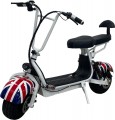 | 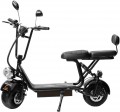 |
|---|---|---|
| Atlas City+ | Kugoo C1 Pro | |
| Outdated Product | Outdated Product | |
| TOP sellers | ||
Rear shock absorber. | ||
| Product type | electric scooterbike | electric scooterbike |
| Max. load | 120 kg | 160 kg |
| Foldable |  |  |
Driving performance | ||
| Range | 40 km | 40 km |
| Power | 1.35 hp | 1.35 hp |
| Power | 1 kW | 1 kW |
| Max speed | 40 km/h | 55 km/h |
| Speed modes | 3 | |
| Max. climb angle | 25 ° | |
| Wheels | 12 " | 11 " |
| Front brake | disk | disk |
| Rear brake | disk | disk |
| Regenerative brake | | |
Battery | ||
| Battery type | Li-Ion | Li-Ion |
| Battery capacity | 16 Ah | 13 Ah |
| Full charge time | 6 h | 8 h |
| Removable battery | | |
Functions and features | ||
| Headlight and position lamps | | |
| Turn signals | | |
| Horn | | |
| Passenger seat | | |
| Kickstand | | |
General | ||
| Dimensions | 125x33x92 cm | |
| Weight | 35 kg | 33 kg |
| Color | ||
| Added to E-Catalog | april 2023 | april 2021 |


Compare Atlas City+ and Kugoo C1 Pro
You may be interested in
My comparisons
Atlas City+ often compared

Glossary
Max. load
The maximum additional weight that a vehicle is designed to carry is, in fact, the weight of the payload that it is allowed to carry.
The maximum load includes both the passenger himself and the things he carries. In this case, the value is usually indicated based on a flat road and a quiet ride. So, ideally, it is best to have a maximum weight margin of at least 10-15 kg — this will give an additional guarantee in case of emergencies, such as a wheel falling into a pothole.
The maximum load includes both the passenger himself and the things he carries. In this case, the value is usually indicated based on a flat road and a quiet ride. So, ideally, it is best to have a maximum weight margin of at least 10-15 kg — this will give an additional guarantee in case of emergencies, such as a wheel falling into a pothole.
Foldable
Vehicles having a foldable design.
By the name, this feature allows you to fold the unit, reducing its dimensions and making it more convenient to store and transport it. However, additional movable fasteners reduce the strength of the structure and at the same time increase its cost.
By the name, this feature allows you to fold the unit, reducing its dimensions and making it more convenient to store and transport it. However, additional movable fasteners reduce the strength of the structure and at the same time increase its cost.
Max speed
The highest speed that a vehicle can reach.
When choosing according to this parameter, it is worth considering that in dense city traffic, it is rarely possible to accelerate faster than 40 km/h; so if the vehicle is bought mainly for a comfortable ride through traffic jams, then there is no need to look for a high-speed model. In addition, for the same motor power, low speed means more torque, which makes it easier to climb hills.
When choosing according to this parameter, it is worth considering that in dense city traffic, it is rarely possible to accelerate faster than 40 km/h; so if the vehicle is bought mainly for a comfortable ride through traffic jams, then there is no need to look for a high-speed model. In addition, for the same motor power, low speed means more torque, which makes it easier to climb hills.
Speed modes
Speed modes allow you to limit the maximum speed of an electric scooter or moped for different riding conditions. With 2 modes, there is usually a calm and a faster option, with 3 modes an additional convenient medium level is added for the city, and 4 modes provide more precise customization for the yard, sidewalk area, regular road, or economical riding.
The more modes, the easier it is to balance speed, battery consumption, and safety. For example, the low mode is convenient for parking and moving next to pedestrians, the medium mode is for everyday trips, and the maximum mode is for open road sections.
The more modes, the easier it is to balance speed, battery consumption, and safety. For example, the low mode is convenient for parking and moving next to pedestrians, the medium mode is for everyday trips, and the maximum mode is for open road sections.
Max. climb angle
The maximum incline that the vehicle can overcome.
Most vehicles, even the most inexpensive ones, can cope with angles of 10 – 12 ° without problems. So you should pay special attention to this parameter only if you have to deal with very steep slopes.
It is also worth mentioning that on road signs the angle of elevation is usually indicated not in degrees, but as a percentage. This means that to evaluate the capabilities of a particular unit, it may be necessary to convert degrees to percentages or vice versa. For this, there are special tables and calculators.
Most vehicles, even the most inexpensive ones, can cope with angles of 10 – 12 ° without problems. So you should pay special attention to this parameter only if you have to deal with very steep slopes.
It is also worth mentioning that on road signs the angle of elevation is usually indicated not in degrees, but as a percentage. This means that to evaluate the capabilities of a particular unit, it may be necessary to convert degrees to percentages or vice versa. For this, there are special tables and calculators.
Wheels
— Rubber Inflatable Tubeless. Tires without an inner tube, where the air is held by the tire itself on a sealed rim. They comfortably handle small bumps, tiles, and poor asphalt, and they better withstand small punctures: pressure usually doesn't drop immediately, and the rider often manages to reach a repair point. Unlike tubed wheels, they are less dependent on the condition of the tube and require less frequent replacement. However, they are more demanding in terms of rim quality and installation, making this type more common on practical city electric scooters, where reliability and daily use convenience are important.
— Rubber Inflatable. In the classic sense, they have a separate tube inside the tire that retains air and cushions road shocks. In terms of comfort, they are close to tubeless, making them well-suited for riding in yards, on tiles, uneven asphalt, and suburban areas. The main difference from tubeless wheels is their behavior when punctured: the tube usually loses pressure faster, but it is simpler and cheaper to patch or replace. This option is often found on affordable electric mopeds and electric scooters, where smoothness, simple construction, and inexpensive maintenance are important.
— Rubber Inflatable. In the classic sense, they have a separate tube inside the tire that retains air and cushions road shocks. In terms of comfort, they are close to tubeless, making them well-suited for riding in yards, on tiles, uneven asphalt, and suburban areas. The main difference from tubeless wheels is their behavior when punctured: the tube usually loses pressure faster, but it is simpler and cheaper to patch or replace. This option is often found on affordable electric mopeds and electric scooters, where smoothness, simple construction, and inexpensive maintenance are important.
Regenerative brake
The function for charging the battery during braking or deceleration — part of the energy that is typically lost in these instances is returned back to the battery.
In practice, this helps to slightly increase the range and reduce the load on the brakes, especially during frequent stops in the city. Regeneration should not be considered as full-fledged charging, but on descents, in traffic jams, and during smooth braking, it makes the trip more economical.
In practice, this helps to slightly increase the range and reduce the load on the brakes, especially during frequent stops in the city. Regeneration should not be considered as full-fledged charging, but on descents, in traffic jams, and during smooth braking, it makes the trip more economical.
Battery capacity
The capacity of the battery installed in the vehicle, in ampere-hours.
Theoretically, the battery life of the vehicle directly depends on this parameter: a more capacious battery can supply the electric motor longer. However, the actual amount of stored energy depends not only on the capacity in amp-hours but also on the nominal voltage of the battery. A more correct unit in this sense is watt-hours, taking into account the difference in nominal voltages; see "Battery capacity" below for details on this designation. Additionally, the operating time on a charge will depend not only on the characteristics of the battery but also on the power consumption of the vehicle itself — and it is determined by the motor power and several other parameters.
Theoretically, the battery life of the vehicle directly depends on this parameter: a more capacious battery can supply the electric motor longer. However, the actual amount of stored energy depends not only on the capacity in amp-hours but also on the nominal voltage of the battery. A more correct unit in this sense is watt-hours, taking into account the difference in nominal voltages; see "Battery capacity" below for details on this designation. Additionally, the operating time on a charge will depend not only on the characteristics of the battery but also on the power consumption of the vehicle itself — and it is determined by the motor power and several other parameters.
Full charge time
The time needed to charge the vehicle battery from 0 to 100%.
This parameter allows you to estimate what breaks you will have to take between trips to charge the vehicle. But keep in mind that a short charging time may mean a low battery capacity.
Separately, we note that in modern battery technology, “emergency” charging technologies can be used, which make it possible to partially replenish the energy supply in a very short time — for example, to charge a battery by 40% in an hour, which in normal mode would be fully charged in 8 hours.
This parameter allows you to estimate what breaks you will have to take between trips to charge the vehicle. But keep in mind that a short charging time may mean a low battery capacity.
Separately, we note that in modern battery technology, “emergency” charging technologies can be used, which make it possible to partially replenish the energy supply in a very short time — for example, to charge a battery by 40% in an hour, which in normal mode would be fully charged in 8 hours.