
Comparison EcoFlow RIVER 3 Max Plus vs EcoFlow RIVER 3 Plus
Add to comparison |  | 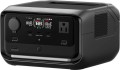 |
|---|---|---|
| EcoFlow RIVER 3 Max Plus | EcoFlow RIVER 3 Plus | |
| Compare prices 1 | Compare prices 7 | |
| User reviews | ||
| TOP sellers | ||
With a removable intelligent additional battery. Equipped with X-Boost and X-GaNPower technology. Pass-through charging. | Equipped with X-Boost and X-GaNPower technology. Pass-through charging. | |
| In box | with battery pack | charging station |
| Rated power | 600 W | 600 W |
| Peak power | 1200 W | 1200 W |
| Output waveform | sinusoid (PSW) | sinusoid (PSW) |
| UPS function |  | |
| Switchover time to battery | 10 ms | 10 ms |
Outputs | ||
| Sockets (230 V) | 3 | 3 |
| USB-A | 2 pcs 5В/2.4А 12 W | 2 pcs 5В/2.4А 12 W |
| USB-C | 1 pcs 5 A 100 W | 1 pcs 5 A 100 W |
| Car cigarette lighter | | |
Inputs (station charging) | ||
| From solar panels | | |
| Input port XT60 | | |
| Add. ports | USB Type B | USB Type B |
Battery and charging time | ||
| Connecting an additional battery | | |
| Battery type | LiFePO4 | LiFePO4 |
| Battery capacity | 858 Wh | 286 Wh |
| Charging cycles | 3000 | 3000 |
| Charging time (socket) ≈ | 60 min | |
| Charging time (solar panel) ≈ | 90 min | |
| Charging time (cigarette lighter) ≈ | 198 min | |
| Charging power (socket) | 380 W | 380 W |
| Charging power (solar panel) | 220 W | 220 W |
| Charging power (cigarette lighter) | 220 W | 220 W |
General | ||
| Smartphone synchronization | Bluetooth and WiFi | Bluetooth and WiFi |
| PSU | built into the body | built into the body |
| Display | | |
| Backlight | | |
| Carrying handle | | |
| Operating temperature | -20 °C ~ +40 °C | -20 °C ~ +40 °C |
| Dimensions (LxWxH) | 304x224x234 mm | 234x231x146 mm |
| Weight | 10.3 kg | 4.7 kg |
| Added to E-Catalog | march 2025 | november 2024 |

Compare EcoFlow RIVER 3 Max Plus and RIVER 3 Plus
When comparing the EcoFlow RIVER 3 Max Plus and EcoFlow RIVER 3 Plus charging stations, it can be noted that both models have the same rated and peak power (600 W and 1200 W respectively) and support sine wave output. However, the RIVER 3 Max Plus stands out with a larger battery capacity (858 Wh compared to 286 Wh in the RIVER 3 Plus), allowing for longer device usage without recharging. Additionally, the RIVER 3 Max Plus supports the connection of an extra battery, enhancing its functionality. Both devices feature similar functions, such as the capability to charge with solar panels and a built-in power supply, but the RIVER 3 Plus is lighter (4.7 kg compared to 10.3 kg for the Max Plus), which makes it more portable. Users highlight the high reliability and convenience of both models, but for extended trips or use under heavy load conditions, the RIVER 3 Max Plus would be preferable.
Price comparison
You may be interested in
My comparisons
EcoFlow RIVER 3 Max Plus often compared


EcoFlow RIVER 3 Plus often compared


Glossary
In box
- Charging station. Portable charging stations are powerful “power banks” that can establish autonomous operation of an arsenal of home appliances, organize the supply of electricity in the country, during road trips or forays into nature, and charge many mobile phones overnight. Charging stations differ from traditional UPSs in their automatic operating modes. The power of such devices varies widely from approximately 100 to 3600 W. Mobile stations are charged from a regular household outlet, solar panels, car cigarette lighter socket, generator, or via a USB type C port with Power Delivery support. As for the configuration, the charging station can be supplied either by itself or additionally with a solar panel, battery pack, inverter or inverter and solar panel. In addition to the built-in battery of the charging station, you can also purchase a battery pack separately.
— Battery pack. An additional battery pack to increase the total energy capacity of the charging station and, as a result, extend the period of autonomous power supply to consumers. Often, battery packs are produced for a specific model or family of charging stations in accordance with the dimensions of the device. Their design, as a rule, is stacked: a block with an additional battery is connected to the charging station f...rom below or from the side.
— Charging station with battery pack. The standard configuration of such charging stations includes an additional battery pack, which allows you to increase the energy intensity of the device. Note that, if necessary, the additional battery can be easily detached from the charging station and it can be used without an external battery.
— Charging station with solar panel. Charging stations with a complete solar panel suggest the possibility of replenishing energy reserves in battery cells from the celestial body. Out of the box, they come with a folding solar panel that can be deployed on a sunny lawn and charge the device when there is no electricity in the outlet. Depending on the power of the charging station and solar panel, as well as weather conditions and daylight hours, the charging procedure can last from several hours to a full daylight hours (or even more).
- With an inverter. The delivery set of such charging stations includes an inverter, which is used to convert direct power energy from solar panels into alternating power for domestic needs. Note that in this case it is assumed that there is only one inverter - solar panels for charging a portable power station from the rays of the heavenly body will need to be purchased separately. Charging stations with an inverter and a solar panel are also available (see below).
— With inverter and solar panel. Advanced configuration, which implies the presence of a charging station, one or more solar panels and an inverter for converting energy from them. In this form, the portable power station impresses with its energy independence - it can be charged directly from the sun’s rays, even during a long absence of electricity in the outlets, and the charging station is ready for this right out of the box.
— Battery pack. An additional battery pack to increase the total energy capacity of the charging station and, as a result, extend the period of autonomous power supply to consumers. Often, battery packs are produced for a specific model or family of charging stations in accordance with the dimensions of the device. Their design, as a rule, is stacked: a block with an additional battery is connected to the charging station f...rom below or from the side.
— Charging station with battery pack. The standard configuration of such charging stations includes an additional battery pack, which allows you to increase the energy intensity of the device. Note that, if necessary, the additional battery can be easily detached from the charging station and it can be used without an external battery.
— Charging station with solar panel. Charging stations with a complete solar panel suggest the possibility of replenishing energy reserves in battery cells from the celestial body. Out of the box, they come with a folding solar panel that can be deployed on a sunny lawn and charge the device when there is no electricity in the outlet. Depending on the power of the charging station and solar panel, as well as weather conditions and daylight hours, the charging procedure can last from several hours to a full daylight hours (or even more).
- With an inverter. The delivery set of such charging stations includes an inverter, which is used to convert direct power energy from solar panels into alternating power for domestic needs. Note that in this case it is assumed that there is only one inverter - solar panels for charging a portable power station from the rays of the heavenly body will need to be purchased separately. Charging stations with an inverter and a solar panel are also available (see below).
— With inverter and solar panel. Advanced configuration, which implies the presence of a charging station, one or more solar panels and an inverter for converting energy from them. In this form, the portable power station impresses with its energy independence - it can be charged directly from the sun’s rays, even during a long absence of electricity in the outlets, and the charging station is ready for this right out of the box.
Battery capacity
Nominal battery capacity, in fact - the amount of energy that is supposed to be stored. The larger it is, the longer the battery life of the charging station will be, all other things being equal. On the other hand, this parameter also affects the dimensions, weight and price of the battery, despite the fact that an energy-intensive battery is not always required. By the indicator of capacity in watt-hours, you can compare batteries with each other.
Charging time (socket) ≈
Time to charge the portable power station from a fully discharged state to 100% charge when using the power adapter from a household outlet. This refers to the original battery and standard charger.
Charging time (solar panel) ≈
Time spent on a full charge when using the original panel in bright sunlight. In cloudy weather, the charging time of the device from the solar panel can be strikingly different downwards.
Charging time (cigarette lighter) ≈
The time required to fully (from zero to 100%) charge the battery, provided that power is supplied to the charging station from the car's cigarette lighter socket (12 V).