
Comparison BLUETTI AC70 vs BLUETTI AC60
Add to comparison |  | 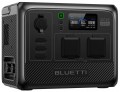 |
|---|---|---|
| BLUETTI AC70 | BLUETTI AC60 | |
from $469.00 | from $399.00 | |
| User reviews | ||
| TOP sellers | ||
Pass-through charging. 2 USB A ports, 2 USB-C ports. Car cigarette lighter. Surges up to 2000 W are allowed. LiFePo4 battery. | ||
| In box | charging station | charging station |
| Rated power | 1000 W | 600 W |
| Peak power | 2000 W | 1200 W |
| Output waveform | sinusoid (PSW) | sinusoid (PSW) |
| UPS function |  | |
| Switchover time to battery | 20 ms | |
Outputs | ||
| Sockets (230 V) | 2 | 2 |
| USB-A | 2 pcs 5В/2.4А 12 W | 2 pcs 5В/3A |
| USB-C | 2 pcs 3 A, 5 A 100 W | 1 pcs 3 A, 5 A 100 W |
| Wireless charging | 1 zone 15 W | |
| Car cigarette lighter | | |
Inputs (station charging) | ||
| From solar panels | | |
| Input port XT60 | |  |
Battery and charging time | ||
| Connecting an additional battery | | |
| Battery type | LiFePO4 | LiFePO4 |
| Battery capacity | 768 Wh | 403.2 Wh |
| Charging cycles | 3000 | 3000 |
| Charging time (socket) ≈ | 45 min | 90 min |
| Charging time (solar panel) ≈ | 120 min | 180 min |
| Charging time (cigarette lighter) ≈ | 300 min | 300 min |
| Charging power (socket) | 850 W | 600 W |
| Charging power (solar panel) | 500 W | 200 W |
| Charging power (socket + solar panel) | 1000 W | |
General | ||
| Smartphone synchronization | Bluetooth | |
| PSU | built into the body | built into the body |
| Display | | |
| Backlight | | |
| Carrying handle | | |
| Operating temperature | 0 °C ~ +40 °C | 0 °C ~ +40 °C |
| Dimensions (LxWxH) | 314x210x256 mm | 290x205x234 mm |
| Weight | 10.2 kg | 8.6 kg |
| Warranty | 5 years | 6 years |
| Added to E-Catalog | june 2024 | july 2023 |


Compare BLUETTI AC70 and AC60
The BLUETTI AC70 and AC60 charging stations have their own features that may influence a user's choice. The AC70 has a higher nominal power of 1000W and a peak power of 2000W, making it more suitable for powering more powerful devices. Meanwhile, the AC60 has a nominal power of 600W and a peak power of 1200W, which limits its capabilities. Both devices use LiFePO4 batteries with a long lifespan (3000 cycles), but the AC70 has a larger battery capacity (24 Ah compared to 18 Ah for the AC60). The AC70 charges from the grid in about 45 minutes, which is significantly faster than the 90 minutes for the AC60. Both devices have a similar number of outputs, including USB and a car cigarette lighter, but the AC60 additionally offers wireless charging. Overall, the AC70 would be the better choice for users who need more power and fast charging, while the AC60 would be suitable for less demanding tasks.
You may be interested in
My comparisons
BLUETTI AC70 often compared


BLUETTI AC60 often compared


Glossary
Rated power
Power that a device can consistently produce for an indefinitely long time without any unpleasant consequences. For normal operation of the charging station, the rated power must be at least 15 - 20% higher than the total power of all devices simultaneously connected to it.
Peak power
Some electrical appliances (in particular, units with electric motors - refrigerators, air conditioners, etc.) consume significantly more energy at startup than after reaching the operating mode. For such a load, the peak power of the charging station must be taken into account - its indicator must be higher than the starting power of the load.
Switchover time to battery
The delay (usually in milliseconds) between the power going out from the outlet and the moment when the station starts feeding connected devices from its battery, maintaining "pass-through" power. The shorter this time, the higher the chance that devices won't notice the drop at all: for routers, cameras, NAS, and PCs, this is critical because a long pause can cause a reboot, loss of connection, or even filesystem errors. Essentially, this is the same parameter as in a classic UPS, but for charging stations, it greatly depends on implementation: models with a more "UPS-like" switching scheme switch considerably faster, while some stations formally have a UPS mode but actually create a noticeable break or activate the output only after "realizing" the network's loss. In practice, this point helps distinguish a charging station that is truly suitable as a UPS for sensitive electronics from an option "for lights and charging": for example, for home internet and video surveillance, minimal switching time is important, while for lamps, charging phones, or a heater, a brief pause is typically not critical.
USB-A
Full-size USB-A connectors are popular in computer technology, commonly used in charging adapters for 230 V household networks and 12 V car sockets. These outputs have become widespread in charging stations for charging gadgets.
— The total number of such ports can be quite varied (1 USB, 2 connectors, 3 ports, and even 4), as they allow for charging and, in some cases, powering various low-power devices — smartphones, tablets, power banks, lamps, and more.
— Current Strength. The maximum current delivered through the USB-A connector to the charging device. Note that different ports of the charging station may output different currents (for example, 1.5 A and 2.1 A). In such cases, the highest current strength is usually specified.
— Power. The maximum output power in watts (W) that the charging station is capable of delivering through the USB-A connector to a single charging gadget.
— The total number of such ports can be quite varied (1 USB, 2 connectors, 3 ports, and even 4), as they allow for charging and, in some cases, powering various low-power devices — smartphones, tablets, power banks, lamps, and more.
— Current Strength. The maximum current delivered through the USB-A connector to the charging device. Note that different ports of the charging station may output different currents (for example, 1.5 A and 2.1 A). In such cases, the highest current strength is usually specified.
— Power. The maximum output power in watts (W) that the charging station is capable of delivering through the USB-A connector to a single charging gadget.
USB-C
USB type C ports are smaller compared to classic USB ports and have a convenient reversible design that allows connecting the plug either way. USB type C was initially created to implement various advanced features: increased power, fast charging technologies, etc.
Since the port is relatively new and quite powerful (you can find USB type C with 60W, even 100W and 140W), the total number of such connectors is often limited to one port, or sometimes two).
— Current. The maximum current delivered through the USB type C port to the device being charged. Note that different ports of a charging station may deliver different currents (for example, 1.5A and 2.1A). In such cases, the highest current is usually specified.
— Power. The maximum power in watts (W) that the charging station can deliver to one charging gadget. The high output power of the USB type C port allows for faster charging. However, the device being charged must support the corresponding power; otherwise, the speed of the process will be limited by the gadget's specifications.
Since the port is relatively new and quite powerful (you can find USB type C with 60W, even 100W and 140W), the total number of such connectors is often limited to one port, or sometimes two).
— Current. The maximum current delivered through the USB type C port to the device being charged. Note that different ports of a charging station may deliver different currents (for example, 1.5A and 2.1A). In such cases, the highest current is usually specified.
— Power. The maximum power in watts (W) that the charging station can deliver to one charging gadget. The high output power of the USB type C port allows for faster charging. However, the device being charged must support the corresponding power; otherwise, the speed of the process will be limited by the gadget's specifications.
Wireless charging
In wireless charging mode, energy is transferred to the gadget being charged through an inductive surface, which is usually built into the upper plane of the charging station case. There can be one slot for wireless charging or several of them are provided. The range of this technology does not exceed a few centimeters. However, this method of charging eliminates the fuss with wires and reduces wear on the connectors. One of the key disadvantages of this format is considered to be low power and, accordingly, slow charging speed.
Input port XT60
Power connector with two round connectors, used to replenish energy reserves in the battery cells of the charging station. For the most part, the input port of the XT60 is for charging the device from solar panels using the appropriate cable.
Battery capacity
Nominal battery capacity, in fact - the amount of energy that is supposed to be stored. The larger it is, the longer the battery life of the charging station will be, all other things being equal. On the other hand, this parameter also affects the dimensions, weight and price of the battery, despite the fact that an energy-intensive battery is not always required. By the indicator of capacity in watt-hours, you can compare batteries with each other.
Charging time (socket) ≈
Time to charge the portable power station from a fully discharged state to 100% charge when using the power adapter from a household outlet. This refers to the original battery and standard charger.