
Comparison Topping E30 II Lite vs Topping E30 II
Add to comparison | 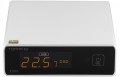 | 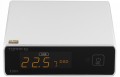 |
|---|---|---|
| Topping E30 II Lite | Topping E30 II | |
from $99.00 | from $149.00 | |
| TOP sellers | ||
| Type | DAC | DAC |
| DAC | AKM AK4493S | AKM AK4493S |
| Number of channels | 2 шт | 2 шт |
Specs | ||
| DAC sampling frequency | 768 kHz | 768 kHz |
| DAC bit depth | 32 bit | 32 bit |
| Frequency range | 20 — 40000 Hz | 20 — 40000 Hz |
| Signal to noise ratio | 121 dB | 123 dB |
| Dynamic range | 121 dB | 123 dB |
| Coef. harmonic distortion | 0.00020 % | 0.00015 % |
Features | ||
| Functions | level adjustment | level adjustment |
| More features | ASIO DSD | ASIO DSD |
Connectors | ||
| Inputs | coaxial S/PDIF optical USB-B | coaxial S/PDIF optical USB-B |
| Outputs | RCA | RCA |
General | ||
| Display |  | |
| Remote control | | |
| Power supply | power through mount | power through mount |
| External power supply | | |
| Dimensions (WxDxH) | 100x125x32 mm | 100x125x32 mm |
| Weight | 295 g | 300 g |
| Added to E-Catalog | february 2024 | february 2024 |


Compare Topping E30 II Lite and E30 II
Models Topping E30 II Lite and Topping E30 II have similar features such as sampling rate of 768 kHz and 32-bit resolution. However, the E30 II is equipped with two AKM AK4493S DACs, providing a better signal-to-noise ratio of 123 dB compared to 121 dB in the Lite. Additionally, the E30 II has a lower harmonic distortion coefficient of 0.00015% against 0.00020% in the Lite. Both devices support ASIO and DSD, have a display and remote control, but the E30 II is slightly lighter (300 g compared to 295 g in the Lite).
You may be interested in
Glossary
Signal to noise ratio
The signal-to-noise ratio provided by the converter.
This parameter describes the ratio of the volume of the pure sound produced by the device to the volume of its own noise (which is inevitably created by any electronic device). Thus, the higher the signal-to-noise ratio, the clearer the sound, the less the DAC's own noise affects the audio signal. Indicators up to 80 dB can be considered acceptable, up to 100 dB — not bad, 100 – 120 dB — good, more than 120 dB — excellent. However, it is worth remembering that the overall sound quality is affected not only by this parameter, but also by many others.
Note that the signal-to-noise ratio is often associated with such a characteristic as the dynamic range (see above). They are similar in general meaning, both describe the difference between an extraneous background and a useful signal. However, the noise level in the calculations is taken differently: for the signal-to-noise ratio, the background of the converter “at idle” is taken into account, and for the dynamic range, the noise that occurs when a low-level signal is output. This is the reason for the difference in numbers.
This parameter describes the ratio of the volume of the pure sound produced by the device to the volume of its own noise (which is inevitably created by any electronic device). Thus, the higher the signal-to-noise ratio, the clearer the sound, the less the DAC's own noise affects the audio signal. Indicators up to 80 dB can be considered acceptable, up to 100 dB — not bad, 100 – 120 dB — good, more than 120 dB — excellent. However, it is worth remembering that the overall sound quality is affected not only by this parameter, but also by many others.
Note that the signal-to-noise ratio is often associated with such a characteristic as the dynamic range (see above). They are similar in general meaning, both describe the difference between an extraneous background and a useful signal. However, the noise level in the calculations is taken differently: for the signal-to-noise ratio, the background of the converter “at idle” is taken into account, and for the dynamic range, the noise that occurs when a low-level signal is output. This is the reason for the difference in numbers.
Dynamic range
The dynamic range of a transducer is defined as the ratio between the maximum signal level it is capable of delivering and the level of its own noise when a low amplitude signal is applied. Quite simply, this parameter can be described as the difference between the quietest and loudest sound that the device can produce.
The wider the dynamic range, the more advanced the DAC is considered, the better sound it can produce, all other things being equal. The minimum value for modern devices is about 90 dB, in top models this figure can reach 140 dB.
Also note that this parameter is similar in its meaning to the signal-to-noise ratio, however, these characteristics are measured in different ways; see below for more on this.
The wider the dynamic range, the more advanced the DAC is considered, the better sound it can produce, all other things being equal. The minimum value for modern devices is about 90 dB, in top models this figure can reach 140 dB.
Also note that this parameter is similar in its meaning to the signal-to-noise ratio, however, these characteristics are measured in different ways; see below for more on this.
Coef. harmonic distortion
The coefficient of harmonic distortion produced by the converter during operation.
The lower this indicator, the clearer the sound produced by the device is, the less distortion is introduced into the audio signal. It is impossible to completely avoid such distortions, but it is possible to reduce them to a level that is not perceived by a person. It is believed that the human ear does not hear harmonics, the level of which is 0.5% and below. However, in high-end audio applications, distortion rates can be much lower — 0.005%, 0.001% or even less. This makes quite a practical sense: the distortions from the individual components of the system are summed up, and the lower the harmonic coefficient of each component, the less distortion there will be in the audible sound as a result.
The lower this indicator, the clearer the sound produced by the device is, the less distortion is introduced into the audio signal. It is impossible to completely avoid such distortions, but it is possible to reduce them to a level that is not perceived by a person. It is believed that the human ear does not hear harmonics, the level of which is 0.5% and below. However, in high-end audio applications, distortion rates can be much lower — 0.005%, 0.001% or even less. This makes quite a practical sense: the distortions from the individual components of the system are summed up, and the lower the harmonic coefficient of each component, the less distortion there will be in the audible sound as a result.