
Comparison Benetech GM321 vs Benetech GM531
Add to comparison | 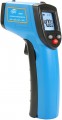 | 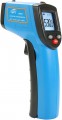 |
|---|---|---|
| Benetech GM321 | Benetech GM531 | |
| Outdated Product | Outdated Product | |
| TOP sellers | ||
| Design | gun | gun |
| Target designator | single point | single point |
Specs | ||
| Surface t measurements | -50 – 400 °C | -50 – 530 °C |
| Distance to spot ratio | 12 | |
| Response time | 500 ms | 500 ms |
| Measurement accuracy | 1.5 °C | 1.5 °C |
| Measurement accuracy | 1.5 % | 1.5 % |
| Operating temperature | 0 – 40 °C | 0 – 40 °C |
| Functions | emissivity adjustment | emissivity adjustment |
General | ||
| Power source | 2xAAA | 2xAAA |
| Max. operating time | 12 h | 12 h |
| Added to E-Catalog | august 2023 | august 2023 |


Compare Benetech GM321 and GM531
You may be interested in
Benetech GM321 often compared

Benetech GM531 often compared

Glossary
Surface t measurements
The range of surface temperatures that the instrument can effectively measure.
In general, the meaning of this parameter is quite obvious. We only note that an extensive operating range is not always an advantage. First, it affects the cost of the device; secondly, when the range is extended, the measurement accuracy may deteriorate. So when choosing, you should not chase the maximum temperature range, but take into account real needs: for example, it hardly makes sense to choose a pyrometer with an upper limit of 500 °C for measuring the quality of thermal insulation and determining heat leaks in residential premises. It is conditionally possible to divide pyrometers into those that are for measuring low temperatures, and, accordingly, for high ones.
In general, the meaning of this parameter is quite obvious. We only note that an extensive operating range is not always an advantage. First, it affects the cost of the device; secondly, when the range is extended, the measurement accuracy may deteriorate. So when choosing, you should not chase the maximum temperature range, but take into account real needs: for example, it hardly makes sense to choose a pyrometer with an upper limit of 500 °C for measuring the quality of thermal insulation and determining heat leaks in residential premises. It is conditionally possible to divide pyrometers into those that are for measuring low temperatures, and, accordingly, for high ones.
Distance to spot ratio
Instrument sighting index.
The sighting indicator is the ratio between the distance to the surface, the temperature of which is measured, and the diameter of the spot that enters the field of view of the device. For example, if at a distance of 2 m the device will cover a zone of 10 cm (0.1 m), then the sighting index will be 2 / 0.1 = 20.
When choosing for this parameter, it is worth considering the expected measurement conditions — the dimensions of the objects whose temperature is supposed to be measured, and the distances to them. At the same time, it is worth remembering that for accurate measurement, the measured surface must completely occupy the field of view of the pyrometer — otherwise the device will also “see” foreign objects, the radiation of which will distort the measurement results. Therefore, for long distances, models with high sighting rates are recommended — 40, 50, etc. If measurements are planned to be carried out at a distance of one or two metres, and the measured objects are quite large, you should pay attention to models with relatively small values of this parameter — 10 , 20 etc.
The sighting indicator is the ratio between the distance to the surface, the temperature of which is measured, and the diameter of the spot that enters the field of view of the device. For example, if at a distance of 2 m the device will cover a zone of 10 cm (0.1 m), then the sighting index will be 2 / 0.1 = 20.
When choosing for this parameter, it is worth considering the expected measurement conditions — the dimensions of the objects whose temperature is supposed to be measured, and the distances to them. At the same time, it is worth remembering that for accurate measurement, the measured surface must completely occupy the field of view of the pyrometer — otherwise the device will also “see” foreign objects, the radiation of which will distort the measurement results. Therefore, for long distances, models with high sighting rates are recommended — 40, 50, etc. If measurements are planned to be carried out at a distance of one or two metres, and the measured objects are quite large, you should pay attention to models with relatively small values of this parameter — 10 , 20 etc.