
Comparison Hop-Sport HS-2050HB vs ZIPRO Jacked
Add to comparison | 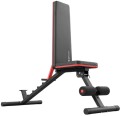 | 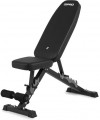 |
|---|---|---|
| Hop-Sport HS-2050HB | ZIPRO Jacked | |
| Outdated Product | Outdated Product | |
| TOP sellers | ||
| Product type | weight bench | weight bench |
| Max. user weight | 160 kg | 120 kg |
| Max. load weight | 230 kg | |
Design | ||
| Main function | bench press abs | bench press abs |
| Footrest |  | |
| Bench tilt adjustment | | |
| Bench tilt angle | vertical positive horizontal negative | vertical positive horizontal negative |
| Types of exercise | pullover chest press shoulder press arms bending arm extension arm separation sit-ups | pullover chest press shoulder press arms bending arm extension arm separation sit-ups |
General | ||
| Seat adjustment | |  |
| Foldable | | |
| Country of origin | Germany | Poland |
| Folded dimensions | 112x42x110 cm | |
| Weight | 12 kg | 12.4 kg |
| Added to E-Catalog | february 2025 | july 2024 |


Compare Hop-Sport HS-2050HB and ZIPRO Jacked
You may be interested in
My comparisons
ZIPRO Jacked often compared


Glossary
Max. user weight
The maximum weight of the user for which the equipment is designed. Usually, only the weight of a person’s body is meant here, without taking into account the barbell, dumbbells or other weights that he holds during the training. However, manufacturers take into account that athletes often use various weights (the weight of which is often comparable to the weight of the athlete himself), and put an appropriate margin of safety into the design. So this parameter is rather arbitrary and is not a strict limitation: in fact, this is the maximum weight of the athlete, at which the structure is guaranteed not to break when working with any additional weight (within reason). If the weight is relatively small, the excess weight of the athlete is also quite acceptable. For example, a bench with a limit of 100 kg or less is unlikely to break under a user weighing 120 kg with 5 kg dumbbells.
It is worth paying attention to the maximum user weight when choosing if the machine is purchased for public use, or for professional athletes working with heavy weights. Here we note that the above-mentioned restriction to 100 kg is quite modest; 100 – 120 kg — also not an outstanding indicator; models for 120 – 150 kg are quite popular; and the most durable and reliable equipment have a weight limit of more than 150 kg.
It is worth paying attention to the maximum user weight when choosing if the machine is purchased for public use, or for professional athletes working with heavy weights. Here we note that the above-mentioned restriction to 100 kg is quite modest; 100 – 120 kg — also not an outstanding indicator; models for 120 – 150 kg are quite popular; and the most durable and reliable equipment have a weight limit of more than 150 kg.
Max. load weight
The greatest weight of the additional load that the equipment can carry. Usually, this parameter refers to the weight that is not directly on the bench or seat for the user: for example, in models with an exercise rack stand (see below), the maximum load weight is the maximum weight of the bar that can be safely held on the rack stand. It is worth mentioning benches with pancake racks(also see below): in them, the total weight of pancakes should be more or less evenly distributed over the “seats”.
The maximum load weight must not be exceeded: this can lead to breakdowns, and not necessarily immediately — an “accident” can happen later, under a completely acceptable weight.
The maximum load weight must not be exceeded: this can lead to breakdowns, and not necessarily immediately — an “accident” can happen later, under a completely acceptable weight.
Seat adjustment
The ability to adjust the seat of the machine at the request of the athlete.
Note that in this case we are talking only directly about the "seat". As for the possibilities, the seat adjustment allows you to adjust it at least in height — this allows you to choose the optimal position, taking into account the height of the user.
Note that in this case we are talking only directly about the "seat". As for the possibilities, the seat adjustment allows you to adjust it at least in height — this allows you to choose the optimal position, taking into account the height of the user.
Country of origin
Country of origin of the brand under which the equipment is presented on the market. It usually refers to the country in which the brand was originally registered, or in which the company's headquarters are located. By this parameter, the overall quality of the equipment and the brand as a whole is often assessed. However, such assessments are rather conditional. Thus, the "homeland" of the brand often does not coincide with the place of actual production: many large companies use factories in regions with cheap labour to reduce costs. At the same time, the quality depends not so much on the manufacturing country, but on how carefully the company monitors its reputation and controls the goods leaving the factories. In addition, companies originating from one state may register brands in another to look more prestigious in the eyes of the manufacturer.
Simply put, it is worth looking not so much at the origin of a particular brand, but at its overall reputation.