
Comparison SJRC E99 Pro 2 vs SJRC F7
Add to comparison | 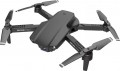 | 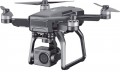 |
|---|---|---|
| SJRC E99 Pro 2 | SJRC F7 | |
| Outdated Product | Outdated Product | |
| TOP sellers | ||
It can be equipped with an additional camera in the lower part of the case. Tilt the main camera up to 90° manually before flying. It can be produced under different brands with identical parameters and appearance. | Carry bag included. | |
Flight specs | ||
| Maximum flight time | 20 min | 25 min |
Camera | ||
| Camera type | built-in | built-in |
| Number of megapixels | 8.3 MP | |
| Photo resolution | 3840x2160 px | |
| HD filming (720p) | 1280x720 px 30 fps | |
| Full HD filming (1080p) | 1920x1080 px 30 fps | 1920x1080 px 30 fps |
| Quad HD filming | 2560x1440 px 30 fps | |
| Ultra HD (4K) | 3840x2160 px 30 fps | 3840x2160 px 16 fps |
| Viewing angles | 110 | |
| Camera stabilization |  |  |
| Mechanical stabilizer suspension | | |
| Camera with control | | |
| Live video streaming | | |
| Memory card slot | | |
Flight modes and sensors | ||
| Flight modes | return "home" Follow me (tracking) flight plan without GPS (Waypoints) acrobatic mode | return "home" Follow me (tracking) Orbit mode (flying in a circle) flyby GPS points |
| Sensors | heights gyroscope | GPS module optic gyroscope |
Control and transmitter | ||
| Control | remote control only | remote control and smartphone |
| Gesture control | | |
| Range | 100 m | 3000 m |
| Control frequency | 2.4 GHz | 2.4 and 5.8 GHz |
| Video transmission frequency | 2.4 GHz (Wi-Fi) | |
| Smartphone mount | | |
| Information display | | |
| Remote control power source | 3xAA | battery |
Motor and chassis | ||
| Motor type | brushless | brushless |
| Motor model | 816 | 1806KV |
| Number of screws | 4 pcs | 4 pcs |
| Foldable design | | |
Battery | ||
| Battery capacity | 1.8 Ah | 2.6 Ah |
| Voltage | 3.7 В | 11.1 В |
| Battery model | 3S | |
| Batteries in the set | 1 pcs | 2 pcs |
| USB charging | | |
General | ||
| Body backlight | | |
| Material | plastic | |
| Dimensions | 260x260x55 mm | 330x325x135 mm |
| Dimensions (folded) | 120x100x50 mm | 161x135x118 mm |
| Weight | 547 g | |
| Added to E-Catalog | september 2022 | february 2022 |


Compare SJRC E99 Pro 2 and F7
You may be interested in
SJRC E99 Pro 2 often compared


SJRC F7 often compared
Glossary
Maximum flight time
Maximum flight time of a quadcopter on one full battery charge. This indicator is quite approximate, since it is most often indicated for ideal conditions - in real use, the flight time may be less than stated. However, by this indicator it is quite possible to evaluate the general capabilities of the copter and compare it with other models - a longer declared flight time in practice usually means higher autonomy.
Note that for modern copters, a flight time of 20 minutes or more is considered a good indicator, and in the most “long-lasting” models it can exceed 40 minutes.
Note that for modern copters, a flight time of 20 minutes or more is considered a good indicator, and in the most “long-lasting” models it can exceed 40 minutes.
Number of megapixels
Resolution of the matrix in the standard camera of the quadrocopter.
Theoretically, the higher the resolution, the sharper, more detailed image the camera can produce. However, in practice, the quality of the "picture" is highly dependent on a number of other technical features - the size of the matrix, image processing algorithms, optical properties, etc. Moreover, when increasing the resolution without increasing the size of the matrix, the image quality may drop, because. significantly increases the likelihood of noise and extraneous artifacts. And for shooting video, a large number of megapixels is not required at all: for example, to shoot Full HD (1920x1080) video, which is considered a very solid format for quadrocopters, a sensor of only 2.07 megapixels is enough.
Note that high resolution is often a sign of an advanced camera with high image quality. However, this quality is not determined by the number of megapixels, but by the characteristics of the camera and the special technologies used in it. Therefore, when choosing a quadcopter with a camera, you should look not so much at the resolution as at the class and price category of the model as a whole.
Theoretically, the higher the resolution, the sharper, more detailed image the camera can produce. However, in practice, the quality of the "picture" is highly dependent on a number of other technical features - the size of the matrix, image processing algorithms, optical properties, etc. Moreover, when increasing the resolution without increasing the size of the matrix, the image quality may drop, because. significantly increases the likelihood of noise and extraneous artifacts. And for shooting video, a large number of megapixels is not required at all: for example, to shoot Full HD (1920x1080) video, which is considered a very solid format for quadrocopters, a sensor of only 2.07 megapixels is enough.
Note that high resolution is often a sign of an advanced camera with high image quality. However, this quality is not determined by the number of megapixels, but by the characteristics of the camera and the special technologies used in it. Therefore, when choosing a quadcopter with a camera, you should look not so much at the resolution as at the class and price category of the model as a whole.
Photo resolution
The maximum resolution of photos that the standard quadcopter camera can take. This parameter is directly related to the resolution of the matrix (see above): usually, the maximum resolution of a photo corresponds to the full resolution of the matrix. For example, for pictures of 4000x3000 pixels, a sensor of 4000 * 3000=12 megapixels is provided.
Theoretically, a higher resolution of photography allows you to achieve highly detailed photographs, with good visibility of fine details. However, as in the case of the overall resolution of the matrix, high resolution does not guarantee the same overall quality, and you should focus not only on this parameter, but also on the price category of the quadcopter and its camera.
Also note that the high resolution of the camera affects the volume of the materials being shot, for their storage and transmission, more voluminous drives and “thick” communication channels are required.
Theoretically, a higher resolution of photography allows you to achieve highly detailed photographs, with good visibility of fine details. However, as in the case of the overall resolution of the matrix, high resolution does not guarantee the same overall quality, and you should focus not only on this parameter, but also on the price category of the quadcopter and its camera.
Also note that the high resolution of the camera affects the volume of the materials being shot, for their storage and transmission, more voluminous drives and “thick” communication channels are required.
HD filming (720p)
The maximum resolution and frame rate supported by the aircraft camera when shooting in HD (720p).
HD 720p is the first high-definition video standard. Notably inferior to Full HD and 4K formats in terms of performance, it nevertheless provides pretty good detail without significant demands on the camera and processing power. Therefore, HD support is found even in relatively inexpensive copters. And in high-end models, it can be provided as an addition to more advanced standards.
In drones, HD cameras typically use the classic 1280x720 resolution; other, more specific options are practically non-existent. As for the frame rate, the higher it is, the smoother the video turns out, the less movement is blurred in the frame. In general, values up to 24 fps can be called minimal, from 24 to 30 fps — medium, from 30 to 60 fps — high, and speeds over 60 fps are used mainly for slow motion HD.
HD 720p is the first high-definition video standard. Notably inferior to Full HD and 4K formats in terms of performance, it nevertheless provides pretty good detail without significant demands on the camera and processing power. Therefore, HD support is found even in relatively inexpensive copters. And in high-end models, it can be provided as an addition to more advanced standards.
In drones, HD cameras typically use the classic 1280x720 resolution; other, more specific options are practically non-existent. As for the frame rate, the higher it is, the smoother the video turns out, the less movement is blurred in the frame. In general, values up to 24 fps can be called minimal, from 24 to 30 fps — medium, from 30 to 60 fps — high, and speeds over 60 fps are used mainly for slow motion HD.
Quad HD filming
The maximum resolution and frame rate supported by the aircraft camera (built-in or bundled) when shooting in Quad HD.
This standard is intermediate between Full HD (see above) and UltraHD 4K (see below); in cameras of modern drones, the Quad HD frame size can be from 2560 to 2720 pixels horizontally and from 1440 to 1530 pixels vertically. In some situations, such a video turns out to be the best option: it gives better detail than Full HD, while it does not require such powerful “hardware” and capacious drives as 4K.
As for the actual frame rate, the higher it is, the smoother the video turns out, the less motion is blurred in the frame. On the other hand, the shooting speed directly affects the requirements for the power of the hardware and the volume of the finished files. In general, values up to 24 fps can be called minimal, from 24 to 30 fps — medium, from 30 to 60 fps — high. Speeds of more than 60 fps are mainly used for shooting slow-motion video, however, for a number of reasons, such a possibility is rarely provided for in the QuadHD standard: relatively simple devices would require too powerful and expensive hardware for this, and in advanced copters, where the cost of electronics not particularly important, manufacturers prefer to use slow motion at higher resolutions.
This standard is intermediate between Full HD (see above) and UltraHD 4K (see below); in cameras of modern drones, the Quad HD frame size can be from 2560 to 2720 pixels horizontally and from 1440 to 1530 pixels vertically. In some situations, such a video turns out to be the best option: it gives better detail than Full HD, while it does not require such powerful “hardware” and capacious drives as 4K.
As for the actual frame rate, the higher it is, the smoother the video turns out, the less motion is blurred in the frame. On the other hand, the shooting speed directly affects the requirements for the power of the hardware and the volume of the finished files. In general, values up to 24 fps can be called minimal, from 24 to 30 fps — medium, from 30 to 60 fps — high. Speeds of more than 60 fps are mainly used for shooting slow-motion video, however, for a number of reasons, such a possibility is rarely provided for in the QuadHD standard: relatively simple devices would require too powerful and expensive hardware for this, and in advanced copters, where the cost of electronics not particularly important, manufacturers prefer to use slow motion at higher resolutions.
Ultra HD (4K)
Maximum resolution and frame rate supported by the aircraft camera (built-in or bundled) when shooting in Ultra HD (4K)
UHD is a much more advanced video standard than Quad HD and even more so Full HD. Such a frame is approximately 2 times larger than a FullHD frame on each side and, accordingly, 4 times larger in terms of the total number of pixels. In this case, specific resolutions may be different; in copters, 3840x2160 and 4096x2160 are the most popular. Thus, shooting in this standard gives excellent detail; on the other hand, it puts forward rather high demands on the hardware of the camera and the amount of memory. Therefore, 4K support is an unmistakable sign of a high-end built-in camera. At the same time, we note that in modern drones you can also find more solid resolutions — see “Shooting above 4K”.
As for the actual frame rate, the higher it is, the smoother the video turns out, the less motion is blurred in the frame. On the other hand, the shooting speed directly affects the requirements for the power of the hardware and the volume of the finished files. In general, values up to 24 fps can be called minimal, from 24 to 30 fps — average, from 30 to 60 fps — above average, and a speed of 60 fps already allows us to talk about high-speed shooting UltraHD. However for full-fledged high-speed shooting, which allows you to create slow-motion videos, an even higher frame rate...is desirable, which is not yet found in copter cameras; however, modern technologies are developing rapidly, and the situation may change in the near future.
UHD is a much more advanced video standard than Quad HD and even more so Full HD. Such a frame is approximately 2 times larger than a FullHD frame on each side and, accordingly, 4 times larger in terms of the total number of pixels. In this case, specific resolutions may be different; in copters, 3840x2160 and 4096x2160 are the most popular. Thus, shooting in this standard gives excellent detail; on the other hand, it puts forward rather high demands on the hardware of the camera and the amount of memory. Therefore, 4K support is an unmistakable sign of a high-end built-in camera. At the same time, we note that in modern drones you can also find more solid resolutions — see “Shooting above 4K”.
As for the actual frame rate, the higher it is, the smoother the video turns out, the less motion is blurred in the frame. On the other hand, the shooting speed directly affects the requirements for the power of the hardware and the volume of the finished files. In general, values up to 24 fps can be called minimal, from 24 to 30 fps — average, from 30 to 60 fps — above average, and a speed of 60 fps already allows us to talk about high-speed shooting UltraHD. However for full-fledged high-speed shooting, which allows you to create slow-motion videos, an even higher frame rate...is desirable, which is not yet found in copter cameras; however, modern technologies are developing rapidly, and the situation may change in the near future.
Viewing angles
The viewing angle provided by the standard quadcopter camera; for optics with adjustable zoom, usually, the maximum value is taken into account.
The viewing angle is the angle between the lines connecting the centre of the lens to the two opposite extreme points of the visible image. Usually measured along the diagonal of the frame, but there may be exceptions. As for the specific values of this parameter, in modern copters they can range from 55 – 60 ° to 180 ° and even more. At the same time, a wider angle (ceteris paribus) allows you to simultaneously fit more space into the frame; and a narrower one covers a smaller space, however, the objects that are in the frame look larger, it is easier to see individual small details on them. So when choosing by this parameter, you should consider what is more important for you: wide coverage or an additional zoom effect.
The viewing angle is the angle between the lines connecting the centre of the lens to the two opposite extreme points of the visible image. Usually measured along the diagonal of the frame, but there may be exceptions. As for the specific values of this parameter, in modern copters they can range from 55 – 60 ° to 180 ° and even more. At the same time, a wider angle (ceteris paribus) allows you to simultaneously fit more space into the frame; and a narrower one covers a smaller space, however, the objects that are in the frame look larger, it is easier to see individual small details on them. So when choosing by this parameter, you should consider what is more important for you: wide coverage or an additional zoom effect.
Camera stabilization
Stabilization system built directly into the complete drone camera.
Any stabilization system is designed to compensate for vibrations and shakes, thus providing a stable image, without shaking or sudden movements in the camera. This function slightly increases the cost of the device, but the video quality increases noticeably. On the other hand, stabilization makes it difficult to perform complex maneuvers, since its use worsens the feedback: changes in the camera image do not quite correspond to changes in the drone’s position in space. In light of this, in devices that have an acrobatic mode (see “Flight Modes”), such a system can be switched off.
Note that specifically in the camera, stabilization is most often carried out according to the electronic principle: reserve space is allocated at the edges of the matrix, and in the event of vibrations or shocks, the camera “pulls up” a fragment of the image from this reserve, keeping the image in the frame motionless. This format of operation somewhat reduces the useful area of the matrix, but is inexpensive, does not affect the weight of the camera and does not complicate its design. A more effective, but also more complex and expensive option is a built-in optical stabilizer, which uses a lens with a moving lens system.
In addition, another method can be used to stabilize the image - a mechanical gimbal stabilizer. However, such a gimbal is not part of the c...amera, so its presence is specified separately (see below). At the same time, some copters provide both functions at once - both built-in stabilization and gimbal; this ensures maximum efficiency.
Any stabilization system is designed to compensate for vibrations and shakes, thus providing a stable image, without shaking or sudden movements in the camera. This function slightly increases the cost of the device, but the video quality increases noticeably. On the other hand, stabilization makes it difficult to perform complex maneuvers, since its use worsens the feedback: changes in the camera image do not quite correspond to changes in the drone’s position in space. In light of this, in devices that have an acrobatic mode (see “Flight Modes”), such a system can be switched off.
Note that specifically in the camera, stabilization is most often carried out according to the electronic principle: reserve space is allocated at the edges of the matrix, and in the event of vibrations or shocks, the camera “pulls up” a fragment of the image from this reserve, keeping the image in the frame motionless. This format of operation somewhat reduces the useful area of the matrix, but is inexpensive, does not affect the weight of the camera and does not complicate its design. A more effective, but also more complex and expensive option is a built-in optical stabilizer, which uses a lens with a moving lens system.
In addition, another method can be used to stabilize the image - a mechanical gimbal stabilizer. However, such a gimbal is not part of the c...amera, so its presence is specified separately (see below). At the same time, some copters provide both functions at once - both built-in stabilization and gimbal; this ensures maximum efficiency.
Mechanical stabilizer suspension
Camera gimbal equipped with mechanical stabilization system.
The mechanical gimbal stabilizer can be used in quadcopters with any type of camera (see above). The principle of operation of such a device is as follows: a system of sensors and gyroscopes monitors vibrations, vibrations and other extraneous movements of the camera and, if necessary, slightly shifts or rotates it on the suspension so that the image in the frame remains smooth, without jerks and sharp shifts. A similar function is performed by the stabilization built into the camera itself (see above), however, a stabilized gimbal has a number of advantages over it. Firstly, it allows you to use the entire area of the matrix, which further contributes to image quality. Secondly, the “picture” turns out to be quite stable even if the installed camera does not have a stabilizer. And in some modern drones, both stabilization methods are provided at once — both a suspension and a built-in camera; This slightly increases the cost, but the efficiency is maximized.
The mechanical gimbal stabilizer can be used in quadcopters with any type of camera (see above). The principle of operation of such a device is as follows: a system of sensors and gyroscopes monitors vibrations, vibrations and other extraneous movements of the camera and, if necessary, slightly shifts or rotates it on the suspension so that the image in the frame remains smooth, without jerks and sharp shifts. A similar function is performed by the stabilization built into the camera itself (see above), however, a stabilized gimbal has a number of advantages over it. Firstly, it allows you to use the entire area of the matrix, which further contributes to image quality. Secondly, the “picture” turns out to be quite stable even if the installed camera does not have a stabilizer. And in some modern drones, both stabilization methods are provided at once — both a suspension and a built-in camera; This slightly increases the cost, but the efficiency is maximized.