
Comparison Ultradesk Rocket vs Huzaro Hero 1.6
Add to comparison | 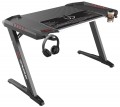 | 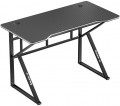 |
|---|---|---|
| Ultradesk Rocket | Huzaro Hero 1.6 | |
| Outdated Product | from $138.00 | |
| TOP sellers | ||
| Form factor | gaming | gaming |
Design | ||
| Dimensions | 1290x680x785 mm | 1200x600x770 mm |
| Height adjustment | in absent | in absent |
| Table top shape | rectangular | rectangular with recess |
| Leg design | Z-shaped | K-shaped |
| Cable management |  |  |
| Cable hole | | |
Features | ||
| RGB backlight | | |
| Cup holder | | |
| Headphone holder | | |
| Mouse Pad | | |
| Color | ||
| Added to E-Catalog | september 2023 | september 2023 |


Compare Ultradesk Rocket and Huzaro Hero 1.6
You may be interested in
My comparisons
Ultradesk Rocket often compared

Huzaro Hero 1.6 often compared


Glossary
Dimensions
The size of an office desk directly affects how comfortable it is to work: a depth of 60–80 cm is considered optimal so there’s enough space for a laptop, a monitor, and stationery, while the width is chosen between 100 and 160 cm depending on how much equipment and how many accessories you have. For gaming desks, the standard is wider—70–80 cm and 120–180 cm respectively—since you need to fit multiple monitors, a PC tower, peripherals, and still have free space to move. Unlike compact office models, gaming versions often have a rounded front edge or a corner design, which boosts ergonomics. In reality, office options are more common in minimalist interiors for working with documents or a laptop, whereas gaming ones are used in setups with more devices, LED lighting, and accessories.
Table top shape
— Rectangular. The most traditional and versatile format, suitable for office and home workspaces. A rectangular desktop is easy to install, fits harmoniously into any space, and is optimal for users who need a standard work surface without unnecessary elements. This option is convenient for writing, working on a laptop, or setting up a minimal set of equipment.
— Rectangular with cutout. This desktop is ergonomic and creates a more comfortable workspace: due to the recess, the user is positioned closer to the center of the table, providing quick access to the keyboard, mouse, and monitor. This is especially relevant for gamers and professionals who work long hours at a PC, as it reduces strain on the hands and back.
— Corner. Represents an L-shaped solution, allowing for efficient use of the room's corner and significantly increasing usable space. This format is ideal for those who work with multiple monitors, large equipment, or appreciate the organization of the workspace while maintaining easy access to all areas of the table.
— Rectangular with cutout. This desktop is ergonomic and creates a more comfortable workspace: due to the recess, the user is positioned closer to the center of the table, providing quick access to the keyboard, mouse, and monitor. This is especially relevant for gamers and professionals who work long hours at a PC, as it reduces strain on the hands and back.
— Corner. Represents an L-shaped solution, allowing for efficient use of the room's corner and significantly increasing usable space. This format is ideal for those who work with multiple monitors, large equipment, or appreciate the organization of the workspace while maintaining easy access to all areas of the table.
Leg design
The leg design of gaming and office desks directly affects stability, legroom, and compatibility with mountings.
— T-shaped. Classic stability: a wide crossbar "heel" evenly distributes the load and almost eliminates sideways wobbling, allowing the desk to confidently hold two to three monitors, a bracket, and heavy peripherals. Compared to Z-supports, the T-frame is more predictable on uneven floors and resists asymmetrical loads from brackets better than Y-shaped structures; the X-frame is stiffer diagonally but "eats" more legroom. The practice is simple: a streaming station, an office with long printing tasks, or an engineer's workstation — T-supports provide a stable setup, a convenient cable tray along the crossbar, and a neat appearance on camera without table shaking.
— Z-shaped. A "broken" frame with inclined posts and a lower bar, which effectively dampens longitudinal vibrations and gives the desk an aggressive, "gaming" silhouette. In reality, such a geometry feels stiff during active mouse work and typing but requires an even floor and careful weight distribution: for asymmetric monitor brackets, X or T supports are more stable. A practical scenario is a gaming setup with two displays on standard stands, a microphone on a boom arm, and a cable tray attached to the lower bar: visually clean, stable during intense sessions, and without unnecessary knee supports.
— <...a href="/list/898/pr-56159/">X-shaped. A frame with diagonal braces forming a "cross," giving the table high rigidity in both planes and minimal wobble during intensive typing or sharp mouse movements. This geometry is valued in gaming and streaming setups with heavy monitors on mounts and massive peripherals: the load is distributed diagonally, and the tabletop is less prone to wobbling. Compared to T-shaped supports, the X-structure better withstands lateral jolts but may consume some leg space. In practice, it is a successful choice for two or three monitors, a microphone on a boom arm, and a docking station.
— Y-shaped. Supports where the central post splits into two "beams" towards the floor, providing free front space and convenient chair access without hitting crossbars. This geometry offers good stability under longitudinal loads and a neat appearance, but usually falls short of X and T constructions in diagonal rigidity and requires even equipment distribution, especially with monitor mounts. Practically, it's ideal for compact workspaces and minimalist gaming setups: a laptop on a docking station, one or two monitors.
— K-shaped. Supports with diagonal struts forming a characteristic "K" geometry, adding stiffness to the frame without weighting the structure. Such a desk looks dynamic and "gamer-like" while maintaining good stability during typing and active mouse work; in "transverse" stability, it is closer to T-shaped solutions but slightly inferior to X-frames in diagonal wobble resistance.
— U-shaped. A frame with a crossbeam connecting two supports acts as a rigid stabilizer, reducing wobbling during active typing and mouse movements.
For a stationary gaming setup with heavy monitors, T or X is often chosen, while for a hybrid "home-office" focusing on ergonomics — U, and for compact rooms emphasizing style and maneuverability — Z or Y.
— T-shaped. Classic stability: a wide crossbar "heel" evenly distributes the load and almost eliminates sideways wobbling, allowing the desk to confidently hold two to three monitors, a bracket, and heavy peripherals. Compared to Z-supports, the T-frame is more predictable on uneven floors and resists asymmetrical loads from brackets better than Y-shaped structures; the X-frame is stiffer diagonally but "eats" more legroom. The practice is simple: a streaming station, an office with long printing tasks, or an engineer's workstation — T-supports provide a stable setup, a convenient cable tray along the crossbar, and a neat appearance on camera without table shaking.
— Z-shaped. A "broken" frame with inclined posts and a lower bar, which effectively dampens longitudinal vibrations and gives the desk an aggressive, "gaming" silhouette. In reality, such a geometry feels stiff during active mouse work and typing but requires an even floor and careful weight distribution: for asymmetric monitor brackets, X or T supports are more stable. A practical scenario is a gaming setup with two displays on standard stands, a microphone on a boom arm, and a cable tray attached to the lower bar: visually clean, stable during intense sessions, and without unnecessary knee supports.
— <...a href="/list/898/pr-56159/">X-shaped. A frame with diagonal braces forming a "cross," giving the table high rigidity in both planes and minimal wobble during intensive typing or sharp mouse movements. This geometry is valued in gaming and streaming setups with heavy monitors on mounts and massive peripherals: the load is distributed diagonally, and the tabletop is less prone to wobbling. Compared to T-shaped supports, the X-structure better withstands lateral jolts but may consume some leg space. In practice, it is a successful choice for two or three monitors, a microphone on a boom arm, and a docking station.
— Y-shaped. Supports where the central post splits into two "beams" towards the floor, providing free front space and convenient chair access without hitting crossbars. This geometry offers good stability under longitudinal loads and a neat appearance, but usually falls short of X and T constructions in diagonal rigidity and requires even equipment distribution, especially with monitor mounts. Practically, it's ideal for compact workspaces and minimalist gaming setups: a laptop on a docking station, one or two monitors.
— K-shaped. Supports with diagonal struts forming a characteristic "K" geometry, adding stiffness to the frame without weighting the structure. Such a desk looks dynamic and "gamer-like" while maintaining good stability during typing and active mouse work; in "transverse" stability, it is closer to T-shaped solutions but slightly inferior to X-frames in diagonal wobble resistance.
— U-shaped. A frame with a crossbeam connecting two supports acts as a rigid stabilizer, reducing wobbling during active typing and mouse movements.
For a stationary gaming setup with heavy monitors, T or X is often chosen, while for a hybrid "home-office" focusing on ergonomics — U, and for compact rooms emphasizing style and maneuverability — Z or Y.
Cable management
A well-thought-out system of holes with plugs, of underfloor trays, and guides that distribute power and low-voltage wiring through separate pathways, preventing wires from hanging down and getting in the way of chair legs. In gaming models, you more often find deep metal boxes for power strips and power supplies, mounts for hubs and microphone cables to keep setups with two or three monitors, a webcam, and a docking station clean and quiet. Office desks often emphasize versatility: neat openings in the tabletop, horizontal channels along the edge, and removable clips for adapting to any peripheral. The result is improved ergonomics and safety: fewer loops, reduced risk of unplugging a cable with your foot, easier cleaning and rearranging of equipment; an example is a PC + laptop on a docking station, where power blocks are seated in a tray, and above the desk are only short "tails" to the keyboard and mouse.
RGB backlight
Built-in lighting function for office and gaming desks. Addressable LED modules with a controller are integrated into the design of the tabletop, edges, and/or supports, creating an even "bias lighting" for the wall and working surface. Modes and brightness can be adjusted via a remote control, USB controller, or PC and smart home software. A diverse palette helps choose the right color for various needs. For instance, static white shades are great for work, while dynamic effects and color event indications are suitable for gaming and streaming. Compared to no lighting or monochrome, RGB provides precise color temperature, reduces contrast around the monitor in the dark, improves surface readability, and allows the desk to synchronize with peripherals.
Cup holder
An easy way to remove a mug, can, or shaker from the work surface without risking spilling a drink on the keyboard and mouse. Most often, the cup holder is detachable and mounted under the edge of the tabletop on a bracket, less frequently it is built into a cutout on the tabletop itself; the first option wins in terms of safety and space-saving, while the second is convenient for quick access. A metal mesh "bowl" or sturdy plastic holds standard bottles and thermos mugs, and some models have a notch for a handle and drainage holes for condensation. In practice, this is convenient for long gaming sessions, streaming, and studying: the coffee goes under the table, the surface is free for an XL mat, and hot drinks are kept away from electronics.
Headphone holder
A hook or platform extended under the edge of a countertop or on its side, so that the headset is always at hand and doesn't take up space on the mat. It is often metallic, with a soft pad, can be swiveling or foldable, and sometimes is designed for two pairs or headphones plus a gamepad. Compared to a tabletop stand, such a headphone holder is safer during active movements and saves space; compared to adhesive hooks, it attaches more securely and better supports heavy gaming headsets. In practice, it keeps the desk organized, provides quick access during a match, and reduces the chances of snagging a cup or mouse with the cable; moreover, the headband isn't lying on the countertop, the ear cushions are less compressed, and they last longer.
Mouse Pad
An oversized desk mat in XL format that covers a significant portion of the tabletop, creating a smooth, predictable surface for sensor and mouse foot gliding. The top is made of woven microfiber for "speed" or "control", and the bottom is non-slip rubber with a thickness of 3–5 mm, with stitched edges and water-repellent treatment. There are versions tailored to specific table models or with cutouts for cup holders/mounts. This mat dampens vibrations, protects the table surface, and ensures stable tracking at low DPI, which is critical for shooters and broad "flick movements". Compared to a small mat, there is room for the keyboard and even friction throughout the area, and compared to a bare textured tabletop, there is less wear on the feet and higher movement repeatability. In everyday use, it's convenient for daily work, streams, and games: the mouse and keyboard are on the same level, the cable does not catch on edges, and maintenance is reduced to dry cleaning or hand washing.