
Comparison Vention FHTB0 vs Infinity A77
Add to comparison | 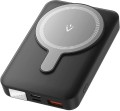 |  |
|---|---|---|
| Vention FHTB0 | Infinity A77 | |
| Outdated Product | Outdated Product | |
| User reviews | ||
| TOP sellers | ||
| Battery capacity | 10000 mAh 37 W*h | 10000 mAh 37 W*h |
| Real capacity | 6300 mAh | 6300 mAh |
| Battery type | Li-Pol | Li-Pol |
Charging gadgets / outputs | ||
| Wireless charger | 15 W | 15 W |
| USB-C | 1 pcs | |
| USB-A | 1 pcs | 1 pcs |
| USB-C1 | 20 W | |
| USB-A1 | 22.5 W | 18 W |
| Power output (all ports) | 15 W | |
Power bank charging | ||
| Power bank charging inputs | USB-C Apple Lightning | USB-C |
| Power bank charge power | 18 W | 18 W |
Features | ||
| Wireless magnetic charging | Qi2.0 | Qi2.0 |
| Fast charge | Quick Charge 3.0 Power Delivery 3.0 | Quick Charge 3.0 Power Delivery 3.0 |
| Bundled cables (adapters) | USB-C | |
| Features | info display | info display |
General | ||
| Smartphone stand |  |  |
| Body material | plastic | plastic |
| Dimensions | 102x67x20 mm | |
| Added to E-Catalog | february 2025 | november 2024 |


Compare Vention FHTB0 and Infinity A77
You may be interested in
My comparisons
Glossary
USB-C
The number of modern ports USB-C and built-in USB-C cables that can be used to charge smartphones, tablets, headphones, consoles, and other current devices. This format is particularly convenient today because USB-C has become the main connector for most new devices and usually supports higher charging power than USB-A. One USB-C output is usually enough for everyday use, while two and three are convenient if you need to connect several gadgets at the same time.
USB-C1
The power capacity of the main USB-C port, which among USB-C connectors is typically the most powerful. This specification is especially important for smartphones with fast charging, tablets, portable consoles, and laptops that require increased power supply.
Values around 18 – 30 W are usually sufficient for fast charging smartphones, 45 – 65 W are suitable for portable consoles, some ultrabooks, and other more demanding devices, and 100 W and above are even designed for powerful laptops and heavy loads.
Values around 18 – 30 W are usually sufficient for fast charging smartphones, 45 – 65 W are suitable for portable consoles, some ultrabooks, and other more demanding devices, and 100 W and above are even designed for powerful laptops and heavy loads.
USB-A1
The power on USB-A1 port shows the maximum output power of the main USB-A port, which among USB-A connectors is usually the most powerful. Values around 10 – 18 W are typically sufficient for regular or fast charging of smartphones, 22.5 – 33 W are already interesting for faster charging of compatible models, while higher values for USB-A are significantly rarer than for USB-C. Compared to USB-A2, USB-A3, or USB-A4, it often makes more sense to connect the most demanding device to USB-A1 if maximum speed from this type of port is needed.
However, the USB-A format itself is already less promising today than USB-C, so such a port is more often used for smartphones, headphones, watches, speakers, and other mobile devices rather than heavy-duty applications like laptops.
However, the USB-A format itself is already less promising today than USB-C, so such a port is more often used for smartphones, headphones, watches, speakers, and other mobile devices rather than heavy-duty applications like laptops.
Power output (all ports)
The total charge power provided by the power bank on all connectors overnight - when devices are connected simultaneously to all charging ports.
This parameter is given due to the fact that the total charge power does not always correspond to the sum of the maximum powers of all available ports. The built-in battery of a power bank often has its own limitation on the output power. Therefore, for example, in a model with two 18 W USB ports, each total charge power can be the same 18 W. Note that the distribution of power among the connectors may be different: in some models it is divided equally, in others it is divided in proportion to the maximum current strength (if it differs on different ports). These nuances should be clarified using the detailed characteristics of the charging connectors.
If you plan to regularly use all power bank connectors at once, you should pay attention to this indicator.
This parameter is given due to the fact that the total charge power does not always correspond to the sum of the maximum powers of all available ports. The built-in battery of a power bank often has its own limitation on the output power. Therefore, for example, in a model with two 18 W USB ports, each total charge power can be the same 18 W. Note that the distribution of power among the connectors may be different: in some models it is divided equally, in others it is divided in proportion to the maximum current strength (if it differs on different ports). These nuances should be clarified using the detailed characteristics of the charging connectors.
If you plan to regularly use all power bank connectors at once, you should pay attention to this indicator.
Power bank charging inputs
The type of input used to charge the power bank's own battery. Simply put, this paragraph indicates which connector on the cable you need to charge the power bank. At the same time, some models provide several inputs for charging at once, which simplifies the search for a cable. Also note that for models with a built-in power bank charging connector (see below), the type of this connector is specified separately.
Most often in modern power banks there are standard connectors microUSB, USB type C and/or Apple Lightning. A lot of accessories are produced for such connectors — cables, network and car chargers, adapters, etc.; so there is usually no difficulty in finding a source of energy. Less common are models with DC input, they are usually equipped with their own power supply (or at least a cable under such a connector). Here is a more detailed description of the different types of inputs:
— microUSB. A smaller version of the USB connector, still very popular in portable tech, despite the active spread of the more advanced USB type C. It has relatively modest capabilities — in particular, it does not allow the implementation of some advanced fast charging technologies. On the other hand, it is very easy to find a source of energy for such a connector: both modern and many of the frankly outdated cables and chargers are...suitable for it.
— USB type C. A miniature type of USB connector, positioned, among other things, as the successor to microUSB. The most noticeable improvement is the reversible design, which allows you not to worry about which side of the plug is inserted into the connector. However, in the case of power banks, this is not the only or even the main advantage: USB type C has more extensive capabilities, allows more powerful currents and use a wider range of fast charging technologies (and Power Delivery was originally created specifically for this connector). Note that in some models the same connector of this type can be used both as an input for charging the battery and as an output for charging external devices — moreover, with automatic switching between these modes.
— Apple Lightning. Initially, this connector is designed for portable gadgets made by Apple. However, in the case of power banks, it can also be found in third-party devices: the idea is that the presence of Lightning allows you to charge an external battery using a cable from an iPhone or iPad and eliminates the need to look for a separate wire. For a number of reasons, this charging input is rarely used as the only one, more often it is provided in addition to microUSB or USB type C (see above).
— DC input. DC is a standard covering several types of connectors at once. Their common feature is a signature round shape, but the diameter, rated voltage and power can be different. In this sense, such connectors are not as convenient as USB type C, Lightning and other generally accepted standards — with a DC socket, it is best to use a native power supply (usually it comes bundled right away), and finding a third-party power source can be a problem. On the other hand, inputs of this type have practically no power limitations, it is easier to achieve high power supply with them than with the connectors described above. Therefore, DC inputs are used mainly in high-capacity power banks, where charging through a "weaker" interface would take an unreasonably long time. However, such models can also be equipped with standard microUSB or USB type C connectors "just in case".
Most often in modern power banks there are standard connectors microUSB, USB type C and/or Apple Lightning. A lot of accessories are produced for such connectors — cables, network and car chargers, adapters, etc.; so there is usually no difficulty in finding a source of energy. Less common are models with DC input, they are usually equipped with their own power supply (or at least a cable under such a connector). Here is a more detailed description of the different types of inputs:
— microUSB. A smaller version of the USB connector, still very popular in portable tech, despite the active spread of the more advanced USB type C. It has relatively modest capabilities — in particular, it does not allow the implementation of some advanced fast charging technologies. On the other hand, it is very easy to find a source of energy for such a connector: both modern and many of the frankly outdated cables and chargers are...suitable for it.
— USB type C. A miniature type of USB connector, positioned, among other things, as the successor to microUSB. The most noticeable improvement is the reversible design, which allows you not to worry about which side of the plug is inserted into the connector. However, in the case of power banks, this is not the only or even the main advantage: USB type C has more extensive capabilities, allows more powerful currents and use a wider range of fast charging technologies (and Power Delivery was originally created specifically for this connector). Note that in some models the same connector of this type can be used both as an input for charging the battery and as an output for charging external devices — moreover, with automatic switching between these modes.
— Apple Lightning. Initially, this connector is designed for portable gadgets made by Apple. However, in the case of power banks, it can also be found in third-party devices: the idea is that the presence of Lightning allows you to charge an external battery using a cable from an iPhone or iPad and eliminates the need to look for a separate wire. For a number of reasons, this charging input is rarely used as the only one, more often it is provided in addition to microUSB or USB type C (see above).
— DC input. DC is a standard covering several types of connectors at once. Their common feature is a signature round shape, but the diameter, rated voltage and power can be different. In this sense, such connectors are not as convenient as USB type C, Lightning and other generally accepted standards — with a DC socket, it is best to use a native power supply (usually it comes bundled right away), and finding a third-party power source can be a problem. On the other hand, inputs of this type have practically no power limitations, it is easier to achieve high power supply with them than with the connectors described above. Therefore, DC inputs are used mainly in high-capacity power banks, where charging through a "weaker" interface would take an unreasonably long time. However, such models can also be equipped with standard microUSB or USB type C connectors "just in case".
Bundled cables (adapters)
Types of cables and/or adapters for charging external devices included with the power bank.
The type of these cables is indicated by the plug used to connect to the charging gadget; the connection to the power bank itself is usually through a standard USB-A or USB type C output. It should be emphasized that this refers to removable cables/adapters; types of built-in charging cables are specified separately (if available — see below).
Overall, this parameter allows you to assess the capabilities of the power bank available "out of the box," without purchasing additional accessories. As for specific interfaces, most external batteries these days come with cables/adapters for microUSB, USB type C, and/or Lightning; more specific connectors are extremely rare. Here are the features of the most popular options:
— microUSB. A connector extremely common in modern portable gadgets. It is less convenient than the newer USB type C and has fewer working characteristics, but it still maintains popularity.
— USB type C. A relatively new standard for miniature USB connectors, used for charging both in portable devices and larger ones — particularly some ultra-compact laptops. Physically, it differs from microUSB with slightly larger sizes and a reversible design, allowing the plug to be connected in either direction. In terms of performance, USB...type C is notable for better compatibility with fast-charging technologies: more such technologies can be used with it, and Power Delivery was originally designed for this connector. However, having a USB type C cable does not necessarily mean support for fast charging.
— Lightning. A standard proprietary connector used in compact Apple gadgets; such technology is not found with other manufacturers.
Note that if several types of included cables/adapters are specified in the characteristics, the specific format of such accessories may vary. For example, the "microUSB plus USB type C" option could mean two separate cables, one cable with two plugs, a cable with one connector plus an adapter for another, etc.
The type of these cables is indicated by the plug used to connect to the charging gadget; the connection to the power bank itself is usually through a standard USB-A or USB type C output. It should be emphasized that this refers to removable cables/adapters; types of built-in charging cables are specified separately (if available — see below).
Overall, this parameter allows you to assess the capabilities of the power bank available "out of the box," without purchasing additional accessories. As for specific interfaces, most external batteries these days come with cables/adapters for microUSB, USB type C, and/or Lightning; more specific connectors are extremely rare. Here are the features of the most popular options:
— microUSB. A connector extremely common in modern portable gadgets. It is less convenient than the newer USB type C and has fewer working characteristics, but it still maintains popularity.
— USB type C. A relatively new standard for miniature USB connectors, used for charging both in portable devices and larger ones — particularly some ultra-compact laptops. Physically, it differs from microUSB with slightly larger sizes and a reversible design, allowing the plug to be connected in either direction. In terms of performance, USB...type C is notable for better compatibility with fast-charging technologies: more such technologies can be used with it, and Power Delivery was originally designed for this connector. However, having a USB type C cable does not necessarily mean support for fast charging.
— Lightning. A standard proprietary connector used in compact Apple gadgets; such technology is not found with other manufacturers.
Note that if several types of included cables/adapters are specified in the characteristics, the specific format of such accessories may vary. For example, the "microUSB plus USB type C" option could mean two separate cables, one cable with two plugs, a cable with one connector plus an adapter for another, etc.
Smartphone stand
Availability of a power bank's own smartphone stand. Typically, this is a retractable or foldable accessory that allows the device to be positioned almost vertically (with a slight tilt); the back of the smartphone rests against the power bank, while the stand prevents the device from sliding forward.
This feature can be useful, for instance, for watching movies—even while the device is charging. It's important to note that this stand is designed specifically for smartphones—it is generally not possible to place a tablet or even a phablet on such a stand.