
Comparison Ugreen PB561 vs Ugreen PB502
Add to comparison | 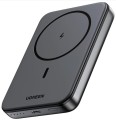 | 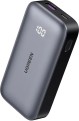 |
|---|---|---|
| Ugreen PB561 | Ugreen PB502 | |
| Compare prices 1 | from $19.99 | |
| TOP sellers | ||
| Battery capacity | 10000 mAh 37 W*h | 10000 mAh 37 W*h |
| Real capacity | 6250 mAh | 6300 mAh |
| Battery type | Li-Pol | Li-Ion |
Charging gadgets / outputs | ||
| Wireless charger | 15 W | |
| USB-C | 1 pcs | 1 pcs |
| USB-A | 1 pcs | |
| USB-C1 | 20 W | 30 W |
| USB-A1 | 22.5 W | |
Power bank charging | ||
| Power bank charging inputs | USB-C | USB-C |
| Power bank charge power | 20 W | 30 W |
Features | ||
| Low current charging |  |  |
| Pass-through charging | | |
| Wireless magnetic charging | Qi2.0 | |
| Fast charge | Quick Charge 3.0 Power Delivery 3.0 | Quick Charge 3.0 Power Delivery 3.0 |
| Bundled cables (adapters) | USB-C | |
| Features | info display | |
General | ||
| Body material | plastic | plastic |
| Dimensions | 106x69x19 mm | 103x52x26 mm |
| Weight | 220 g | 320 g |
| Color | ||
| Added to E-Catalog | september 2024 | august 2024 |



Compare Ugreen PB561 and PB502
Price comparison
You may be interested in
My comparisons
Ugreen PB561 often compared


Ugreen PB502 often compared


Glossary
Real capacity
The real capacity of the power bank.
Real capacity is the amount of energy that a power bank is able to transfer to rechargeable gadgets. This amount is inevitably lower than the nominal capacity (see above) — most often by about 1.6 times (due to the fact that part of the energy goes to additional features and transmission losses). However, it is by real capacity that it is easiest to evaluate the actual capabilities of an external battery: for example, if this figure is 6500 mAh, this model is guaranteed to be enough for two full charges of a smartphone with a 3000 mAh battery and smartwatches for 250 mAh.
The capacity in this case is indicated for 5 V — the standard USB charging voltage. At the same time, the features of milliamp-hours as a unit of capacity are such that the actual amount of energy in the battery depends not only on the number of mAh, but also on the operating voltage. In fact, this means that when using fast charging technologies (see below) that involve increased voltage, the actual value of the actual capacity will differ from the claimed one (it will be lower). There are formulas and methods for calculating this value, they can be found in special sources.
Real capacity is the amount of energy that a power bank is able to transfer to rechargeable gadgets. This amount is inevitably lower than the nominal capacity (see above) — most often by about 1.6 times (due to the fact that part of the energy goes to additional features and transmission losses). However, it is by real capacity that it is easiest to evaluate the actual capabilities of an external battery: for example, if this figure is 6500 mAh, this model is guaranteed to be enough for two full charges of a smartphone with a 3000 mAh battery and smartwatches for 250 mAh.
The capacity in this case is indicated for 5 V — the standard USB charging voltage. At the same time, the features of milliamp-hours as a unit of capacity are such that the actual amount of energy in the battery depends not only on the number of mAh, but also on the operating voltage. In fact, this means that when using fast charging technologies (see below) that involve increased voltage, the actual value of the actual capacity will differ from the claimed one (it will be lower). There are formulas and methods for calculating this value, they can be found in special sources.
Battery type
The type of own batteries installed in the power bank. Lithium-ion(Li-Ion) or lithium-polymer(Li-Pol) batteries are most commonly used today. Other options are less common — solutions based on nickel-metal hydride(Ni-Mh) batteries, as well as on LiFePO4 type cells. In addition, a rather promising development has appeared relatively recently — graphene batteries; however, as of early 2021, they are just beginning to be introduced into mass production. Here are the main features of each of these varieties:
— Li-Ion. Lithium-ion technology allows you to create quite capacious batteries of small dimensions and weight. In addition, such elements are easy to use (the main operating parameters are regulated by the built-in controller), have a high charge speed and are practically not affected by the "memory effect" (reduction in capacity when charging an incompletely discharged battery). The main disadvantage of lithium-ion batteries is a rather narrow range of permissible ambient temperatures. This is not a problem in urban usage, when the power bank is used mainly indoors and is carried in a pocket or in a bag; but for less favorable conditions (such as long hikes in the cold season), it is worth choosing models with good thermal insulation. You can also find information that lithium-ion batteries are prone to fires and even explosions; however, this is usually due to...failures in the embedded controllers, and these controllers are also constantly being improved, and nowadays the risk of such an accident is so low that it can actually be neglected.
— Li-pol. Further development and improvement of the lithium-ion technology described above; the main difference is the use of a solid polymer electrolyte instead of a liquid one (hence the name). This made it possible to achieve even greater capacity without increasing the dimensions, as well as to reduce the potential for fires and explosions during abnormal operation. On the other hand, lithium-polymer batteries are somewhat more expensive than lithium-ion batteries and are even more sensitive to temperature disturbances.
— Ni-Mh. Nickel-metal hydride batteries are distinguished by their reliability and a wide range of permissible temperatures, however, with the same dimensions, they are inferior in capacity to lithium-ion (and even more to lithium-polymer) batteries, and they also require certain specific operating rules to be observed. In addition, it is worth noting that Ni-Mh technology is well suited for removable batteries. It is in this format that such batteries are most often used: power banks of the Ni-Mh format are usually adapters with slots for several replaceable elements of a standard size (for example, AA). In this case, usually, several corresponding removable batteries are included in the kit, however, if desired, they can be replaced with other elements — these can even be disposable batteries from the nearest store. Such an opportunity can turn out to be very useful if the power bank is out of juice at an unfortunate moment, but there is no way to charge it; in addition, worn-out batteries can be replaced with fresh ones without changing the entire device.
— Li-FePO4. Another modified version of the Li-Ion batteries described above, the so-called "lithium iron phosphate". The advantages of such cells over classical lithium-ion ones are, first of all, a stable discharge voltage (until the energy is exhausted), high peak power, long service life, resistance to low temperatures, stability and safety. In addition, due to the use of iron instead of cobalt, such batteries are also safer to manufacture and easier to dispose of. At the same time, they are noticeably inferior to the classic lithium-ion ones in terms of capacity, and they are more expensive, which is why they are rarely used.
— Graphene. Batteries based on graphene — a carbon film one atom thick. The battery itself consists of a set of such films, between which silicon plates are laid, and lithium cobaltate or magnesium oxide is used as an anode. This design provides a number of advantages over the earlier batteries described above. First, graphene technology provides a high charge density, which allows you to create capacious and at the same time light and compact batteries. Secondly, for the production of such batteries, fewer rare resources are needed than for the same lithium ones; and the production itself is more environmentally friendly. Thirdly, such batteries are not prone to overheating and explosions when overloaded or damaged. On the other hand, graphene power supplies take a long time to charge and are not durable. However, this technology is still developing, and in the future it is likely that these shortcomings will be eliminated — completely or at least partially.
— Li-Ion. Lithium-ion technology allows you to create quite capacious batteries of small dimensions and weight. In addition, such elements are easy to use (the main operating parameters are regulated by the built-in controller), have a high charge speed and are practically not affected by the "memory effect" (reduction in capacity when charging an incompletely discharged battery). The main disadvantage of lithium-ion batteries is a rather narrow range of permissible ambient temperatures. This is not a problem in urban usage, when the power bank is used mainly indoors and is carried in a pocket or in a bag; but for less favorable conditions (such as long hikes in the cold season), it is worth choosing models with good thermal insulation. You can also find information that lithium-ion batteries are prone to fires and even explosions; however, this is usually due to...failures in the embedded controllers, and these controllers are also constantly being improved, and nowadays the risk of such an accident is so low that it can actually be neglected.
— Li-pol. Further development and improvement of the lithium-ion technology described above; the main difference is the use of a solid polymer electrolyte instead of a liquid one (hence the name). This made it possible to achieve even greater capacity without increasing the dimensions, as well as to reduce the potential for fires and explosions during abnormal operation. On the other hand, lithium-polymer batteries are somewhat more expensive than lithium-ion batteries and are even more sensitive to temperature disturbances.
— Ni-Mh. Nickel-metal hydride batteries are distinguished by their reliability and a wide range of permissible temperatures, however, with the same dimensions, they are inferior in capacity to lithium-ion (and even more to lithium-polymer) batteries, and they also require certain specific operating rules to be observed. In addition, it is worth noting that Ni-Mh technology is well suited for removable batteries. It is in this format that such batteries are most often used: power banks of the Ni-Mh format are usually adapters with slots for several replaceable elements of a standard size (for example, AA). In this case, usually, several corresponding removable batteries are included in the kit, however, if desired, they can be replaced with other elements — these can even be disposable batteries from the nearest store. Such an opportunity can turn out to be very useful if the power bank is out of juice at an unfortunate moment, but there is no way to charge it; in addition, worn-out batteries can be replaced with fresh ones without changing the entire device.
— Li-FePO4. Another modified version of the Li-Ion batteries described above, the so-called "lithium iron phosphate". The advantages of such cells over classical lithium-ion ones are, first of all, a stable discharge voltage (until the energy is exhausted), high peak power, long service life, resistance to low temperatures, stability and safety. In addition, due to the use of iron instead of cobalt, such batteries are also safer to manufacture and easier to dispose of. At the same time, they are noticeably inferior to the classic lithium-ion ones in terms of capacity, and they are more expensive, which is why they are rarely used.
— Graphene. Batteries based on graphene — a carbon film one atom thick. The battery itself consists of a set of such films, between which silicon plates are laid, and lithium cobaltate or magnesium oxide is used as an anode. This design provides a number of advantages over the earlier batteries described above. First, graphene technology provides a high charge density, which allows you to create capacious and at the same time light and compact batteries. Secondly, for the production of such batteries, fewer rare resources are needed than for the same lithium ones; and the production itself is more environmentally friendly. Thirdly, such batteries are not prone to overheating and explosions when overloaded or damaged. On the other hand, graphene power supplies take a long time to charge and are not durable. However, this technology is still developing, and in the future it is likely that these shortcomings will be eliminated — completely or at least partially.
Wireless charger
The power supplied by the power bank in wireless charging mode.
In accordance with the name, with such charging, energy is transferred to the device being charged literally via the air. However the range of such a transmission is only a few centimeters, so the gadget usually has to be placed directly on the power bank. However, it's still much easier and more convenient than fussing with wires, and the connectors don't wear out.
As for the power, the higher it is, the faster the external device can be charged. Initially, wireless technologies did not differ in power, but nowadays, even for power banks, the minimum is actually 5 W — this is comparable to the power of a modest, but far from the weakest USB port. There are also models with 10 W — this is comparable to the highest power that can be achieved at the USB output in a standard format, without the use of special fast charging technologies.
Of course, in order to use all the possibilities of wireless charging, the charging gadget must also support the appropriate power.
In accordance with the name, with such charging, energy is transferred to the device being charged literally via the air. However the range of such a transmission is only a few centimeters, so the gadget usually has to be placed directly on the power bank. However, it's still much easier and more convenient than fussing with wires, and the connectors don't wear out.
As for the power, the higher it is, the faster the external device can be charged. Initially, wireless technologies did not differ in power, but nowadays, even for power banks, the minimum is actually 5 W — this is comparable to the power of a modest, but far from the weakest USB port. There are also models with 10 W — this is comparable to the highest power that can be achieved at the USB output in a standard format, without the use of special fast charging technologies.
Of course, in order to use all the possibilities of wireless charging, the charging gadget must also support the appropriate power.
USB-A
The number of USB-A ports available for charging smartphones, headphones, accessories, and other devices. This format is still in demand because USB-A is widely used and fits a large number of existing cables and devices, although it usually falls behind USB-C in terms of relevance and power. A single USB-A output is typically sufficient for basic everyday use, while two, three, four, or more are convenient for connecting multiple gadgets simultaneously.
USB-C1
The power capacity of the main USB-C port, which among USB-C connectors is typically the most powerful. This specification is especially important for smartphones with fast charging, tablets, portable consoles, and laptops that require increased power supply.
Values around 18 – 30 W are usually sufficient for fast charging smartphones, 45 – 65 W are suitable for portable consoles, some ultrabooks, and other more demanding devices, and 100 W and above are even designed for powerful laptops and heavy loads.
Values around 18 – 30 W are usually sufficient for fast charging smartphones, 45 – 65 W are suitable for portable consoles, some ultrabooks, and other more demanding devices, and 100 W and above are even designed for powerful laptops and heavy loads.
USB-A1
The power on USB-A1 port shows the maximum output power of the main USB-A port, which among USB-A connectors is usually the most powerful. Values around 10 – 18 W are typically sufficient for regular or fast charging of smartphones, 22.5 – 33 W are already interesting for faster charging of compatible models, while higher values for USB-A are significantly rarer than for USB-C. Compared to USB-A2, USB-A3, or USB-A4, it often makes more sense to connect the most demanding device to USB-A1 if maximum speed from this type of port is needed.
However, the USB-A format itself is already less promising today than USB-C, so such a port is more often used for smartphones, headphones, watches, speakers, and other mobile devices rather than heavy-duty applications like laptops.
However, the USB-A format itself is already less promising today than USB-C, so such a port is more often used for smartphones, headphones, watches, speakers, and other mobile devices rather than heavy-duty applications like laptops.
Power bank charge power
The power in watts at which the power bank is charged under normal conditions.
The higher the charging power, the less time it takes to charge (given the same battery capacity). For example, fast charging of a power bank typically means a charging power of 30W or more. However, this parameter does not directly affect compatibility with charging devices: modern portable batteries can work with chargers of both higher and lower power. In the first case, the battery controller will automatically limit the charging current, while in the second case, charging will simply take more time.
The higher the charging power, the less time it takes to charge (given the same battery capacity). For example, fast charging of a power bank typically means a charging power of 30W or more. However, this parameter does not directly affect compatibility with charging devices: modern portable batteries can work with chargers of both higher and lower power. In the first case, the battery controller will automatically limit the charging current, while in the second case, charging will simply take more time.
Low current charging
Low current charging allows you to seamlessly charge devices that do not require high current. This allows you to extend the life cycle of the devices and protect them as much as possible during charging. Such devices include smartwatches, headphones, headsets, etc.
Pass-through charging
A function that allows a power bank connected to the mains to transfer power to other external devices for charging. Note that pass-through charging can be implemented in different ways. In some cases, a portable battery can supply all incoming power from an energy source through a USB port, in others, the power bank coordinates the power consumption with the gadget being charged and accumulates the remaining energy in the cells of its own battery. In the latter version, both devices are charged at the same time. However, the presence of such a function is not often specified by the manufacturer. Sometimes even the manuals do not provide information on end-to-end charging. Therefore, it is better to focus on the reviews and, before buying, further clarify the availability of pass-through charging.