
Comparison Yato YT-1843 300 mm vs Tolsen 10059 300 mm
Add to comparison | 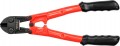 | 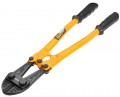 |
|---|---|---|
| Yato YT-1843 300 mm | Tolsen 10059 300 mm | |
| Outdated Product | Outdated Product | |
| TOP sellers | ||
| Type | bolt cutters | bolt cutters |
| Cutting thickness | 5 mm | 3 mm |
| Steel grade | Cr-Mo | Cr-V |
| Steel hardness (HRC) | 61 | |
| Rubberized handles |  | |
| Length | 300 mm | 300 mm |
| Weight | 850 g | |
| Added to E-Catalog | august 2017 | august 2017 |


Compare Yato YT-1843 and Tolsen 10059
You may be interested in
Yato YT-1843 often compared

Glossary
Cutting thickness
The cut thickness of scissors is the largest thickness of metal that they can handle normally.
This parameter is directly related to the type of instrument (see the relevant paragraph). So, manual shears for sheet metal mainly have a cut thickness of up to 1.5 mm (with some exceptions), and in powerful lever models and bolt cutters this figure can exceed 15 mm. When choosing, note that, other things being equal, a large cut thickness means a larger, heavier and more expensive tool. So it’s worth choosing with some margin, in case of unforeseen situations, but this margin should not be too large.
Also note that in the basic characteristics, the cut thickness is usually indicated for a certain type of metal, and when working with other materials, it may be less than the claimed value. These nuances must be specified according to the instructions and other detailed information of the manufacturer.
This parameter is directly related to the type of instrument (see the relevant paragraph). So, manual shears for sheet metal mainly have a cut thickness of up to 1.5 mm (with some exceptions), and in powerful lever models and bolt cutters this figure can exceed 15 mm. When choosing, note that, other things being equal, a large cut thickness means a larger, heavier and more expensive tool. So it’s worth choosing with some margin, in case of unforeseen situations, but this margin should not be too large.
Also note that in the basic characteristics, the cut thickness is usually indicated for a certain type of metal, and when working with other materials, it may be less than the claimed value. These nuances must be specified according to the instructions and other detailed information of the manufacturer.
Steel grade
The grade of steel from which the scissors are made — or at least their cutting part (in some models, the material of the handles may differ from the material of the knives).
This parameter is most often indicated by the type of steel or by the main alloying components included in its composition. For example, the designation CS stands for "carbon" and refers, usually, to traditional unalloyed tool steel. Such steel is prone to corrosion under the influence of moisture, including atmospheric, so it is advisable to periodically lubricate such a tool and keep it in a place with low air humidity. Markings Cr-V and Cr-Mo denote steel with chromium-vanadium and chromium-molybdenum alloying additives, respectively. Both of these varieties are highly resistant to corrosion, while the addition of molybdenum allows you to also reduce weight without sacrificing strength. There is also a tool made of stainless steel marked SS; such an alloy contains only chromium as an alloying additive. Other types of steels are rarely used in metal shears; a description of such materials, if necessary, can be found in special sources.
This parameter is most often indicated by the type of steel or by the main alloying components included in its composition. For example, the designation CS stands for "carbon" and refers, usually, to traditional unalloyed tool steel. Such steel is prone to corrosion under the influence of moisture, including atmospheric, so it is advisable to periodically lubricate such a tool and keep it in a place with low air humidity. Markings Cr-V and Cr-Mo denote steel with chromium-vanadium and chromium-molybdenum alloying additives, respectively. Both of these varieties are highly resistant to corrosion, while the addition of molybdenum allows you to also reduce weight without sacrificing strength. There is also a tool made of stainless steel marked SS; such an alloy contains only chromium as an alloying additive. Other types of steels are rarely used in metal shears; a description of such materials, if necessary, can be found in special sources.
Steel hardness (HRC)
The hardness of the steel from which the scissors are made — or at least the cutting part of the scissors (handles and other elements can be made of other types of metal, softer). Indicated on the Rockwell scale in points; the higher the score, the harder the steel.
The general rule is that the hardness of the cutting edges should not be lower than the hardness of the material being cut — otherwise the quality of the work will noticeably deteriorate, up to the complete impossibility of making a cut. The minimum hardness found among metal shears is 40 HRC, and the highest is about 65 HRC. Most often, this is quite enough: most of the metals that you have to work with with scissors, without special hardening, have a hardness of up to 25 – 30 HRC. But if the tool is planned to be used for high-strength alloys, it is worth clarifying whether its hardness will be enough for this.
Also note that higher hardness increases the overall efficiency of the tool and allows it to retain sharpness for a long time; on the other hand, as hardness increases, the metal becomes more brittle and harder to sharpen. Conversely, softer steel is relatively quickly wrinkled and blunted, but it is also restored without much difficulty.
The general rule is that the hardness of the cutting edges should not be lower than the hardness of the material being cut — otherwise the quality of the work will noticeably deteriorate, up to the complete impossibility of making a cut. The minimum hardness found among metal shears is 40 HRC, and the highest is about 65 HRC. Most often, this is quite enough: most of the metals that you have to work with with scissors, without special hardening, have a hardness of up to 25 – 30 HRC. But if the tool is planned to be used for high-strength alloys, it is worth clarifying whether its hardness will be enough for this.
Also note that higher hardness increases the overall efficiency of the tool and allows it to retain sharpness for a long time; on the other hand, as hardness increases, the metal becomes more brittle and harder to sharpen. Conversely, softer steel is relatively quickly wrinkled and blunted, but it is also restored without much difficulty.