
Comparison Colibro Tremix vs Qplay Cosy
Add to comparison | 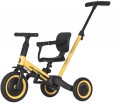 | 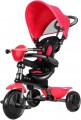 |
|---|---|---|
| Colibro Tremix | Qplay Cosy | |
| Outdated Product | Outdated Product | |
| TOP sellers | ||
| Type | tricycle | tricycle |
| Age group | from 2 to 4 years old | from 1 to 3 years old |
Design | ||
| Frame material | steel | steel |
| Wheel diameter | 10 " | 10 " |
| Wheels | rubber | rubber |
| Alloy wheels |  | |
| Parent handle | | |
| Footrest |  | |
| In box | seat belts | fenders carrier handlebar basket bumper bar seat belts protective visor |
General | ||
| Dimensions | 92x90x51 cm | |
| Country of origin | Germany | |
| Added to E-Catalog | july 2023 | may 2023 |


Compare Colibro Tremix and Qplay Cosy
You may be interested in
My comparisons
Colibro Tremix often compared


Glossary
Age group
— Ages 1 to 3. The youngest age group. This group consists exclusively of tricycles (see "Type"), and the design often includes additional features that ensure safety and allow parents to use the bike as a stroller. Some of these features include, in particular, safety belts, bumper, canopy (see "Package") and a parent handle (see below).
— Ages 2 to 4. This group may include all 3 types of bicycles (see "Type"). However, tricycle models typically resemble strollers less and are more suited for a child's independent movement than those in the previous group; for bicycles with two wheels, side wheels are necessary (see "Package"). Balance bikes are almost all designed for children aged 2-4 years.
— Ages 3 to 6. For children in this age range, tricycles have become uninteresting, and their physical development is adequate to learn riding on two wheels. Therefore, this category mainly includes bicycles with two wheels (see "Type") and must include side wheels in the package (see "Package").
— Ages 5 to 8. Bicycles for kids in early school years closely resemble adult models: only two-wheeled bikes belong here, and side wheels (see "Package") are not mandatory, though they can sometimes be found.
— Ages 6 to 10.... Models for the older age group offer the ability to ride like adults. This category includes bikes with 20-inch wheels. Some examples for this age already feature a hand brake and some additional functions. However, selecting such bicycles requires considering the child's readiness for independent riding.
— Ages 8 to 10. The age group from 8 to 10 years encompasses children's bicycles with truly "adult" equipment. This includes models with 20-inch wheels, multi-speed transmissions, handlebar-mounted brake levers (including advanced disc brakes), and other attributes of genuine adult bikes, but in a smaller format. Essentially, bicycles in this age range are a transitional link between children's and teenage models.
The limits of age groups are quite arbitrary, but it is not recommended to greatly exceed them. It is important to consider not only the age range specified by the manufacturer but also the child's overall level of development. Additionally, children of a certain age may have different heights and body builds — when choosing, it is worth considering not only the age group but also the maximum load (see below).
— Ages 2 to 4. This group may include all 3 types of bicycles (see "Type"). However, tricycle models typically resemble strollers less and are more suited for a child's independent movement than those in the previous group; for bicycles with two wheels, side wheels are necessary (see "Package"). Balance bikes are almost all designed for children aged 2-4 years.
— Ages 3 to 6. For children in this age range, tricycles have become uninteresting, and their physical development is adequate to learn riding on two wheels. Therefore, this category mainly includes bicycles with two wheels (see "Type") and must include side wheels in the package (see "Package").
— Ages 5 to 8. Bicycles for kids in early school years closely resemble adult models: only two-wheeled bikes belong here, and side wheels (see "Package") are not mandatory, though they can sometimes be found.
— Ages 6 to 10.... Models for the older age group offer the ability to ride like adults. This category includes bikes with 20-inch wheels. Some examples for this age already feature a hand brake and some additional functions. However, selecting such bicycles requires considering the child's readiness for independent riding.
— Ages 8 to 10. The age group from 8 to 10 years encompasses children's bicycles with truly "adult" equipment. This includes models with 20-inch wheels, multi-speed transmissions, handlebar-mounted brake levers (including advanced disc brakes), and other attributes of genuine adult bikes, but in a smaller format. Essentially, bicycles in this age range are a transitional link between children's and teenage models.
The limits of age groups are quite arbitrary, but it is not recommended to greatly exceed them. It is important to consider not only the age range specified by the manufacturer but also the child's overall level of development. Additionally, children of a certain age may have different heights and body builds — when choosing, it is worth considering not only the age group but also the maximum load (see below).
Footrest
A special stand on which the child can put his feet while sitting on a bicycle. It is found exclusively in three-wheeled models (see "Type") equipped with a parent handle (see above), and is another "pram" function: when the parent pushes the car, it is inconvenient and sometimes unsafe for the baby to keep his feet on the pedals. do not confuse this feature with a bicycle footrest, which allows you to put the bike on your own without a stop.
In box
— Side wheels. Additional remote wheels mounted on both sides of the bike, usually in the area of \u200b\u200bthe rear axle. They are found exclusively in two-wheeled models (see "Type"). Their main purpose is to insure beginner cyclists who are not yet able to keep their balance: the bike does not fall on its side, even when it is stationary, and you can practice riding without fear of “accidents” and bruises. At the same time, the side wheels are usually made removable, so that when the child acquires the necessary skills to ride in the classic way, they can be removed.
— Wings. Protective devices in the form of curved plates over the wheels of a bicycle; the name "shields" is also used. The main purpose of the wings is to protect the cyclist and the people around them from spray and dirt flying from the wheels while riding. This can be very useful, for example, in wet weather after rain.
— Boot. A device for carrying various loads on a bicycle, located behind the saddle. In three-wheeled models (see "Type"), the boot is most often a plastic tray in which you can carry, for example, your baby's favorite toys. Two-wheelers usually use a platform with a clamp to secure the cargo being transported (although there are exceptions, up to a closed boot). It is worth noting that it is not recommended to use the boot for transporting passengers: it is unsafe and...fraught with breakdowns.
— Basket on the steering wheel. Like the boot (see above), the handlebar basket is designed to carry various loads. It differs, in addition to placement, also in design: it is a rather deep container and can be equipped with a lid. It is found among both two- and three-wheeled vehicles (see "Type"); in some models, the baskets are made removable.
— Cup holder A stand that allows you to securely fasten a glass or a bottle with a drink — for example, milk for a baby or water for the parent himself. Naturally, such equipment is relevant for tricycles-wheelchairs.
— Bag for things. The presence in the design of the bicycle of its own handbag for transporting small items. The main difference from the boot and the basket on the steering wheel (see above) is the design: the bag is made of soft fabric and has a fastener. On two-wheeled models (see "Type") it is usually located on the handlebars, and on three-wheeled models it is on the parent handle (see above).
— Protective bumper. Safety bar around the saddle: the child can hold on to the bumper with his hands, in addition, this feature significantly reduces the risk of falling off the bike. It is installed exclusively on three-wheeled vehicles (see "Type").
— Seat belts. This item of equipment is installed on tricycles (see "Type"), designed for the smallest: seat belts securely fix the baby on the seat, preventing him from falling off the bike — which is especially important if an adult carries the car by the parent's handle (see above). ).
— Protective visor. A device placed above the baby's head and designed to protect from direct sunlight (to avoid heat strokes), and in some models also from rain. Fits exclusively on tricycles (see "Type"). The design of the protective visor can be different: a canopy, an umbrella, or even a folding hood like those found in pushchairs.
— Mirrors. Special mirrors mounted on the steering wheel and allowing the child to see what is happening behind him without turning his head. There can be one or two such mirrors (one mirror is standardly installed on the left). This feature provides additional driving safety and teaches the baby to constantly look “in mirrors” — this skill can be very useful in the future, when learning to ride an “adult” vehicle like a car or motorcycle.
— Signal / call. The presence of a bell or other sound signal supplied with the bike. It is found in all types of machines (see above), however, the specific purpose in some cases varies. So, in two-wheeled models, the signal is often made in the form of a bell and is intended to warn others who may otherwise not notice the cyclist in time. But in tricycles, a horn is usually installed, which can also play the role of additional entertainment for the child. Anyway, buying a model with a bell / signal will save you the hassle of finding and installing it yourself.
— Footboard. Additional support in the form of a folding "leg", used in two-wheeled bicycles. By opening such a support, you can put the bike upright, without leaning on surrounding objects such as a pole, fence, etc. And while riding, the footboard folds compactly and does not interfere with movement.
— Game panel. Used in tricycles (see "Type"). The main purpose of the game panel is to provide the baby with additional entertainment. But its execution is different: it can be toys placed directly on the steering wheel, buttons and switches with sound signals, arrows imitating the dashboard of a motorcycle, etc.
— Wings. Protective devices in the form of curved plates over the wheels of a bicycle; the name "shields" is also used. The main purpose of the wings is to protect the cyclist and the people around them from spray and dirt flying from the wheels while riding. This can be very useful, for example, in wet weather after rain.
— Boot. A device for carrying various loads on a bicycle, located behind the saddle. In three-wheeled models (see "Type"), the boot is most often a plastic tray in which you can carry, for example, your baby's favorite toys. Two-wheelers usually use a platform with a clamp to secure the cargo being transported (although there are exceptions, up to a closed boot). It is worth noting that it is not recommended to use the boot for transporting passengers: it is unsafe and...fraught with breakdowns.
— Basket on the steering wheel. Like the boot (see above), the handlebar basket is designed to carry various loads. It differs, in addition to placement, also in design: it is a rather deep container and can be equipped with a lid. It is found among both two- and three-wheeled vehicles (see "Type"); in some models, the baskets are made removable.
— Cup holder A stand that allows you to securely fasten a glass or a bottle with a drink — for example, milk for a baby or water for the parent himself. Naturally, such equipment is relevant for tricycles-wheelchairs.
— Bag for things. The presence in the design of the bicycle of its own handbag for transporting small items. The main difference from the boot and the basket on the steering wheel (see above) is the design: the bag is made of soft fabric and has a fastener. On two-wheeled models (see "Type") it is usually located on the handlebars, and on three-wheeled models it is on the parent handle (see above).
— Protective bumper. Safety bar around the saddle: the child can hold on to the bumper with his hands, in addition, this feature significantly reduces the risk of falling off the bike. It is installed exclusively on three-wheeled vehicles (see "Type").
— Seat belts. This item of equipment is installed on tricycles (see "Type"), designed for the smallest: seat belts securely fix the baby on the seat, preventing him from falling off the bike — which is especially important if an adult carries the car by the parent's handle (see above). ).
— Protective visor. A device placed above the baby's head and designed to protect from direct sunlight (to avoid heat strokes), and in some models also from rain. Fits exclusively on tricycles (see "Type"). The design of the protective visor can be different: a canopy, an umbrella, or even a folding hood like those found in pushchairs.
— Mirrors. Special mirrors mounted on the steering wheel and allowing the child to see what is happening behind him without turning his head. There can be one or two such mirrors (one mirror is standardly installed on the left). This feature provides additional driving safety and teaches the baby to constantly look “in mirrors” — this skill can be very useful in the future, when learning to ride an “adult” vehicle like a car or motorcycle.
— Signal / call. The presence of a bell or other sound signal supplied with the bike. It is found in all types of machines (see above), however, the specific purpose in some cases varies. So, in two-wheeled models, the signal is often made in the form of a bell and is intended to warn others who may otherwise not notice the cyclist in time. But in tricycles, a horn is usually installed, which can also play the role of additional entertainment for the child. Anyway, buying a model with a bell / signal will save you the hassle of finding and installing it yourself.
— Footboard. Additional support in the form of a folding "leg", used in two-wheeled bicycles. By opening such a support, you can put the bike upright, without leaning on surrounding objects such as a pole, fence, etc. And while riding, the footboard folds compactly and does not interfere with movement.
— Game panel. Used in tricycles (see "Type"). The main purpose of the game panel is to provide the baby with additional entertainment. But its execution is different: it can be toys placed directly on the steering wheel, buttons and switches with sound signals, arrows imitating the dashboard of a motorcycle, etc.
Country of origin
The country of origin of the brand under which the product is marketed. Often indicated by the nationality of the company or the location of its headquarters. At the same time, the actual production capacity of the brand often differs from the country of origin.
It should be noted that the quality of products depends not so much on geography, but on the peculiarities of the organization of processes and quality control at all stages of production. Therefore, national prejudices regarding brands from certain regions, as a rule, are not supported by anything. It is necessary to pay attention to the country of origin of the brand only if the task is to fundamentally support or bypass the manufacturer from a particular state.
It should be noted that the quality of products depends not so much on geography, but on the peculiarities of the organization of processes and quality control at all stages of production. Therefore, national prejudices regarding brands from certain regions, as a rule, are not supported by anything. It is necessary to pay attention to the country of origin of the brand only if the task is to fundamentally support or bypass the manufacturer from a particular state.