
Comparison inverters
Save List
Add to comparison | 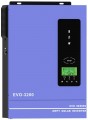 |
|---|---|
| Anern EVO Series SCI-EVO-3200 | |
| Outdated Product | |
| TOP sellers | |
| Device type | hybrid inverter |
| In box | inverter only |
| Network type | 1 phase (230 V) |
| Maximum efficiency | 98 % |
AC output | |
| Rated power | 3.2 kVA |
| Rated power | 3 kW |
| Peak power | 6.4 kW |
| Output waveform | pure sine |
Batteries and DC charging | |
| Connection voltage | 24 В |
| Number of battery inputs | 1 шт |
| Maximum charge current | 80 А |
Solar PV panels | |
| Max. power | 3 kW |
| Operating voltage PV | 30 – 400 В |
Features and control | |
| Functions | UPS function built-in monitoring |
| Control interfaces | Wi-Fi LAN (RJ45) |
| Protection | short circuit protection overload protection |
General | |
| Display | monochrome |
| Cooling | active (fans) |
| Casing protection class | IP21 |
| Operating temperature | -10 °C ~ +50 °C |
| Dimensions (HxWxD) | 360x270x100 mm |
| Weight | 5.4 kg |
| Added to E-Catalog | november 2023 |


You may be interested in
My comparisons
Glossary
Device type
— Autonomous inverter. Voltage and power converters that are not connected to an external electrical network. They are supposed to be used as part of autonomous photovoltaic systems - such inverters generate electricity, which is spent exclusively for the needs of the household. It can be consumed directly by household appliances or accumulated in batteries. This type of inverter is often called off grid.
— Network inverter. Inverters operating synchronously with the external power supply network. They are designed to convert solar energy into alternating power with the parameters of the general network. Grid-connected inverters are used in battery-free systems - all generated energy is used for own consumption, and the excess is transferred to the network at a “feed-in tariff”. To do this, some indicators of generated electricity are adjusted, in particular, amplitude differences are eliminated, the network frequency is equalized, etc. Grid-tied inverters are also known as on-grid inverters.
— Hybrid inverter. Battery-grid inverters are peculiar hybrids of autonomous and network converters. Actually, this is where the name hybrid comes from. Inverters of this type work with battery chains, and excess electricity is sent to the general network. This ensures the energy independence of the system based on solar panels with the ability to use the energy a...ccumulated in the batteries without disconnecting from the network. For example, if DC power is prioritized, power is primarily supplied from batteries, and any energy shortages are supplied from the external grid. This comes in handy in case of bad weather conditions or insufficient power generated by solar panels. If electricity is generated in excess, the excess energy is released into the general network at a “feed-in tariff”.
— Inverter for campers (motorhomes). Such narrow-niche inverters usually work in conjunction with a branded charging station - while staying at a campsite, it charges the vehicle’s battery. And while driving, such inverters are connected to the car’s alternating power generator and with their help, the energy reserves in the battery cells of the charging station are replenished.
— Network inverter. Inverters operating synchronously with the external power supply network. They are designed to convert solar energy into alternating power with the parameters of the general network. Grid-connected inverters are used in battery-free systems - all generated energy is used for own consumption, and the excess is transferred to the network at a “feed-in tariff”. To do this, some indicators of generated electricity are adjusted, in particular, amplitude differences are eliminated, the network frequency is equalized, etc. Grid-tied inverters are also known as on-grid inverters.
— Hybrid inverter. Battery-grid inverters are peculiar hybrids of autonomous and network converters. Actually, this is where the name hybrid comes from. Inverters of this type work with battery chains, and excess electricity is sent to the general network. This ensures the energy independence of the system based on solar panels with the ability to use the energy a...ccumulated in the batteries without disconnecting from the network. For example, if DC power is prioritized, power is primarily supplied from batteries, and any energy shortages are supplied from the external grid. This comes in handy in case of bad weather conditions or insufficient power generated by solar panels. If electricity is generated in excess, the excess energy is released into the general network at a “feed-in tariff”.
— Inverter for campers (motorhomes). Such narrow-niche inverters usually work in conjunction with a branded charging station - while staying at a campsite, it charges the vehicle’s battery. And while driving, such inverters are connected to the car’s alternating power generator and with their help, the energy reserves in the battery cells of the charging station are replenished.
In box
— Only the inverter. This configuration means that in the box you receive the device itself without additional modules. This option is chosen when the system is already assembled and you need to replace or scale a unit, or when the designer intentionally selects external accessories for specific tasks and brands. The advantage is the minimal price and freedom of configuration; the drawback is the need to purchase everything for startup and monitoring.
— With battery module. This set provides guaranteed compatibility and factory warranty on the combination, however, it is more expensive. The only potential hurdle is the standard battery volume, which may be insufficient for certain needs. However, nothing prevents you from purchasing additional batteries.
— With battery module. This set provides guaranteed compatibility and factory warranty on the combination, however, it is more expensive. The only potential hurdle is the standard battery volume, which may be insufficient for certain needs. However, nothing prevents you from purchasing additional batteries.
Network type
— Single-phase (230 V). Single-phase power is well known from classic 230 V household sockets. However, this also often includes models for other alternating voltage values - for example, 110 V.
— Three-phase (400 V). Three-phase power supply with a voltage of 400 V is used mainly for energy-hungry devices for which 230 V networks do not provide enough power. This option can be used both for private households and in the industrial sector.
— Single-phase / three-phase. Models with the ability to connect to both single-phase power supply at 230 V and three-phase power supply at 400 V. This allows them to be used with both household and industrial networks - depending on which option is more convenient at the moment.
— DC (constant voltage). This category usually includes a few inverters for campers (motorhomes) (see “Device Type”). They are designed for operation in automotive networks with a constant voltage of 12/24 V.
— Three-phase (400 V). Three-phase power supply with a voltage of 400 V is used mainly for energy-hungry devices for which 230 V networks do not provide enough power. This option can be used both for private households and in the industrial sector.
— Single-phase / three-phase. Models with the ability to connect to both single-phase power supply at 230 V and three-phase power supply at 400 V. This allows them to be used with both household and industrial networks - depending on which option is more convenient at the moment.
— DC (constant voltage). This category usually includes a few inverters for campers (motorhomes) (see “Device Type”). They are designed for operation in automotive networks with a constant voltage of 12/24 V.
Maximum efficiency
Inverter efficiency for solar panels.
The efficiency indicator is the percentage ratio between the amount of energy that the device delivers to the load and the energy consumed from the solar panel. The higher this parameter, the more efficient the operation of the device and the lower the losses during conversion. In modern inverters for solar panels, efficiency values of up to 90% are considered average, and above 90% are considered good.
The efficiency indicator is the percentage ratio between the amount of energy that the device delivers to the load and the energy consumed from the solar panel. The higher this parameter, the more efficient the operation of the device and the lower the losses during conversion. In modern inverters for solar panels, efficiency values of up to 90% are considered average, and above 90% are considered good.
Rated power
The nominal power in kVA shows the total electrical load that an inverter can handle in terms of voltage and current, taking into account the characteristics of the connected devices. This parameter is especially important for equipment with motors, transformers, compressors, and other reactive loads, where consumption does not always equal useful power in kW.
kVA should not be directly equated to kW: at a power factor of 0.8, a 5 kVA device is actually designed for approximately 4 kW of active load. For example, a pump, air conditioner, or refrigeration compressor may load the inverter more in kVA terms than it seems based on their usual power in watts.
kVA should not be directly equated to kW: at a power factor of 0.8, a 5 kVA device is actually designed for approximately 4 kW of active load. For example, a pump, air conditioner, or refrigeration compressor may load the inverter more in kVA terms than it seems based on their usual power in watts.
Rated power
The rated power in kW indicates the active load that an inverter or controller can reliably handle in operational mode. This value is closest to the actual consumption of household appliances such as refrigerators, pumps, boilers, lighting, and power tools.
Unlike peak power, the rated power is not calculated for short bursts, but for prolonged operation without overheating and overloading. For example, a 5 kW inverter can supply several devices with a total continuous consumption up to this level, but for a motor or pump, it is advisable to leave a margin for the starting current.
Unlike peak power, the rated power is not calculated for short bursts, but for prolonged operation without overheating and overloading. For example, a 5 kW inverter can supply several devices with a total continuous consumption up to this level, but for a motor or pump, it is advisable to leave a margin for the starting current.
Peak power
The maximum active load that the inverter can withstand briefly, usually during the startup of equipment. This reserve is needed for devices with a high starting current: pumps, refrigerators, compressors, power tools.
Unlike nominal power, peak power is not designed for continuous operation and lasts only a few seconds or even fractions of a second. For example, an inverter with a nominal power of 5 kW and a peak power of 10 kW can briefly handle the startup of a pump, but it should not continuously supply a load of 10 kW.
Unlike nominal power, peak power is not designed for continuous operation and lasts only a few seconds or even fractions of a second. For example, an inverter with a nominal power of 5 kW and a peak power of 10 kW can briefly handle the startup of a pump, but it should not continuously supply a load of 10 kW.
Output waveform
The form that the graph of the voltage produced by the inverter has.
This can be a pure sinusoid with a high quality output signal - the voltage on the graph changes evenly, without sudden jumps and drops. It is as close as possible to the parameters of conventional sockets. Models with pure sine wave voltage allow you to connect almost any load - even delicate electronics that are sensitive to power quality. On the other hand, such quality requires the use of complex control circuits and significantly affects the cost of the inverter, and there is not always a real need for it.
Another option for the output signal shape is a modified (approximated) sine wave. As a rule, such graphs are constructed from stepped lines, sometimes quite large. The disadvantage of the modified sine is the inability to work with sensitive equipment (for example, where asynchronous motors or transformers are installed). However, in the absence of such a need, this moment cannot be called critical.
This can be a pure sinusoid with a high quality output signal - the voltage on the graph changes evenly, without sudden jumps and drops. It is as close as possible to the parameters of conventional sockets. Models with pure sine wave voltage allow you to connect almost any load - even delicate electronics that are sensitive to power quality. On the other hand, such quality requires the use of complex control circuits and significantly affects the cost of the inverter, and there is not always a real need for it.
Another option for the output signal shape is a modified (approximated) sine wave. As a rule, such graphs are constructed from stepped lines, sometimes quite large. The disadvantage of the modified sine is the inability to work with sensitive equipment (for example, where asynchronous motors or transformers are installed). However, in the absence of such a need, this moment cannot be called critical.